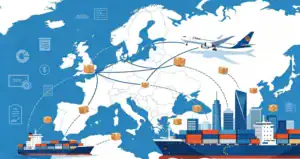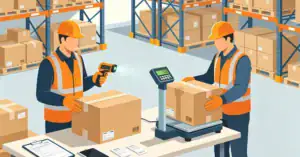
If you’ve been selling on Amazon for a while, you probably know that feeling—watching your inventory level drop day by day while your replenishment stock is still somewhere out at sea. Running out of stock is one of the most direct profit killers for FBA sellers. Worse than that, it’s a serious threat to your listing’s organic ranking and search visibility. Amazon’s algorithm leans heavily on historical sales data and conversion rates. When your listing goes out of stock, that sales momentum breaks. By the time your new stock arrives, your ranking often won’t bounce back to where it was before, and your competitors have already had a chance to grab that traffic.
Most sellers respond to this anxiety by focusing only on their “FBA sellable inventory.” But they overlook a second engine that can actually save the day—in-transit inventory. Even while your goods are still on a ship or in the air, you can start managing them strategically to protect your listing and even give your rankings a boost.
1. Why Is In-Transit Inventory Such a Game-Changer in Replenishment Planning?
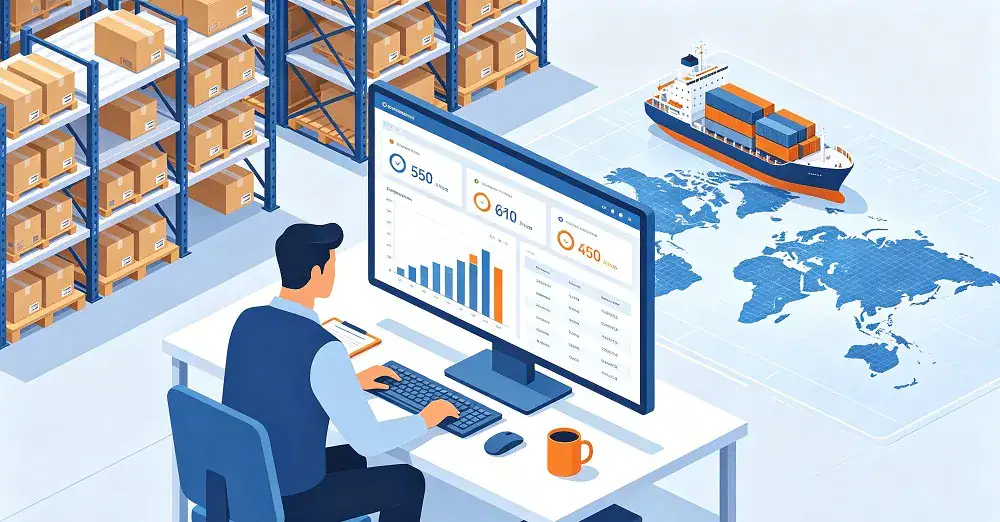
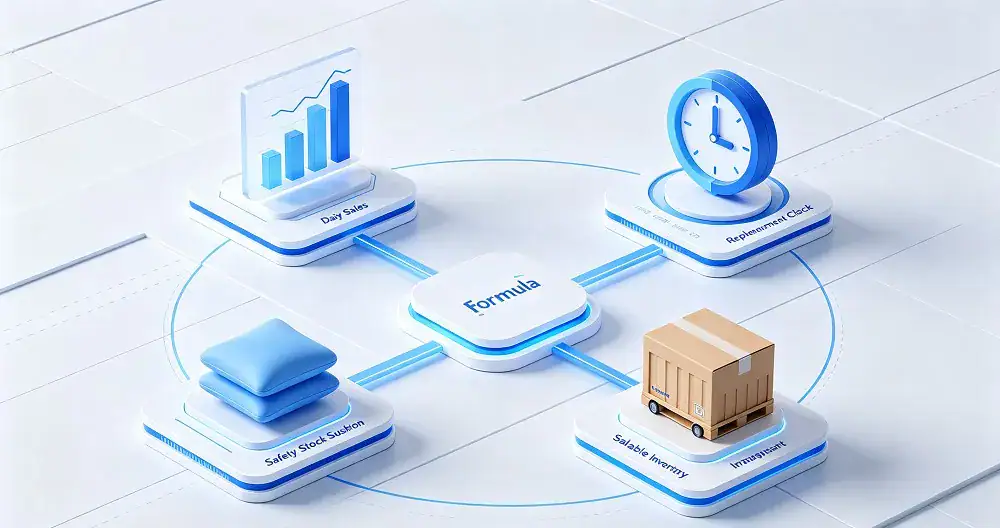
A lot of sellers think in a straight line: check the sellable stock, and when it looks low, place another order. But Amazon inventory management is more dynamic than that. At the heart of it is a core formula that determines how much you should reorder and when:
Reorder Quantity = (Daily Sales × (Replenishment Cycle Days + Safety Stock Days)) – FBA Sellable Inventory – In-Transit Inventory
Within this formula, in-transit inventory is often the most overlooked piece. If you leave it out of your calculation, you risk overstocking and tying up cash, or worse, underestimating your supply and running out. For example, let’s say an SKU sells 10 units per day, the sea freight replenishment cycle takes 30 days, and you want to keep 15 days of safety stock. Right now, you have 120 units in FBA and 200 units in transit. Your suggested reorder quantity would be: 10 × (30 + 15) – 120 – 200 = 130 units.
The real value of in-transit inventory lies in this: it’s the only buffer between “sold out” and “restocked.” If you use this buffer well, you can lock in orders early, keep your traffic steady, and even give your ranking a push—all before the goods actually reach the warehouse.
2. Three Core Strategies to Turn a Potential Crisis Into a Sales Opportunity
Strategy 1: Use the “Stockout Warning Date” to Reverse-Engineer Your Replenishment Schedule
Replenishment shouldn’t be a guessing game. You need a clear stockout warning date, and it’s simple to calculate:
Estimated Stockout Date = Today’s Date + (FBA Sellable Inventory ÷ Daily Sales)
Let’s say today is November 4, and you’ve got 120 units of an SKU in FBA. It sells 10 units per day on average. That gives you about 12 days of cover, meaning your estimated stockout date would be November 16. Now, check your in-transit inventory. If its estimated arrival date is November 23, you have a week-long gap. That’s your signal to start an emergency plan.
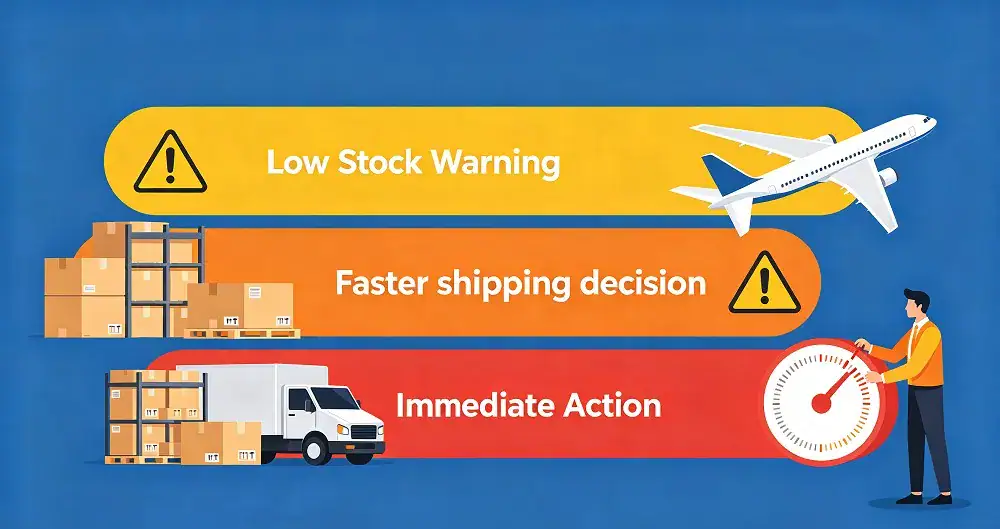
Here’s a quick way to categorize the urgency and respond accordingly:
| Urgency Level | Days of Cover Left | Recommended Action |
|---|---|---|
| Yellow Alert | Less than 30 days | Start preparing your regular ocean freight order and see if your in-transit stock can cover the sales period. |
| Orange Alert | Less than 15 days | Consider switching to faster shipping options like air freight to make sure new stock arrives before you run out. |
| Red Alert | Less than 7 days | Rush air freight immediately, or temporarily raise your price to slow down sales and buy time for your in-transit inventory. |
Having these clear checkpoints lets you work backward from the arrival date of your in-transit stock and plan every step accordingly.
Strategy 2: Enable “In-Stock Head Start” to Make In-Transit Inventory Available for Sale Early
There’s a lesser-known Amazon tool that can do wonders for stabilizing your ranking—In-Stock Head Start. This feature allows your listing to remain searchable and purchasable even when your FBA stock is temporarily empty, as long as Amazon has confidence in the delivery timeline of your incoming shipment.
Once you enable it, your product detail page will show customers an estimated delivery date. That means your listing stays “available” even during a physical stockout. Customers can still place orders, so you don’t lose that sales momentum. More importantly, your search ranking and traffic sources stay protected. This tool is currently available in the US, Japan, and several European countries including the UK, Germany, and France.
To make the most of this feature, you need a carrier that provides accurate and consistently updated tracking codes. Amazon relies on this tracking data to estimate delivery dates. This is where a logistics partner with stable delivery times and transparent tracking becomes truly valuable.

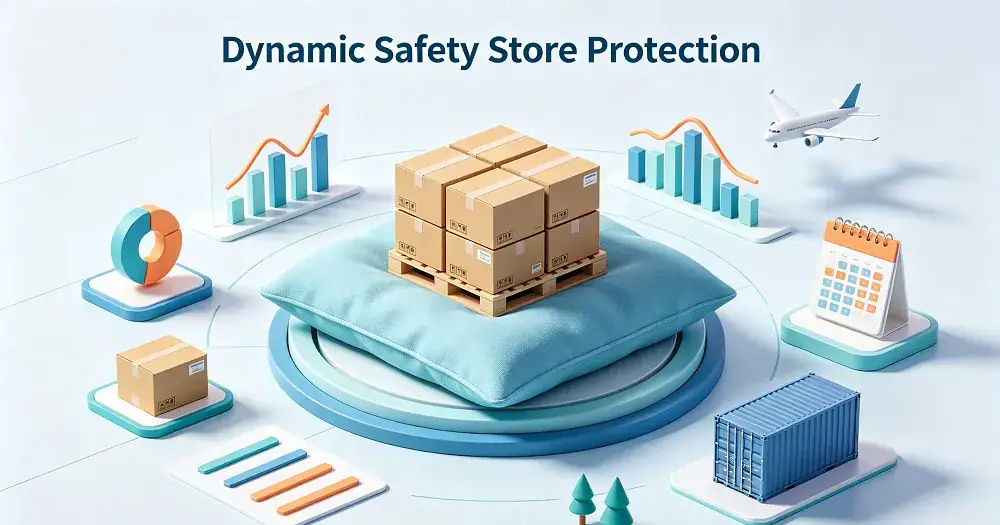
Strategy 3: Set Up a “Dynamic Safety Stock” to Add a Layer of Protection for Your In-Transit Inventory
Safety stock acts as a buffer against sales fluctuations and supply chain hiccups. With cross-border shipping timelines stretching over weeks, you’ll need a thicker cushion than you would for domestic operations.
A simple and practical formula is:
Safety Stock = Safety Days × Daily Sales
How you set your “safety days” depends on the product type and your own experience:
-
Steady Sellers: Sales are fairly consistent, so setting aside 5 to 7 days of cover is usually enough.
-
Growing Sellers: Sales are picking up. It’s safer to set aside more days—better to have extra than to run out.
-
Seasonal or Promotional Items: Before peak seasons or major sales events, set your safety stock based on your estimated peak volume, and gradually phase it out after the event ends.
The thicker your safety stock cushion, the more resilient you’ll be against shipping delays or sudden spikes in demand.
3. Why Your Logistics Partner’s Reliability Makes or Breaks This Whole Strategy
All of the strategies above depend on one key assumption: you have a reasonably accurate estimate of when your in-transit inventory will arrive. If your shipping times are a gamble, then all your careful calculations become useless. A trustworthy logistics partner should offer a few critical things:
1. Stable Transit Times Are the Foundation of Accurate Planning
The estimated arrival date of your in-transit inventory is a crucial variable in your replenishment formula. If that timeline keeps shifting, you simply can’t plan with confidence. Reliable freight forwarders set clear internal service standards—for example, getting your cargo loaded onto a vessel within five working days of receiving it, for major routes like US West Coast or US East Coast. And if something slips on their end, they’ll proactively let you know. This level of predictability is what gives sellers the confidence to manage inventory tightly.
2. End-to-End Visibility Lets You Track Every Step of Your In-Transit Inventory
Handing your goods over to a carrier doesn’t mean you should stop paying attention. You need to know where your inventory is at every stage—has it left the port, has it arrived, is it in customs, is it being delivered? A provider with a real-time tracking system and a dedicated account manager gives you that transparency and saves you from the anxiety of not knowing where your shipment is. Having support that responds within 4 hours and offers bilingual service (English and Chinese) is a huge reassurance for cross-border sellers.
3. Flexible Shipping Options Match Your Replenishment Rhythm
If you only have ocean freight as an option, you’re going to be stuck when an orange or red alert hits. A reliable logistics partner usually offers a mix of sea freight, air freight, and express delivery options. When your system warns you that inventory might fall short, you can quickly shift part of your shipment to air freight, using a “sea-air combo” strategy to give your in-transit inventory a backup plan.

4. Treat Your In-Transit Inventory as Your Second Sales Team
Stockouts don’t have to be inevitable. They’re an operational risk you can anticipate and manage. Moving beyond just watching your FBA sellable inventory and taking a broader view of your in-transit stock is a crucial step toward more sophisticated operations.
By calculating your stockout warning date, enabling In-Stock Head Start, and building a dynamic safety stock, you can turn the passive waiting period of “in transit” into an active phase of “in sale.” And the foundation for all of this is a logistics partner who provides stable transit times, transparent tracking, and flexible solutions—someone who helps you take control of every stage of your in-transit inventory.
ABout AMZ Shipper
AMZ Shipper has several years of experience for international logistics Freight Forwarding service. Our service is for importer and exporter, foreign freight forwarders, local and abroad business. Export of 1500 of 40HQ per year for FBA Amazon shipping, 15-30 tons of air shipments per month.
Member of WCA. Our company is a professional Amazon freight forwarder that specializes in providing comprehensive and efficient services to customers.