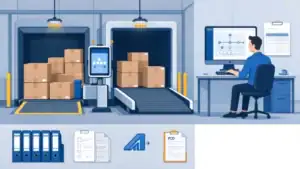
If you are selling on Amazon, you have probably come across terms like “freight forwarder,” “3PL,” and “4PL.” Sometimes people use them as if they mean the same thing. Other times, they sound like completely different services. So what do they actually mean? And which one do you really need as an Amazon seller?
This guide will walk you through the definitions, the key differences, and help you figure out which logistics model fits your current business stage.
1. What Is a Freight Forwarder?
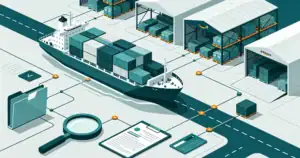
A freight forwarder is one of the oldest roles in international trade. Forwarders usually do not own ships, planes, or trucks. Instead, they act as middlemen who help you arrange transportation.
Here is what a freight forwarder typically does:
-
Booking cargo space: Reserving space on a vessel or aircraft based on your shipment size and timeline.
-
Arranging trucking: Moving your goods from your factory or warehouse to the departure port.
-
Helping with customs paperwork: Preparing or reviewing documents, sometimes working with a licensed customs broker.
-
Handling shipping documents: Making sure bills of lading, commercial invoices, and packing lists are in order.
-
Tracking shipments: Updating you on where your goods are during transit.
In simple terms, a freight forwarder solves the problem of “get this shipment from point A to point B.” Their service is usually project-based. You have a shipment, you hire a forwarder to move it.
For Amazon sellers who are just starting out and only send a few FBA shipments here and there, a reliable freight forwarder is often the most cost-effective choice.
2. What Is a 3PL?
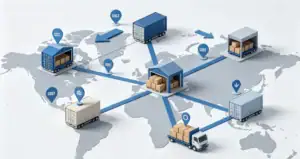
3PL stands for Third-Party Logistics. Unlike traditional freight forwarders, 3PLs offer broader, longer-term logistics outsourcing.
The main feature of a 3PL is that it does not just move your goods. It takes over part of your logistics operations. For example:
-
Warehousing: Storing your inventory in their warehouses.
-
Picking and packing: When an order comes in, the 3PL picks the items and packs them.
-
Shipping to customers: Sending out orders through local carriers (also known as “dropshipping fulfillment”).
-
Returns processing: Receiving returned items, inspecting them, and deciding whether to restock or discard them.
-
Multi-channel fulfillment: Handling orders from Amazon, your own website, eBay, and other sales channels from one pool of inventory.
Think of it this way: a freight forwarder helps you ship a batch of goods, while a 3PL helps you run your entire order fulfillment process. The relationship is not about replacement — it is about upgrading and expanding.
For Amazon sellers who have passed the startup stage and have steady monthly sales, a 3PL can bring clear benefits:
-
Lower FBA storage costs: Keep slow-moving inventory in a 3PL warehouse to avoid Amazon’s long-term storage fees.
-
Support multi-channel sales: Use the same 3PL warehouse to fulfill orders from Amazon, Shopify, TikTok Shop, and more.
-
More flexible restocking: 3PLs usually do not have the same inbound restrictions as FBA during peak seasons.
-
Professional returns management: A 3PL can inspect returned items and put them back on your shelves, reducing losses.
3. What Is a 4PL?
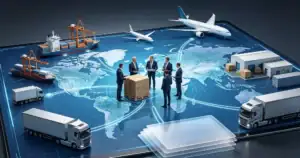
4PL stands for Fourth-Party Logistics. The term was first introduced by the consulting firm Accenture in 1996. A 4PL acts as a supply chain integrator.
The role of a 4PL is very different from forwarders and 3PLs:
-
No hands-on operations: A 4PL usually does not own warehouses, trucks, or cargo ships. It does not pick or pack orders.
-
Manages the whole supply chain: A 4PL designs, optimizes, and manages your entire logistics network — including multiple 3PLs, forwarders, and customs brokers.
-
Strategic focus: A 4PL is more like a “general contractor” or “supply chain管家.” It provides data analysis and process optimization.
Here is an example: A large international retailer has multiple warehouses across the globe and works with three different 3PLs. They might hire a 4PL to coordinate all three 3PLs, optimizing inventory placement, shipping routes, and costs.
For the vast majority of small and medium-sized Amazon sellers, 4PL is overkill. You only need to think about 4PL when your business is very large (tens of millions in annual sales) and your supply chain is truly complex.
4. Key Differences at a Glance
To help you see the differences more clearly, here is a comparison table:
| Aspect | Freight Forwarder | 3PL | 4PL |
|---|---|---|---|
| Core service | Booking shipments, one-time cargo moves | Warehousing, picking, packing, shipping, returns | Supply chain strategy and integration |
| Asset ownership | Usually owns no ships or planes | Owns or leases warehouses, WMS, delivery fleets | Owns almost no logistics assets |
| Contract length | Per shipment (project-based) | Long-term (monthly or yearly) | Strategic, long-term partnership |
| Management level | Execution | Operations | Strategy |
| Scope | Single transportation leg | End-to-end order fulfillment | Multi-region, multi-carrier network |
| Best for sellers who are | Just starting out, shipping infrequently | Growing to mid-sized | Very large, with complex global supply chains |

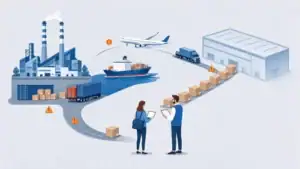
As the table shows, a freight forwarder answers “how to ship.” A 3PL answers “how to store, pick, pack, ship, and return.” A 4PL answers “how to optimize my entire supply chain.”
5. How Should Amazon Sellers Choose Based on Their Stage?
Different business stages need different logistics models. Here is a simple stage-by-stage guide:
Stage 1: Startup — a few SKUs, shipping 1–2 times per month
-
Recommended model: A reliable freight forwarder.
-
Why: At this stage, your focus is on product research and operations. You do not need a warehouse or complex fulfillment services. A good forwarder can handle your FBA head shipments just fine.
-
What to look for: Transparent pricing, stable shipping times, and familiarity with Amazon’s inbound requirements.
Stage 2: Growth — tens of thousands in monthly sales, multiple SKUs
-
Recommended model: 3PL.
-
Why: As sales grow, you may start seeing high FBA storage fees, trouble getting inventory into FBA during peak seasons, and messy returns. A 3PL can take some of your inventory, handle returns, and even support your own website orders.
-
What to look for: System integration, clear inventory reports, and a straightforward returns process.
Stage 3: Scaling — millions in annual sales, selling on multiple platforms and countries
-
Recommended model: Mostly 3PL, plus possibly 4PL consulting.
-
Why: When your supply chain gets complex (e.g., selling on Amazon, Walmart, and TikTok, with operations in both the US and Europe), you might need professional advice to optimize your network. But in most cases, a strong 3PL plus your own supply chain management skills are enough.
Here is a quick decision table to help you match your situation with the right model:
| What your business looks like | Recommended model | Main reason |
|---|---|---|
| Brand new store, shipping less than 5 times a month | Freight forwarder | Lowest cost, no need to manage warehousing |
| Steady monthly orders, FBA storage fees are rising | 3PL | Divert some inventory to lower long-term storage costs |
| Selling on both Amazon and your own website | 3PL | Centralize inventory for multi-channel fulfillment |
| Handling a large number of customer returns | 3PL | Professional return inspection and restocking |
| Global warehouses, multiple 3PLs | 4PL (consulting) | Strategic optimization — very few sellers need this |
6. Why 3PL Is the Sweet Spot for Most Amazon Sellers
Among freight forwarders, 3PLs, and 4PLs, 3PL offers the most value for the widest range of Amazon sellers. Here is why:
-
It solves common FBA pain points: Long-term storage fees, peak season inbound limits, and costly returns are headaches for many sellers. A 3PL can take over these problems.
-
It supports multi-channel selling: More and more sellers are not just on Amazon. They also sell on Shopify, TikTok Shop, eBay, and more. A 3PL can fulfill orders from all these channels using one pool of inventory.
-
Predictable costs: 3PLs usually charge fixed monthly storage and handling fees. This makes budgeting much easier.
- It grows with you: A good 3PL can grow alongside your business — from one or two pallets to full containers and dedicated warehouse space.

ABout AMZ Shipper
AMZ Shipper has several years of experience for international logistics Freight Forwarding service. Our service is for importer and exporter, foreign freight forwarders, local and abroad business. Export of 1500 of 40HQ per year for FBA Amazon shipping, 15-30tons of air shipments per month.
Member of WCA. Our company is a professional Amazon freight forwarder that specializes in providing comprehensive and efficient services to customers.