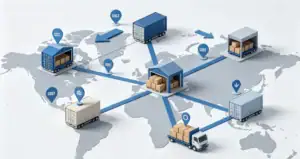

For Amazon sellers, FBA warehouse overcrowding is like an unexpected “logistics crisis” — goods arrive at the port but cannot get a warehouse appointment, remain stuck after warehousing and fail to be listed for a long time, peak season inventory preparation is disrupted, inventory turnover stagnates, and sellers even face a chain of consequences such as stockouts, declining Listing rankings, and soaring additional storage fees. Especially before Black Friday and Prime Day every year, popular warehouses such as LAX9 and IUSP in the western US, and FTW1 and IND9 in the central US frequently fall into the predicament of “no appointments available due to overcrowding”. The appointment cycle for some warehouses can be as long as 2-3 weeks. Many sellers whose goods arrived at the port at the end of August still haven’t completed warehousing when the peak season arrives, directly missing the golden sales period. Faced with this passive situation, instead of waiting passively for the warehouse to ease, it is better to take the initiative, master stock diversion skills, achieve delay-free diversion, and minimize losses caused by overcrowding.
Step 1: Quickly Check Inventory Status and Lock in Diversion Priorities
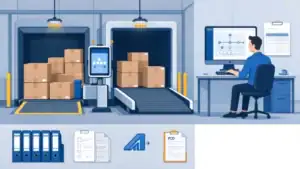
Step 1: Quickly check inventory status and lock in diversion priorities. After overcrowding occurs, do not panic and follow the trend to divert stock. First, comprehensively sort out the inventory situation in the seller’s backend: distinguish between four types of inventory: “in-transit goods”, “goods arrived at port but not warehoused”, “goods warehoused but not listed”, and “sellable inventory with abnormal transfer”. Prioritize handling “goods arrived at port but not warehoused” and “in-transit goods about to arrive at port” — if such goods are detained at the port or outside the warehouse for a long time, they will generate high container detention fees and storage fees, and the loss will be irreversible if the sales node is missed. At the same time, combined with Listing performance, give priority to ensuring the inventory circulation of best-selling products and high-margin products. For slow-moving and low-value products, diversion can be postponed and handled in conjunction with clearance strategies later to avoid resource waste. In addition, through the Amazon backend or logistics service providers, real-time query the overcrowding degree and appointment situation of each warehouse, avoid popular overcrowded warehouses, and lock in alternative warehouses that can receive goods normally to prepare for diversion.
Step 2: Make Good Use of Amazon’s Official Tools for Rapid Stock Diversion
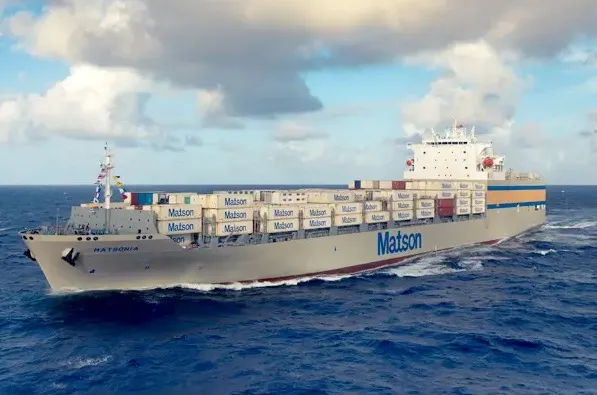
In response to overcrowding, Amazon has launched an intelligent rerouting service, which is the most direct and efficient official diversion method, especially suitable for sellers cooperating with ShipTrack carriers. This service supports carriers to transfer shipments to other non-congested FBA warehouses when the assigned FBA warehouse is congested, greatly shortening the warehousing time. For example, Seller Xiao Lü once sent replenishments to MEM1 warehouse. After customs clearance, he only got a warehouse delivery appointment on August 28, which could not meet the replenishment demand. His cooperating ShipTrack carrier activated the intelligent rerouting service and transferred the shipment to GYR2 warehouse, advancing the appointment time to August 7, saving 21 days and successfully avoiding stockouts. It should be noted that currently only some ShipTrack carriers support this service. Sellers can filter “Smart Reroute” on the SPN applet or website, or directly consult the cooperating carrier to confirm.
In addition to intelligent rerouting, Amazon’s “Inventory Placement Service” can also be used for cross-warehouse diversion, especially suitable for sellers who need to layout inventory in multiple countries. Sellers can create a removal order in the backend to transfer inventory that has been warehoused or is in transit from an overcrowded warehouse to FBA warehouses in other countries or regions, realizing “multi-location inventory, nearby delivery”. When operating, note: log in to the seller’s backend, find “Manage Inventory” under the “Inventory” menu, check the products to be diverted, click “Create Removal Order”, select the “Remove” method (not Dispose), accurately fill in the target warehouse address, confirm the removal quantity and submit. Then track the order progress in real time to avoid goods loss caused by incorrect address filling. This method is suitable for long-term layout, which can not only alleviate the current overcrowding pressure but also optimize inventory distribution and improve delivery efficiency.
Step 3: Use Overseas Warehouses as a Buffer for Flexible Stock Diversion
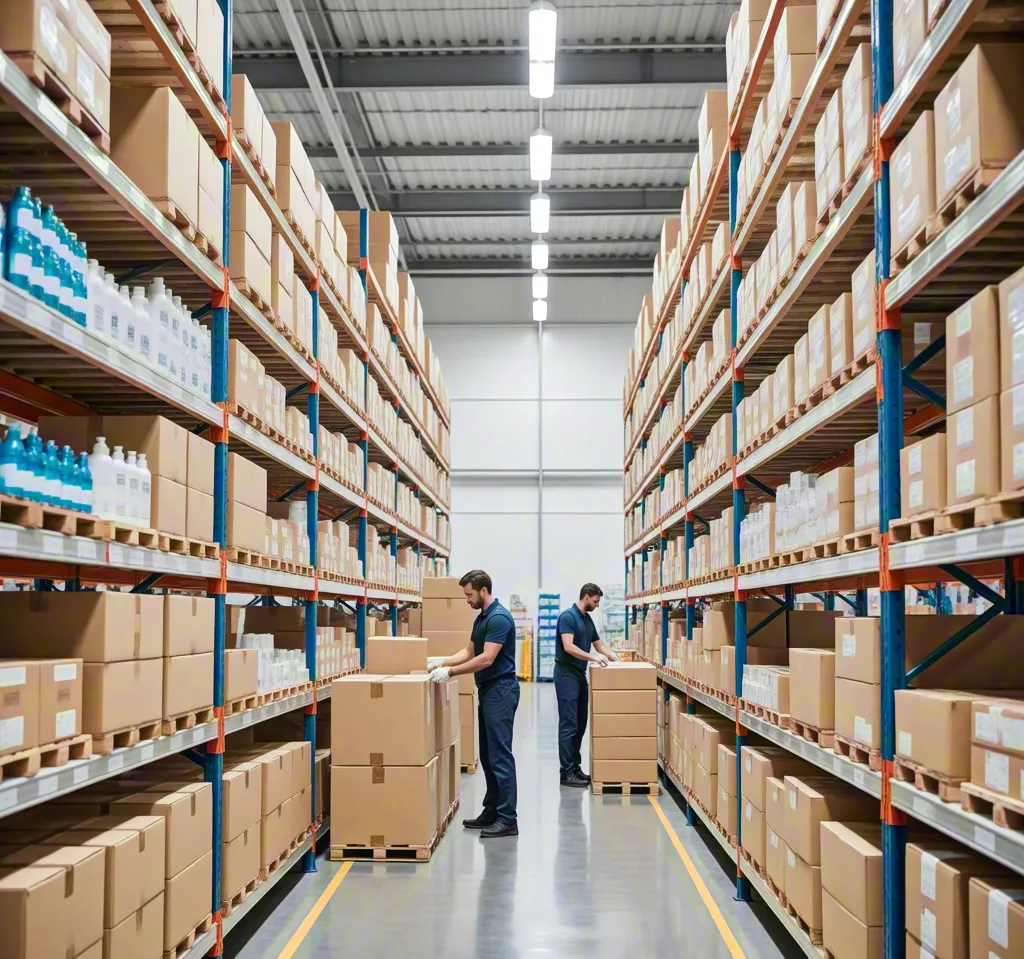
Overseas warehouses are the “universal buffer” to deal with FBA overcrowding and the core support for delay-free diversion, especially suitable for goods that have arrived at the port but cannot enter FBA warehouses. The specific operation is divided into two scenarios: first, “pre-diversion” — for in-transit goods, contact a reliable overseas warehouse in advance and send the goods directly to the overseas warehouse for storage. After the FBA warehouse eases, replenish the goods to FBA in batches from the overseas warehouse to avoid goods being detained at the port or outside the FBA warehouse; second, “emergency diversion” — for goods that have arrived at the port but cannot get an FBA warehouse appointment, immediately contact the freight forwarder to transfer the goods directly from the port to the overseas warehouse. After counting and labeling, flexibly choose to replenish or directly ship from the overseas warehouse according to the FBA warehouse status to maintain Listing activity.
When choosing an overseas warehouse, focus on three core capabilities: first, timeliness — prioritize overseas warehouses close to FBA warehouses to ensure efficient subsequent replenishment; second, services — support fast transfer, label processing, label replacement and other services to avoid long time consumption in intermediate links — when product labels are damaged or information is incorrect, the overseas warehouse can complete the label replacement operation and then resend the goods to the FBA warehouse to activate the inventory; third, compliance — ensure that the overseas warehouse has formal qualifications and can properly handle customs clearance related matters to avoid goods being detained due to inspection. In addition, reserve a small amount of emergency inventory in the overseas warehouse to deal with stockout risks caused by FBA overcrowding, forming an inventory gradient of “30% FBA + 50% overseas warehouse + 20% in-transit” to spread risks.
Step 4: Optimize Logistics and Operation Details to Avoid Delays
Many sellers easily cause secondary delays due to operational mistakes during diversion, which instead aggravates losses. Therefore, pay attention to the following points: first, communicate with the logistics carrier in advance to confirm the diversion plan and timeliness, avoiding goods detention due to poor coordination between carriers — prioritize carriers connected to the ShipTrack system. Such carriers can realize real-time synchronization of shipment tracking, automatically enter tracking numbers, avoid manual filling errors, and also be exempt from performance defects caused by tracking number problems; second, optimize packaging and labels, standardize packaging according to Amazon’s requirements, unify size and weight, prepare pallets and print official labels in advance, avoiding warehouse rejection due to non-compliant packaging and saving warehousing time; third, off-peak operation — avoid peak warehousing periods such as Monday and Thursday, submit shipment plans on weekends or non-peak periods, and avoid popular overcrowded warehouses, choose newly opened warehouses or remote warehouses to reduce the risk of rejection.

Step 5: Conduct Follow-up Review and Long-term Layout to Avoid Overcrowding Risks
FBA warehouse overcrowding is not accidental; it occurs every peak season. Temporary diversion can only solve the current problem. In the long run, it is necessary to establish a resilient inventory management system to cope with it calmly. On the one hand, optimize the stocking strategy, start peak season stocking in advance, avoid the logistics peak after October, replenish goods in batches according to historical sales data and market trends, and avoid sending too many goods at one time to accumulate in the FBA warehouse; at the same time, establish a safety stock model, reasonably plan the stocking quantity combined with sales forecasts, return rates and other factors, avoiding both increased storage fees caused by overstocking and stockouts caused by insufficient stocking.
On the other hand, strengthen supply chain resilience, adopt multi-channel transportation modes, combine sea freight, air freight and land freight, and flexibly choose according to the urgency of goods — prioritize sea freight for large goods to reduce costs, and air freight for urgent goods to ensure timeliness; at the same time, connect to a professional ERP system to real-time monitor warehouse capacity, IPI scores and inventory dynamics, realize visual inventory management, and adjust the shipping direction in a timely manner to take the initiative to divert when a warehouse is close to saturation. In addition, pay attention to changes in Amazon’s policies, respond to policies such as inventory capacity restrictions and storage fee adjustments in a timely manner, operate in compliance, prepare customs clearance documents in advance, and reduce the risk of customs inspection, thereby reducing the impact of overcrowding from the root.
ABout AMZ Shipper
AMZ Shipper has several years of experience for international logistics Freight Forwarding service. Our service is for importer and exporter, foreign freight forwarders, local and abroad business. Export of 1500 of 40HQ per year for FBA Amazon shipping, 15-30tons of air shipments per month.
Member of WCA. Our company is a professional Amazon freight forwarder that specializes in providing comprehensive and efficient services to customers.