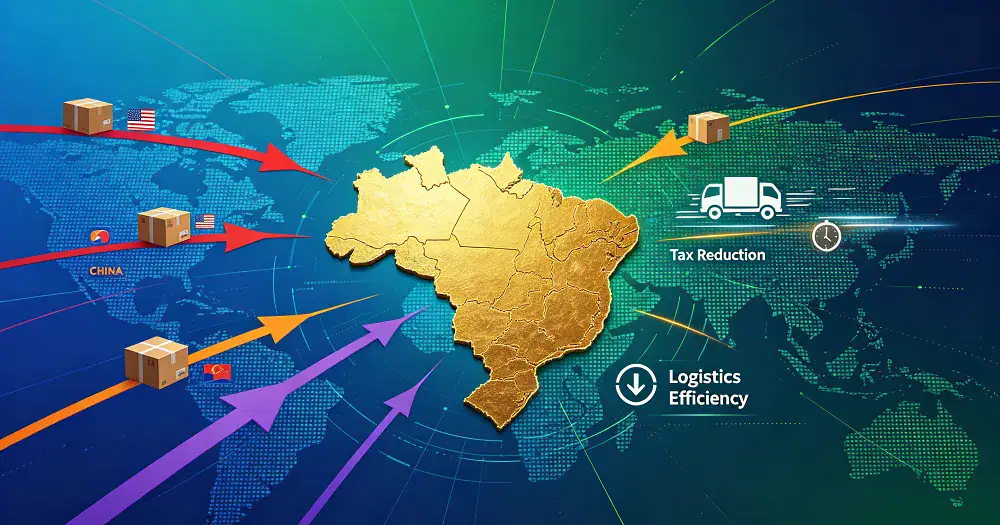
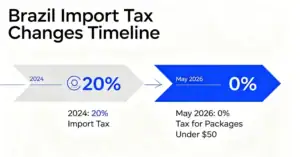
In May 2026, the Brazilian government officially repealed the federal import tax on cross-border packages valued under $50. The new rule took effect immediately after being published in the country’s official gazette.
This change came less than two years after Brazil had started charging a 20% import tax on the same type of shipments back in August 2024.
For sellers shipping to Brazil, this is a meaningful shift in costs. This article breaks down the policy details, what it means for the market, and how logistics strategies need to adjust.
1. Key Policy Details
According to Brazil’s official announcement, here’s what changed:
Federal import tax is gone for low-value packages
Packages worth less than $50, shipped to individuals for personal use, are no longer subject to the 20% federal import duty. That’s the tax that had been squeezing margins for sellers of low-priced goods.
State taxes still apply
The repeal does not mean tax-free entry. Shipments under $50 still have to pay state VAT (ICMS), which ranges from 17% to 20%, plus a few other small federal contributions (PIS/COFINS). In total, buyers still end up paying around 20% in taxes.
Moderate-price items also benefit
For packages between $50 and $3,000, the federal import tax rate dropped from 60% to 30%. That’s good news for sellers offering mid-range products.
Temporary measure – watch for updates
The current policy is valid for 120 days only. After that, Brazil’s Congress needs to review it to decide on a long‑term rule. Sellers should keep an eye on further announcements.
2. Four Major Impacts on Brazil’s Cross-Border E‑Commerce in 2026
Impact 1: Low‑Price Products Get Some Breathing Room
For the past two years, packages under $50 were hit with a combined tax of up to 44.5% (federal + state). That made many $10–$30 items barely profitable.
Now that the federal portion is gone, total tax drops to about 20%. That means sellers can hold onto more margin per unit, and buyers see a lower final price.
Impact 2: Platforms and Carriers Are Adapting Quickly
Amazon Brazil started enforcing the AMIF (Amazon Logistics Import Fee Management) program on April 1, 2026. Under AMIF, Amazon automatically calculates and collects taxes at checkout for all PRC (Postal and Courier) small packages sent to Brazil. Sellers don’t need to handle customs declarations themselves.
AliExpress signed a deal with Brazil’s national postal service to improve last‑mile delivery in remote areas and now runs multiple weekly charter flights to speed up customs clearance.
Platform logistics models compared
| Platform | Logistics Model | Tax Handling | Best For |
|---|---|---|---|
| Amazon Brazil | AMIF (mandatory) | Platform collects & pays; carrier clears customs | PRC direct‑ship sellers |
| AliExpress | Brazil Post + chartered flights | Platform assists clearance | All product categories |
| Mercado Libre | Fulfillment + local 3PL warehouses | Seller arranges or carrier handles DDP | Sellers stocking local inventory |

Impact 3: Overseas Warehousing Demand Shifts
Even though the federal tax is gone, state VAT (ICMS) remains – and it varies by state (17–20%). Shipping products in bulk to a Brazilian warehouse still requires paying taxes at entry, but it gives you faster delivery (1–5 days) and a better customer experience.
Major platforms are investing heavily in local fulfillment. Shopee now has 14 distribution centers in Brazil, including a mega‑warehouse that can process millions of orders daily. Amazon’s FBA in Brazil handles storage, picking, packing, and delivery.
Comparing three logistics models
| Model | Delivery Time | Tax Complexity | Best Use Case |
|---|---|---|---|
| Direct small package (PRC) | 15–30 days | Low (platform handles) | Testing products, low‑inventory items |
| Brazil warehouse (3PL) | 1–5 days | Medium (clear once on entry) | Best‑sellers, repeat‑buy products |
| Platform FBA / official warehouse | 1–3 days | Low (platform manages) | Premium listings, ranking‑sensitive SKUs |
Impact 4: Customs Compliance Is Still Important
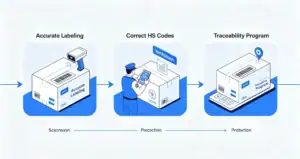
Brazil kept its “Remessa Conforme” traceability program. That means even without the federal tax, sellers still need accurate labeling, correct HS codes, and honest value declarations.
The AMIF program also pushes toward more standardized customs processing – less risk for sellers, but also fewer shortcuts.
3. What Sellers Can Do – Practical Logistics Adjustments
1. Match shipping models to product price ranges
-
Low‑value items (under $30)
Stick with PRC direct shipping. Use a logistics provider that’s part of AMIF or similar compliance programs so customs clearance runs smoothly. -
Mid‑range items ($30–$100)
Try a hybrid approach. Keep best‑sellers in a local Brazilian warehouse for fast delivery and better conversion. Use direct shipping for seasonal or test products to avoid tying up inventory. -
Higher‑value items (over $100)
With federal tax down to 30%, compare sea freight + local warehouse against DDP express options. Look at the per‑unit landed cost.

2. Reduce the tax base by optimizing packaging and freight
ICMS is calculated on “product value + shipping + insurance.” That means lowering the shipping portion directly reduces tax.
-
Use lightweight, space‑saving packaging
-
Compare carrier rates – find the balance between speed and cost
-
Bundle multiple low‑value items into one package to spread shipping cost per unit
3. Watch platform compliance deadlines
Amazon’s AMIF has been mandatory since April 1, 2026. If you sell on Amazon and use PRC shipping:
-
Enable AMIF shipping templates in Seller Central
-
Use approved carriers (e.g., SFC for China‑to‑Brazil)
-
Link your ASINs to the AMIF template
Other platforms have their own compliance rules – ignoring them could mean stuck packages or returns.
4. Use the temporary policy window to test the market
The current tax break is only valid for 120 days. While the rules are clear:
-
Relist SKUs you had paused because of high taxes
-
Increase stock for proven local best‑sellers
-
Make sure your customs paperwork meets Brazil’s traceability standards
5. Set up a simple logistics cost tracking system
Keep a record of every shipment to Brazil. Track these numbers:
-
Shipping cost per package (aim to keep it within a reasonable share of the selling price)
-
Clearance time (from flight arrival to release)
-
Unexpected fees (inspection charges, storage penalties, etc.)
Over time, the data will show you which carriers and routes work best for your specific products.
Brazil’s decision to remove the sub‑$50 import tax stands in contrast to the US and EU, which have been tightening small‑package duty rules. For cross‑border sellers, this is a good moment to re‑evaluate the Brazilian market.
ABout AMZ Shipper
AMZ Shipper has several years of experience for international logistics Freight Forwarding service. Our service is for importer and exporter, foreign freight forwarders, local and abroad business. Export of 1500 of 40HQ per year for FBA Amazon shipping, 15-30tons of air shipments per month.
Member of WCA. Our company is a professional Amazon freight forwarder that specializes in providing comprehensive and efficient services to customers.