The recent tensions around the Strait of Hormuz are still affecting global shipping more than many people realize. Since this area is a major route for oil shipments, any disruption there directly impacts bunker fuel prices. According to industry data, the cost of low‑sulfur bunker fuel has gone up significantly.
For businesses that rely on sea freight, higher fuel costs usually mean higher shipping bills. Shipping lines pass on these increases through fuel surcharges. So, what can you actually do about it if you’re an exporter or an Amazon seller? Based on our experience as an international freight forwarder, here are three practical ways to keep your freight costs under control.

1. Why Does Rising Bunker Fuel Affect Your Freight Bill?
Bunker fuel is one of the biggest operating costs for container ships. When fuel prices climb, shipping lines adjust their Bunker Adjustment Factor (BAF). That’s a standard surcharge that covers fuel cost changes.
Because of the current situation in the Strait of Hormuz, shipping lines are dealing with a few extra challenges:
-
Route changes – Some vessels now take much longer alternative routes (e.g., around the Cape of Good Hope), which burns more fuel.
-
Higher insurance costs – Extra war‑risk insurance makes overall operations more expensive.
-
Disrupted schedules – Port delays and rerouting force lines to spend more fuel just to keep their schedules on track.
All these factors end up in the BAF. So even if the base ocean freight rate doesn’t change much, the fuel‑related part of your total bill can go up noticeably.
2. What’s Actually Different in the Current Shipping Market?
Here’s a quick comparison to give you a clear picture:
| What we look at | Before the disruption | Recently (since tensions increased) |
|---|---|---|
| Route choices | Stable, mostly via Hormuz | Some vessels reroute, longer voyages |
| Bunker fuel price trend | Relatively flat | Clearly higher |
| BAF update frequency | Monthly or quarterly | Weekly or bi‑weekly at some lines |
| Schedule reliability | High | Less predictable due to rerouting |
| Suggested cost strategy | Stick to standard contracts | Actively adjust shipping plans |
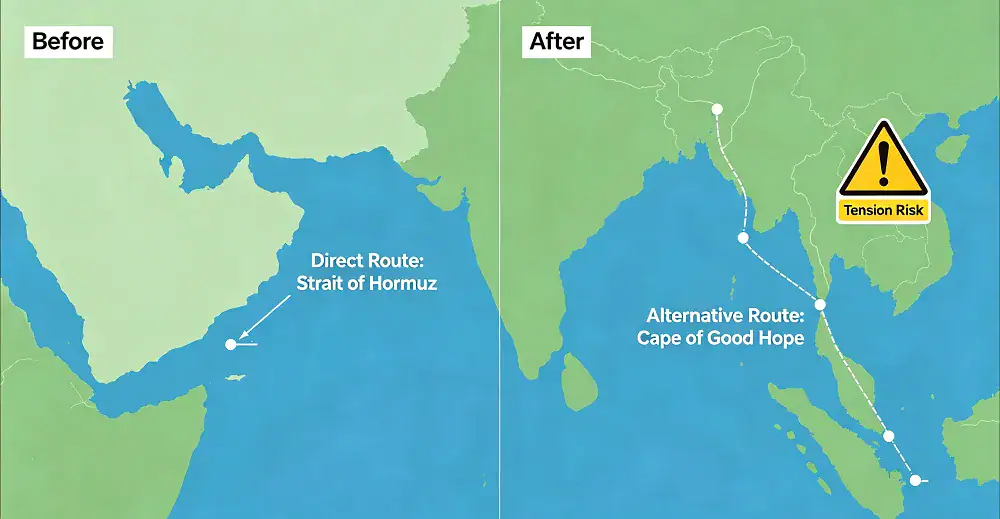
Comparison of direct shipping route via Hormuz vs. longer detour around Africa.
3. Three Actionable Tips to Save on Freight Costs
At AMZ Shipper, we’ve helped our customers navigate many unusual shipping situations. Here’s what we recommend doing right now.
Tip 1 – Review how your cargo is measured, and improve your packaging
Fuel surcharges are often based on either cargo volume (CBM) or weight – whichever is larger. When fuel is expensive, reducing wasted space or weight is the quickest way to lower your total cost.
Try these small changes:
-
Use tighter packaging – as long as your goods remain safe.
-
Cut unnecessary fillers – like oversized bubble wrap or empty space inside boxes.
-
Mix heavy and light items – especially for LCL shipments, to reduce the chargeable weight or volume.
We’ve seen that many sellers pay more simply because their packaging isn’t optimized. A small adjustment can often lower the base that your fuel surcharge is calculated on.

Tip 2 – Be flexible with your shipping route, and use multimodal transport instead of sticking to one direct lane
Right now, choosing the most direct route through the risky area isn’t always the best idea – for cost or reliability. A good freight forwarder can design alternative routes based on your destination, budget, and timeline.
Some examples:
-
To Europe – Instead of going through the Suez Canal, you can ship to a North European port (like Rotterdam or Hamburg) and then use truck or rail to reach Central/Eastern Europe.
-
To the US East Coast – Ship to a West Coast port first (e.g., Los Angeles or Long Beach), then move cargo by rail or truck to the East. This takes a few more days, but fuel surcharges and freight rates are often more stable.
-
Regional consolidation – Combine several small orders into one full container, ship it to a nearby hub port, and then break it down for final delivery.
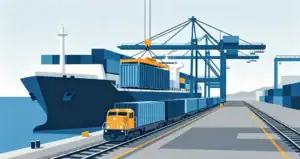
Here’s a simple comparison:
| Comparison point | Direct route (via risk zone) | Alternative route (multimodal) |
|---|---|---|
| Transit time | Shorter | Might be a few days longer |
| Fuel cost impact | Direct, closely tied to BAF | Sea part still has BAF, but rail/truck costs are more stable |
| Complexity | Low | Needs a forwarder with good multimodal capability |
| Best for | Time‑sensitive, fast‑turnover goods | Cost‑sensitive goods with some schedule flexibility |
Tip 3 – Lock in short‑ or medium‑term freight rates to avoid market swings
When fuel prices jump every week, paying spot rates can get stressful. A good freight forwarder can help you set up smarter pricing models with shipping lines.
Options to ask for:
-
Freight cap – An agreed maximum rate. Even if the market goes higher, you won’t pay more. This gives you cost control with very little risk.
-
Short‑term contract – Instead of a full‑year contract or pure spot rates, try a quarterly or monthly deal. It balances flexibility and stability.
-
All‑in pricing – Some forwarders can bundle the base freight and BAF into one fixed number, so you don’t see surprise adjustments.
At AMZ Shipper, we actively recommend one of these approaches based on market trends. We believe a forwarder should help you find a balance between cost control and reliable service – not just pass along every market spike.

4. How to Choose a Freight Forwarder You Can Actually Trust
Freight forwarding is no longer just about booking space on a ship. In a changing market, your forwarder should act like a control tower for your supply chain.
Here’s what to look for:
-
Real operational ability – Do they have their own team, warehouses, and solid carrier relationships?
-
Transparent pricing – Can they clearly explain each cost item, including BAF and terminal handling charges?
-
Quick response – When routes change or surcharges pop up, do they offer alternative plans fast?
-
Experience with your type of business – Have they worked with e‑commerce sellers or small/medium exporters before? Do they know LCL, FCL, and FBA shipments?

ABout AMZ Shipper
AMZ Shipper has several years of experience for international logistics Freight Forwarding service. Our service is for importer and exporter, foreign freight forwarders, local and abroad business. Export of 1500 of 40HQ per year for FBA Amazon shipping, 15-30tons of air shipments per month.
Member of WCA. Our company is a professional Amazon freight forwarder that specializes in providing comprehensive and efficient services to customers.