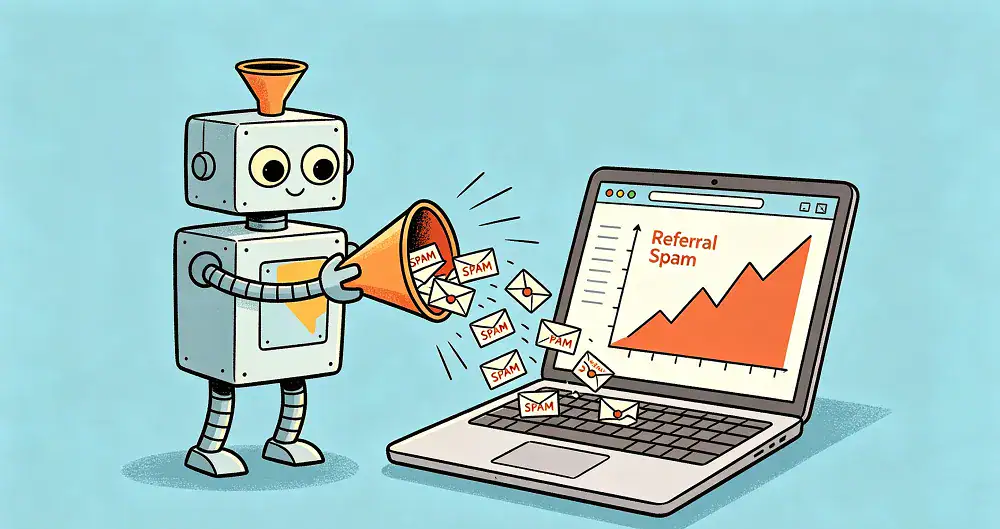
Your freight forwarding website gets dozens of “inquiries” every day. But how many of them actually come from sellers who are ready to ship?
According to Imperva’s 2026 Bad Bot Report, automated bot traffic now makes up a massive chunk of all web traffic. And within that, malicious bot traffic tied to referral spam has grown by 1615% year over year.

Freight forwarding is a prime target. The industry has high order values, and the inquiry process is fairly standardized. That makes it easy for AI bots to attack.
AI today is not just simple crawlers. It can mimic real human behavior – browsing your site, filling out forms, even having basic email conversations. Old methods like IP blacklists or simple CAPTCHAs are no longer enough.
This article breaks down the main types of fake traffic, how they hurt freight forwarders, and a six‑step process you can use to tell real inquiries from fake ones.
1. Three Main Types of AI Fake Traffic
Looking at attack patterns across thousands of B2B websites, three types of fake traffic hit freight forwarders the hardest.

1. Referral spam
Bots visit your site using fake referral URLs. These fake visits mess up your analytics data – things like traffic sources, bounce rate, and time on site lose their meaning. Worse, if you run ads that charge based on referral source or clicks, referral spam can directly eat your budget.
Many freight forwarders use UTM parameters to track campaign performance. Referral spam makes that tracking useless.
2. Lead form bots
This is the one that hurts freight forwarders the most. Bots automatically fill out your “get a quote” or “freight inquiry” forms. The content might be random, or it might mimic a real inquiry – for example, “electronic parts,” “500 kg,” “Shenzhen,” “Jeddah.”
But the contact info they leave is almost always fake: temporary email addresses, deactivated virtual phone numbers, or country codes that don’t match anything real.
3. Click fraud
This targets your Google Ads or Bing Ads campaigns. Malicious bots click on your ads like real users would. Each click burns your budget, and none of them can ever convert into a real customer. For expensive keywords like “China to US LCL shipping,” click fraud is especially painful.
Comparison of three AI fake traffic types
| Type | Main Target | Direct Damage to Forwarders |
|---|---|---|
| Referral spam | Skew analytics data | Wrong marketing decisions; can’t tell real traffic sources |
| Lead form bots | Waste sales & customer service time | Teams chase fake leads; efficiency drops |
| Click fraud | Drain ad budget | Poor ad ROI; customer acquisition cost rises |
2. Why Is Freight Forwarding Such a Big Target?
Freight forwarding has several features that attract malicious bots. First, each potential shipment has high value. Bots cast a wide net – if even a tiny percentage of their fake inquiries get treated as real and get a reply, the attacker wins.
Second, forwarder websites make it easy. Contact info and quote forms are public, easy to scrape, and easy to automate.
Third, the industry is competitive. A small number of bad actors use bots to mess with competitors – for example, exhausting their sales team’s time so they miss real customer inquiries.
3. Four Key Impacts of AI Fake Traffic on Freight Forwarders
Impact 1: Sales and customer service efficiency collapses
Your salespeople and customer service reps have limited time. If your website gets hundreds of inquiries a day and half of them are AI‑generated fakes, your team will spend hours replying to emails, making calls, and verifying info – with zero results.
Over time, this kills team morale. Worse, real customers get delayed responses or get ignored entirely.
Impact 2: Marketing decisions become unreliable
Key metrics like total traffic, conversion rate, and cost per lead get polluted by fake data. If you base your budget allocation, channel optimization, or ad bidding on that polluted data, you’ll make wrong decisions.
Imagine a referral channel shows “high conversion” – but it’s entirely bots. If you put more budget there, you’ll just attract even more fake traffic.
Impact 3: Operating costs go up
You waste payroll on fake inquiries. Some advanced bot inquiries even include malicious links or suspicious attachments – clicking them could create a security problem. Also, if you use a third‑party customer service or CRM system that charges by inquiry volume, fake inquiries will directly increase your software bill.
Impact 4: Brand reputation takes a hit
If you respond slowly to real customers because you’re drowning in fake inquiries – or if your team sounds exhausted and unfriendly – word gets around. In freight forwarding, referrals and word‑of‑mouth are huge. One bad inquiry experience can lose you a customer before you even get a chance to quote.

4. How Forwarders Can Fight Back: A Six‑Step Process
These six steps go from “technical defense” to “human verification.” Freight forwarders should use them for every single inquiry.
Step 1: Make your quote form smarter
Add simple defenses at the form level. Double‑step verification or slider CAPTCHAs stop many basic bots.
A hidden field (honeypot) works well too – add a field that real users can’t see but bots will fill out. If that field gets filled, you can auto‑ignore the inquiry. These methods don’t require extra time from your sales team.
Step 2: Do a quick quality check on the inquiry content
When you get an inquiry, scan it fast.
Signs of a real inquiry usually include:
-
Specific product name or HS code
-
Clear destination port and expected shipping time
-
Specific logistics questions (trucking, customs clearance, insurance)
-
Mentions of whether they have export experience
Signs of an AI‑generated inquiry typically include:
-
Vague language like “can you ship my goods”
-
Not answering your specific questions
-
Talking about something unrelated
-
Weird or obviously fake contact info
Step 3: Verify the contact info
Use simple tools to check.
-
Email domain: Check if it’s a known temporary email service (lists are available online).
-
Phone number: Try calling. Real customers will pick up or call back.
-
Send a verification email requiring a reply. Bots usually can’t handle “understand and respond” tasks.
Step 4: Ask for more specific information
For inquiries that seem suspicious but might still be real, don’t give up immediately. Instead, ask for something concrete:
-
Photos of the goods
-
Purchase order or invoice
-
Exact pickup and delivery addresses
Bots can’t produce real‑world stuff like photos. A real customer might not have it ready, but they’ll give a reasonable explanation or promise to send it later.
Step 5: Try a few rounds of back‑and‑forth
Real customers respond reasonably to professional replies. They’ll ask about price, negotiate, ask about delivery terms, insurance, or timelines.
Bots usually drop off after one or two exchanges. They don’t have real shipping needs, and they can’t handle open‑ended business conversations. Train your team to flag inquiries that still make sense after three rounds – those are high priority.
Step 6: Use technical tools to help
In your analytics tool (like Google Analytics 4), set up filters to exclude known bots and crawlers. That gives you cleaner data for decision‑making.
For forwarders with high traffic volume, consider professional bot management services (like Cloudflare Bot Management). These tools analyze behavior patterns to identify and block malicious bots, cutting down the number of fake inquiries that reach your human team.

Quick checklist: Real inquiry vs. AI fake inquiry
| Dimension | Real Inquiry | AI Fake Inquiry |
|---|---|---|
| Level of detail | Specific product name, HS code, destination port, timing | Vague, templated language; doesn’t answer questions |
| Contact info validity | Normal email domain; phone number works | Temp email, virtual number, wrong format |
| Response to follow‑up requests | Can provide photos/invoice or gives a reasonable excuse | Cannot provide; communication stops |
| Survives multiple exchanges | Keeps asking relevant business questions | Drops off after 1–2 exchanges |
ABout AMZ Shipper
AMZ Shipper has several years of experience for international logistics Freight Forwarding service. Our service is for importer and exporter, foreign freight forwarders, local and abroad business. Export of 1500 of 40HQ per year for FBA Amazon shipping, 15-30tons of air shipments per month.
Member of WCA. Our company is a professional Amazon freight forwarder that specializes in providing comprehensive and efficient services to customers.