

In 2026, an Amazon seller sat down to run the numbers. The same shipment was costing nearly double what it did at the start of the year for the first leg of shipping. The FBA invoice had several new charges he had never seen before. Peak season had not even arrived yet, and storage fees were already going up. By the time he finished the math, his usual double‑digit profit margin was down to almost nothing.
This is not an isolated case. It is the reality facing countless Amazon sellers in 2026. Rising freight costs and Amazon’s fee adjustments are systematically reshaping profit structures. This article breaks down the impact across three dimensions – ocean freight rates, Amazon FBA fees, and hidden costs – and how all of them are eating into Amazon sellers’ margins.
Ocean Freight Rates: Headline Costs Are Nearly Double
The shipping market in 2026 has taught Amazon sellers a lesson about volatility.
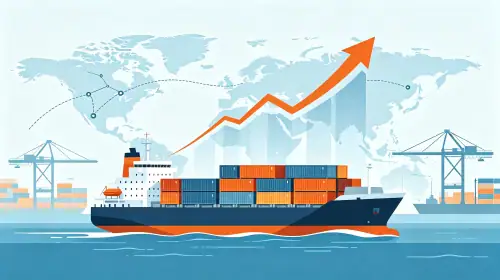
By July 3, 2026, the Shanghai Containerized Freight Index (SCFI) closed at 3,326.87 points – up 77.4% from its yearly low of 1,875.26 on April 24. That marked ten consecutive weeks of gains and a four‑year high. The US West Coast route saw weekly jumps of over 10% multiple times, while the Europe base port rate surged 22.7% in a single month.
Into August, rates stayed elevated. On August 7, the SCFI was at 3,276.14, up 2.19% week‑over‑week for a second straight week. Some carriers quoted FAK rates as high as $11,200 per FEU on the US East Coast route – though actual transactions were around $8,700, still more than double where they were at the start of the year.
Data from Ningbo Customs shows that by late April, a 40‑foot container from Ningbo to the US West Coast cost around $2,900, and about $3,900 to the US East Coast. By late June, West Coast rates were approaching $6,300 and East Coast rates were near $7,500. From late April through June, US‑bound rates nearly doubled. Industry sources report that since mid‑March, major carriers have been adjusting rates every two weeks, with last‑minute bookings extremely difficult and space shortages and rollovers becoming routine.
What does this mean for Amazon sellers?
For sellers shipping from China to FBA, first‑leg freight is a direct cost per unit. A 40‑foot container rate going from $2,900 to $6,300 means an increase of over $3,400 per container. For a container holding 2,000 units, that adds nearly $2 per unit in freight costs. For low‑margin categories selling at $10‑20 per unit, that $2 is essentially the entire profit margin.
And rates keep climbing. In mid‑August, carriers launched another round of increases. Long‑term contract rates on US routes have already absorbed multiple peak‑season surcharges – around $3,000 on the East Coast and $1,500 on the West Coast. Every new increase directly squeezes Amazon sellers’ margins.
Amazon FBA Fees: Three Rounds of Increases, Layered on Top
If ocean freight hits sellers on the “first mile,” FBA fees hit them on the “last mile” and everything in between. In 2026, Amazon made three separate adjustments to FBA fees.
Round 1: January 15 – base fulfilment fees went up
Effective January 15, 2026, Amazon increased FBA base fulfilment fees by an average amount per unit. Amazon’s announcement noted that the total FBA fee per unit sold would increase by a modest amount, with the increase below the average selling price. That sounds small, but for sellers moving thousands of units per month, it adds up quickly. Standard‑size fulfilment fees increased, and large‑item inbound placement fees also went up.
Round 2: April 17 – a 3.5% fuel and logistics surcharge
Effective April 17, 2026, Amazon added a 3.5% fuel and logistics surcharge to FBA fulfilment fees in the US and Canada. This applies to FBA, remote fulfilment, multi‑channel fulfilment, and Buy with Prime. The surcharge is calculated on the fulfilment fee, not the selling price. According to Amazon’s own data, this adds a certain amount per unit on average.
More importantly, there is no end date for this surcharge. It is not a temporary adjustment – it is a permanent addition to every FBA order.
Round 3: October 15 – peak‑season surcharges
From October 15, 2026, through January 14, 2027, Amazon will apply peak‑season surcharges across FBA, remote fulfilment, multi‑channel fulfilment, and Buy with Prime. The average surcharge per unit is a specific amount, but the actual impact varies widely by category. Small standard items like phone cases see a smaller increase. Large standard items like T‑shirts see a larger one. For a 50‑70 pound TV, the per‑unit increase is several times higher.
The cumulative effect of all three increases
Base fulfilment fee increase in January + 3.5% fuel surcharge in April + peak‑season surcharge in October = a year‑over‑year increase in Q4 fulfilment costs that could reach 10‑15%. For a seller moving 10,000 units per month, the peak‑season surcharge alone could add thousands of dollars in costs in a single month, and the fuel surcharge adds even more on top.
And there is a catch: the peak‑season surcharge is triggered when the item leaves the fulfilment centre, not when the order is placed. Even if an order came in before October 15, if it ships after that date, the higher rate still applies. Sellers cannot simply ship early to lock in the standard rate.
Inbound and Storage: The Hidden Cost Black Hole for Amazon Sellers
Beyond shipping and fulfilment, Amazon has added multiple cost increases at the inbound and storage stages.
Inbound placement fees went up
In 2026, Amazon increased inbound placement fees. For standard‑size items using the “single‑point” inbound option, the average fee per unit increased. Large‑item inbound placement fees also went up. Sellers who use the “minimum shipment split” option pay an additional fee per unit; the only way to avoid it is to split shipments across four or more Amazon‑designated fulfilment centres.
Inbound defect fee rules were updated
Undeliverable, delayed, or mis‑routed shipments are now subject to a single inbound defect fee. The cost of incorrect labelling or non‑compliant packaging is now significantly higher.
Long‑term storage surcharges were sharply increased – the change that hurts most
In July 2026, Amazon cut the threshold for long‑term storage surcharges from 365 days to 181 days. Once inventory reaches 181 days of age, surcharges kick in. For inventory older than 365 days, the surcharge can reach as high as 13 times the monthly storage fee.
To put that in perspective: if a product has a monthly storage fee of, say, $10 per unit, once it sits for over a year, the surcharge alone would be $130 per month. In the past, sellers had a high tolerance for slow‑moving inventory – you could keep products in the warehouse for a long time without worrying about extra charges. Under the new rules, “six months and you pay” is the new reality. Many sellers have reported that their overall gross margins have dropped by 7‑10 percentage points as a result.
The Layered Effect: Amazon Seller Margins Are Being Squeezed Systematically
Logistics costs as a percentage of total costs for Amazon sellers have already risen from the previous 25‑30% range to 35‑40%. For some low‑unit‑price products, it is even higher than 50%.

One apparel seller told the media that shipping and logistics now account for over 20% of operating costs. Based on the increases seen in 2026, their net profit margin is expected to decline as a result. The average profit margin for Amazon sellers is around 21%, but some sellers are already making no profit at all. In the three highest‑volume categories for Amazon third‑party sellers – sporting goods, home goods, and consumer goods – reported net profit margins have compressed by 3‑7 percentage points compared to 2025.
Low‑unit‑price sellers are hit hardest. For sellers of $10‑20 home goods and 3C accessories, margins were already thin. After the combination of higher ocean freight, three rounds of FBA increases, and rising advertising costs, margins are being squeezed down to extremely low levels. For low‑value, high‑volume, bulky items, shipping costs alone can account for 30‑50% of the selling price.
Large‑item sellers are also under pressure. For large items that are not enrolled in SIPP (Ships in Product Packaging), if Amazon has to provide packaging assistance, a per‑unit packaging service fee applies. Sellers of furniture, fitness equipment, and pet supplies are seeing their fulfilment costs climb further.
How Amazon Sellers Are Responding to This Cost Surge
Facing higher freight and higher FBA fees on both ends, some Amazon sellers are already adjusting their strategies.
Lock in rates early. The 2‑3 month window before peak season is the critical period for signing rate‑lock agreements. Working with freight forwarders that have long‑term carrier contracts can help hedge against spot‑market volatility.
Optimise inbound plans. Splitting shipments across multiple warehouses can eliminate inbound placement fees. In 2026, Amazon adjusted the weight thresholds that determine split decisions, giving more sellers an opportunity to optimise their inbound setups and reduce costs.
Clear out aged inventory. Identify products with over 150 days of shelf time and take action on slow movers. Inventory over 365 days now incurs storage surcharges of up to 13 times the monthly storage fee – the longer you hold it, the more it costs.
Re‑evaluate your fulfilment model. Some sellers have started shifting slow‑turnover SKUs from FBA to FBM. For large items like furniture and home goods, long‑term reliance on FBA is increasingly costly. More sellers are exploring local overseas warehousing as an alternative.
Re‑run the numbers on every product. Factor in all three rounds of 2026 FBA increases and recalculate your true margin before setting prices or planning promotions.
As a logistics provider focused on cross‑border ecommerce, AMZ Shipper helps Amazon sellers lock in stable freight rates and optimise logistics costs in a volatile market – so you can focus on your products and operations, rather than watching rising shipping costs eat away at your profits.
ABout AMZ Shipper
AMZ Shipper has several years of experience for international logistics Freight Forwarding service. Our service is for importer and exporter, foreign freight forwarders, local and abroad business. Export of 1500 of 40HQ per year for FBA Amazon shipping, 15-30tons of air shipments per month.
Member of WCA. Our company is a professional Amazon freight forwarder that specializes in providing comprehensive and efficient services to customers.