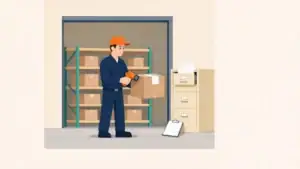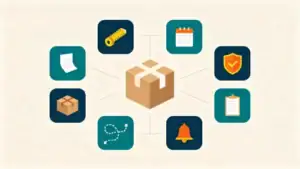
If you’re shipping from China to Amazon for the first time, the biggest challenge with China Amazon FBA Shipping isn’t “not knowing how many shipping methods there are” – it’s “not knowing what you don’t know.”
You might have heard of ocean freight and air freight, and heard of freight forwarders. But you might not know that shipments must be created in Seller Central first, that labels must be applied at origin, or that warehouse deliveries need an appointment. These are things very few people can get straight in their head before actually doing it.
China Amazon FBA Shipping – often called “FBA head haul” – is the process of moving goods from their origin in China to an Amazon FBA warehouse in the destination country by sea, air, or express courier. Over 82% of active Amazon sellers use FBA, and understanding the full China Amazon FBA Shipping process is essential for any seller based in China.
One key thing to understand: China Amazon FBA Shipping isn’t as simple as “find a forwarder and ship it out.” It involves shipment creation, labeling, packaging, export customs, import clearance, and delivery appointments. If any one of these steps goes wrong, your goods can get stuck or rejected.
1. Why China Amazon FBA Shipping Is Different in 2026
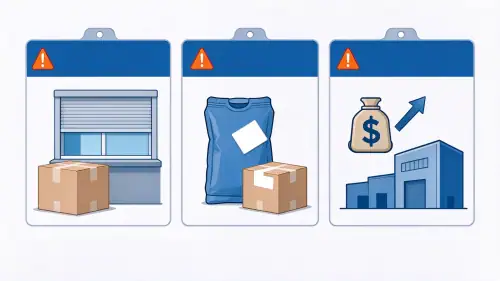
Three changes in 2026 mean first-time sellers need to rethink the process.
Change 1: FBA prep and labeling services are completely gone
Ended for US sites on January 1, 2026, and for European sites on July 1, 2026. Previously, new sellers could send unpackaged goods to the warehouse and let Amazon handle labeling – that’s no longer an option. All goods must be labeled and compliantly packaged before reaching the Amazon FBA warehouse. Non-compliant shipments will be rejected outright, with no compensation.
Change 2: New FNSKU label rules
As of March 31, 2026, non-brand-registered sellers must use FNSKU labels. Manufacturer barcodes are no longer accepted.
Change 3: Inbound defect fees have shot up
Fines for labeling errors, oversized cartons, and missing tracking info have increased significantly. For new sellers, the “just ship it and hope for the best” approach carries more risk than ever.
2. The 7 Steps of China Amazon FBA Shipping
Here’s the seven-step process for your first shipment, in order.
Step 1 – Supplier preparation and product compliance
Confirm your products meet the destination country’s certification requirements (US: FCC/CPC/FDA; Europe: CE/UKCA). Confirm packaging and labeling requirements with your supplier – give them a visual guide. Make sure “MADE IN CHINA” is marked on every carton.
Step 2 – Create the shipment plan in Seller Central
Log in to Seller Central, go to Inventory → Manage Inventory, select the SKUs you’re shipping, and enter the Send to Amazon workflow. Enter the quantity and ship-from address, and the system assigns a destination FBA warehouse. Record the SHIPMENT ID.
Step 3 – Generate and apply labels
Download FNSKU and carton labels, send them to your supplier or forwarder, and apply them at origin. Each sellable unit needs an FNSKU label; each carton needs at least two FBA box labels.
Step 4 – Choose a shipping method and book space
Based on volume and urgency, choose ocean, air, or express, and contact your forwarder to book space. During peak season, book at least 7 days ahead.
Step 5 – Export customs clearance
Prepare the commercial invoice, packing list, and customs declaration authorisation letter, and complete China customs declaration. Sensitive categories need MSDS, UN38.3, and other documents in advance.
Step 6 – Import customs clearance
Complete destination customs declaration, and handle ISF filing (US, must be submitted 24 hours before vessel departure) or ENS filing (Europe). The importer information on customs documents must match the legal entity registered with your Amazon store.
Step 7 – Last-mile delivery and warehouse receiving
The forwarder books a delivery appointment through Carrier Central and delivers to the FBA warehouse. Shipment status will move from “In Transit” to “Delivered” to “Receiving.”
3. How to Choose a China Amazon FBA Shipping Method
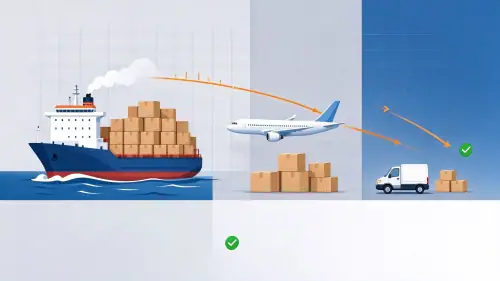
The most common confusion for new sellers is “which shipping method should I pick?” Here’s a simplified framework.
| Shipping Method | Door-to-Door Transit Time | Best for New Sellers |
|---|---|---|
| Ocean FCL | 25-35 days | Large volumes, not urgent, cost priority |
| Ocean LCL | 25-40 days | Medium volumes, first test run |
| Air Freight | 7-12 days | High-value lightweight goods, emergency restocks |
| Express | 3-7 days | Small batch testing, samples |
A suggestion for new sellers: test with a small batch first. Don’t start with a full container. Use ocean LCL or air freight for a small batch, get the process running smoothly, then scale up. Getting the process right matters more than saving on freight.
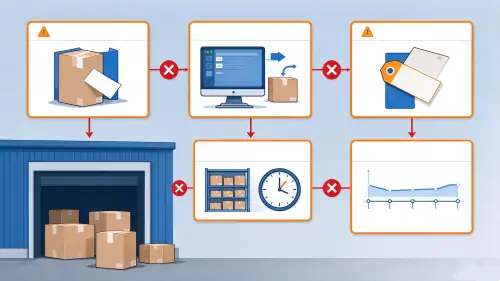
4. Common Mistakes First-Time Sellers Make with China Amazon FBA Shipping
Here are the mistakes new sellers make most often, in the order they tend to happen.
Mistake 1: Assuming your supplier understands FBA requirements
Suppliers do manufacturing, not FBA logistics. You must provide a visual labeling guide and ask for photos before the boxes are sealed.
Mistake 2: Forgetting to create the shipment in Seller Central
All FBA shipments must be created in Seller Central first. Skip this step and ship directly, and your goods will be rejected at the warehouse door.
Mistake 3: Labels not applied properly at origin
After FBA prep services ended in 2026, labels must be applied at origin. Get them wrong, and it’s rejection or defect fees.
Mistake 4: Forgetting warehouse receiving time
Goods arriving at the FBA warehouse doesn’t mean they’re sellable. From Checked In to Receiving can take 2-10 days, during which inventory isn’t available.
Mistake 5: No safety buffer
Shipping on the tightest timeline means any small delay causes a stockout. Leave at least 7-14 days of buffer.
5. What to Prepare Before China Amazon FBA Shipping
Here’s a pre-shipment checklist for new sellers.
Product side
-
Confirm product certification requirements
-
Confirm the product matches the listing
-
Confirm “MADE IN CHINA” is on every carton
Platform side
-
Complete Amazon account registration
-
Confirm whether brand registry is needed
-
Create the shipment plan in Seller Central
-
Download FNSKU and carton labels
Logistics side
-
Choose a shipping method
-
Contact a forwarder to book space
-
Confirm whether the forwarder handles delivery appointments
-
Confirm whose IOR is used for customs clearance
Documents side
-
Commercial invoice
-
Packing list
-
Customs declaration authorisation letter
-
Product compliance documents
6. How New Sellers Should Choose a China Amazon FBA Shipping Partner
Don’t pick a logistics partner based on price alone.
Ask five specific questions:
-
Where do FNSKU labels go? What size?
-
What are the carton weight and side limits for US sites?
-
Do you handle Carrier Central delivery appointments?
-
After FBA prep services ended in 2026, how do you handle labeling?
-
Do you clear customs using your own IOR?
Test with a small shipment first: don’t hand all your inventory to a new forwarder right away. Send a small batch first – see if communication is smooth, whether the final bill matches the quote, whether transit times hold up, and whether the goods get into the warehouse without issues. Once it runs smoothly, scale up.
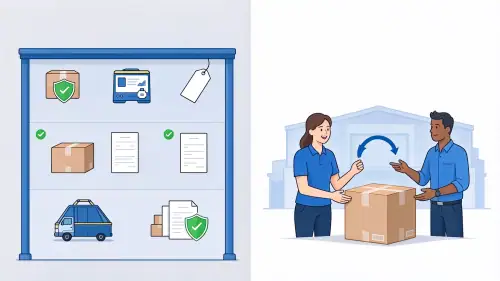
7. China Amazon FBA Shipping Quick Reference for First-Timers
| Stage | Check Items | Key Reminder |
|---|---|---|
| Product and compliance | Certifications, packaging, origin marking | Confirm before shipping |
| Seller Central | Shipment creation, label download | Must be done first |
| Packaging and labeling | FNSKU, carton labels, box limits | Apply at origin |
| Documents and customs | Invoice, packing list, ISF/ENS | IOR information must match |
| Shipping and delivery | Booking, appointment, tracking number | Book appointments early |
| After delivery | Receiving status, quantities | Check promptly |
8. What First-Time Sellers Should Expect from China Amazon FBA Shipping
Some realistic expectations to avoid unnecessary anxiety.
Transit times aren’t precise
Door-to-door time is a range, not a fixed number. Customs inspections, weather, and port congestion can all affect it.
Warehouse receiving takes time
Goods arriving at the FBA warehouse doesn’t mean they’re immediately sellable. From Checked In to Receiving can take several days, and longer during peak season.
Your first shipment won’t be perfect
There will always be small issues the first time. What matters is getting the process running and building experience. Don’t let one small mistake make you doubt the whole approach.
Don’t overcomplicate China Amazon FBA Shipping – but don’t oversimplify it either
It’s a systematic process with fixed steps. Follow the seven steps, avoid the common mistakes, and choose the right partners – and your goods will go from a Chinese factory to the FBA shelf without a hitch.
Choosing a logistics partner who knows FBA rules and explains costs clearly is the key to getting your first China Amazon FBA Shipping right. For example, AMZ Shipper focuses on cross-border logistics for Amazon sellers, offering support across origin labeling coordination, destination clearance, and last-mile delivery. But whoever you choose, the key is finding a team that knows the full China Amazon FBA Shipping process and is willing to go through every item with you before you ship.
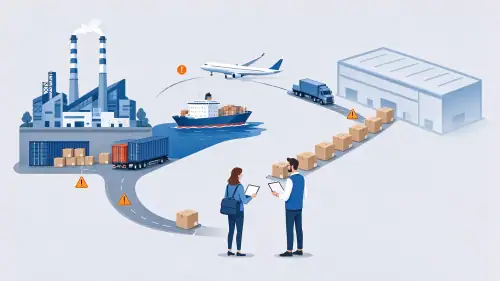
In 2026, China Amazon FBA Shipping has shifted from “moving boxes” to “getting boxes in compliantly.” Your first shipment doesn’t need to be perfect, but the key steps need to be right. Walk through the seven steps, avoid the common mistakes, and choose the right logistics partner – do these three things, and your first shipment will make it into the warehouse smoothly.