
Selling furniture to the US is tough, and logistics is where things go wrong most often. A three-seat sofa rejected by UPS, a batch of solid wood dining tables sent back by Amazon because the pallets weren’t right, an outdoor furniture set stuck at port for two weeks due to incomplete customs documents — if you sell oversized furniture, these scenes probably sound familiar.
Unlike standard-sized products, oversized furniture involves way more steps: factory packing, export customs clearance, ocean booking, US customs clearance, last-mile trucking, and Amazon warehouse appointment booking. Every step has its own rules and risks. As of November 13, 2026, this article pulls together the latest Amazon policies and US customs requirements to give furniture sellers a practical logistics plan.
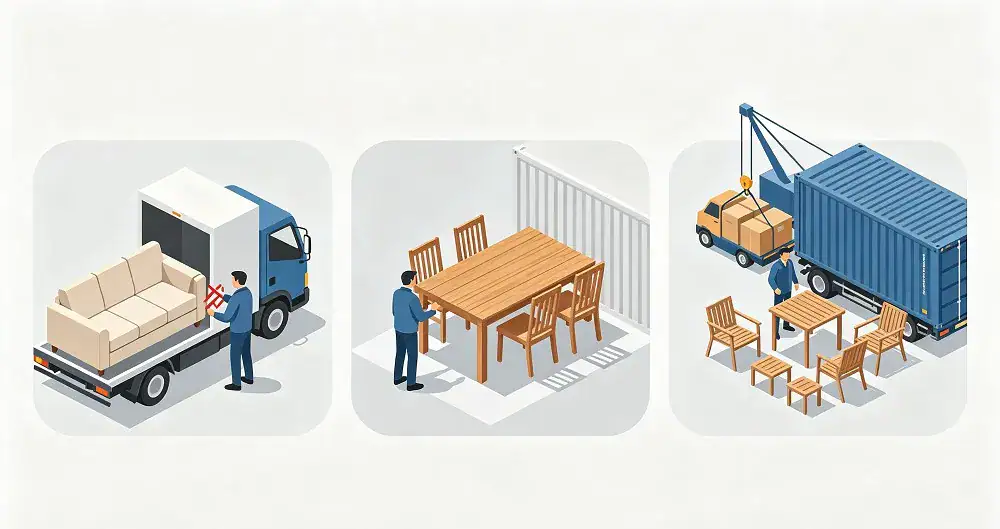
1. First Thing First: What Counts as “Oversized” on Amazon?
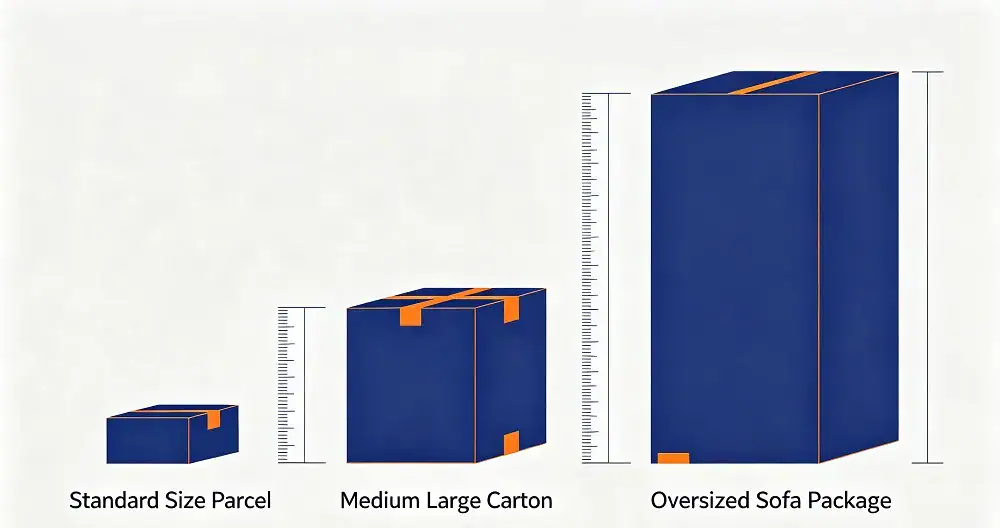
Many sellers only realize their products are classified as “large” or “oversized” when they’re creating an FBA shipment — and by then, the logistics costs and handling requirements are completely different. Amazon US has clear size tiers:
Standard size: Longest side ≤18 inches, median side ≤14 inches, shortest side ≤8 inches, and weight ≤20 lbs. This is the most common FBA category and the easiest to handle.
Large items: Products that exceed standard size but still fit within certain limits. According to Amazon’s official info, FBA in the US has handled items weighing up to 590 kg.
Oversized: Generally refers to items with a longest side over 108 inches, or length + girth over 165 inches, or single-item weight over 150 lbs. These need to go through dedicated AMXL warehouses.
One thing worth noting: since July 31, 2026, Amazon US AWD no longer accepts large items — only standard-size products. This means oversized furniture sellers need to create FBA shipments directly or look at GWD as an alternative.
2. Palletizing and Labeling: The First Hurdle
The most common reason oversized furniture gets rejected at the warehouse isn’t the product itself — it’s poor palletizing and labeling.
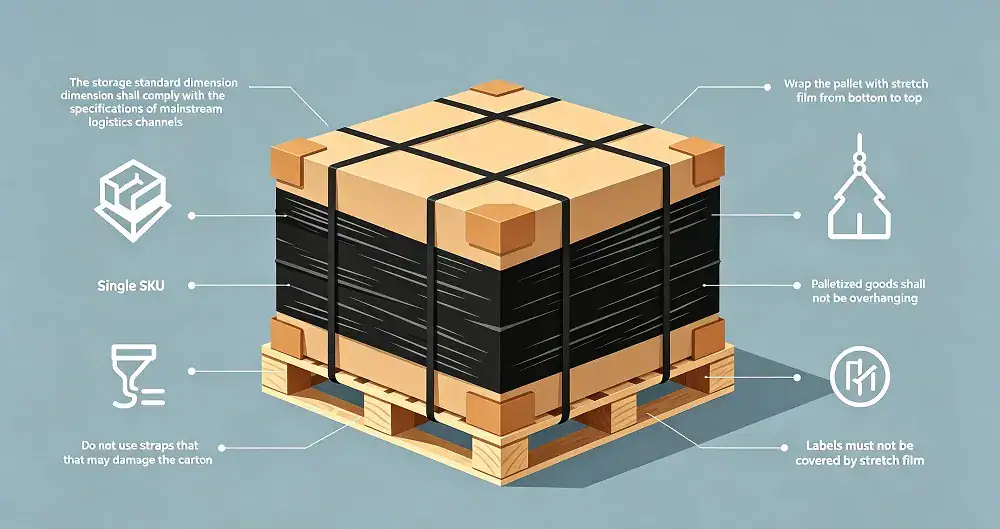
Pallet standard: You must use 48×40 inch GMA standard pallets. This is the standard size in US logistics, and Amazon warehouse forklifts and shelving are designed around it. Non-standard pallets can’t be put away and may be rejected outright.
Stacking rules: Oversized items must be palletized individually — no mixed SKUs. Many sellers try to save pallet space by putting different SKUs on one pallet, but Amazon will flag this as non-compliant. The right way: one SKU per pallet, centered weight, nothing hanging over the edges.
Reinforcement details: Furniture is often irregularly shaped, so you need heavy-duty stretch wrap to hold everything together. For pieces with sharp corners or fragile parts, add wood supports or corner protectors. Items over 23 kg need a “Team Lift” label; over 45 kg need a “Mech Lift” label.
FNSKU labels: Labels must be scannable and not covered by stretch film. After palletizing, it’s a good idea to put an extra shipment label on the outside of the pallet so the warehouse can identify it quickly.
3. Ocean Freight: FCL or LCL?
For oversized furniture, ocean freight is basically the only viable option. Air freight is too expensive, and express channels have strict limits on large items.
Full Container Load (FCL) works best for bulk stocking. Take a 40HQ from Shanghai or Shenzhen to Los Angeles — fast boat transit is about 12-18 days. The advantages: the container stays sealed the whole way, reducing damage risk; customs clearance is handled per container, which is more efficient; and the per-unit cost is the lowest.
Less than Container Load (LCL) suits smaller batches or product testing. You only pay for the volume you use, which is more flexible. But keep in mind: LCL cargo needs to be consolidated at the origin port, so transit is usually 3-7 days longer than FCL. After deconsolidation at the destination, your goods may be mixed with other sellers’ cargo, which raises damage risk a bit.
A special note for furniture: Furniture is bulky and heavy, so cost differences are obvious when billing by volume. Take a three-seat sofa — if it’s designed to be knock-down and flat-packed, volume can be cut by 30%-50%, which directly lowers ocean freight costs. It’s worth thinking about logistics-friendliness at the product design stage.
4. Last-Mile Delivery: Why Not Express?
This is a trap many new sellers fall into. After furniture arrives at a US port, if you choose UPS or FedEx for delivery, there’s a good chance it gets rejected.
Express channel limits: UPS and FedEx have clear size and weight limits per package. Generally, packages over 150 lbs or with a longest side over 108 inches will be refused or hit with hefty surcharges. Even if they accept it, the surcharge can exceed the freight itself.
The right approach is LTL or FTL trucking:
LTL (Less than Truckload): Good for delivering multiple pieces that don’t fill a whole truck. Goods must be palletized, and carriers bill by pallet count and weight. Note that LTL comes with several accessorial charges: liftgate, appointment, residential delivery, etc. These are easy to overlook when quoting but do show up in practice.
FTL (Full Truckload): Good for large volumes, direct to the Amazon warehouse. More consistent transit times, lower damage risk, but you need enough cargo to fill a truck for it to make sense.
AMXL warehouse appointments: The real challenge with oversized inbound is booking. AMXL warehouses have limited dock capacity, and during peak season you may need to lock in an appointment 1-2 weeks ahead. It’s best to work with a logistics provider that has a US-based team tracking the appointment system in real time, so you don’t get stuck with truck waiting fees.

5. Compliance and Customs: Special Landmines for Furniture
Furniture customs clearance involves several regulatory requirements. One misstep and your goods can be held or returned.
LACEY Act Declaration for Wood Furniture
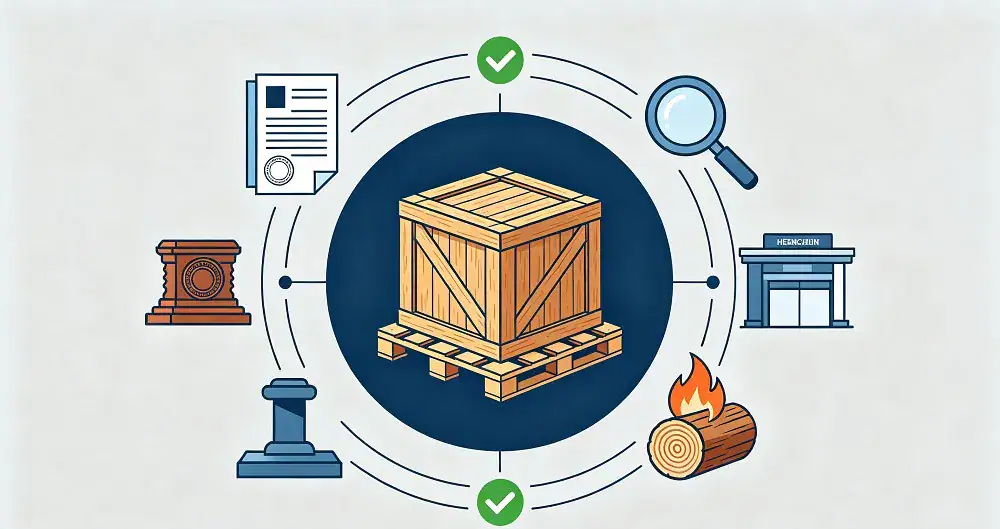
The US LACEY Act requires importers of wood products to declare the species, harvest country, quantity, and value of the wood. This covers most wood furniture. Declarations must be submitted through the ACE system in advance, including: genus and species name, harvest country, value, quantity, and manufacturer info. Incomplete or inaccurate declarations can lead to fines or even criminal penalties.
ISPM 15 Wood Packaging Requirements
All solid wood packaging materials over 6mm thick — including pallets, crates, and dunnage — must be treated to ISPM 15 standards and carry the IPPC mark.
An important 2026 change: Starting January 1, 2026, USDA APHIS is reinstating the “hyphen” rule for IPPC stamps. There must be a hyphen between the country code and producer number (e.g., CN-001). Missing this hyphen can result in the entire container being returned.
| Treatment Method | Key Requirement | Mark Code |
|---|---|---|
| Heat Treatment (HT) | Wood core temp ≥56°C for 30 minutes | HT |
| Methyl Bromide (MB) | Fumigation for 16+ hours | MB |
| Dielectric Heating (DH) | 60°C for 1 minute | DH |
Important note: Plywood, particleboard, and fiberboard are exempt from ISPM 15 because their manufacturing process already involves high heat and pressure. If your furniture uses these materials, note it in the packaging description to avoid unnecessary fumigation costs.
Tariff and Anti-Dumping Risks
The tariff environment for furniture is complicated. Besides the base MFN tariff, there may be Section 301 tariffs and anti-dumping/countervailing duties stacked on top.
Key anti-dumping categories: As of July 2026, the US anti-dumping order on Chinese wooden bedroom furniture is still in effect, with a relatively high China-wide rate and lower individual rates for some companies. Wooden cabinets and vanities also face anti-dumping and countervailing duty orders, covering assembled and unassembled products, including flat-packed RTA furniture.
Compliance advice: Before purchasing, verify your supplier’s product HS code and whether it falls under an anti-dumping order. If it does, confirm whether the supplier has individual rate eligibility — otherwise you may face a higher deposit requirement.
6. Cost Optimization: Storage Fees and Packaging Strategy
Peak Season Storage Fees
Amazon FBA monthly storage fees jump significantly during peak season (October-December). Based on 2026 rates, oversized item storage during peak season is about 2.5 times the regular rate.
This means if inventory isn’t sold before October, holding costs go up noticeably. Furniture sellers should start planning inventory clearance in late Q3 to avoid large amounts sitting in FBA warehouses during peak season.
For items aged over 181 days, Amazon adds an aged inventory surcharge. This fee increases by age tier, so long-term unsold inventory keeps generating costs.
Lighter Packaging and Volume Optimization
Furniture logistics costs are directly tied to volume. These strategies can effectively reduce freight:
Knock-down design: Design sofas, bed frames, dining tables, etc. as knock-down structures with flat packing. This not only compresses volume but also reduces damage risk in transit.
Material substitution: For non-load-bearing parts, consider lighter materials. For example, replacing some solid wood structure with honeycomb cardboard — lighter but still strong.
Packaging consolidation: Combine multiple parts of the same order into one package to reduce package count and handling steps.
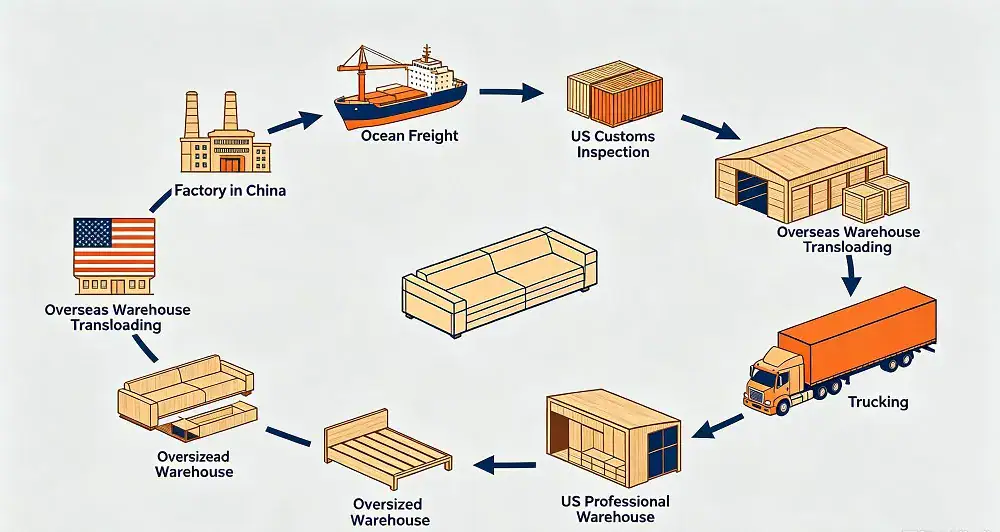
7. AMZ Shipper’s Oversized Logistics Solution
For the specific needs of oversized furniture sellers, AMZ Shipper provides end-to-end service from China factory to US AMXL warehouse:
Ocean freight: Partnerships with multiple carriers, offering FCL and LCL options. Stable transit times on US West Coast fast boats, with guaranteed space during peak season.
US customs clearance: Real IOR credentials, familiar with LACEY Act declarations and ISPM 15 requirements for furniture. For anti-dumping categories, we can help verify supplier qualifications and rates.
Last-mile trucking: US-based team handles LTL/FTL delivery, familiar with appointment rules and dock requirements at major AMXL warehouses.
Overseas warehouse transloading: Warehouses in Los Angeles and other key hubs support transloading, labeling, pallet reinforcement, and drop-shipping.
For oversized furniture sellers, logistics isn’t just a “shipping” action — it’s a system that needs careful operation. From packaging optimization at the product design stage, to compliant declarations during customs clearance, to timing control for warehouse appointments, every step affects final logistics costs and inbound success rates. Choosing a logistics partner with experience and local capabilities makes this whole chain run a lot smoother.