
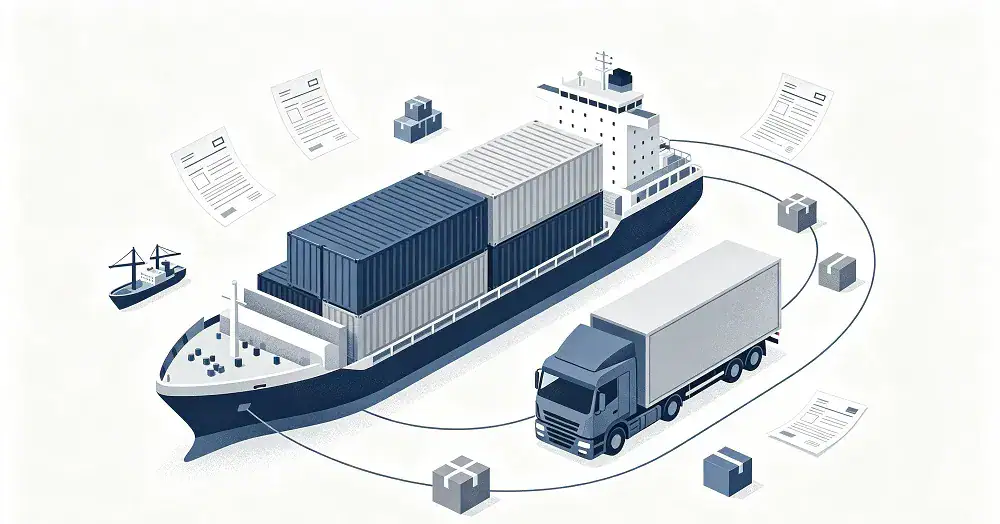
Have you ever received a freight bill that was way higher than the initial quote? This happens to quite a few cross-border sellers. You get a quote that looks reasonable, your goods ship out, and then—surprise—a bunch of extra charges show up on the final bill. When you add everything up, your logistics costs have eaten way deeper into your margins than you expected.
This isn’t rare. In the freight forwarding world, it’s almost become an unspoken rule: lure clients in with a low base rate, then make up the profit through various add-on fees. A cheap-looking quote often comes with plenty of costs that were never spelled out upfront.
Below, we’re breaking down the five most overlooked fee categories. Whether you’re a smaller seller just getting started or a more established business shipping regularly, knowing these points will help you ask better questions and stop leaving money on the table.
Why Your Final Bill Often Exceeds the Quote
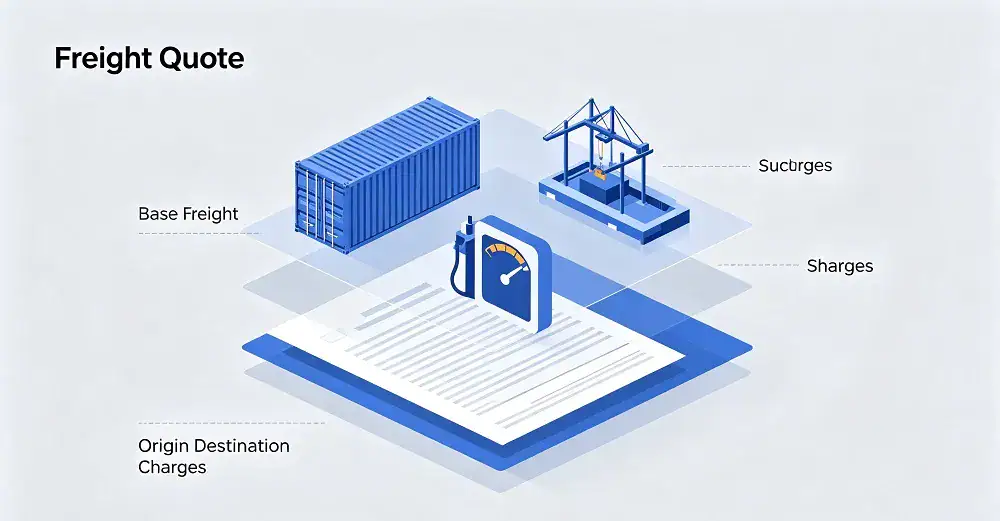
To get why this happens, you first need to understand how a freight quote is typically built. A standard ocean freight quote usually includes three parts:
-
Base Freight – the core shipping cost from origin port to destination port. This is the big, obvious number on the quote.
-
Surcharges – extra fees tied to fuel price swings, exchange rate changes, seasonal demand spikes, and similar external factors.
-
Origin & Destination Charges – local fees like terminal handling, documentation, and customs brokerage at both ends.
The trouble usually hides in the second and third categories. Many quotes only spell out the base rate and a few surcharges, while glossing over local port fees and destination-side costs. By the time your cargo arrives, those unmentioned charges start piling up—and your final bill balloons.
Here’s the thing: a quote’s transparency matters way more than the bottom-line number. A truly transparent quote itemizes every single charge, rather than hiding behind a vague “all-in” price.
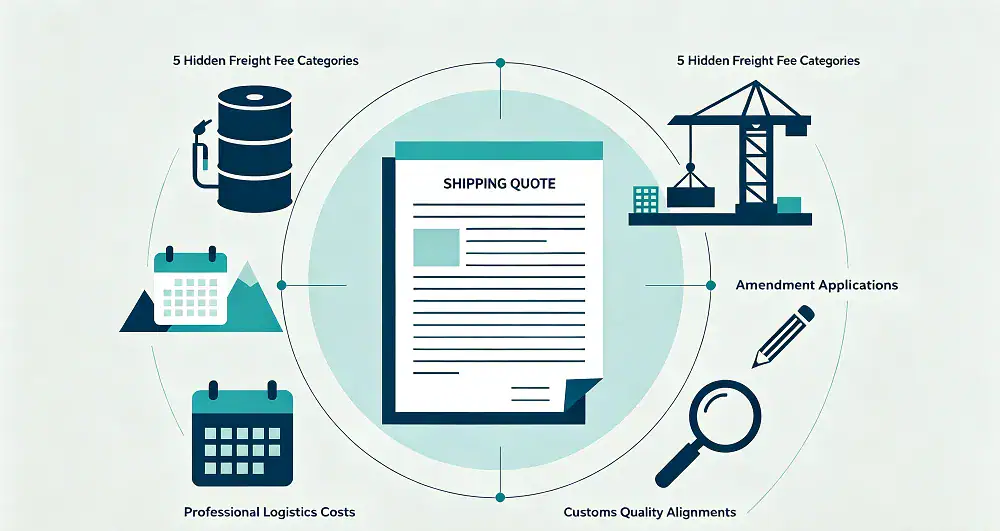
5 Hidden Fees You Must Ask About
1. Fuel Surcharges and Floating Add-Ons (BAF / CAF / PSS)
This is the most common type of extra charge you’ll run into. The Bunker Adjustment Factor (BAF) moves with global fuel prices—when oil goes up, so does this fee. The Peak Season Surcharge (PSS) typically kicks in during high-demand periods (think Prime Day or Black Friday) when shipping capacity gets tight. The Currency Adjustment Factor (CAF) compensates for exchange rate fluctuations and still applies on certain routes.
What to ask when getting a quote:
-
Does this quote include all current fuel and peak season surcharges?
-
If not, how are they calculated? Is there a cap?
-
How long is this quote valid? If surcharges change before my cargo ships, how will I be notified?
2. Origin and Destination Charges (THC / Customs Clearance / Documentation)
The Terminal Handling Charge (THC) covers loading and unloading at both ports, and rates vary by carrier. The documentation fee is usually charged per bill of lading and covers administrative costs. Customs clearance fees depend on how complex your shipment’s declaration is.
These charges aren’t huge individually, but when they all show up unannounced on your final bill, they add up fast.
What to ask:
-
Can you provide a line-by-line breakdown of all port charges at both origin and destination?
-
Does the customs clearance fee cover all routine declaration items? Does it include the broker’s service fee?
-
How is the documentation fee calculated? Is there a difference between electronic and paper documents?
3. Demurrage and Detention Charges
These are probably the most overlooked fees—and they can generate some of the biggest surprises. Here’s the difference:
-
Demurrage – charged when an import container stays in the terminal or yard beyond the free period. The standard free time is usually 3 to 7 days, and the daily rate after that can get quite steep.
-
Detention – charged when you pick up a loaded container but don’t return the empty one within the free time allowance.
Both fees depend on the port, the carrier, and the specific free time negotiated. And things like port congestion or customs delays can easily push you over the limit.
What to ask:
-
How many free days do I get at both origin and destination?
-
What’s the daily rate for demurrage and detention after the free period? Is it a tiered structure?
-
If delays happen due to customs inspections or port congestion, can I request an extension or waiver?
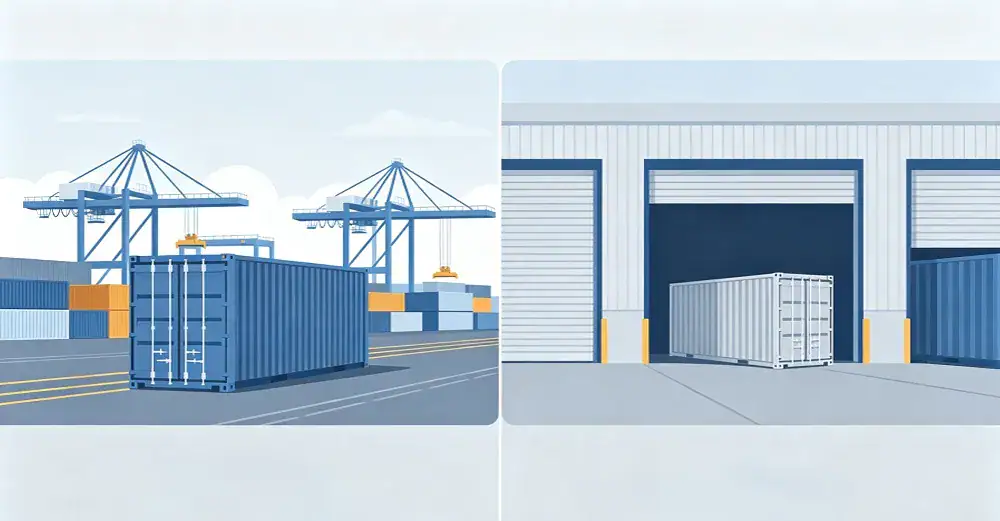
Here’s a quick comparison to keep handy:
| Aspect | Demurrage | Detention |
|---|---|---|
| When it applies | Container stays in the terminal/yard too long | You keep the container outside the terminal too long |
| Container status | Loaded (full) | Empty (after unloading) |
| Where it applies | Inside the terminal or yard | Outside the terminal (e.g., at your warehouse or factory) |
4. Customs Examination Fees
Customs inspections are just part of international shipping—you can’t fully avoid them. When your shipment gets pulled for exam, a few extra charges pop up: exam service fees, stripping and restuffing fees, new seal charges, and so on. The total depends on how complex the exam gets.
The key question: who foots the bill? Some forwarders leave this out of their quotes or assume the shipper pays, without ever mentioning it upfront.
What to ask:
-
If my cargo gets examined by customs, who covers the cost? What specific charges should I expect?
-
Does the forwarder help prepare the documents needed for the exam? Is there someone assigned to coordinate?
5. Amendment and Change Fees
Things change mid-shipment sometimes—and changes usually cost money. You might need to amend the bill of lading, update consignee info, or change the destination port. Each adjustment can trigger separate administrative fees.
What to ask:
-
If I need to amend details before the cutoff time, is there a charge? How much?
-
When’s the cutoff? Can I still make changes after that?
-
Do you charge differently for changes initiated by me versus changes caused by the carrier?
How to Get a Truly Transparent Quote
Now that you know the five fee hotspots, here’s how to put that knowledge into practice:
-
Give complete cargo info upfront – product name, HS code, dimensions, weight, packaging, and full addresses for both pickup and delivery. More detail = more accurate quotes.
-
Clarify the Incoterm – confirm whether your quote is based on FOB, CIF, DDP, or another term. Different terms shift costs to different parties.
-
Ask for an itemized written quote – don’t settle for verbal numbers or vague “all-in” promises. A written quote should spell out every line item with its description, amount, and basis.
-
Ask the final question – before you confirm anything, ask directly: “Other than what’s listed here, will anything else show up on my final bill?”

How AMZ Shipper Keeps Costs Clear and Transparent
AMZ Shipper recently revamped our service structure, with a core focus on solving sellers’ concerns about fee transparency.
-
Itemized written quotes – every quote clearly breaks down ocean freight, clearance fees, destination trucking, and optional services. Unless you change your cargo type or shipping terms, your final bill won’t include any charges that weren’t on the original quote.
-
Standardized pricing – for FBA prep services like labeling, packing, and assembly, we provide clear rate sheets based on SKU type and complexity, so you can estimate costs precisely before shipping.
-
A reliable global network – as a WCA (World Cargo Alliance) member, AMZ Shipper works with trusted partners worldwide to anticipate and avoid hidden costs like destination demurrage.
-
Responsive, transparent communication – our support team covers both US and China time zones, and we respond to client inquiries within 4 hours. Every shipment gets a dedicated account manager who sends regular status updates.
ABout AMZ Shipper
AMZ Shipper has several years of experience for international logistics Freight Forwarding service. Our service is for importer and exporter, foreign freight forwarders, local and abroad business. Export of 1500 of 40HQ per year for FBA Amazon shipping, 15-30 tons of air shipments per month.
Member of WCA. Our company is a professional Amazon freight forwarder that specializes in providing comprehensive and efficient services to customers.


