We’re now less than three weeks away from Black Friday and Cyber Monday (November 27–30, 2026). If you haven’t finished your holiday inventory planning yet, this is probably the most stressful time of the year for you.
Let’s be honest – most sellers started preparing their Q4 inventory back in August or September. But sometimes things don’t go as planned. Maybe a best-seller exceeded your expectations. Maybe a shipment got held up at customs. Maybe you simply underestimated demand. Whatever the reason, you’re not alone – and you’re not out of options yet.
But let’s start with the bad news first.

2026 Amazon Peak Season Cutoff Dates – A Quick Recap
Amazon officially announced the 2026 Black Friday and Cyber Monday inventory cutoff dates earlier this year, and they were divided into three separate deadlines depending on which inbound shipping method you chose:
| Inventory Type | Cutoff Date | Current Status |
|---|---|---|
| AWD Inventory | October 14 | Passed |
| Minimal Shipment Splits | October 21 | Passed |
| Amazon-Optimized Shipment Splits | October 28 | Passed (14 days ago) |
Yes, all of these dates have passed. Any shipment arriving at Amazon fulfillment centers after these cutoff dates isn’t guaranteed to be processed in time for the holiday rush. And we’re not just talking about a few days late – we’re talking about shipments that are already two weeks past the final deadline.
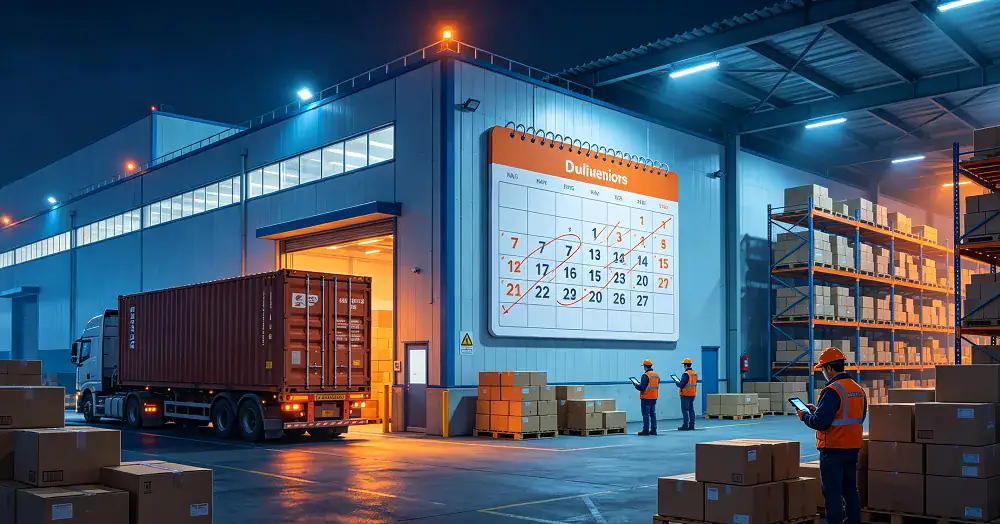
Right now, most warehouses across the U.S. have already shifted their operations entirely toward handling customer orders. During November and December, Amazon’s fulfillment network prioritizes picking, packing, and shipping orders to buyers – not receiving and checking in new inventory from sellers. This means that even if your shipment arrives at the warehouse tomorrow, there’s a good chance it will sit in the receiving queue for several days before anyone even scans the first box.
The Hard Truth – What’s Still Possible vs. What’s Not
Ocean Freight – No Longer an Option
Let’s be very clear about this: ocean freight is completely off the table at this point. The full shipping cycle from China to the U.S. West Coast typically takes 40 to 60 days, depending on the carrier, the route, and whether there are any delays along the way. That includes:
-
Container loading and departure from the port of origin (usually Shanghai, Ningbo, or Shenzhen)
-
15 to 18 days of actual sailing time to reach Los Angeles or Long Beach
-
Customs clearance at the destination port, which can take anywhere from 2 to 5 days depending on inspection rates
-
Truck or rail transport from the port to the final fulfillment center location
-
Warehouse receiving and check-in, which is the most unpredictable part of the entire process during peak season
Even if your container left China today, it wouldn’t arrive at a U.S. port until early December. And even then, there’s no guarantee that Amazon would be able to check it in before the holiday sales window closes. So if you’re still thinking about sending more inventory by sea, it’s time to let that idea go.
Air Freight – Your Only Viable Option Right Now
The good news is that air freight is still a viable path for emergency replenishment – but only if you act quickly. Here’s what the timeline looks like for air shipments in mid-November:
-
Getting your goods to our warehouse: 1 to 2 days, depending on where you’re located in China
-
Pre-shipment processing: 1 day for palletizing, labeling checks, and documentation review
-
Flight departure and transit: 3 to 5 days from major Chinese airports (PVG, CAN, SZX) to U.S. gateways like LAX or JFK
-
U.S. customs clearance: 1 to 2 days for clean shipments with no red flags
-
Final trucking from the airport to Amazon’s fulfillment center: 1 to 3 days, depending on distance and how busy the trucking companies are
-
Warehouse check-in: This is the wild card – during peak season, it can take 2 to 5 days for Amazon to scan and receive your shipment
If you add all of that up, the total air freight timeline from your warehouse in China to Amazon’s shelves is roughly 7 to 14 days, with the shorter end of that range being the best-case scenario.
Here’s what that means in practical terms: If you want your inventory checked in by November 25 (leaving two full days before Black Friday kicks off on November 27), you should ship out your goods no later than November 14 to 16. That’s not next week – that’s this week.

Key Considerations for Last-Minute Air Freight
Shipping by air in November comes with its own set of challenges. Here’s what you need to know before you pull the trigger:
Flight Capacity Is Extremely Tight
November is peak season for air cargo across the entire industry. E-commerce sellers aren’t the only ones scrambling for space – traditional retailers, electronics manufacturers, and fashion brands are all competing for the same cargo holds on passenger and freighter aircraft. Routes to major West Coast airports like LAX are particularly congested. If you don’t secure your booking early, you could find yourself waiting several days for the next available flight.
Customs Clearance Could Take Longer
U.S. Customs and Border Protection tends to increase random inspection rates during the holiday shopping season. If your shipment gets pulled for a physical examination, that could add 3 to 5 days to your timeline. To reduce this risk, make sure your commercial invoice is complete and accurate – include the correct HTS codes, country of origin, and declared value for every product on the shipment.
Trucking Capacity Is Also Tight
Even after your shipment clears customs, you still need to get it from the airport to Amazon’s fulfillment center. During November, trucking companies are fully booked, and rates go up significantly. Some sellers have reported waiting 2 to 3 days just to find a carrier willing to take their pallets. Working with a logistics partner that has established relationships with reliable trucking companies can help you skip the line.
Amazon’s Receiving Queues Are Long
This is perhaps the most frustrating part of the entire process. Even if your shipment arrives at Amazon’s warehouse on time, it could still sit in the receiving yard for several days before anyone checks it in. Amazon’s fulfillment centers simply don’t have the manpower to process every incoming shipment instantly during peak season – they prioritize customer orders first, and receiving new inventory comes second.
Your Emergency Action Timeline – A Step-by-Step Plan
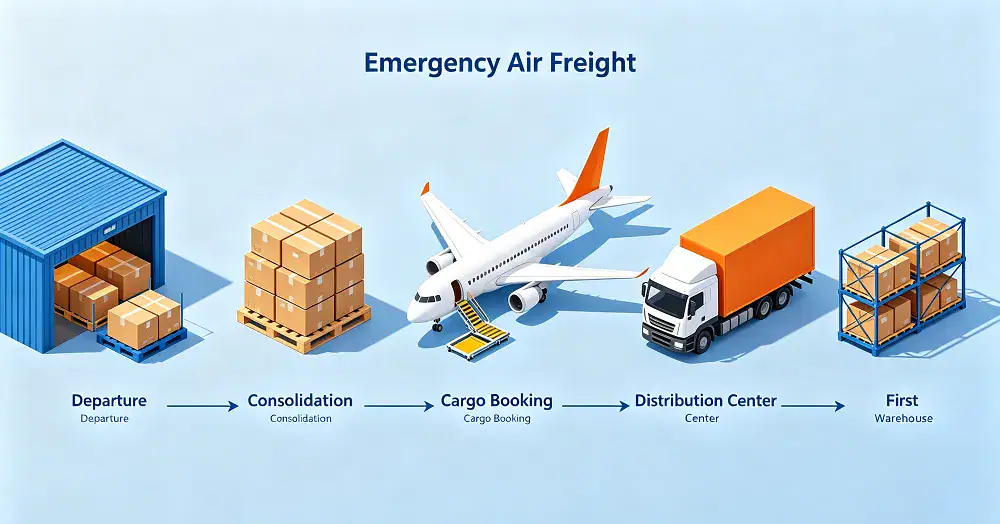
Given everything we’ve just discussed, here’s a realistic schedule for what you need to do over the next few days:
| Step | Suggested Timing | What You Need to Do |
|---|---|---|
| Step 1 – Confirm your needs | Today (November 11) | Decide which SKUs you need to restock, how many units per SKU, and which fulfillment center you’re shipping to |
| Step 2 – Request a quote | Today (November 11) | Contact us with your product details – provide product names, individual weights, dimensions, and total shipment weight |
| Step 3 – Ship goods to AMZ Shipper | Within 1 to 2 days | Send your products to our nearest warehouse – we have locations in Shenzhen, Yiwu, and Guangzhou |
| Step 4 – Palletizing and flight booking | Within 1 to 2 days after arrival | We’ll prepare your shipment, create air waybills, and book the earliest available flight |
| Step 5 – Flight transit | 3 to 5 days | Your shipment is in the air – we’ll provide tracking information so you know exactly where it is |
| Step 6 – U.S. customs clearance | 1 to 2 days | We work with licensed customs brokers to clear your shipment as quickly as possible |
| Step 7 – Final delivery to Amazon | 1 to 3 days | Your goods are trucked from the airport to the fulfillment center |
| Step 8 – Amazon receiving | 2 to 5 days | This is the waiting game – your shipment is checked in and made available for sale |
If everything goes smoothly, you’re looking at roughly 7 to 14 days from warehouse pickup to Amazon check-in. That means if you start the process today, your inventory could be live on Amazon as early as November 18 – giving you more than a week of sales before Black Friday. If you wait until November 14 or 15, you’re cutting it much closer, but it’s still possible.
2026 Policy Changes That Could Affect Your Emergency Shipment
Amazon implemented some significant changes to its FBA policies at the beginning of 2026, and these changes are now fully in effect. If you haven’t shipped anything since last year, please read this section carefully.
FBA Prep and Labeling Services Are Gone
As of January 1, 2026, Amazon no longer offers any FBA prep or labeling services – this includes paid options that were previously available. What does this mean for you? It means that every shipment you send to Amazon’s fulfillment centers must arrive at the warehouse with all packaging, labeling, and prep work already completed. If your shipment doesn’t meet Amazon’s requirements, it could be refused at the warehouse door – and during peak season, there’s no second chance.
For your emergency air shipment, pay special attention to these three requirements:
-
FNSKU labels – each individual unit must have a scannable FNSKU label that matches the ASIN in your seller account. The label should be firmly attached to the product packaging or poly bag, not loosely taped or folded. Make sure the barcode is clean and not wrinkled – Amazon’s scanning equipment needs to read it on the first try.
-
Packaging compliance – different product categories have different packaging requirements. Fragile items need bubble wrap or other protective materials. Liquids need to be sealed in leak-proof containers with absorbent material. Items that come in sets need to be secured together so they don’t separate during transit. Check Amazon’s packaging guidelines for your specific product type.
-
Carton labels – every shipping carton must have the correct FBA box ID label attached to the outside. This label tells Amazon where the carton needs to go within the fulfillment center. The shipping address on the label should exactly match the address provided by Amazon when you created the shipment plan.
Oversize Restrictions at AWD Warehouses
Since July 31, 2026, Amazon’s AWD warehouses have stopped accepting oversize items that meet any of these criteria: length of 18 inches or more, width of 14 inches or more, height of 8 inches or more, or weight of 20 pounds or more.
If you’re selling larger or heavier products, this doesn’t necessarily mean you can’t ship them at all – but you do need to confirm with the target fulfillment center that they’re still accepting your product category. Some fulfillment centers have different capacities and restrictions, so it’s worth double-checking before you ship.
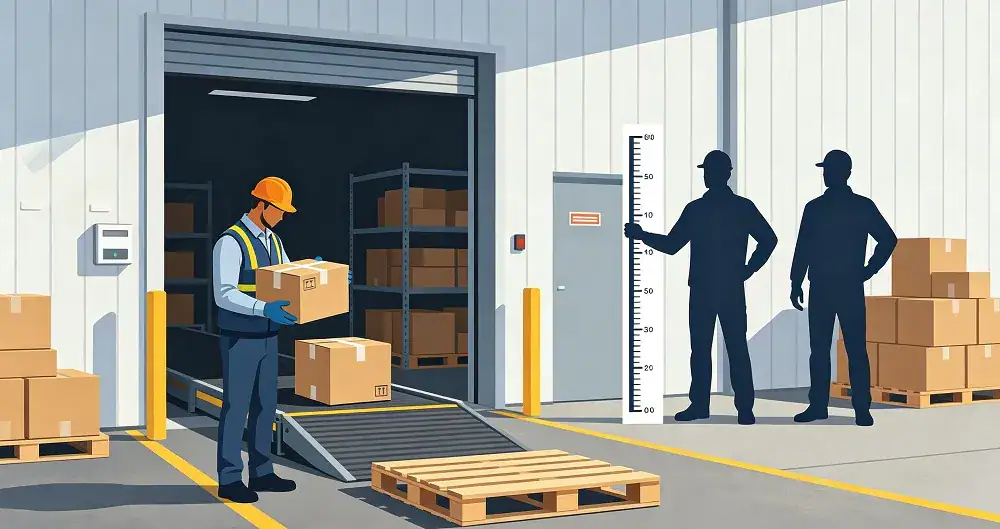
How AMZ Shipper Can Support Your Last-Minute Replenishment
We understand that emergency replenishment isn’t just about moving boxes from point A to point B – it’s about giving you peace of mind during a stressful time. Here’s what we offer to help you through this final sprint:
Express Air Freight Service
-
Coverage for major U.S. gateways including Los Angeles (West Coast) and New York (East Coast)
-
Priority booking with multiple airlines – we’ll secure the earliest available flight for your specific route
-
Active tracking with real-time status updates at every stage of the journey
-
Flexible capacity options – whether you’re shipping a few pallets or a full air container
Fast-Track Prep Service
-
Our warehouses in Shenzhen, Yiwu, and Guangzhou are equipped to handle emergency labeling and packaging checks on short notice
-
Emergency shipments get expedited processing to minimize ground time at our facilities
-
We can also handle FBA compliance checks before your goods leave China, so you don’t have to worry about rejection at the Amazon warehouse
Transparent Pricing and Dedicated Support
-
Every client gets a clear, written quote before any work begins – no hidden fees, no surprises
-
Your dedicated account manager will be your single point of contact from start to finish, so you’re not repeating your story to different people
-
We respond within 4 hours across U.S. and China time zones – because we know that when you’re making emergency decisions, waiting a full business day isn’t acceptable
-
We’ll provide live flight status updates and final-mile delivery tracking
Your Immediate To-Do List
Time is running out, but you still have a window of opportunity. Here’s what we recommend doing right now:
-
Confirm your replenishment needs – which SKUs are running low, how many units you need, and which fulfillment center they should go to
-
Verify your target warehouse’s current policies – make sure they’re still accepting your product category, especially if you sell oversize items
-
Double-check your packaging and labeling – inspect a sample of your products to make sure they meet Amazon’s current compliance standards
-
Reach out for an air freight quote – contact AMZ Shipper with your shipment details so we can give you an accurate quote and flight options
-
Arrange delivery to our warehouse – schedule your shipment to arrive at one of our locations within the next 1 to 2 days
The window is extremely narrow – we strongly recommend completing your needs assessment and reaching out for a quote today. The sooner you start the process, the better your chances of getting your inventory onto Amazon’s shelves before the Black Friday rush begins.
If you need urgent assistance, contact your dedicated account manager directly or reach out through our website. Our team is ready to help you get through this final sprint.