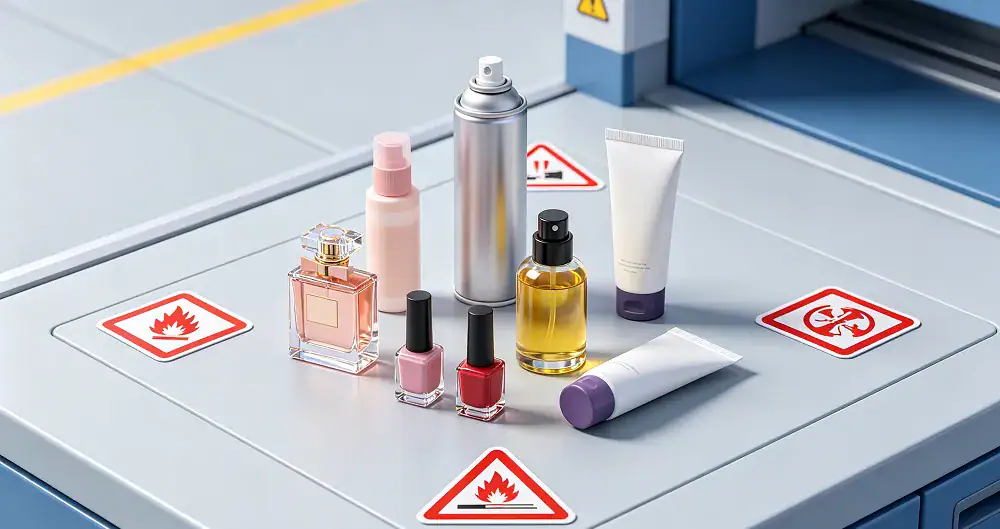
Cosmetics and liquid products are often classified as sensitive goods in cross-border logistics, and sometimes even as dangerous goods. Perfumes, nail polish, aerosols, alcohol sprays, and essential oils may contain flammable, volatile, corrosive, or compressed gas ingredients. When shipping by air, sea, express, or into FBA warehouses, they often require an MSDS (Material Safety Data Sheet) and a transport certification report. Without proper documents, your shipment may be rejected by the carrier, held at customs, returned, or even destroyed. AMZ Shipper has handled many cosmetics and liquid shipments, and this guide will walk you through the definitions, application process, required materials, differences between shipping methods, and common questions.
Why Cosmetics and Liquids Get Stuck in Cross-Border Logistics
The ingredients in cosmetics and liquids are often complex. Many everyday products can be classified as dangerous or sensitive goods during transport. For example, perfume contains a high concentration of alcohol and has a low flash point, making it a flammable liquid. Nail polish contains organic solvents such as acetone and ethyl acetate. Aerosols, sprays, and mousses contain compressed or liquefied gases. Hair dyes and perms may contain hydrogen peroxide or other oxidizing agents. These ingredients are regulated by IATA DGR rules for air transport, IMDG Code for sea transport, and strict carrier rules for express channels.
On top of that, different carriers, airlines, shipping lines, and destination customs may have different standards for accepting documents. Some require a specific version of MSDS, some require the transport certification report to be issued by a designated institution, and some have extra rules for packaging, labels, and UN numbers. If sellers do not confirm these requirements before shipping, goods may be rejected at the airport or port. Misreporting or failing to declare dangerous goods is even riskier and can lead to fines, blacklisting, or destruction of goods. So preparing MSDS and transport certification in advance is the first step for cosmetics and liquids to go overseas smoothly.
What Is MSDS/SDS, and How Is It Different from a Transport Certification Report?
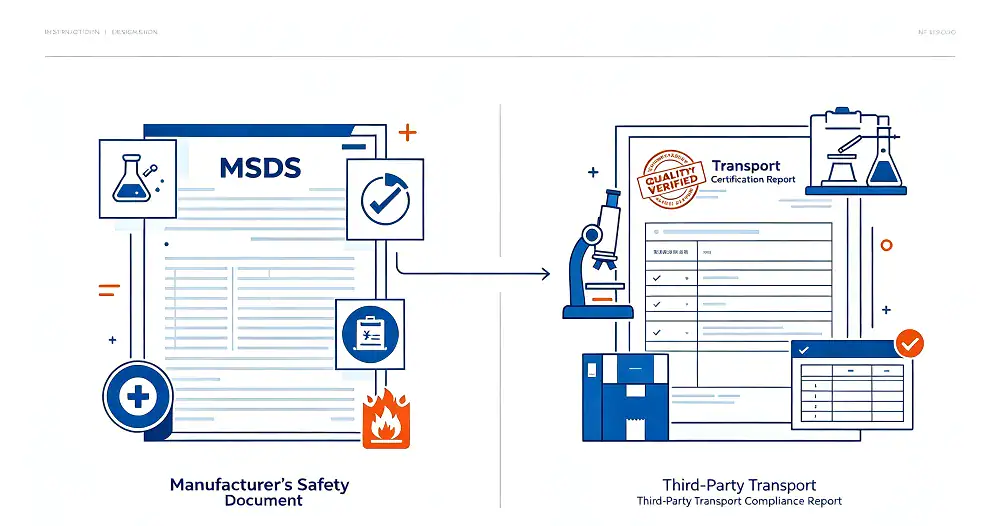
MSDS stands for Material Safety Data Sheet. It is now more commonly called SDS (Safety Data Sheet) internationally. It is a technical document provided by the manufacturer or supplier, usually with 16 sections covering chemical and company identification, composition, hazard overview, first-aid measures, fire-fighting measures, accidental release measures, handling and storage, exposure controls and personal protection, physical and chemical properties, stability and reactivity, toxicological information, ecological information, disposal considerations, transport information, regulatory information, and other information. The main purpose of MSDS is to explain what the product is, what hazards it has, and how to handle it safely. It is the basic document carriers use to review the nature of the goods.
A transport certification report is different. It is issued by a qualified third-party institution based on the MSDS, product formula, and necessary tests. It judges whether the goods are suitable for a certain mode of transport. The report gives a clear conclusion, such as “can be transported as general cargo,” “can be transported as dangerous goods,” or “not suitable for air transport,” and may note UN numbers, packing groups, and transport labels. Simply put, MSDS explains “what it is and what hazards it has,” while the transport certification report explains “whether it can be shipped and under what conditions.” The two cannot replace each other, and in many cases both are required.
| Item | MSDS/SDS | Transport Certification Report |
|---|---|---|
| Definition | Safety data sheet covering composition, hazards, and emergency measures | Third-party judgment on transport suitability |
| Purpose | Provides safety information and is the basis for carrier review | Proves goods can be shipped under specific conditions |
| Issued by | Manufacturer, supplier, or professional institution | Qualified testing or certification institution |
| When required | Usually for products containing chemicals | For air, sea, or other modes based on carrier rules |
| Validity | Updated when formula or regulations change | Usually has a stated validity period, subject to carrier rules |
Types of Transport Certification Reports
Transport certification reports vary by mode of transport. The main types are air transport certification reports, sea transport condition certification documents, road transport certification reports, and rail transport certification reports. Air transport certification reports are used for air freight and some express channels, based on IATA DGR rules, and assess flammability, corrosiveness, toxicity, and radioactivity. Sea transport condition certification documents are based on the IMDG Code and are used for booking with shipping lines and port delivery. Road and rail reports are used for some dedicated lines or inland transport.
Different carriers may accept reports from different institutions. Some airlines only accept reports from specific institutions, and some shipping lines have extra requirements for report format and conclusions. So before applying, it is best to confirm with your freight forwarder or logistics provider: which report is required for the destination and transport mode, who should issue it, whether the original is needed, and how long it is valid. AMZ Shipper can help you pre-check documents and connect you with reliable third-party institutions, reducing back-and-forth and delays.
Which Cosmetics and Liquids Need These Documents? A Checklist
Not all cosmetics and liquids require a transport certification report, but the following types are usually higher risk and should be confirmed in advance:
-
Perfume, cologne, alcohol spray
-
Nail polish, nail polish remover, nail wipe
-
Aerosols, sprays, mousse
-
Essential oils, aromatherapy products, low flash point liquids
-
Hair dye, perm products, hydrogen peroxide
-
Creams, gels, powders, beauty devices with batteries
If a product contains alcohol, acetone, ethyl acetate, compressed gas, oxidizers, or corrosive substances, or has a low flash point, it is usually classified as sensitive or dangerous goods. Even if the product does not contain these ingredients, if the carrier requires an MSDS, you still need to prepare one. For FBA sellers, Amazon may require SDS and transport certification during dangerous goods review. Preparing in advance can help avoid delays at the warehouse.
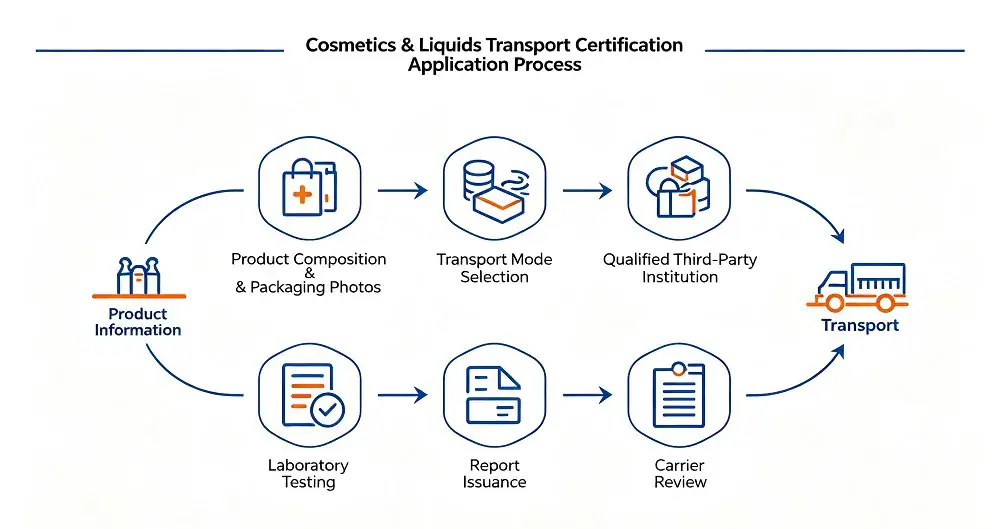
Application Process: Six Steps
To apply for MSDS and a transport certification report, you can usually follow these steps:
-
Provide basic information such as product composition, formula percentages, CAS numbers, usage, and packaging photos.
-
Confirm the transport mode: air, sea, express, or FBA first-leg.
-
Choose a qualified third-party institution and confirm the report type and accepted scope.
-
The institution reviews the MSDS and conducts transport certification tests if necessary.
-
MSDS and transport certification report are issued.
-
Submit the documents to the carrier for review. After approval, book and ship.
During the whole process, complete information, clear product composition, and confirmed transport mode all affect how quickly things move. If the formula is complex or contains multiple dangerous ingredients, allow more time.
What Materials Are Needed?
Before applying, you usually need to prepare:
-
Chinese and English product names, ingredient list, and percentages
-
CAS numbers, flash point, pH, packaging specifications
-
Product photos, MSDS application form
-
Brand, usage, whether it contains alcohol, gas, or corrosive substances
-
Other documents required by the carrier
If you already have an MSDS from the manufacturer, you can send it to your logistics provider or certification institution for a pre-check to see if it meets transport requirements. If the MSDS is missing, expired, or does not match the actual product, it needs to be rewritten or updated. For liquids, packaging specifications and photos are also important, because carriers care about whether the packaging meets UN packaging requirements and whether there is a risk of leakage.
Cost, Timeline, and Validity
Costs vary depending on product composition, test items, certification institution, and whether you need expedited service. There is no uniform standard. It is best to consult a professional institution or logistics provider. In terms of timeline, regular processing usually takes several working days. Expedited service can shorten it, but it depends on the institution’s schedule and product complexity. MSDS does not have an absolute “validity period,” but if the formula, regulations, or carrier requirements change, it needs to be updated. Transport certification reports usually state a validity period on the report, often one year, but different carriers may have different requirements. It is best to confirm again before shipping.

Differences Between Air, Sea, Express, and FBA
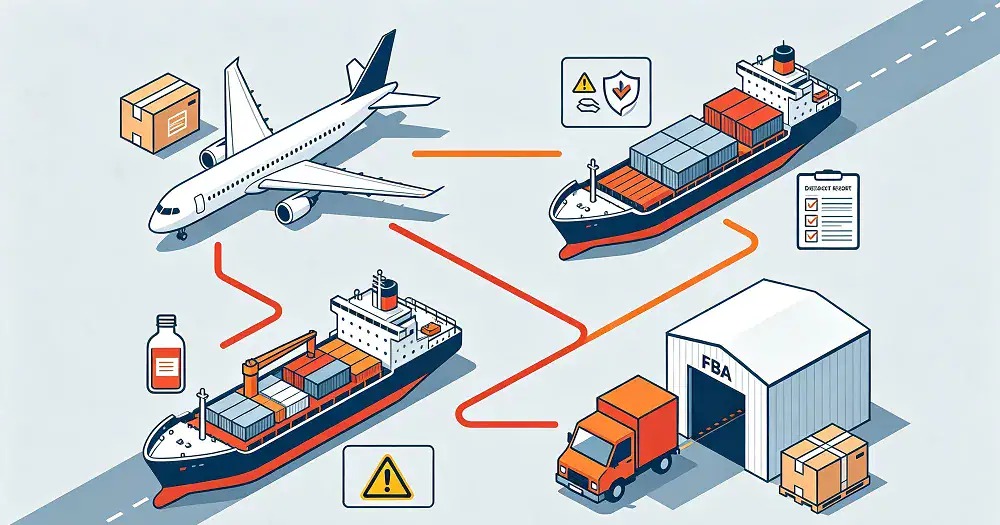
Different transport modes have very different requirements for cosmetics and liquids. Air transport is the strictest for flammable liquids, aerosols, and alcohol-based products, and usually requires an air transport certification report. Sea transport is relatively looser, but shipping lines still review MSDS and sea transport condition certification documents. In express channels, DHL, FedEx, and UPS have strict rules for sensitive goods, and some products can only go through specific sensitive goods channels. For FBA, Amazon may require SDS and transport certification and conduct a dangerous goods review.
| Transport Mode | Main Rules | Common Documents | Notes |
|---|---|---|---|
| Air | IATA DGR | MSDS, air transport certification report | Strict on alcohol and aerosols |
| Sea | IMDG Code | MSDS, sea transport condition certification | Shipping line review; some accept MSDS only |
| Express | Carrier rules | MSDS, certification report, sensitive goods channel | DHL/FedEx/UPS have high requirements |
| FBA | Amazon dangerous goods review | SDS, transport certification, dangerous goods review | Submit early to avoid warehouse delays |
Common Reasons for Rejection or Delay
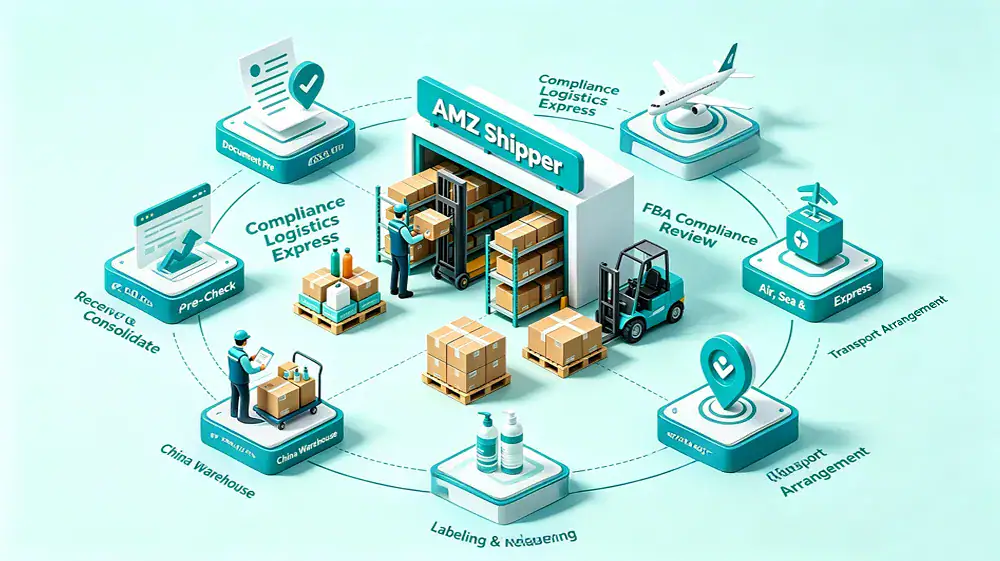
Cosmetics and liquids are often rejected or delayed because of expired MSDS or ingredients that do not match the actual product, certification conclusions that do not match the goods, packaging that does not meet UN packaging requirements, failure to confirm carrier requirements in advance, documents in the wrong language, version, or from an unrecognized institution, or misreporting of dangerous goods. Most of these problems can be avoided through pre-checking and standardized operations. AMZ Shipper can help sellers find risks early in receiving, consolidation, labeling, relabeling, and document pre-check, reducing the chance of rejection and delay.
How AMZ Shipper Helps
AMZ Shipper is an international logistics service provider with warehouses in China. We offer competitive prices, efficient logistics, reliable partners, and personalized service. For cosmetics and liquids, we can help you:
-
Receive, consolidate, label, and relabel goods at our China warehouse
-
Pre-check MSDS, transport certification reports, and FBA compliance documents
-
Connect you with reliable third-party testing and certification institutions
-
Arrange air, sea, express, dedicated line, and FBA first-leg shipping
-
Provide 24/7 support and customize logistics solutions based on your products
We work with a network of reliable partners to make sure your goods are handled properly at every step. Whether you are a new independent store seller or a brand that needs stable shipments, we can give you practical transport advice based on your product ingredients, destination, and timeline.
FAQ
Is MSDS the same as SDS?
Basically yes. SDS is the updated term for MSDS, and they are often used interchangeably in international transport, though some carriers may have specific format requirements.
Do all cosmetics need a transport certification report?
Not necessarily. Regular non-dangerous cosmetics may only need MSDS, but products containing alcohol, aerosols, or nail polish usually need a transport certification report. It depends on carrier requirements.
Can I ship without MSDS?
For most products containing chemicals, no. Carriers need MSDS to judge the nature of the goods. Without it, the shipment may be rejected.
Can I apply for a transport certification report myself?
Usually it must be issued by a qualified third-party institution. Individuals or ordinary companies cannot issue a report recognized by carriers.
Can perfume be shipped by air?
Some can, but they must meet air transport conditions, usually with MSDS and an air transport certification report, and must use compliant packaging.
Can nail polish go to FBA?
Some can, but Amazon may require SDS and transport certification and may restrict inbound storage. It is best to submit for review early.
How long are the reports valid?
MSDS needs to be updated when the formula or regulations change. Transport certification reports usually state a validity period, subject to carrier requirements.
How much does it cost?
Costs vary by product, institution, items, and urgency. There is no uniform standard. It is best to consult a professional institution or logistics provider.
If you are not sure whether your cosmetics or liquids can be shipped, send your product ingredient list, packaging photos, and destination to AMZ Shipper. We will help you pre-check MSDS and transport certification requirements and give you air, sea, express, or FBA options. This article is not legal advice. Please refer to the latest carrier and official regulations.