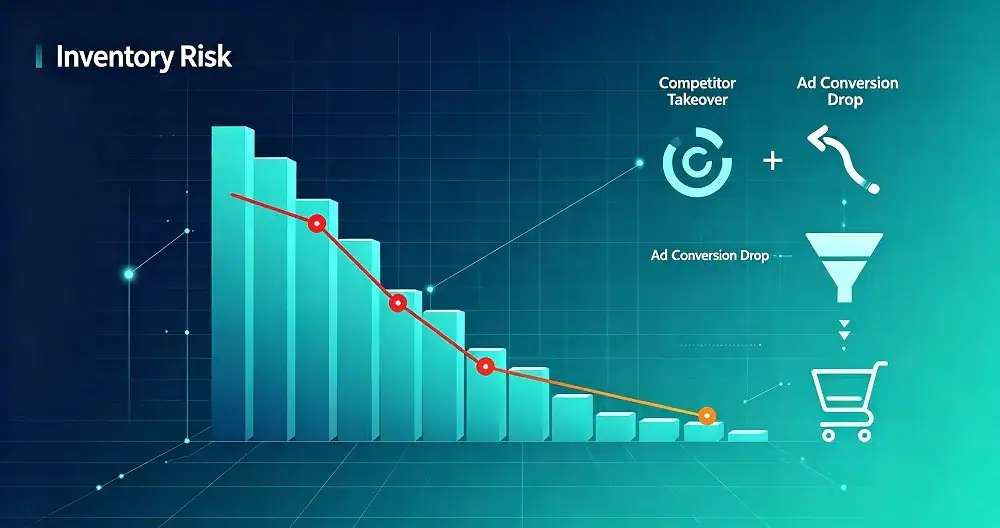
The cost of a stockout during peak season is not just a few lost orders. For Amazon FBA sellers and independent site sellers, a stockout can directly hurt listing ranking, ad conversion, Buy Box competitiveness, and even let competitors grab your keyword positions. What makes it worse is that peak season brings more logistics variables than usual: tight shipping space, port queues, customs delays, difficult FBA inbound appointments, and slower receiving and listing. If you wait until inventory hits bottom to decide on replenishment, you have usually missed the best window.
As an international logistics company serving cross-border e-commerce, AMZ Shipper often sees sellers get stuck because their “safety stock line” is too simple. This happens in China warehouse receiving, labeling, FBA first-mile shipping, overseas warehouse transfers, and 24/7 support. This article does not discuss complex theory. Instead, it explains from a practical angle: how to calculate safety stock, how to set a reorder point, how to use a three-level warning system to determine emergency replenishment triggers, and how to include international logistics lead time in your replenishment system.
1. Safety Stock Line, Reorder Point, and Emergency Replenishment Trigger
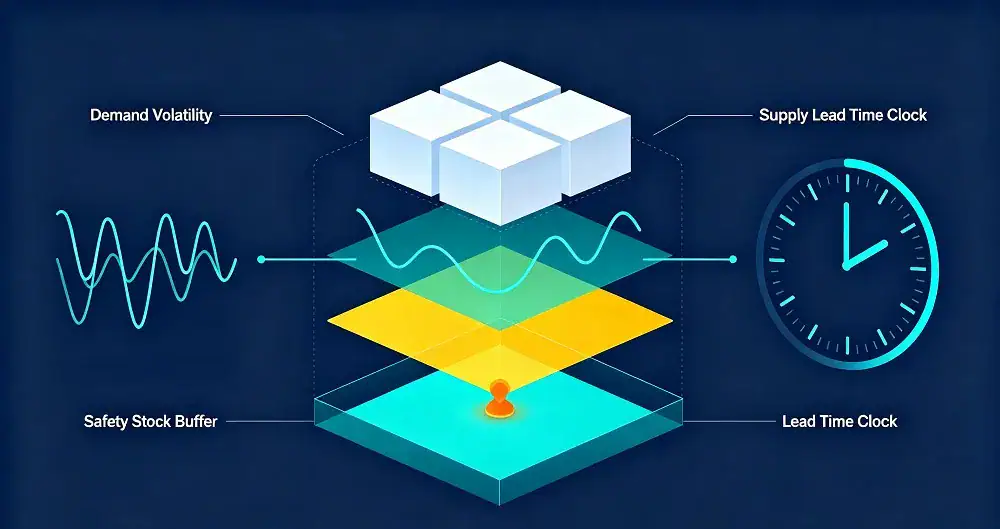
Safety stock is the extra inventory buffer you prepare to handle demand fluctuations and lead time fluctuations. It is not just “stocking a bit more.” It is a dynamic number calculated based on historical sales, lead time stability, and target service level.
Reorder Point, or ROP, is the inventory level at which you should place a regular replenishment order. ROP usually equals “expected sales during replenishment lead time” plus “safety stock.”
The emergency replenishment trigger is an even lower line below ROP. When inventory falls below this line, regular sea freight or normal air freight is already too late. You must switch to faster options, such as air freight, express, overseas warehouse transfers, or emergency replenishment from other channels. The relationship can be understood like this: ROP means “time to order,” and the emergency trigger means “time to use fast logistics.”
Many sellers only set one “minimum inventory” level, so every replenishment becomes an emergency. This not only raises logistics costs, but during peak season, shipping space may not even be guaranteed. Separating safety stock line, ROP, and emergency trigger helps make replenishment more controllable.
2. Safety Stock Is Not a Fixed Number of Days: Understand Four Variables First
Before calculating safety stock, you need to break down four core variables. The table below can serve as a reference for aligning your team’s understanding.
| Variable | Meaning | Peak Season Notes |
|---|---|---|
| D | Average daily sales | Do not use annual average; add peak season coefficient and promotion forecast |
| LT | Average replenishment lead time | Cover production, China warehouse, first-mile, customs, overseas warehouse, FBA listing |
| σD | Demand standard deviation | Peak season fluctuations amplify; ads, flash sales, competitor actions all matter |
| σLT | Lead time standard deviation | Include sea freight, port, customs, and FBA appointment uncertainty |
| Z | Service level coefficient | About 1.65 for 95% service level, about 2.05 for 98%; higher means more inventory |
Z value represents the probability you want of not stocking out. A 95% service level means that under normal fluctuations, about 95% of the time you will not stock out. 98% is safer, but puts more pressure on inventory. Sellers do not need to use the same standard for all SKUs. You can set levels based on gross margin, ad dependence, seasonality, and replenishment difficulty.
3. Formulas for Safety Stock and Reorder Point
The commonly used safety stock formula is:
Safety Stock = Z × √(LT × σD² + D² × σLT²)
The reorder point formula is:
Reorder Point = D × LT + Safety Stock
Here is an example. A SKU has average daily sales of 100 units, average replenishment lead time of 30 days, demand standard deviation of 20 units, lead time standard deviation of 5 days, target service level of 95%, and Z of 1.65. After plugging in, safety stock is about 845 units, and ROP is about 3,845 units. That means when available inventory drops to around 3,845 units, you should place a regular replenishment order.
If air freight lead time is about 10 days, and you want another 7 days of safety days during air freight, the emergency trigger can be set at 100 × (10 + 7) = 1,700 units. When inventory falls below 1,700 units, regular sea freight is already high risk, and you should start air freight or overseas warehouse transfers. The key here is not to memorize a number, but to understand the logic: the longer the lead time, the bigger the fluctuation, and the higher the service level, the higher the safety stock.
For FBA sellers, you also need to consider “inbound but not yet listed” inventory. Goods arriving at the FBA warehouse do not mean they are immediately available for sale. Peak season appointments and listing delays can eat up several days or even longer. Therefore, it is best to add an “FBA inbound buffer period” to LT, rather than only counting sea freight arrival time.

4. Use a Three-Level Warning System to Set Emergency Replenishment Triggers
The safety stock line is not just a line drawn on a chart. It should become an executable warning mechanism for the team. It is recommended to divide inventory status into three levels: green, yellow, and red.
| Status | Inventory Position | Suggested Action | Logistics Method |
|---|---|---|---|
| Green | Above ROP | Normal sales, replenish as planned | Mainly sea freight, watch costs |
| Yellow | At or below ROP | Place regular replenishment order immediately | Sea freight + some air freight |
| Red | At or below emergency line | Start emergency replenishment | Air freight, express, overseas warehouse transfer |
In green status, sellers can arrange sea freight according to economic order quantity, using China warehouse consolidation, labeling, and container loading to reduce unit logistics costs. Yellow status means the regular replenishment window is open. Do not hesitate. Confirm supplier lead time, book shipping space, and arrange FBA appointments as soon as possible. Red status means stockout risk is already high, and you must use faster logistics to buy time.
AMZ Shipper often suggests sellers move the “yellow warning” earlier during peak season. From placing an order to goods actually being available for sale, there are still production, inbound, customs declaration, sea freight, customs clearance, overseas warehouse handling, and FBA listing. If you wait until inventory is clearly low, the time left for logistics will be very limited.
5. Lead Time Structure That Cross-Border Sellers Must Break Down
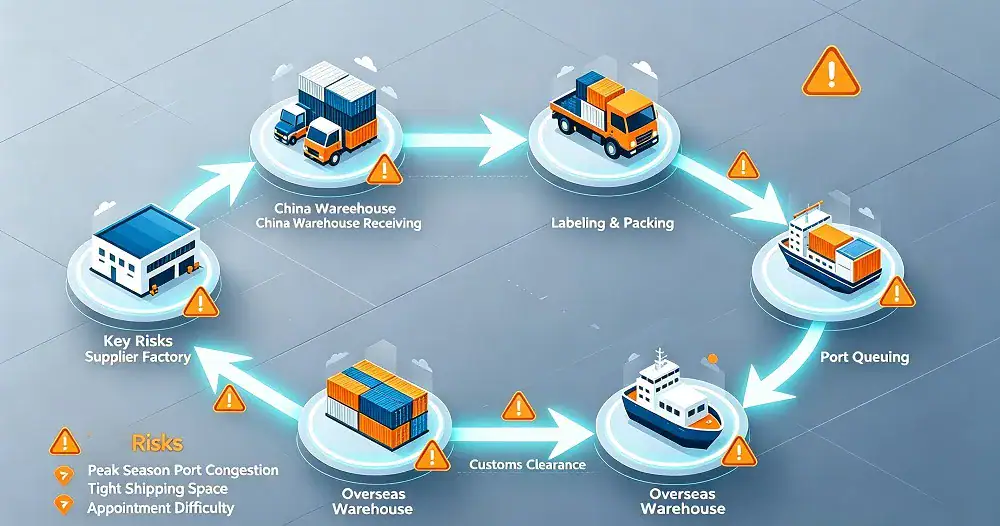
Many replenishment plans fail because “lead time” is simply understood as “sea freight days.” In reality, cross-border replenishment lead time includes at least: supplier production time, China warehouse receiving and quality check, labeling and FBA prep, container loading and customs declaration, first-mile transportation, destination customs clearance, overseas warehouse receiving, FBA appointment, and inbound listing. Each segment has an average time and a worst-case time.
During peak season, worst-case time is more important than average time. For example, port congestion may delay the vessel, FBA warehouse appointments may be scheduled later, and receiving and scanning may slow down. If safety stock is calculated only on average lead time, inventory will break through the emergency line once there are consecutive delays. A more reliable approach is: use average lead time to calculate ROP, and use worst-case lead time to verify the emergency line. If it can still cover demand under worst-case lead time, your replenishment system is resilient.
AMZ Shipper’s services cover China warehouse, international first-mile, FBA prep, overseas warehouse, and destination delivery. This helps sellers manage different lead time segments separately. For example, some inventory goes by sea for regular replenishment, some goes by air for emergency replenishment, and some is stored in overseas warehouses in advance for flexible transfer based on sales speed. This combined approach handles peak season fluctuations better than a single logistics channel.
6. Peak Season Logistics Risks and Response Strategies
Peak season logistics risks mainly include: tight shipping space, port congestion, peak season surcharges, customs delays, FBA warehouse overflow, appointment difficulties, and slow listing. These risks are not isolated; they often appear together. For example, port congestion delays arrival, customs clearance takes a few more days, and FBA appointments are unavailable, so available inventory becomes available much later than expected.
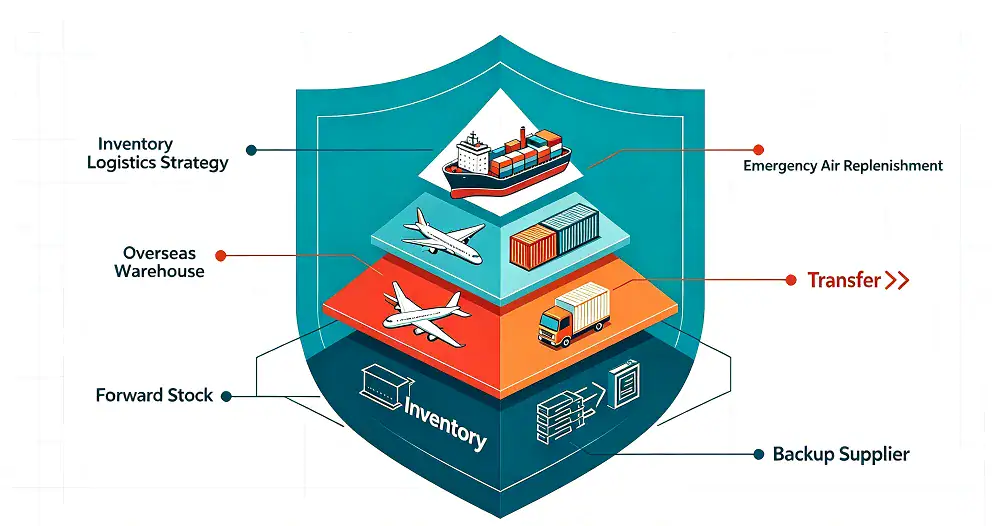
The response is not simply “ship earlier,” but layered stocking. First layer: regular sea freight books space in advance to cover main sales. Second layer: air freight or express as emergency supplement to cover the gap after red warning. Third layer: overseas warehouse stock for quick transfer and FBA replenishment. Fourth layer: backup suppliers and backup logistics channels to avoid a single point of failure.
AMZ Shipper provides 24/7 support to help sellers track shipment status, coordinate warehouse operations, and destination delivery during peak season. However, it should be noted that any logistics plan is affected by shipping space, customs, ports, and platform policies. Sellers should keep reasonable buffers and should not push safety stock to the limit.
7. Seven Steps to Build Your Replenishment Trigger System
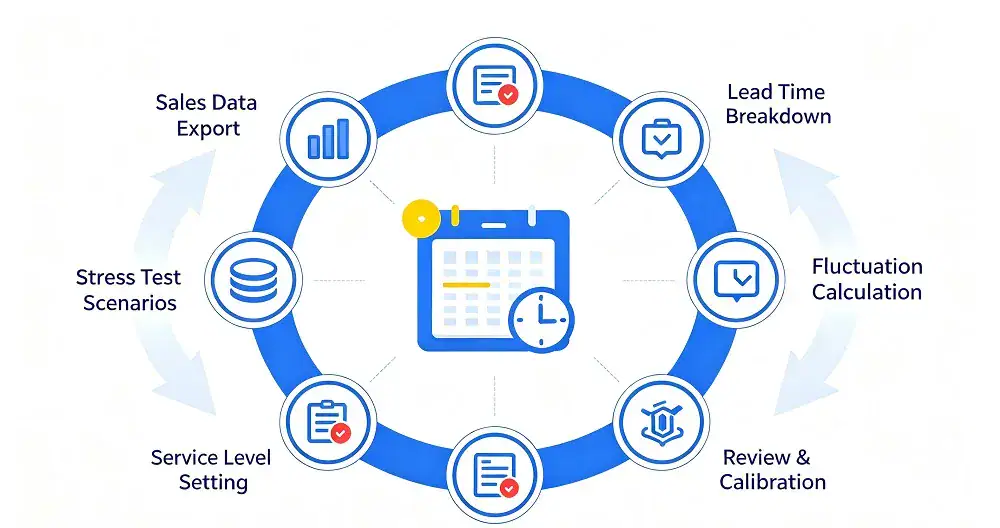
Step 1: Export 12 months or more of sales data, organized by SKU, by week or by day. Step 2: Calculate peak season coefficients, and mark Black Friday, Cyber Monday, Christmas, Prime Day, and other events separately. Step 3: Break down the complete lead time for each SKU, including production, first-mile, customs, overseas warehouse, and FBA listing. Step 4: Calculate demand standard deviation and lead time standard deviation. Do not just use averages. Step 5: Set service levels based on gross margin and stockout cost. Core SKUs can be higher; long-tail SKUs can be slightly lower. Step 6: Calculate safety stock, ROP, and emergency trigger, and set automatic reminders in your ERP or spreadsheet. Step 7: Review once a week, and during peak season, increase to once a day or every two days, updating parameters based on actual sales and logistics status.
The key to this system is not getting it right once, but continuous calibration. One month before peak season, you should start stress testing: if sales rise 30%, if sea freight delays 10 days, if FBA listing slows by 5 days, on which day will inventory fall below the red line? Seeing risk early gives you time to activate air freight, overseas warehouse, or backup suppliers.
8. Common Mistakes
-
Only looking at average sales and ignoring peak season fluctuations and promotion peaks.
-
Forgetting in-transit inventory, overseas warehouse inventory, and FBA not-yet-listed inventory.
-
Using the same safety stock line for all SKUs without tiered management.
-
Waiting until inventory is almost gone to find logistics, when peak season space and appointments are already tight.
-
Having no backup suppliers, backup logistics channels, or overseas warehouse buffer.
These mistakes look simple, but they often explode during peak season. Especially when multiple SKUs enter yellow or red status at the same time, the team has limited energy. You must decide priorities in advance: which SKUs must go by air, which can wait, and which can temporarily accept stockout risk.
FAQ
How many days of safety stock is appropriate?
There is no universal number. The longer the lead time, the bigger the fluctuation, and the higher the service level, the more days of safety stock. It is recommended to calculate with the formula and then stress test with worst-case lead time.
How early should I replenish for peak season?
Usually earlier than off-season. The exact timing depends on production cycle, first-mile method, customs speed, and FBA appointment situation. Core SKUs should book space in advance and prepare air freight or overseas warehouse backup plans.
Is air freight replenishment worth it?
If a stockout would cause a big ranking drop, wasted ad spend, or competitors grabbing market share, air freight can be an emergency measure. But it is better for filling the gap after a red warning, not for replacing all regular replenishment.
How can I avoid FBA stockouts?
Include FBA inbound and listing delays in lead time, set three-level warnings, keep overseas warehouse buffer, and let your logistics provider get involved in peak season planning early.
What peak season replenishment support can AMZ Shipper provide?
AMZ Shipper provides China warehouse receiving, labeling, FBA prep, international first-mile, overseas warehouse, and destination delivery support. This helps sellers arrange regular and emergency replenishment in layers. You can visit amzshipper.com to learn about services and contact the team to build a replenishment plan based on your products, routes, and peak season schedule.