If you’ve been selling cross-border into Southeast Asia for any length of time, you’ve probably been through this: your goods are sitting in a warehouse in China, you’ve checked shipping schedules more times than you can count, you’ve asked around about every border crossing, and you still can’t decide which route to take. Sea freight feels too slow. Land transport feels unpredictable. Air freight is too expensive. Pick the wrong port of departure, and the profit on an entire shipment can disappear.
This isn’t a problem unique to any one seller. The complexity of Southeast Asian cross-border logistics lies precisely in the fact that there’s no “standard answer.” Every destination country has different geography, different border efficiency, and different transport modes that suit different product categories. But flip that around: the land borders and infrastructure networks between China and Southeast Asia are themselves a hand of cards that can be “translated” into supply chain strategy. The problem is, most sellers only see the vague idea of “it’s close,” without breaking that geographic advantage down into actionable node choices.
This article looks at three things from a logistics provider’s operational perspective: what characteristics of Southeast Asian e-commerce logistics are often overlooked, where exactly China’s geographic advantages lie, and how those advantages can be turned into concrete supply chain actions.
1. The “Atypical” Characteristics of Southeast Asia E-commerce Logistics
Most discussions about Southeast Asian logistics start with “slow transit times, high costs, difficult last-mile delivery.” These are outcomes, not causes. From a geographic and infrastructure perspective, there are three more noteworthy characteristics.
Border crossings are fragmented, not unified.
There is no single “best border crossing” from China to Southeast Asia. For Vietnam, Pingxiang Friendship Pass and Dongxing each serve different purposes. For Laos and Thailand, Mohan is the exit point for the China-Laos Railway. For the Philippines and Malaysia, direct shipping routes from Shenzhen and Guangzhou are more densely scheduled. A single seller doing both Vietnam and Thailand is essentially running two completely different routes. Choosing the wrong border crossing isn’t just “a little slower” — it changes your entire cost structure.
Border warehouses and overseas warehouses are two different things.
Many people think of a border warehouse as a “budget version” of an overseas warehouse. That’s off the mark. The core function of an overseas warehouse is “stock and sell” — goods have already cleared customs and entered the target market’s distribution system. The core function of a border warehouse is “buffering and scheduling” — goods are still within China or at the edge of the border zone, but already positioned as close to the target market as possible. In the Pingxiang Comprehensive Bonded Zone, goods enter in bulk and leave in small batches. The inspection model shifts from “one order inspected, the whole truck waits” to individual parcels being inspected independently and quickly. The efficiency difference is on a completely different scale. During peak season, the scheduling flexibility of a border warehouse is far higher than shipping directly from a domestic warehouse.
Infrastructure variables are “repricing” geographic distance.
In the past, China’s geographic advantage was described as “being close.” Now that definition is being rewritten. After the Pinglu Canal opened, goods from southwestern China can reach the sea via the canal, cutting the inland waterway distance by more than 560 kilometers compared to routing east through Guangzhou, and reducing overall logistics costs by 18%–30%. The China-Laos Railway has compressed customs clearance time at Mohan from about 40 hours in the early days of operation to 2–5 hours. At Dongxing, non-inspection vehicles pass through the checkpoint in about 30 seconds. These variables are rewriting a fact: the “economic distance” between China and parts of Southeast Asia is already far smaller than the “physical distance” on a map.

2. Three Levers of China’s Geographic Advantage
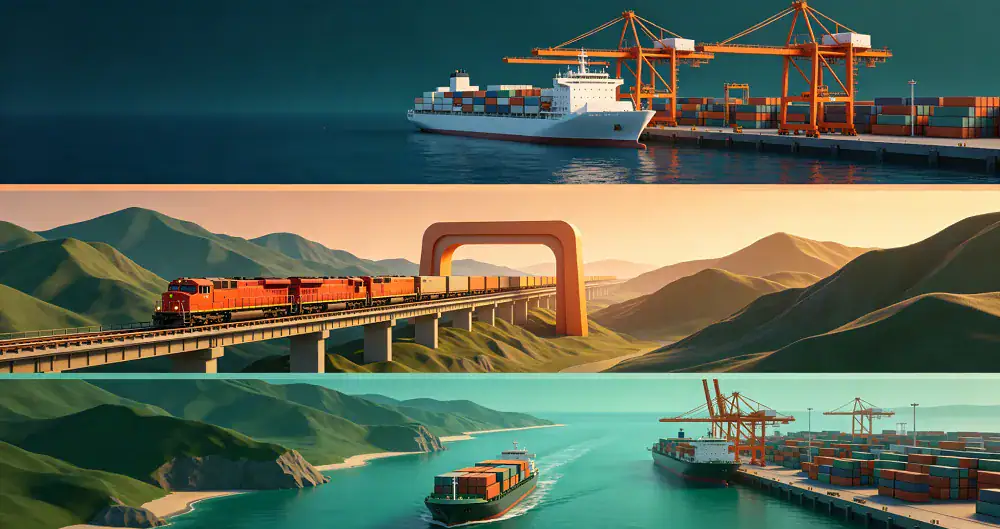
Talking about China’s geographic advantage vaguely as “being close” doesn’t help sellers make real decisions. What’s actually useful is breaking it down into three layers of levers that can be used in practice. Each layer has different applicable product categories, cost structures, and operational logic.
| Layer | Core Channel | Applicable Direction | Suitable Categories | Key Nodes |
|---|---|---|---|---|
| Level 1: Direct Port Shipping | Shenzhen/Guangzhou/Xiamen → major Southeast Asian ports | Philippines, Malaysia, Singapore | Regular e-commerce parcels, bulk general cargo | Yantian, Nansha, Xiamen Port |
| Level 2: Rail + Border Crossing | China-Laos Railway, China-Vietnam freight trains | Vietnam, Laos, Thailand | Time-sensitive goods, mid-to-high value cargo | Mohan, Pingxiang, Dongxing |
| Level 3: Canal + Beibu Gulf | Pinglu Canal, river-sea intermodal | Southwestern China → ASEAN | Bulk cargo, fresh cold chain, heavy goods | Nanning Liujing, Qinzhou Port |
Level 1 is direct port shipping — the route most sellers are familiar with. Shenzhen, Guangzhou, and Xiamen have dense shipping routes to Manila and Kuala Lumpur, with plenty of schedule options. But the key to this lever isn’t “having routes” — it’s matching shipping schedules with warehouse operations rhythm. The competitiveness of direct shipping lies in “stability.” As long as containers are loaded before the cutoff time, the variables in subsequent stages are relatively controllable. It suits categories that don’t demand extreme speed but need stable batch capacity.
Level 2 is rail plus border crossings — the layer that has changed the most in recent years. The number of cross-border freight trains on the China-Laos Railway has increased from 2 per day in the early days of operation to a maximum of 23. After Mohan implemented “railway fast clearance” and “advance declaration,” overall cross-border cargo clearance time has been compressed to 2–5 hours. The China-Laos-Thailand scheduled express train departing from Zhengzhou, exiting through Mohan and heading directly to Thailand’s Laem Chabang Port, takes 5 days and 11 hours — 2 to 3 days shorter than regular trains, and a completely different order of magnitude compared to the 15–18 days of traditional sea freight.
The real value of this lever isn’t “speed” — it’s certainty. Rail transport is less affected by weather and road conditions. Fixed departures and on-time arrivals mean companies can plan production schedules and warehouse allocation around them. For electronics, branded apparel, and mid-to-high price point categories, this certainty has more business value than sheer speed.
Level 3 is canal plus Beibu Gulf — a layer that is happening but easy to overlook. The opening of the Pinglu Canal changed a basic fact: although Guangxi has a coastline, goods from the upper reaches of the Xi River previously had to detour east through Guangdong to reach the sea. With the canal open, goods from the southwestern hinterland can head directly south into the Beibu Gulf. For businesses in Nanning, the overall logistics cost of shipping via the canal is expected to drop by 30%–40%.
This lever isn’t for small parcel e-commerce. The Pinglu Canal’s 5,000-ton navigation capacity suits bulk cargo like coal, ore, building materials, and new energy materials, as well as some cost-sensitive fresh and cold chain goods. But small and medium sellers should also pay attention, because when bulk cargo diverts to the canal route, the previously congested eastward port resources get freed up, which indirectly affects the rhythm of all goods moving through South China ports.
3. Translating Geographic Advantages into Operational Actions
Geographic advantages don’t take effect automatically. They need to be broken down into concrete operational actions.
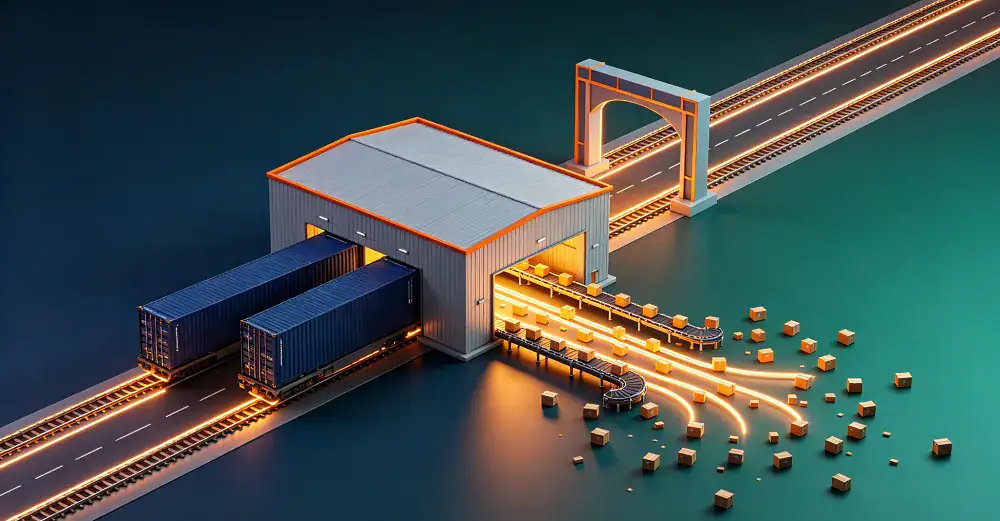
The first thing is making border crossing choices upfront. For Vietnam, Pingxiang Friendship Pass and Dongxing suit different scenarios. Border warehouses in the Pingxiang Comprehensive Bonded Zone are better for e-commerce parcels that need “bulk in, scattered out” — goods enter in bulk, get sorted and consolidated in the warehouse, then exit as individual parcels for inspection. Dongxing’s advantage is clearance efficiency — non-inspection vehicles pass through the checkpoint in about 30 seconds, making it suitable for time-sensitive, high-frequency shipments. In 2025, cross-border e-commerce parcels declared for export at Dongxing exceeded 18 million, with daily peak volume reaching 33 trucks and over 450,000 parcels. That data alone tells you something: when clearance efficiency is high enough, cargo naturally flows toward the more efficient crossing.
The second thing is the logic behind warehouse node placement. The value of a border warehouse isn’t “having a warehouse” — it’s the distance from the warehouse to the border crossing and the operating model inside the warehouse. Some operators in the Pingxiang Comprehensive Bonded Zone deploy warehouses directly on the “first line of the national border,” paired with a “single-order sorting mode supervision center” inspection mechanism, allowing e-commerce goods to flow in a “bulk in, scattered out” pattern. Logistics costs drop by about 20%, and fulfillment time improves by more than 30%.
For sellers doing multiple Southeast Asian markets at once, a more practical approach isn’t setting up warehouses at every border crossing, but setting up a main warehouse near one core border crossing while keeping flexible direct-ship channels for other directions. The main warehouse handles high-frequency, stable routes. Direct-ship channels handle temporary restocking and test orders. This “one main, multiple auxiliary” layout is more controllable than spreading warehouses in every direction.
The third thing is dynamic switching of transport modes. Don’t lock yourself into “my goods go by sea” or “my goods go by land.” The same SKU can go by direct sea shipping in the off-season, then switch to the China-Laos Railway or China-Vietnam freight trains during peak season or restocking periods. The fixed departure and on-time arrival characteristics of scheduled trains make this kind of switching operationally feasible. The key is whether your logistics provider can handle multiple channels simultaneously, rather than “betting” on just one direction.
4. A Logistics Provider’s “Geographic Translation” in Practice
What AMZ Shipper does is essentially translate these geographic nodes and channel capabilities into operational solutions that sellers can use directly.
Our warehouse location logic revolves around “border adjacency.” The distance from a warehouse to a key border crossing determines the response time between “finishing consolidation” and “entering the cross-border channel.” In the off-season, this time might just be an efficiency issue. In peak season, it’s a question of whether you can catch the sailing or the train.
At the operational level, what we focus on is the “controllable points” along a route. A route from a domestic warehouse to a Southeast Asian destination has several nodes: domestic consolidation, export clearance, cross-border transport, import clearance, and last-mile delivery. Each node has its own patterns of time fluctuation. Our job isn’t to promise “X days door to door” — it’s to know where problems are likely to occur, which backup route to switch to when they do, and what the cost of that switch is.
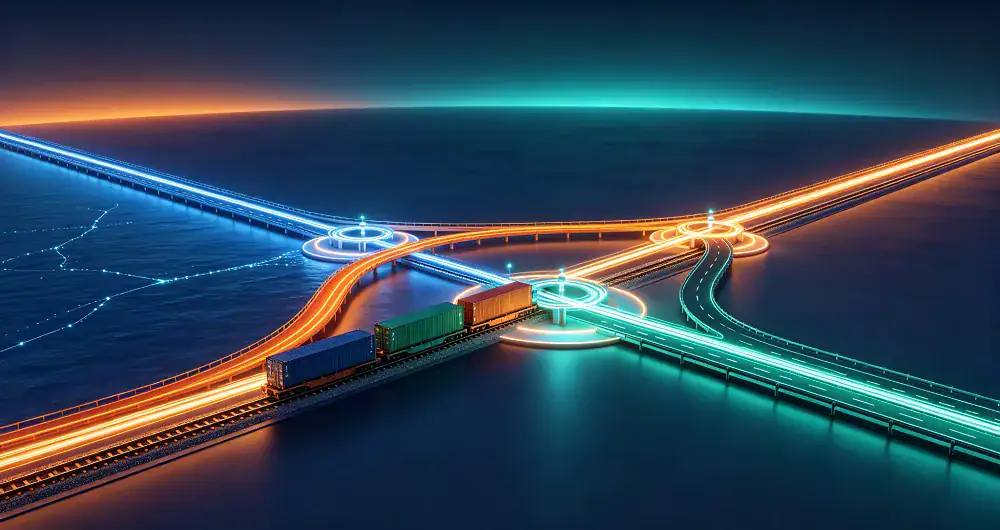
Peak season scheduling best demonstrates this capability. When a border crossing gets congested due to a surge in volume, or when train capacity in a certain direction tightens, being able to quickly switch goods to another channel isn’t about “connections” — it’s about accumulated day-to-day operational experience across multiple routes. For example, when the China-Vietnam direction backs up, some goods can be evaluated for rerouting via the China-Laos Railway. When Dongxing faces pressure, border warehouses in the Pingxiang Comprehensive Bonded Zone can absorb some of the sorting and consolidation functions. This kind of switching doesn’t require knowing someone in advance — it requires being familiar enough with the operational details of each route.
Competition in Southeast Asian e-commerce logistics is shifting from “do you have an overseas warehouse” to “can you use China’s geographic nodes efficiently.” Border crossing efficiency differences, border warehouse scheduling flexibility, the certainty of rail schedules, the cost restructuring of canal routes — these variables together form a geographic system that needs to be “translated.” AMZ Shipper‘s role is to do that translation.