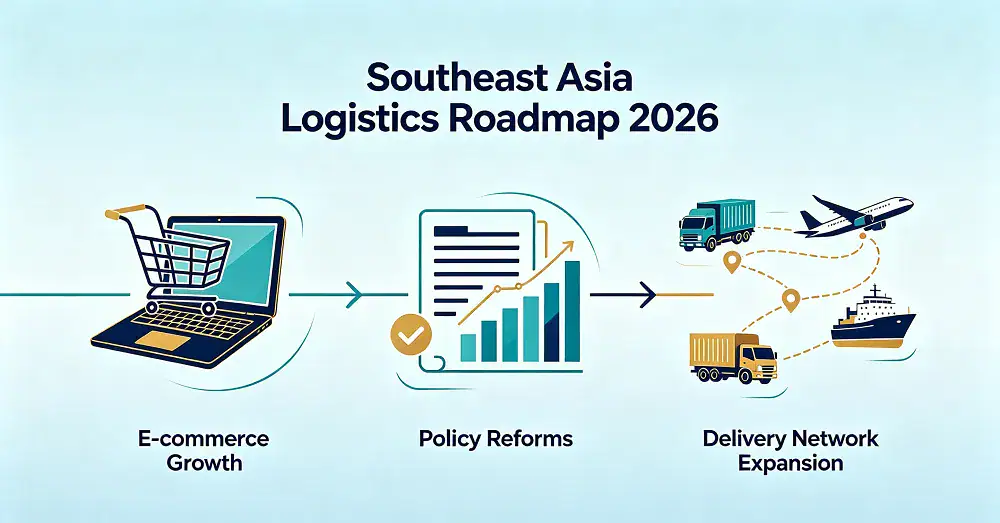
I. Introduction: Why 2026 Is a Turning Point for Logistics
By 2026, Southeast Asia’s digital economy is expected to hit over $300 billion, with e-commerce making up more than 70% of that figure. Indonesia, Thailand, Vietnam, the Philippines, and Malaysia continue to lead the charge. Platforms like TikTok Shop, Shopee, and Lazada are pushing further into “full-service” and “local fulfillment” models.
But here’s the catch: logistics is becoming the make-or-break factor for sellers.
Over the past year, customs rules in the region have shifted frequently. Indonesia tightened its import quota checks. Thailand proposed lowering the VAT exemption threshold for cross-border parcels. Vietnam is thinking about cutting the duty-free allowance for small packages. At the same time, customers now expect delivery in three days, not seven. Poor logistics leads to more returns and lower rankings on platforms. Relying solely on a platform’s domestic warehouse system won’t cut it anymore.
Below, we break down five key areas: policy changes, cost control, inventory planning, choosing logistics partners, and tech tools. No theories — just practical steps you can take.
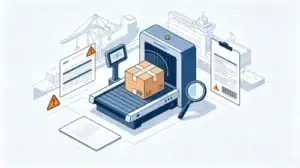
II. 2026 Policy Updates in Five Southeast Asian Countries
| Country | Key Policy Change in 2026 | Direct Impact on Sellers | Suggested Response |
|---|---|---|---|
| Indonesia | Stricter import quota rules; full tax ID and COO needed for B2B clearance | Small sellers face detention or return if documents are incomplete | Apply for quota 3 months ahead; work with a local importer for customs clearance |
| Thailand | VAT exemption threshold may drop to 0 THB (from 1,500 THB) | 7% VAT on every cross-border order, raising costs | Use platform’s tax collection tools; switch to bulk air freight + local splitting |
| Vietnam | Duty-free allowance for express parcels may be cut from 1M VND to 500K VND | Low-value items (e.g., accessories) pay more tax | Consolidate shipments; increase product prices to absorb tax |
| Philippines | Platforms require first-mile scan within 12 hours of order | Direct shipping from China no longer works | Use shared or third-party warehouses in Metro Manila |
| Malaysia | 10% sales tax on low-value goods (<500 MYR) | Higher tax costs on small parcels | Bundle products to increase shipment value; use sea freight for cost efficiency |
The table above shows one thing clearly: there’s no one-size-fits-all solution for Southeast Asia in 2026.

III. Core Logistics Strategies for 2026
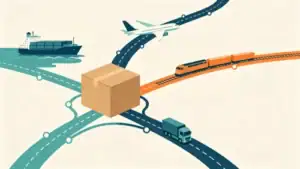
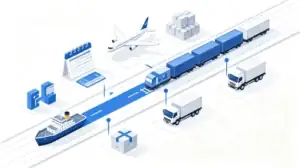
1. First-Mile: Move From a Single Mode to a Hybrid Model
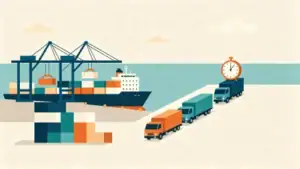
In 2026, relying entirely on air small-packet or full sea container shipping is no longer cost-effective. You need to mix modes based on product type and sales speed.
-
Fast-moving, small, light items (e.g., accessories, small electronics): Use air freight + expedited customs clearance. Delivery in 3-5 days to a local warehouse. You pay a bit more in shipping, but platforms tend to favor faster listings.
-
Heavy or bulky items (e.g., home goods, luggage): Go with full container shipping + deconsolidation. Costs are 60-70% lower than air freight, but you need to plan 45 days ahead.
-
Seasonal or promotional products (e.g., flash sale items): Try air-to-truck (air freight to a hub, then truck/rail). Costs about 20% less than pure air freight.
Key rule: Match your first-mile method to inventory turnover. If turnover is under 30 days, use air freight. If over 45 days, use sea freight. For new products, test with air first, then switch to sea once sales stabilize.

2. Warehouse Placement: From One Per Country to Regional Hubs
Setting up a warehouse in every Southeast Asian country in 2026 is unrealistic for most sellers. A smarter move is a regional hub + local delivery partners.
-
Indonesia: Jakarta warehouse covers Java (70% of e-commerce orders). For outer islands like Sumatra and Kalimantan, use third-party delivery.
-
Thailand: Bangkok warehouse serves the central and south; Chiang Mai warehouse for the north. Traffic in Bangkok is bad — pick a warehouse near the airport or a platform’s sorting center.
-
Vietnam: Two hubs in Ho Chi Minh City and Hanoi. Shopping habits differ between the north and south — separate stock saves cross-region transfer costs.
-
Philippines: One core warehouse in Metro Manila (Pasig, Makati, etc.) covers 70% of orders. Other islands get 2-3 day delivery.
-
Malaysia: Port Klang near Kuala Lumpur is the best spot — it’s a transport hub and also serves Singapore orders well (common for cross-border sellers).
Why regional hubs work: You keep inventory in fewer places, save on working capital, and can connect to multiple platforms’ official warehouses (like FBT or FBY). One stock pool serves many sales channels.
3. Last-Mile: Design for Real Local Conditions
Speed isn’t the only problem in Southeast Asia — delivery success rates and COD (cash on delivery) rejections are just as painful. For 2026, consider these steps:
-
Address clean-up: Force Google address auto-complete at checkout. This alone can cut address-related delivery failures by 20%.
-
Flexible delivery windows: Offer evening (6–10 PM) or weekend slots for office workers. This improves success rates.
-
COD risk reduction:
-
For high-rejection areas (e.g., some outer islands in Indonesia), set a minimum order value to disable COD.
-
Send a WhatsApp or SMS reminder before delivery with a product photo — this can reduce rejections by 15-20%.
-
-
Pickup points: Work with local convenience stores (7-11, FamilyMart). Shoppers in the Philippines and Thailand often prefer picking up parcels there, which cuts down on missed deliveries.
4. Reverse Logistics: Handling Returns Locally Is a Competitive Edge
Return rates in Southeast Asia are expected to hit 8-15% in 2026 (even higher for clothing). Sending returns all the way back to China is too expensive. Better options include:
-
Local return hubs: Send returns to a local warehouse for inspection. Good items go back on sale; damaged ones are refurbished or sold at a discount locally; unsalvageable ones are disposed of.
-
Swap before return: For sizing issues, let customers request an exchange right away. Ship the new item from the local warehouse while they return the old one — less waiting.
-
Return insurance: Work with insurers to offer return insurance. You pay a small premium, and the insurer covers part of the return loss.
Practical tip: Make sure your warehouse contract clearly states return handling fees (per piece or per kg). Also try to get a free storage period (e.g., 30 days) for returned goods — otherwise reverse logistics eats into your margin.
IV. How to Evaluate a Logistics Partner in 2026
Use these five metrics to compare providers:
-
First-mile on-time rate: If they promise 7 days but take 10+ regularly — drop them. A deviation over 30% is a red flag.
-
Customs success rate: Percentage of shipments that passed customs without being seized in the past year. Should be above 98%.
-
Last-mile delivery success rate: After excluding buyer rejects, the actual signed-for rate. Top performers achieve over 95%.
-
Loss/damage transparency: Do they clearly state compensation per kg or per piece? Are there rules like “pay double if no tracking update for 30 days”?
-
System integration: Can they push tracking data automatically to Shopee, Lazada, or TikTok Shop via API?

V. Tech Tools for Data-Driven Logistics
| Logistics Area | Recommended Tool Type | Expected Benefit |
|---|---|---|
| First-mile rate comparison | Freight calculator (aggregates multiple forwarders) | Compare 3-5 prices in 10 seconds |
| Inventory alerts | Multi-channel sync system (e.g., TradeGecko) | Auto-trigger restock when stock falls below safety level |
| Shipment tracking | Carrier-agnostic tracker (e.g., AfterShip) | Customers see whole journey in one place; cuts support queries by 50% |
| COD reconciliation | Auto-reconciliation with payment gateways | Daily report of signed-for but unpaid orders; frees up cash flow |
| Return analysis | QR-based return tagging | Generates reports on “sizing issue”, “damaged”, “changed mind” — helps improve products |
Start small: You don’t need to buy all these at once. Begin with Excel and free tools (like 17TRACK). When your annual logistics spend passes a certain level, upgrade to paid systems. The real goal is fewer manual errors and faster response to problems — not technology for its own sake.
VI. 2026 Peak Season Logistics Timeline
For known 2026 sale events (9.9, 10.10, 11.11, 12.12), here’s a suggested shipping and stocking schedule:
-
Sea freight deadline: 50 days before the sale (e.g., July 20 for 9.9). Avoid port congestion during typhoon season (Aug–Sep).
-
Air freight deadline: 20 days before the sale. Two weeks out, space gets tight and rates jump 30-50%.
-
Warehouse cut-off for inbound stock: 15 days before the sale. After that, warehouses focus on processing orders, not receiving bulk shipments.
-
Apply for “local shipping” badge: 10 days before the sale in the platform’s backend to get traffic support.
For sellers joining Southeast Asian peak season for the first time in 2026, start with one country (e.g., Malaysia). Test the timeline there, then copy what works to other markets. There’s no universal logistics plan — you’ll always need to tweak based on each country’s holidays, weather, and port efficiency.

ABout AMZ Shipper
AMZ Shipper has several years of experience for international logistics Freight Forwarding service. Our service is for importer and exporter, foreign freight forwarders, local and abroad business. Export of 1500 of 40HQ per year for FBA Amazon shipping, 15-30tons of air shipments per month.
Member of WCA. Our company is a professional Amazon freight forwarder that specializes in providing comprehensive and efficient services to customers.