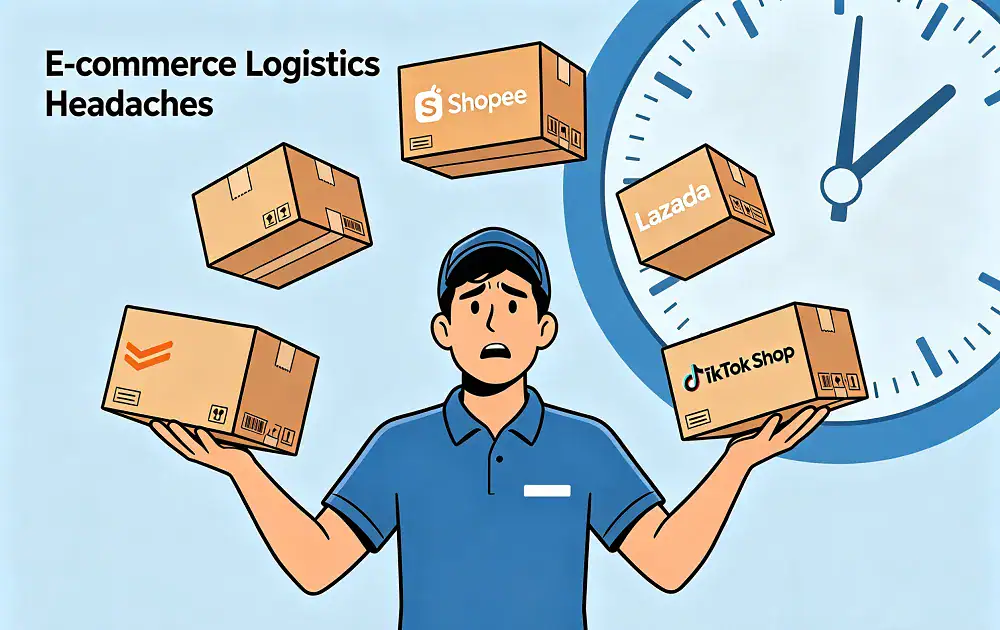
Selling on e-commerce platforms like Shopee, Lazada, and TikTok Shop can be a goldmine. But let’s be real – the logistics part is often a headache. Even when orders are flying in, one small shipping delay or a lost package can turn that “win” into a refund request and a frustrated customer.
Each platform has its own logistics system. They sound helpful in theory, but sellers regularly run into real-world problems. In this article, we’ll walk through the common logistics challenges across these platforms, the unique issues each one brings to the table, and practical solutions you can actually use.
First Off, How Do These Platforms Handle Logistics?
It helps to know the basics first.
-
Shopee runs most of its shipments through Shopee Logistics Service (SLS) . Sellers send products to a local hub, and Shopee takes over from there – including sorting, international shipping, and last-mile delivery.
-
Lazada has its own Lazada Logistics network. It’s somewhat similar but with tighter integration in countries like Indonesia and Thailand, especially for customs clearance.
-
TikTok Shop is a bit newer. Its cross-border logistics system is still evolving, and many sellers rely on a mix of platform-managed shipping and third-party help to keep up with sudden traffic spikes from viral videos.
On paper, all good. But in reality? Things get messy.

Common Logistics Problems Across All Three Platforms
No matter which platform you sell on, these problems tend to pop up.
1. Unpredictable Pickup Times
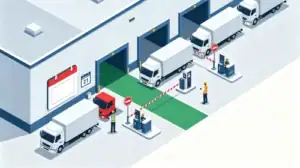
Platforms often promise to pick up orders from your warehouse on a set schedule. But when order volume spikes, pickups get delayed. Your shipment sits there for an extra day or two. That directly hurts your On-Time Delivery rate.
2. Hidden or Volatile Costs
Shipping fees are rarely straightforward. Dimensional weight, peak season surcharges, remote area fees – they add up quickly. By the time you calculate your real costs, your margin might have already taken a hit.
3. Broken Tracking Information
Ever had a customer ask, “Where’s my package?” and you look up the tracking number – only to see no updates for five days? That happens a lot. Once the parcel leaves the destination country’s sorting center, tracking often goes silent until delivery. This creates endless customer service headaches.
4. Return and Refund Chaos
Each platform has its own return policy, but few make it easy for cross-border sellers. If a buyer in the Philippines returns a faulty item, can you get it back? Usually no. Most small sellers just write off the loss.
| Logistics Challenge | What It Looks Like | Impact on Seller |
|---|---|---|
| Pickup delays | Platform doesn’t collect on time | Lower seller rating, risk of penalty |
| Hidden fees | Surcharges for remote zones or heavy volume | Shrinking profit margins |
| Poor tracking | No updates for days | More customer complaints, disputes |
| Return inefficiency | Can’t easily retrieve returned goods | Lost inventory and revenue |
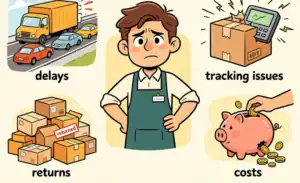
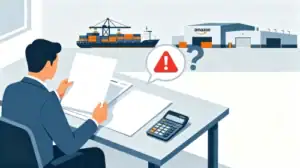
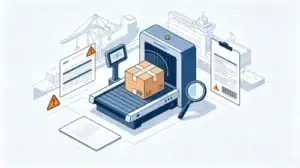
A worried seller surrounded by scenes of delays, tracking issues, returns, and costs
Now, What’s Unique to Each Platform?
Beyond the common issues, each platform has its own quirks.
Shopee: Fragmented Inventory Across Different Regions
Shopee operates multiple sites (Malaysia, Thailand, Indonesia, etc.), each with its own warehouse network. If you want to sell in three countries, you’d ideally keep stock in three separate local warehouses. For a small seller, that’s a logistical and financial stretch. Moving stock from one country to another costs time and money.
A workaround
Some sellers use a centralized third-party warehouse that can distribute to different Shopee hubs. This reduces the need to split inventory too thinly.
Lazada: Strict Customs Clearance (Especially in Indonesia)
Lazada has a strong focus on the Indonesian market. But Indonesia is known for its strict customs rules. A simple mistake in the product description or HS code can get your package stuck at the border for weeks. Buyers get annoyed, and you lose trust.
What helps
Having a logistics partner that understands local clearance rules makes a huge difference. You want someone who knows exactly what documents each product category needs.
TikTok Shop: Wild Demand Spikes Without Warning
TikTok Shop is exciting because one video can explode and bring thousands of orders overnight. But here’s the dark side – most sellers aren’t prepared for that volume surge. The platform’s own shipping system can get overwhelmed. Orders get delayed, and suddenly your store is flooded with “Where’s my order?” messages.
A practical fix
Keep buffer stock at a nearby third-party warehouse that can ship within 24-48 hours. That way, when a video goes viral, you don’t panic – you just fulfill.

Solutions That Actually Work (And Why Third-Party Logistics Makes Sense)
So, how do successful sellers deal with these challenges? They don’t rely on platform logistics alone. They add a layer of flexibility by working with independent logistics providers.
Here’s why that approach works:
-
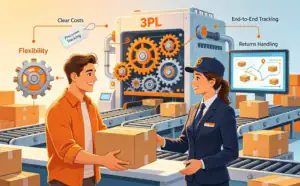
More flexibility – You can repack, merge shipments, add branding, or split deliveries. Platform logistics usually don’t allow that.
-
Clearer costs – No sudden surcharges. You get a simple, upfront price for freight, handling, and delivery.
-
End-to-end tracking – A good logistics partner gives you one tracking number that works from your warehouse to the customer’s door.
-
Better returns handling – Some third-party services help with local returns, inspection, and even resale.
| Platform | Unique Pain Point | Example Solution |
|---|---|---|
| Shopee | Fragmented inventory across regions | Centralized third-party warehouse feeding multiple Shopee hubs |
| Lazada | Tough customs in Indonesia | Partner with local clearance experts |
| TikTok Shop | Sudden demand spikes | Pre-position stock at a fast-response warehouse |
How to Pick a Logistics Partner (5 Things to Look For)
If you’re thinking about bringing in external logistics support, don’t just pick the cheapest option. Look for these five things first.
1. Local Warehouse in Your Shipping Country
Do they have a physical warehouse where you can store inventory before it goes to the platform hub or directly to customers? That cuts down delivery time significantly.
2. 24/7 Customer Support
Sounds simple, but many logistics companies only work business hours. When a shipment goes wrong at 10 PM on a Saturday, you want someone to talk to.
3. Strong Local Partnerships
Check if they have reliable agents in the destination country – for customs, last-mile delivery, and returns. No single company can do everything alone.
4. Insurance or Compensation Policy
Ask upfront: if they lose a package, what happens? A clear compensation policy shows they stand behind their service.
5. Proof of Experience
Request case studies or testimonials from sellers on similar platforms. A provider that has already handled Shopee or TikTok Shop orders will understand your daily reality much better.

ABout AMZ Shipper
AMZ Shipper has several years of experience for international logistics Freight Forwarding service. Our service is for importer and exporter, foreign freight forwarders, local and abroad business. Export of 1500 of 40HQ per year for FBA Amazon shipping, 15-30tons of air shipments per month.
Member of WCA. Our company is a professional Amazon freight forwarder that specializes in providing comprehensive and efficient services to customers.