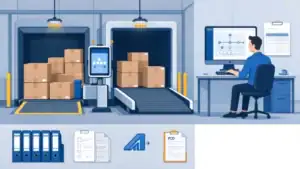
Starting in 2026, Thailand is changing how it taxes imported goods. Before this, packages valued under 1,500 baht were basically tax-free. You only paid a small VAT fee. But from January 1, 2026, things are different. Thailand’s Customs Department says every shipment worth 1 baht or more must go through full customs clearance. That means paying the base tariff plus a 7% VAT. So what does that actually mean for sellers? If you sell small items like fashion accessories or phone cables, your total tax bill could jump from almost nothing to a significant chunk of your product’s value. This is where a good freight forwarder starts to matter — not just for moving boxes, but for helping you figure out how to clear customs without overpaying.
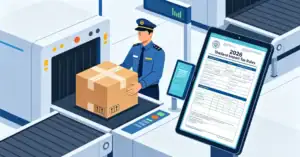
So what does that actually mean for sellers? If you’re selling small items like fashion accessories, home gadgets, or phone cables, your total tax bill could jump from almost nothing to a pretty significant chunk of your product’s value. Some products might get taxed at 30% or more.
At the same time, Thai customs has upgraded its inspection systems. They’re now connected to major platforms like Lazada, Shopee, and Temu. Those platforms share real transaction prices directly with customs. Trying to declare a lower value on your shipping documents? It’s way riskier now.
But here’s the good news. You don’t have to just accept higher costs and move on. A good freight forwarder can actually help you figure this out. Their job is shifting from “moving boxes from A to B” to “designing smart clearance solutions.” Here are four practical strategies that work.
1. Switch to DDP or Door-to-Door Services
Under the old rules, many sellers used “unpaid delivery” methods. Basically, the buyer in Thailand paid the taxes when the package arrived. That sounds easier for you as the seller, but it causes real problems. Buyers get annoyed by surprise fees. Some refuse to accept the package entirely. Then you’re stuck with return shipping fees and angry customer emails.
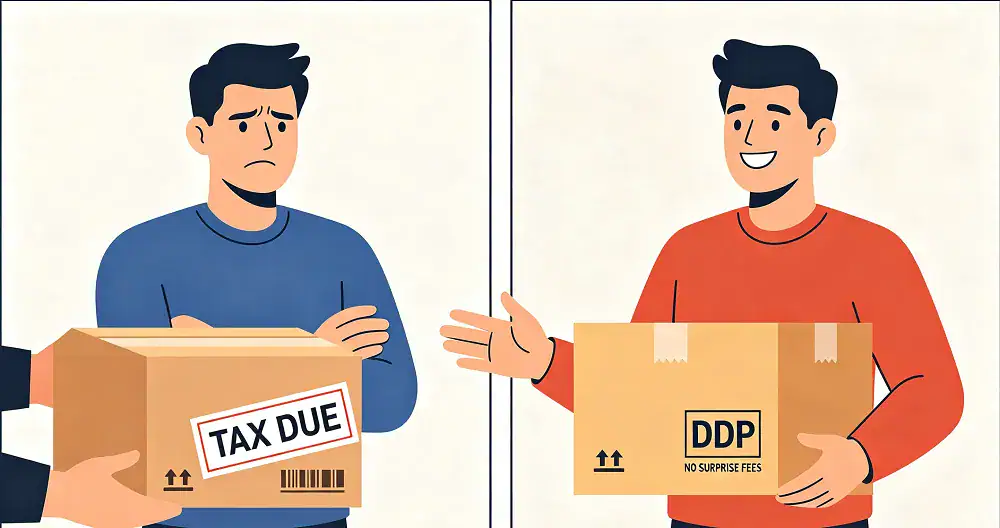
With DDP services, you handle all the taxes upfront. Yes, it looks like your cost went up. But let’s be real about the numbers.
| Comparison Point | Unpaid Delivery (Buyer Pays) | DDP Door-to-Door |
|---|---|---|
| Customer experience | Has to pay extra; might refuse package | No surprise costs; smooth delivery |
| Return risk | High risk | Very low |
| Clearance speed | Depends on buyer responding; could take days | Pro forwarder handles it; usually cleared same day |
| Hidden costs | Storage fees for returns, redelivery fees | None |
Professional forwarders work with Thai customs brokers regularly. They can combine many small packages into one batch clearance. That spreads the cost across all the packages. AMZ Shipper’s Thailand door-to-door service actually ends up costing less than what many sellers calculate on their own for “freight plus estimated taxes.”
2. Use RCEP and ASEAN Origin Rules Smartly
This is where experienced forwarders really earn their value. Most small sellers don’t know these rules exist.
Thailand is part of the China-ASEAN Free Trade Area. And the RCEP agreement is fully active now. Under the ASEAN trade rules, products can get a FORM E certificate. For many product types, that drops the tariff to 0%.
But here’s what surprises most sellers: your product doesn’t need to be 100% made in Thailand. Using “regional value content” or “tariff classification change” rules, even products with mostly Chinese components can qualify for Thai origin status. The key is finishing a simple processing step in Thailand — assembly, packaging, labeling, something like that.
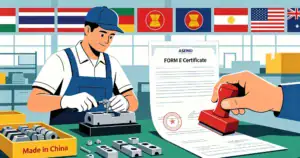
What can a freight forwarder actually help with?
-
Review your products to see which ones could qualify for lower rates by moving just the final steps to Thailand
-
Plan the logistics so semi-finished goods go to a Thai border processing zone first
-
Get the origin certificates through their Thai customs partners
This doesn’t just help with Thai tariffs. You can reposition yourself from a pure “China to Thailand” seller into a regional supplier using both countries.
3. Move from Direct Small Parcels to Warehouse Stock
Under the new rules, each small package pays its own fixed clearance fees. That adds up fast. One lightweight item might not seem bad. But multiply it by hundreds or thousands of shipments.
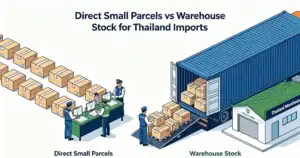
If you send a full container or consolidated shipment into a Thailand warehouse, you pay clearance costs once. Then those costs get divided across every single item in that shipment.
| Factor | Direct Small Parcel (One Item) | Warehouse Stock (Full Container) |
|---|---|---|
| How many clearances | Every package | One shipment |
| Clearance cost per item | High | Low |
| Restock time | 5-10 days (shipping + customs + delivery) | 1-3 days local delivery |
| Best for | Testing new products, high-value items, non-standard goods | Consistent sellers, bulky items |
| Inventory planning needed | Not much | Yes, you need a plan |
If you already sell decent volume in Thailand, moving your steady products to a “full container to warehouse + local delivery” model works really well. You get lower shipping cost per item. Your delivery time drops to 1-3 days, which helps conversion rates. And you stop dealing with customs for every single package.
A freight forwarder helps here by finding you a compliant Thai warehouse, designing consolidated shipping to lower your upfront costs, and handling any returns or exchanges.
4. Get Your HS Codes and Declarations Right
Here’s what’s changed most noticeably in 2026: customs inspections are way more common. According to Thai Customs public data from the first quarter, inspection rates for e-commerce packages went from under 5% to around 25-30%. When customs stops your package, you pay extra fees. Your shipment gets delayed a week or more.

Common mistakes include:
-
Picking the wrong HS code. Two similar products might have different tax rates based on small differences in materials or function.
-
Declaring a value that doesn’t match what the customer actually paid. Platform data sharing makes this easy to catch.
-
Writing vague descriptions like “accessories” without saying what material or purpose.
A professional forwarder assigns someone to check your HS codes before you ship. The process works like this: you provide product details, photos, material info → the forwarder checks Thailand’s customs database for the correct eight-digit HS code → they tell you the base tariff and whether any trade agreement reduces it → you use that information to set your pricing.
For small, low-value but high-quantity items, experienced forwarders might suggest reclassifying them under a parts category with lower rates. Or they might group items under “set” rules. These approaches follow official Thai Customs guidelines. Nothing shady here — just smarter use of existing rules.
AMZ Shipper maintains a pre-screening checklist for Thailand rules covering many common e-commerce product types. You provide basic specs, and the team gives you two or three compliant declaration options with clear notes on what conditions apply and how likely inspection would be.

5. Use Real-Time Tracking and Data Integration
Let’s be honest. The old “wait and wonder” approach to customs clearance is painful. Especially now with higher inspection rates. You don’t want to find out a package is stuck three days after it got flagged.
Good forwarders offer extras that actually matter:
-
Syncing Thai customs status — hold, tax due, released — directly into your order management dashboard
-
Having a local Thai team that responds within a few hours when a package gets held for document or valuation questions
-
Giving you a monthly compliance report on products that regularly have issues, so you can adjust descriptions or packaging
This transparency saves you warehouse storage fees from delayed notice. More importantly, it frees you up to actually run your business instead of chasing down clearance problems.
ABout AMZ Shipper
AMZ Shipper has several years of experience for international logistics Freight Forwarding service. Our service is for importer and exporter, foreign freight forwarders, local and abroad business. Export of 1500 of 40HQ per year for FBA Amazon shipping, 15-30tons of air shipments per month.
Member of WCA. Our company is a professional Amazon freight forwarder that specializes in providing comprehensive and efficient services to customers.