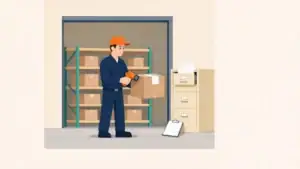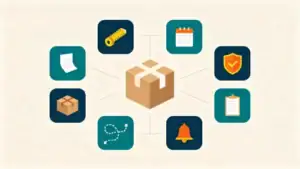
When a lot of Amazon sellers run into problems shipping to FBA warehouses, their first reaction is to blame themselves – didn’t check the labels carefully enough, entered the wrong quantity, forgot to book the appointment.
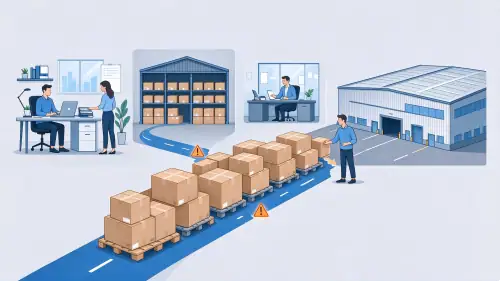
But if you look at it more carefully, most mistakes aren’t caused by carelessness. They’re caused by information gaps. You might have prepared labels carefully, filled in the shipment details correctly, and confirmed the quantities – but your supplier used the wrong barcode type, your forwarder never told you that warehouse deliveries need an appointment, or the importer information on your customs documents doesn’t match your Amazon store entity. These mistakes don’t show up when you ship. They all surface at once when your goods reach the FBA warehouse or customs.
The 2026 rule changes have made information-gap mistakes more costly. FBA prep and labeling services are completely gone, shifting labeling responsibility to the shipper. New FNSKU label rules require non-brand-registered sellers to use FNSKU labels. And inbound defect fees have shot up, making labeling errors more expensive than ever.
Instead of listing a bunch of mistakes, let’s figure out why they happen – and how to close the gaps at the source.
1. Amazon Seller Shipping Mistake 1 – Assuming Your Supplier Understands FBA Requirements
This is the most common mistake new Amazon sellers make, and one of the most costly.
What it looks like: You send label files to your supplier and assume they know how to apply them, where to put them, and what size they should be.
Why it happens: Your supplier does manufacturing, not Amazon FBA logistics. They may have handled FBA orders for other customers, but different customers have different requirements. A supplier with no FBA experience might use UPC/EAN instead of FNSKU, place labels over box seams, or cover them with tape so they can’t be scanned.
The consequence: Your shipment gets rejected at the Amazon FBA warehouse, or you get hit with inbound defect fees.
How to prevent it:
-
Give your supplier a visual labeling guide with pictures – not just a PDF
-
Make it clear: as of March 31, 2026, non-brand-registered sellers must use FNSKU labels
-
Ask your supplier to send photos before sealing the boxes
-
For your first order, ask them to make a sample carton first
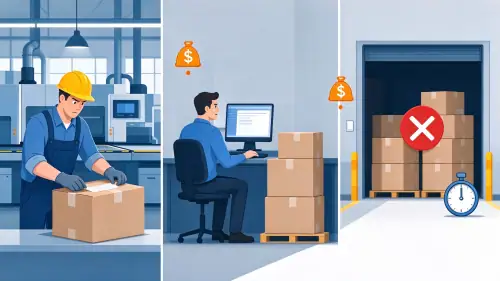
2. Amazon Seller Shipping Mistake 2 – Not Verifying Your Forwarder Actually Understands FBA
What it looks like: You pick a forwarder with a cheap quote and assume “any forwarder can ship to FBA.”
Why it happens: A lot of Amazon sellers pick a forwarder based on price alone, without asking whether they’ve handled FBA shipments, whether they know FNSKU label requirements, or whether they can handle Carrier Central delivery appointments.
The consequence: The forwarder only goes as far as the port, leaving last-mile delivery and warehouse appointments to you. They don’t know the 2026 rule changes, so labeling is non-compliant. Or they clear customs using someone else’s IOR, so you have no one to hold accountable when problems arise.
How to prevent it:
-
Ask specific questions: Where do FNSKU labels go? What’s the max weight per carton for US sites? Do you handle Carrier Central appointments?
-
Confirm whether they know FBA prep services ended in 2026
-
Send a small test shipment first, then scale up
3. Amazon Seller Shipping Mistake 3 – Getting Product Compliance Wrong
What it looks like: Your product doesn’t have the required certifications, or you assume “the forwarder will handle compliance.”
Why it happens: Amazon sellers don’t confirm product compliance at the sourcing stage, or they trust a supplier who says “other customers never had a problem.”
The consequence: Your goods get held at destination customs, clearance gets delayed, or the entire shipment gets sent back.
How to prevent it:
-
Confirm certification requirements by destination and product category before shipping (US: FCC/CPC/FDA; Europe: CE/UKCA)
-
Ask your supplier for compliance documents
-
Confirm “MADE IN CHINA” is marked on every carton
-
For sensitive categories (batteries, magnets, liquids, powders), prepare MSDS, UN38.3, and other documents in advance
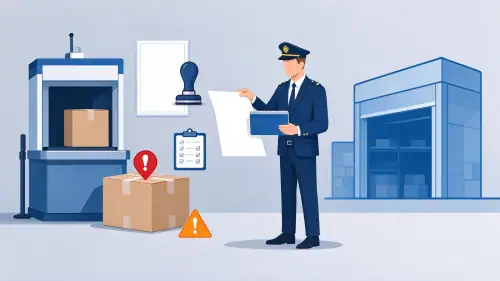
4. Amazon Seller Shipping Mistake 4 – Misunderstanding Who the Importer of Record Is
What it looks like: Assuming the forwarder automatically becomes the importer, or that Amazon can act as the importer.
Why it happens: Many new Amazon sellers don’t understand the legal meaning of Importer of Record (IOR), assuming “the forwarder handles customs” means the forwarder takes on all responsibility.
The consequence: The importer information on customs documents doesn’t match the Amazon store entity, causing clearance failure or cargo detention.
How to prevent it:
-
Be clear: you – the Amazon seller – are the Importer of Record
-
The importer information on customs documents must match the legal entity registered with your Amazon store
-
If using DDP, confirm the forwarder is using its own IOR, not someone else’s
5. Amazon Seller Shipping Mistake 5 – Ignoring Post-Arrival Receiving Tracking
What it looks like: Assuming everything’s fine once the goods reach the Amazon FBA warehouse.
Why it happens: Amazon sellers put all their attention on “shipping” and ignore “what happens after arrival.”
The consequence: Received quantities don’t match, and you don’t catch it in time to dispute. Shipments sit in one status for too long without follow-up. Defect fees appear before you realise there’s a labeling problem.
How to prevent it:
-
Check shipment status regularly after arrival
-
Once it moves to Receiving, check the Reconcile page immediately to verify quantities
-
Dispute discrepancies early – the sooner you catch it, the higher the success rate
-
Keep proof of delivery (POD)
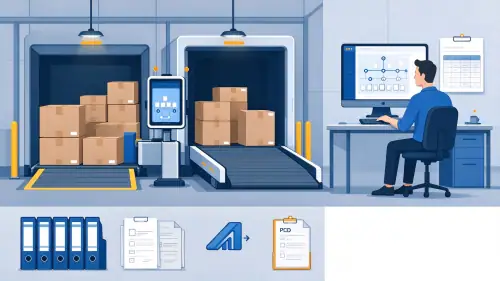
6. Amazon Seller Shipping Mistake 6 – No Buffer in Your Shipping Timeline
What it looks like: Shipping on the tightest possible timeline with no safety buffer.
Why it happens: Amazon sellers calculate “30 days by sea” and assume shipping 30 days ahead is enough, forgetting origin handling, customs clearance, last-mile delivery, and warehouse receiving time.
The consequence: Any small delay causes a stockout – ranking drops, conversion falls, ad spend gets wasted.
How to prevent it:
-
Use door-to-door transit time, not port-to-port
-
Count warehouse receiving time (2-10 days) into your timeline
-
Leave at least 7-14 days of buffer; 14-21 days during peak season
-
Don’t forget your supplier’s production time
7. Amazon Seller Shipping Mistake 7 – Not Archiving Documents and Records
What it looks like: Not archiving commercial invoices, packing lists, bills of lading, customs documents, and tracking numbers after shipping.
Why it happens: Amazon sellers think “the goods arrived, what do I need the paperwork for?”
The consequence: When receiving discrepancies, lost cargo, or customs audits happen, you have no evidence for disputes or claims.
How to prevent it:
-
Archive commercial invoices, packing lists, and bills of lading or air waybills
-
Save customs documents and tracking numbers
-
Keep proof of delivery (POD)
-
Set up a folder for each shipment for easy retrieval
8. Amazon Seller Shipping Mistakes – Quick Reference
| Mistake | Root Cause | Consequence | Prevention |
|---|---|---|---|
| Assuming supplier knows FBA | Information gap | Label errors, rejection | Visual guide, sample confirmation |
| Forwarder doesn’t know FBA | Wrong selection criteria | Failed receiving, defect fees | Ask specific questions, test first |
| Product compliance errors | Not confirmed at sourcing | Customs detention | Confirm certifications early |
| IOR identity unclear | Conceptual misunderstanding | Clearance failure | Clarify seller is IOR |
| Ignoring post-arrival tracking | Attention bias | Receiving discrepancies, defect fees | Check regularly, dispute early |
| No buffer in shipping timeline | Incomplete calculation | Stockouts, ranking drops | Door-to-door time + safety buffer |
| Not archiving documents | Lack of awareness | Can’t dispute or claim | Folder per shipment |

9. How to Plug These Mistakes Before Amazon Shipping
Three checks before shipping:
Check 1: Cross-check three documents
Commercial invoice, packing list, and Amazon FBA shipment plan – product names, quantities, and SKUs must all match exactly.
Check 2: Give your supplier a written checklist
Put Amazon FBA packaging requirements, label specs, carton limits, and country-of-origin marking requirements on one page with pictures.
Check 3: Confirm your forwarder’s capabilities
Use specific questions to assess whether your forwarder genuinely understands Amazon FBA. Don’t just look at the quote.
Two sync actions during shipping:
Action 4: Keep all three parties in sync
Information flow between supplier, forwarder, and Amazon seller must be accurate and timely.
Action 5: Confirm shipment and track promptly
As soon as the forwarder picks up, go back to Seller Central and confirm shipment. Enter the carrier and tracking number.
Two tracking actions after shipping:
Action 6: Check shipment status regularly
From In Transit to Delivered to Checked In to Receiving – pay attention at every stage.
Action 7: Archive every document
Commercial invoices, packing lists, bills of lading, customs documents, tracking numbers, PODs – archive everything.
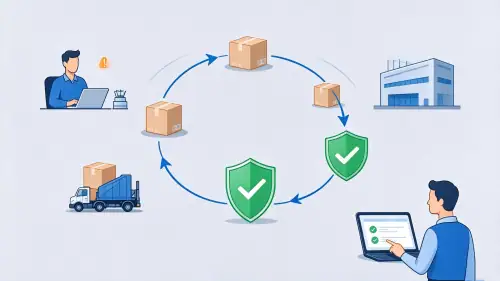
Choosing a logistics partner who offers origin labeling coordination, packaging compliance checks, and end-to-end tracking can close the information gaps at the source. For example, AMZ Shipper focuses on cross-border logistics for Amazon sellers, offering support across origin labeling coordination, destination clearance, and last-mile delivery. But whoever you choose, the key is finding a team that genuinely understands Amazon FBA inbound rules and is willing to go through every item with you before shipping.
Most Amazon shipping mistakes aren’t caused by sellers not being careful enough – they’re caused by information not getting through. Close the gaps between your supplier, your forwarder, and the platform rules, and your goods will have their problems solved at origin – instead of waiting until they reach the Amazon FBA warehouse door to find out something went wrong.