If you’ve been selling on Amazon for a while, you’ve probably felt this: sales are growing, but profit isn’t – because Amazon FBA shipping costs are eating the difference.
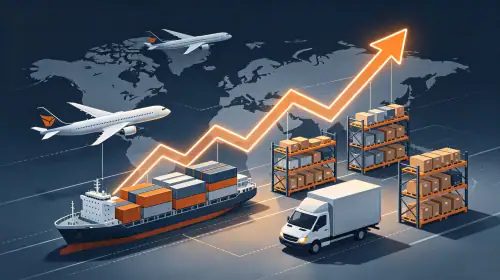
What makes it even trickier is that cutting costs and avoiding stockouts often feel like they’re in conflict. To save money, you go with slow boats – but slow boats risk stockouts. To avoid stockouts, you go with air freight – but air freight costs more. A lot of sellers bounce back and forth between these two dilemmas and end up neither saving money nor protecting their inventory.
This article isn’t going to give you the obvious advice like “find a cheaper forwarder.” Instead, it breaks down Amazon FBA shipping costs so you can see which costs can be cut, which can’t, and how to save money without sacrificing inventory availability.
1. The Wrong Ways to Reduce Amazon FBA Shipping Costs
Let’s start by clarifying which “cost-cutting” moves are actually traps.
Wrong move 1: Picking the cheapest forwarder
The cheapest quote often excludes destination charges, customs clearance, and delivery. The final invoice can be much higher than the quote. Worse, cheap forwarders often lack exception handling capability – if your cargo gets inspected or labels go wrong, all they say is “there’s nothing we can do.”
Wrong move 2: Switching to the slowest boat to save money
Slow boats take longer, which looks like it saves on freight. But if it causes a stockout, the lost sales and ranking drop far outweigh the freight savings. One stockout can take weeks to recover your listing ranking from.
Wrong move 3: Skipping packaging checks
Inbound defect fees from non-compliant packaging can be far higher than the packaging cost you saved. After inbound defect fees shot up in 2026, this calculation looks even worse.
Wrong move 4: Shipping everything in one go
Large batch shipments have lower unit freight costs, but if the goods don’t sell, long-term storage fees eat into your profit.
The core logic: the prerequisite for cost reduction is not hurting inventory availability. Any cost cut that causes a stockout is fake cost reduction.
2. What Makes Up Amazon FBA Shipping Costs
To cut costs, you first need to know where the money goes.
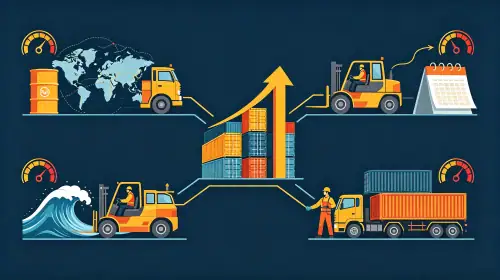
1. Base freight
Ocean freight is priced by cubic meter or per container. Air freight is priced by chargeable weight. This is the most visible chunk.
2. Origin charges
Pickup fees, customs declaration fees, labeling fees, packaging inspection fees.
3. Destination port charges
Terminal handling fees, deconsolidation fees, chassis fees.
4. Customs clearance fees
Duties, VAT, brokerage service fees.
5. Last-mile delivery fees
Trucking from the port or airport to the Amazon FBA warehouse.
6. Surcharges
Peak season surcharges, fuel surcharges, remote warehouse surcharges.
7. Inbound defect fees
Fines for labeling errors and oversized cartons. These went up significantly in 2026.
8. Hidden costs
Lost sales from stockouts, ranking drops, wasted ad spend.
Key reminder: many sellers only focus on item 1 (base freight), but the real savings often come from items 7 and 8. Inbound defect fees and stockout losses eat into profit faster than freight itself.
3. Controllable Levers for Reducing Amazon FBA Shipping Costs
Here are specific ways to lower Amazon FBA shipping costs without sacrificing speed.

1. Optimize packaging to reduce volumetric weight
Air freight and some ocean shipments are charged by volumetric weight. Smaller carton sizes and better packing methods directly lower chargeable weight. This is the one “self-controlled” item that doesn’t wait for market changes.
2. Improve carton utilization
The same goods, packed more tightly, mean fewer cartons and less volume. Work with your supplier to optimize the packing plan – the freight savings can be substantial.
3. Combine shipping methods wisely
Don’t use just one method. Use ocean freight to maintain base inventory and air freight for emergency restocks. Combining methods is more flexible and more cost-effective than relying on one.
4. Plan ahead to avoid peak season surcharges
Peak season surcharges start before the peak actually hits – the later you ship, the more you pay. Plan restocks 2-3 months ahead and complete major batches before surcharges kick in.
5. Use overseas warehouses for forward stocking
Send inventory to an overseas warehouse in the destination country ahead of time, then ship to Amazon FBA from there. It adds some upfront storage cost, but avoids the peak season premium on international transport.
6. Get inbound compliance right
Inbound defect fees are “avoidable costs.” Labels applied correctly, cartons compliant, tracking info complete – get these right, and you save the fines.
4. What You Should NOT Cut When Reducing Amazon FBA Shipping Costs
Some costs look like they can be cut, but cutting them costs you more.
| Looks Like It Can Be Cut | The Cost of Cutting It |
|---|---|
| Skipping packaging checks | Inbound defect fees, rejections, rehandling costs |
| Skipping delivery appointments | Goods can’t get in, detention fees |
| Choosing the slowest shipping method | Stockouts, ranking drops, wasted ad spend |
| Skipping product compliance documents | Customs delays, cargo detention |
| Skipping tracking info uploads | Shipment status issues, hard to dispute receiving discrepancies |
| Picking only the cheapest forwarder | Hidden fees, poor exception handling |
The key judgment: the boundary for cost cutting is not sacrificing compliance, not sacrificing traceability, and not sacrificing inventory availability. Cross that line, and the freight you save will be spent somewhere else.
5. How to Balance Amazon FBA Shipping Costs and Inventory Availability
This is the most critical part of cost reduction – finding the balance between saving money and avoiding stockouts.
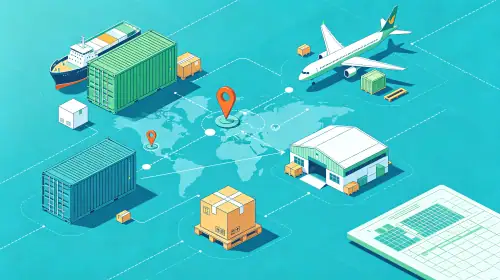
Method 1: Build an inventory days model
Current inventory ÷ average daily sales = sellable days. This number determines how wide your time window is, and which shipping method you can choose. Plenty of inventory days means ocean freight is comfortable. Tight inventory means air freight is your only rescue.
Method 2: Separate “regular restocks” from “emergency restocks”
Regular restocks are planned ahead, using ocean or rail to minimize costs. Emergency restocks ignore cost, using air or express to protect listing rankings. Managing these two separately is clearer than mixing them together.
Method 3: Use overseas warehouses as a buffer
Keep some inventory in an overseas warehouse, and replenish Amazon FBA from there when needed. This way, the international leg can use slow boats to cut costs, while your Amazon FBA warehouse stock doesn’t run out.
Method 4: Adjust shipping rhythm dynamically
Adjust shipping frequency and batch size based on sales trends. When sales rise, restock earlier. When sales decline, reduce batch size to avoid long-term storage fees from overstocking.
Method 5: Calculate the total, not just the freight
One air shipment looks expensive, but if it protects your best-seller ranking, it might be cheaper than a stockout. One ocean shipment looks cheap, but if it generates long-term storage fees, the total cost might be higher.
6. What’s Changed in 2026 for Amazon FBA Shipping Costs
Several changes in 2026 directly affect how much room you have to cut costs.
Change 1: FBA prep and labeling services are gone
Ended for US sites on January 1, 2026, and for European sites on July 1, 2026. Previously, Amazon could label for you – now it must be done at origin. This adds origin handling costs, but they can be controlled through process optimization.
Change 2: Inbound defect fees have shot up
Fines for labeling errors and oversized cartons have increased significantly. This directly changes the math on “skipping packaging checks” – you save a little, you pay a lot.
Change 3: New FNSKU label rules
As of March 31, 2026, non-brand-registered sellers must use FNSKU labels. If your supplier labels incorrectly, your shipment gets rejected.
Change 4: Peak season surcharges arrive earlier and hit harder
In 2026, peak season surcharges came earlier and were steeper than before. Planning ahead is worth more than ever.
7. A Practical Routine for Reducing Amazon FBA Shipping Costs
Here’s how to turn the methods above into daily actions.
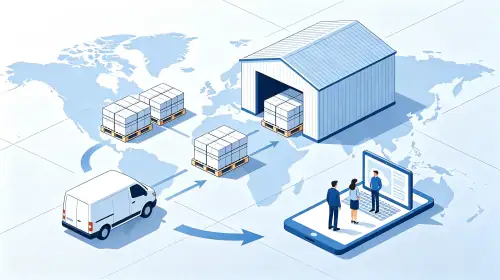
Before shipping
-
Review the packing plan with your supplier to optimize volume
-
Confirm labels and packaging are compliant to avoid defect fees
-
Compare costs and transit times across two or three shipping methods
During shipping
-
Keep all three parties in sync
-
Confirm shipment and upload tracking numbers promptly
After shipping
-
Track warehouse receiving status
-
Verify received quantities
-
Record actual costs for each shipment to build your own cost database
Continuous optimization
-
Review your logistics cost structure quarterly
-
See which cost items are rising and why
-
Adjust your shipping method mix and shipping rhythm
Long-term strategy
-
Build stable relationships with forwarders to secure better space and rates
-
Consider overseas warehouse forward stocking
-
Optimize product packaging design to reduce volumetric weight at the source
Choosing a logistics partner who offers multiple shipping options and is willing to help you analyze your cost structure gives you more levers to pull. For example, AMZ Shipper focuses on cross-border logistics for Amazon sellers and can support combined ocean-air solutions as well as overseas warehouse to FBA replenishment. But whoever you choose, the key is finding a team that’s willing to break down your Amazon FBA shipping costs for you, not just quote a single lump sum.
Reducing Amazon FBA shipping costs isn’t about finding a cheaper forwarder. The real savings live in packaging design, carton utilization, shipping method mix, and inbound compliance. Cut what can be cut, do the non-negotiables properly, and manage your inventory rhythm well – get these three things right, and Amazon FBA shipping costs can genuinely come down without sacrificing inventory availability.