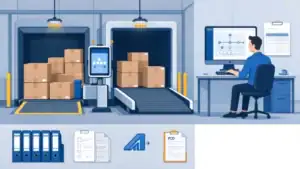
A lot of sellers judge a freight forwarder by one thing only: did the goods arrive on time?
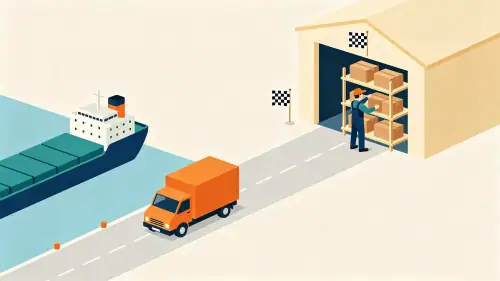
But the finish line for an Amazon FBA shipment isn’t the port – it’s the shelf in an Amazon FBA warehouse. A freight forwarder can get your cargo to the port and deliver on schedule, but if labels are wrong, cartons are oversized, or the delivery appointment wasn’t booked – the goods still can’t get in, or they get in and trigger inbound defect fees.
The 2026 rule changes have made this standard even more important. FBA prep and labeling services are completely gone, so labels must be applied at origin. New FNSKU label rules are in effect, requiring non-brand-registered sellers to use FNSKU labels. And inbound defect fees have shot up, making labeling errors more costly than ever.
A good Amazon FBA freight forwarder doesn’t just handle “transport” – they handle “getting your goods into the warehouse smoothly.” The measure isn’t “did it arrive,” but “did it get in, and did it generate extra fees?” Here’s a checklist to assess whether a freight forwarder’s services are complete.
1. Core Transportation Services Every Freight Forwarder Should Provide
Let’s start with the basics. These are the core transportation services any freight forwarder should offer.
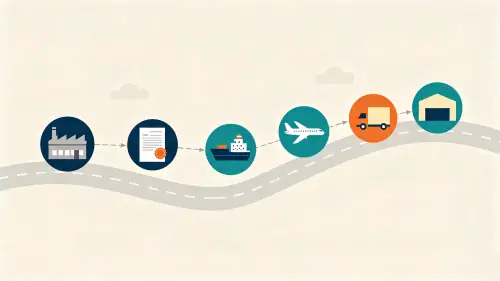
1. Booking and shipping method selection
Based on cargo volume, urgency, and budget, they should offer options like ocean FCL, ocean LCL, air freight, express, and rail – with professional recommendations.
2. Origin pickup
Pickup from the supplier’s factory or designated warehouse, or arranging for the supplier to deliver to the forwarder’s warehouse.
3. Export customs clearance
Preparing commercial invoices, packing lists, customs declaration authorisation letters, and completing China customs export declaration.
4. International transport
Arranging ocean, air, or rail transport, with status updates throughout the journey.
5. Import customs clearance at destination
Completing destination customs declaration, paying duties and VAT (under DDP terms), handling ISF filing (US) and ENS filing (Europe).
6. Last-mile delivery
Delivery from the port or airport to the assigned Amazon FBA warehouse.
The common thread among these basics: they solve the “how do goods get from A to B” problem. A standard freight forwarder typically offers these – but stops there.
2. Amazon FBA-Specific Services a Good Freight Forwarder Must Provide
This is the core of judging whether a freight forwarder truly understands Amazon FBA. Beyond basic transport, they should also provide the following.
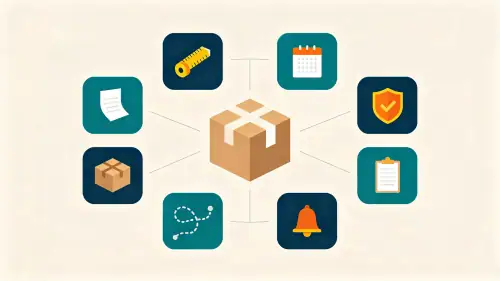
1. Origin labeling coordination or execution
After FBA prep services ended in 2026, labels must be applied at origin. A good freight forwarder should be able to apply FNSKU labels at origin, or at least coordinate the labeling process. If your supplier can’t handle labeling well, this service is essential.
2. Packaging compliance checks
Checking whether carton dimensions, weights, and sealing methods meet Amazon FBA requirements. For US sites, no carton can exceed 22.7kg, and no side can be longer than 63.5cm. Cartons over 15kg need a “Team Lift” label. If a carton doesn’t comply, the freight forwarder should be able to help adjust it.
3. Carton label specification verification
Confirming that carton label size, quantity, and placement meet Amazon FBA requirements. At least two labels per carton, preferably on two opposite sides.
4. Carrier Central delivery appointments
Amazon FBA warehouses don’t accept unscheduled deliveries. A good freight forwarder needs to book delivery appointments through Carrier Central in advance and ensure the appointment time matches the arrival time.
5. Inbound defect fee prevention
This is one of the core values of an FBA-specialised freight forwarder. By getting labels and packaging right at origin, they prevent inbound defect fees at the warehouse. With defect fees having shot up in 2026, this service is more valuable than ever.
6. Carton splitting and consolidation recommendations
Based on Amazon FBA carton requirements, helping adjust the carton plan to ensure every box meets size and weight limits.
7. End-to-end tracking information
Full-chain tracking from origin to the Amazon FBA warehouse, including status updates at origin pickup, customs declaration, vessel departure, arrival, clearance, delivery, and warehouse receiving. You shouldn’t have to chase them for updates every time.
8. Proactive 2026 rule alerts
A good freight forwarder tracks Amazon’s policy changes proactively and tells you before shipping what you need to watch out for – like the end of FBA prep services, new FNSKU label rules, and the increase in inbound defect fees.
3. Freight Forwarder Service Comparison Table
| Service Item | Standard Freight Forwarder | Amazon FBA-Specialised Freight Forwarder |
|---|---|---|
| Booking and transport | ✓ | ✓ |
| Export customs | ✓ | ✓ |
| Import clearance | Sometimes not included | ✓ |
| Last-mile delivery | Sometimes not included | ✓ |
| Origin labeling | ✗ | ✓ |
| Packaging compliance checks | ✗ | ✓ |
| Carton label verification | ✗ | ✓ |
| Carrier Central appointments | ✗ | ✓ |
| Inbound defect fee prevention | ✗ | ✓ |
| End-to-end tracking | Partial | ✓ |
| 2026 rule alerts | ✗ | ✓ |
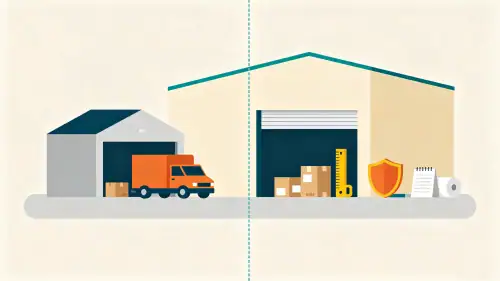
The bottom line: a standard freight forwarder provides “transport services.” An Amazon FBA-specialised freight forwarder provides “transport services plus FBA compliance services.” The extra service items correspond to whether your goods can actually get into the warehouse. That’s also why FBA-specialised forwarders usually quote higher – not because they’re expensive, but because their service scope is broader and their responsibility is heavier.
4. Why These Services Matter More in 2026
Several changes in 2026 have turned FBA-specific services from “nice to have” into “must have.”
Change 1: FBA prep and labeling services are completely gone
Ended for US sites on January 1, 2026, and for European sites on July 1, 2026. Previously, sellers could send unpackaged goods to the warehouse and let Amazon handle labeling – that’s no longer an option. Origin labeling has gone from “optional” to “mandatory.”
Change 2: Inbound defect fees have shot up
Fines for labeling errors, oversized cartons, and missing tracking info have increased significantly. This directly raises the cost of skipping inbound compliance. What used to be a minor penalty can now eat into the profit of an entire shipment.
Change 3: New FNSKU label rules
As of March 31, 2026, non-brand-registered sellers must use FNSKU labels. If a freight forwarder doesn’t know this change, labels can end up wrong.
Change 4: Stricter packaging compliance
Amazon FBA’s packaging requirements keep getting more detailed. Origin packaging checks have gone from “a nice extra” to “a necessary step to avoid rejection.”
5. How to Check If Your Freight Forwarder Is Doing All This
Here are practical questions to ask your freight forwarder.

Question 1: About labeling
“Can you apply FNSKU labels at origin? After FBA prep services ended in 2026, how do you handle labeling?”
Question 2: About packaging checks
“Will you check whether carton dimensions and weights meet Amazon FBA requirements? If not, can you help adjust them?”
Question 3: About delivery appointments
“Do you handle Carrier Central appointments, or do I need to do it myself?”
Question 4: About inbound defect fees
“If labeling or packaging issues cause inbound defect fees, how is responsibility divided?”
Question 5: About tracking
“Do you provide end-to-end tracking from origin to the Amazon FBA warehouse? At which milestones do you proactively update status?”
Question 6: About 2026 rules
“What 2026 FBA changes will affect my shipments? Will you alert me in advance?”
The judgment standard: if they can answer these questions specifically and accurately, their service scope genuinely covers FBA-specific steps. If their answers are vague or they dodge, they’re just treating Amazon FBA shipments as regular cargo.
6. Red Flags of Missing Freight Forwarder Services
These signals suggest a freight forwarder may be skipping things they should be doing:
Signal 1: They only quote transport fees and don’t mention labeling or packaging checks
That means they don’t offer FBA-specific services – just basic transport.
Signal 2: They tell you to handle the warehouse appointment yourself in Seller Central
That means they don’t do last-mile delivery, or they’re not familiar with Amazon FBA processes.
Signal 3: They don’t know FBA prep services ended in 2026
That means they’re not tracking Amazon’s policy updates.
Signal 4: They don’t check carton dimensions and weights
That means the risk of rejection at the warehouse is high.
Signal 5: They don’t provide end-to-end tracking
That means you can’t see where your goods are, and it’s hard to pinpoint issues when they arise.
Signal 6: No exception handling process
If your goods get inspected or rejected and all they say is “there’s nothing we can do” – that means they haven’t prepared any specific response plan for Amazon FBA shipments.
Choose a freight forwarder who provides complete FBA-specific services, gets labeling and packaging right at origin, and proactively alerts you to 2026 rule changes. For example, AMZ Shipper focuses on cross-border logistics for Amazon sellers and can provide FNSKU labeling coordination, packaging compliance checks, and Carrier Central appointment booking at origin. But whoever you choose, the key is finding a team that genuinely understands Amazon FBA inbound rules and clearly explains their service scope – not a freight forwarder that just quotes a freight rate and pushes you to book.
In 2026, a freight forwarder’s service scope has expanded from “moving boxes” to “getting boxes into the warehouse compliantly.” Take the checklist above and compare it against your forwarder – see what they offer and what they’re missing. That tells you far more about whether they’re worth a long-term partnership than the freight quote alone.