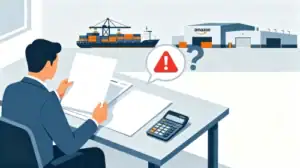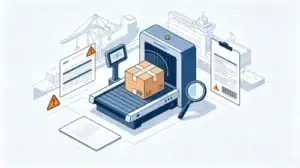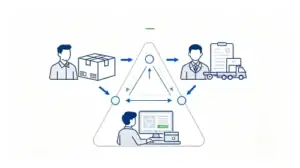
A lot of sellers look for a China freight forwarder the same way: ask in a group chat “anyone used a reliable forwarder?”, or search for “top China freight forwarders,” then pick the one with the lowest quote.

But a freight forwarder you find that way may not suit your goods, your target market, or the way you like to work. Worse, you might only find out they’re unreliable after a few shipments – by which point you’ve already paid in time and money.
This article doesn’t recommend any specific company. Instead, it gives you a complete process, from where to look to how to verify, so you can find and vet a reliable China freight forwarder yourself.
1. What “Reliable” Actually Means for a China Freight Forwarder
Before you start looking, define “reliable.” The word gets thrown around far too casually.
Reliable doesn’t mean cheapest.
Reliable doesn’t mean fastest to reply.
Reliable doesn’t mean biggest.
A truly reliable China freight forwarder should meet several conditions at once:
-
Credentials are real and verifiable – NVOCC, AEO, FMC, and so on
-
They understand Amazon FBA – FNSKU label requirements, carton limits, Carrier Central appointment process
-
Pricing is transparent – quotes are itemised with no hidden fees
-
Communication is smooth – timely replies, specific answers, willing to flag risks proactively
-
Exception handling capability – when problems arise, they give you concrete solutions, not just “don’t worry”

The 2026 context matters here: FBA prep services have ended, new FNSKU label rules are in effect, and inbound defect fees have gone up. These three changes make “do they understand Amazon FBA” the first screening filter for any freight forwarder. A forwarder who doesn’t know these changes could end up costing you more in fines than you save on freight.
2. Where to Find a China Freight Forwarder
Here are the main channels, each with its own pros and cons.
Channel 1: Amazon Service Provider Network (SPN)
Amazon SPN is Amazon’s official directory of certified service providers. Sellers can filter by service type and region in Seller Central. The upside: vetted by Amazon, so credentials have a basic level of assurance. The downside: not all good forwarders are in SPN, and SPN certification doesn’t guarantee good service.
Channel 2: Industry trade shows and networking events
Events like the Canton Fair or cross-border e-commerce expos. You can talk face to face and get a feel for how professional they are. The upside: you can ask questions directly and see if their answers hold up. The downside: high time cost and limited reach.
Channel 3: Seller communities and peer recommendations
Ask other sellers in Amazon groups, forums, and industry communities about their experiences. The upside: real feedback from actual users, with service details. The downside: their forwarder may not suit your goods, and recommendations can carry personal bias.

Channel 4: Search engines and industry directories
Search for “China freight forwarder Amazon FBA” or browse industry directories. The upside: wide choice. The downside: information quality varies, and you have to filter it yourself.
Channel 5: International networks like WCA
Networks like WCA (World Cargo Alliance) bring together freight forwarder members from around the world. Through these networks, you can find forwarders with partner agents in your destination country. The upside: members usually go through basic credential checks, and destination agent resources are more reliable. The downside: you still need to judge each forwarder’s actual service capability.
A suggestion: don’t rely on just one channel. Get candidates from two or three channels at the same time and cross-compare – you’ll filter out unreliable options much faster.
3. How to Verify a China Freight Forwarder’s Credentials
Once you have candidates, the next step is verifying credentials. Don’t just trust what’s on their marketing materials – check official databases.
NVOCC license
Check on the Ministry of Transport website. An NVOCC license means the forwarder can issue its own bills of lading and contract directly with shipping lines. Without it, they have to piggyback on someone else’s license.
China Customs AEO certification
Check on China Customs’ website. AEO Advanced Certified companies have lower inspection rates and faster clearance.

FMC registration (for US-bound routes)
Check on the US Federal Maritime Commission website. US law requires all NVOCCs to register with the FMC and post a bond.
Amazon-recognised credentials (if applicable)
Like SPN service provider, SEND carrier, or FIST carrier. These credentials mean they have integration with Amazon’s systems.
WCA membership
If they claim to be a WCA member, you can verify their status on the WCA website.
The verification principle: every credential they claim should be findable through official channels. If you can’t find it, treat it as if it doesn’t exist.
4. How to Assess a China Freight Forwarder’s Amazon FBA Capabilities
Credentials are the baseline, but credentials don’t equal capability. Here are the core questions to assess a freight forwarder’s Amazon FBA-specific capabilities.
| Area | Question to Ask | Good Answer | Red Flag |
|---|---|---|---|
| FBA label knowledge | Where do FNSKU labels go? Size requirements? | Specific and accurate | Vague or can’t answer |
| Carton limits | Max weight and side length for US sites? | States limits accurately | “Close enough is fine” |
| Delivery appointments | Do you handle Carrier Central appointments? | Yes, we handle them | You do it yourself in Seller Central |
| 2026 rules | How do you handle labeling after FBA prep ended? | Origin labeling coordination | Doesn’t know about the change |
| Customs capability | Whose IOR do you use for DDP clearance? | Our own IOR | Someone else’s IOR |
| Origin services | Can you do packaging checks and labeling at origin? | Yes, with specifics | Only goes as far as the port |
The key judgment: if they can answer these questions specifically and accurately, they’ve genuinely handled Amazon FBA shipments. If their answers are vague or they can’t answer at all, they’re just treating Amazon FBA shipments as regular cargo.
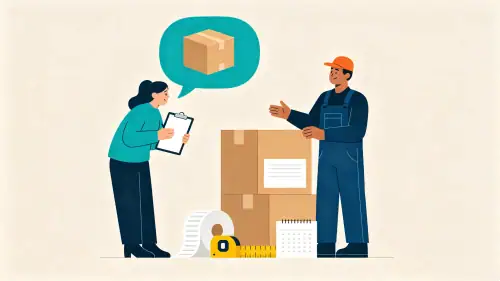
5. How to Evaluate a China Freight Forwarder’s Pricing and Communication
Three principles for evaluating pricing:
Principle 1: Ask for an itemised quote
A good quote should list: base freight, origin charges, destination charges, customs clearance fees, last-mile delivery, and surcharges. Be extra cautious if they only give you one lump-sum price.
Principle 2: Clarify how surcharges work
Peak season surcharges, fuel surcharges, remote warehouse surcharges – are these included in the quote? When do they start applying?
Principle 3: Calculate the total, not just the freight
Ocean freight looks cheap, but after adding destination charges, customs fees, and delivery, the total can be higher than expected. Air freight looks expensive, but if it protects your best-seller ranking, it might be cheaper than going out of stock.
Three signals for evaluating communication:
Signal 1: Response speed
Send a question and see how long they take to reply. If they’re slow on first contact, they’ll likely be slower after you sign.
Signal 2: How specific their answers are
A good freight forwarder gives specific, reasoned answers – not just “don’t worry, no problem.”
Signal 3: Do they proactively flag risks?
A good forwarder tells you before you sign: what risks your goods carry, what you need to prepare, which steps tend to cause problems. If they only tell you what you want to hear, be careful.
6. How to Test a China Freight Forwarder Before Committing
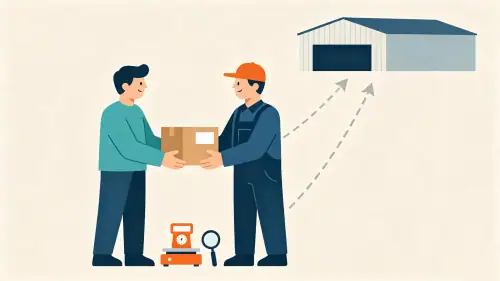
Don’t hand all your inventory to a new freight forwarder right away. Here’s how to test step by step.
Step 1: Send a small test shipment first
Send a small batch. See if communication is smooth, whether the final bill matches the quote, whether transit times hold up, and whether the goods get into the warehouse without issues.
Step 2: Watch how they handle exceptions
If your test shipment runs into problems (delays, inspections, labeling issues), see how they respond. Exception handling says more about a forwarder than smooth sailing does.
Step 3: Confirm information transparency
After shipping, see if they proactively provide tracking updates and sync status at key milestones. If you have to chase them every time, the partnership will be exhausting.
Step 4: Scale up only after it runs smoothly
Once your test shipment is received, accounts are clear, and communication is smooth, then consider scaling up. Don’t let one good experience lower your guard – get at least two or three shipments through before committing long-term.
7. Red Flags When Finding a China Freight Forwarder
Watch out for these warning signs:
Signal 1: One lump-sum price with no breakdown
You can’t assess the cost structure or know if extra charges will pop up later.
Signal 2: Unaware of 2026 Amazon FBA rule changes
If they don’t know FBA prep services have ended, or about the new FNSKU rules – they’re not tracking Amazon’s policy updates.
Signal 3: Can’t provide NVOCC or FMC credentials
Basic requirements for US-bound routes. If they can’t show these, move on.
Signal 4: Claims “Amazon can act as your importer”
That’s seriously misleading. You – the seller – are the Importer of Record.
Signal 5: Can’t handle Carrier Central appointments
This means they don’t do last-mile delivery – they only cover the port.
Signal 6: Promises “guaranteed no inspection” or “100% customs clearance”
No legitimate freight forwarder makes promises like that. Customs inspections are probabilistic – no forwarder can guarantee your shipment won’t be inspected.
Signal 7: Pushes you to sign but won’t answer questions
If they’re eager to get you to commit but dodge your specific questions, that’s a clear red flag.
Choose a freight forwarder who can answer FBA-specific questions accurately, whose credentials are verifiable, and who’s willing to explain costs and risks clearly before you sign. For example, AMZ Shipper focuses on cross-border logistics for Amazon sellers and typically holds international network memberships like WCA, offering support across origin labeling coordination, destination clearance, and last-mile delivery. But whoever you choose, the key is finding a team that genuinely understands Amazon FBA rules and is willing to explain every step clearly.
Finding a reliable China freight forwarder isn’t something you solve by asking “anyone used one?” Get candidates from multiple channels, verify credentials on official databases, assess FBA capability with specific questions, and test with a small batch before scaling up. Go through this process, and your odds of finding a reliable forwarder go up significantly.