On January 1, 2026, Amazon completely ended its FBA prep and labeling service, which had been running for over a decade. Before this, sellers could send unpackaged goods to the warehouse and let Amazon handle the labeling – that’s no longer an option. All goods must now be labeled and compliantly packaged before arriving at the Amazon FBA warehouse.
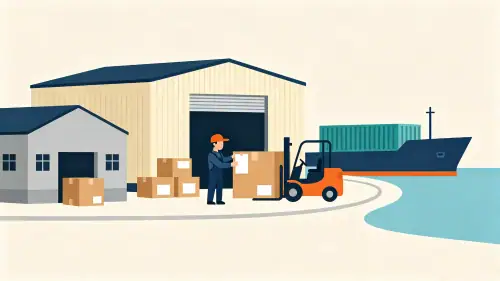
This change has left a lot of sellers asking the same question: can a freight forwarder handle FBA prep for me?
The answer: yes, but there are limits. A professional freight forwarder can typically provide labeling, packaging checks, palletizing, and other origin prep services – but there are things a freight forwarder cannot do for you. Understanding where that line is drawn is the key to knowing which steps to hand off and which you must handle yourself.
1. What Amazon FBA Prep Services a Freight Forwarder Can Provide
A professional freight forwarder can typically offer the following FBA prep services at its origin warehouse.
1. FNSKU label printing and application
A freight forwarder can print and apply FNSKU labels at its origin warehouse. You just send the label files to the forwarder, and they apply them to each unit after the goods arrive at their facility. As of March 31, 2026, sellers who aren’t brand-registered must use FNSKU labels – manufacturer barcodes are no longer accepted. A freight forwarder needs to know this change and make sure they’re applying FNSKU labels, not UPC/EAN.
2. Carton label printing and application
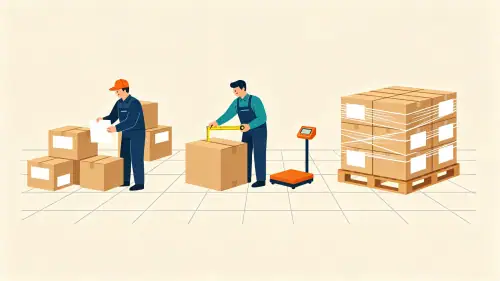
Each outer carton needs FBA box labels, and a freight forwarder can apply them at origin. Typically, two labels per carton are recommended, placed on two opposite sides to prevent wear during transit.
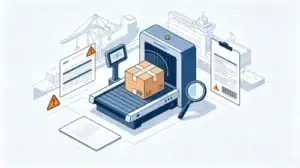
3. Packaging compliance checks
A freight forwarder can check whether carton dimensions and weights meet Amazon FBA requirements. For US sites, no carton can exceed 22.7kg, and no side can be longer than 63.5cm. Cartons over 15kg need a “Team Lift” label. If a carton doesn’t comply, the forwarder can help adjust it at origin.
4. Palletizing and stretch wrapping
For palletized shipments, a freight forwarder can handle palletizing, stretch wrapping, and pallet label application.
5. Poly bag packaging
For products that need individual packaging, a freight forwarder can provide poly bagging services. Amazon FBA requires poly bags to be at least 1.5 mil thick.
6. Re-labeling (label replacement)
If goods have already been labeled incorrectly, a freight forwarder can replace the labels at origin, preventing rejection at the warehouse.
7. Carton splitting and consolidation
Based on Amazon FBA carton requirements, a freight forwarder can help adjust the carton plan to ensure every box meets size and weight limits.
2. What a Freight Forwarder Cannot Do for Amazon FBA Prep
Knowing what a freight forwarder cannot do is just as important as knowing what they can.
1. Create the shipment in Seller Central
The shipment plan must be created by the seller in Seller Central. A freight forwarder doesn’t have access to your account and can’t do this step for you.
2. Generate FNSKU and carton label files
Label files must be downloaded by the seller from Seller Central and sent to the forwarder. A freight forwarder can print and apply them, but can’t generate them.

3. Confirm product compliance
Product certifications (FCC, CE, FDA, CPC, etc.) are the seller’s responsibility with their supplier. A freight forwarder can remind you which certifications are needed, but can’t confirm product compliance on your behalf.
4. Take on Importer of Record legal responsibility
You – the seller – are always the Importer of Record. A freight forwarder can handle customs paperwork for you, but the legal liability for customs clearance rests on you, not the forwarder, and not Amazon.
5. Guarantee Amazon FBA warehouse receiving time
A freight forwarder can deliver your goods to the Amazon FBA warehouse on time, but when the warehouse actually completes receiving and shelving depends on Amazon’s processing queue – the forwarder can’t control that.
3. Freight Forwarder Labeling vs Supplier Labeling vs Amazon Labeling
| Dimension | Supplier Labeling | Freight Forwarder Labeling | Amazon Labeling (Pre-2026) |
|---|---|---|---|
| Feasibility | Depends on supplier capability | Feasible | Discontinued in Jan 2026 |
| Labeling quality | Inconsistent | Professional and stable | Amazon standard |
| Cost | Possibly lower | Included in service or charged separately | Discontinued |
| Flexibility | Low | High | Discontinued |
| Best for | Suppliers with FBA experience | Suppliers without experience or with inconsistent quality | No longer applicable |
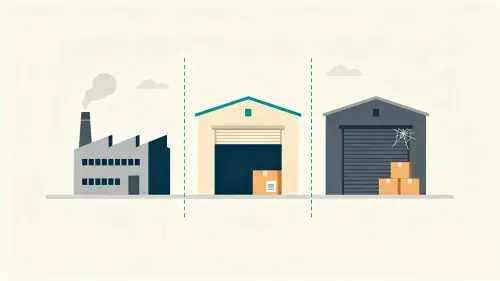
The key judgment: if your supplier has FBA order experience and labeling quality is stable, supplier labeling is the most cost-effective option. If your supplier has no experience, or you can’t confirm labeling quality, having the freight forwarder handle labeling at origin is the safer route. If your supplier is in a remote area and pickup costs are high, you can also consider having the supplier send goods to the forwarder’s origin warehouse and letting the forwarder handle all prep centrally.
4. Why Freight Forwarder FBA Prep Capabilities Matter More in 2026
Several changes in 2026 have made a freight forwarder’s prep capabilities more important than ever.
Change 1: FBA prep and labeling services are completely gone
Ended for US sites on January 1, 2026, and for European sites on July 1, 2026. The service that ran for over a decade, including all paid options, has been discontinued. All goods must be labeled and compliantly packaged before reaching the Amazon FBA warehouse.
Change 2: Inbound defect fees have shot up
Fines for labeling errors, oversized cartons, and missing tracking info have increased significantly. If a freight forwarder handles labeling and packaging checks at origin, the risk of inbound defect fees drops dramatically. The time you save rushing might not cover the fines.
Change 3: New FNSKU label rules
As of March 31, 2026, non-brand-registered sellers must use FNSKU labels. A freight forwarder needs to know this change and make sure they’re using FNSKU labels, not UPC/EAN.
Change 4: Stricter packaging compliance
Amazon FBA’s packaging requirements keep getting more detailed. If a freight forwarder checks packaging compliance at origin, it prevents rejection at the warehouse.
5. How to Tell If a Freight Forwarder’s FBA Prep Capabilities Are Reliable
Here are the criteria to assess whether a freight forwarder’s prep capabilities are solid.
1. Do they offer origin labeling services?
Ask directly: can you apply FNSKU labels at origin after I send you the label files? Is labeling charged separately?
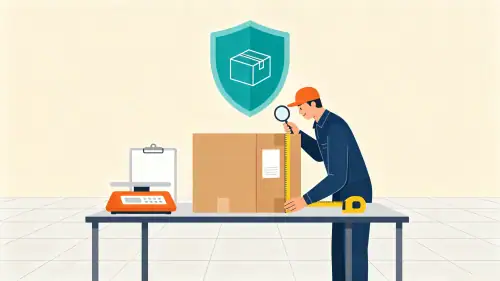
2. Do they check packaging compliance?
Ask directly: will you check whether carton dimensions and weights meet Amazon FBA requirements? If not, can you help adjust them?
3. Are they familiar with 2026 rule changes?
Ask directly: do you know FBA prep services have ended? Do you know about the new FNSKU label rules? If they’re clueless, that’s a red flag.
4. Do they offer re-labeling services?
Ask directly: if goods have already been labeled incorrectly, can you replace the labels at origin?
5. Do they have photo or video records of prep operations?
If they can provide photos or videos of past prep work, they’re actually doing this. If it’s just a verbal “yes, we can,” be cautious.
6. Red Flags When a Freight Forwarder Handles FBA Prep
Watch out for these warning signs:
Signal 1: They don’t know what FNSKU is
“Labeling? Don’t you sellers do that yourself?” – that means they have no clue about Amazon FBA receiving requirements.
Signal 2: They don’t know FBA prep services ended in 2026
If they’re still saying “you can let Amazon label it for you,” they’re not tracking Amazon’s policy updates.
Signal 3: They can’t provide origin labeling services
If they only go as far as the port and labeling is left to you or your supplier, they’re not an FBA-specialised forwarder.
Signal 4: They don’t check packaging compliance
If they only handle transport and don’t check carton dimensions and weights, the risk of rejection at the warehouse is high.
Signal 5: They won’t confirm label files before applying
A legitimate freight forwarder will verify label files before applying – checking size, barcode type, and placement. If they “apply whatever they receive,” that’s risky.
Choose a freight forwarder who offers complete origin prep services, verifies label files before applying, and is familiar with 2026 rule changes. For example, AMZ Shipper focuses on cross-border logistics for Amazon sellers and can provide FNSKU labeling, packaging compliance checks, and palletizing at origin – helping sellers fill the gap when their supplier can’t handle labeling well. But whoever you choose, the key is finding a team that’s willing to get prep right at origin, not just tell you something’s wrong after the warehouse rejects your shipment.
In 2026, a freight forwarder’s prep capabilities have gone from “nice to have” to “must have.” Understand what they can do, what they can’t, and how to tell if they’re reliable – get these three things straight, and you’ll stop problems before your goods even leave the origin warehouse.