For Amazon sellers who are already familiar with the US FBA process, expanding into Canada often feels like the same playbook – until it does not. Amazon Canada has over 37 million consumers and significantly less competition than the US site. But on the logistics side, Canada has its own customs system, its own labelling rules, and a vast geography that punishes sellers who ship without a plan.
This guide covers everything you need to know about shipping from China to Amazon Canada FBA – transport options, 2026 customs compliance, and the DDP vs. DAP decision – so you can expand into Canada with fewer surprises.
Why Amazon Sellers Should Pay Attention to Canada
Amazon holds about 40% of the Canadian ecommerce market – making it the dominant player by a wide margin. Amazon.ca gets over 150 million monthly visits and has more than 75,000 active sellers. More importantly, competition on the Canadian site is noticeably lower than in the US – meaning the same product often has a better shot at the Buy Box and organic ranking.
If you already sell on Amazon US, expanding to Canada through the North America Unified Account is relatively straightforward. Amazon Canada has over 10 FBA fulfilment centres, concentrated mainly in Greater Vancouver (YVR2, YVR3, YVR4) and Greater Toronto (YYZ1, YYZ4, YYZ7).
Transport Options: Three Ways to Ship from China to Amazon Canada FBA
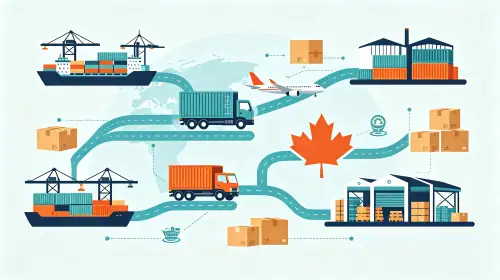
There are three main transport options for shipping from China to Amazon Canada FBA. Each one has very different transit times and use cases – the choice comes down to how urgent your shipment is, how big it is, and how heavy it is.
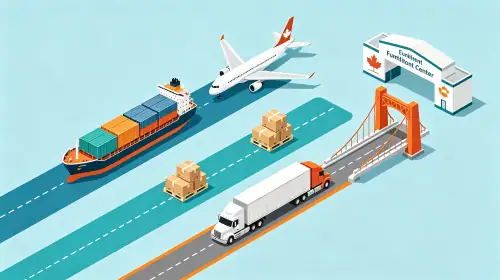
Ocean Freight – most cost‑effective, best for planned bulk replenishment
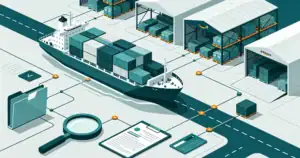
Ocean freight is the most economical way to ship from China to Amazon Canada FBA. Containers depart from major ports like Shenzhen, Ningbo, Shanghai, and Qingdao, and arrive at ports like Vancouver and Prince Rupert.
Transit times vary significantly by destination:
-
Vancouver (West Coast): 15‑25 days to port, about 18‑22 days door‑to‑door
-
Toronto/Montreal (East Coast): 30‑40 days to port, about 25‑35 days door‑to‑door
The Port of Vancouver is the closest North American port to Asia. Routing through Vancouver saves 10‑15 days compared to East Coast routes. If your destination is in the east, cargo moves by rail from Vancouver to Toronto, adding 5‑7 days.
Air Freight – faster, for urgent restocking and high‑value goods
Air freight is the fastest regular shipping method from China to Amazon Canada FBA. The main destination airports are Vancouver (YVR) and Toronto (YYZ).
-
Standard air: 5‑10 days door‑to‑door
-
Express air: 3‑5 days door‑to‑door
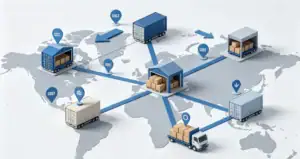
US Transshipment – some sellers ship to a US West Coast warehouse first, then cross‑border truck to Canada. Total transit time is about 22‑28 days, but this route requires customs clearance on both the US and Canadian sides. The extra clearance step means more paperwork and higher risk, so it is generally not recommended as a first choice.
Transport Options Comparison: How Should Amazon Sellers Choose?
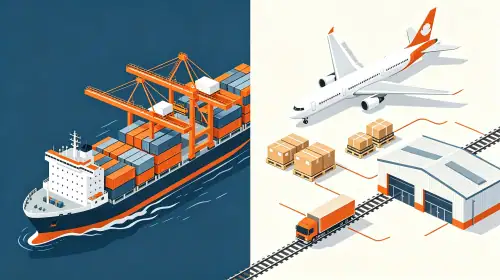
The table below summarises the key differences between the three options to help Amazon sellers decide:
| Transport Mode | Best For | Door‑to‑Door (Vancouver) | Door‑to‑Door (Toronto) |
|---|---|---|---|
| Ocean (fast vessel) | Planned bulk replenishment, regular inventory | 18‑22 days | 25‑35 days |
| Ocean (standard vessel) | Large‑volume restocking, low‑value goods | 22‑30 days | 35‑45 days |
| Standard air | Regular restocking, time‑sensitive | 5‑10 days | 5‑10 days |
| Express air | Emergency restocking, high‑value goods | 3‑5 days | 3‑5 days |
| US transshipment | Sellers with existing US inventory, flexible restocking | 22‑28 days | 22‑28 days |
A quick rule of thumb:
-
Regular replenishment: use ocean freight – it covers 80‑90% of your volume at the best cost
-
Emergency restocking: use air freight – treat it as an “insurance policy” for your top SKUs
-
Q4 peak season: plan ahead – for Black Friday (November 27, 2026) inventory, ocean shipments should leave China by October 10 at the latest
Canada Customs Compliance: What Amazon Sellers Must Know About the 2026 Rule Changes
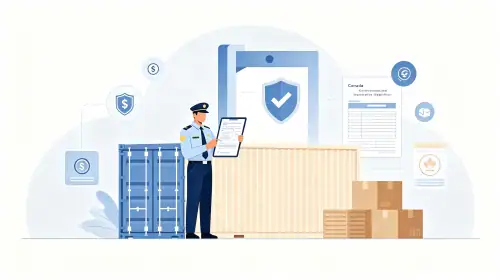
Canada Customs (CBSA) is undergoing a major digital transformation. In 2026, several significant changes have already taken effect or are being rolled out, directly affecting shipments from China to Amazon Canada FBA.
Change 1: CARM mandatory registration – the biggest change
CARM (CBSA Assessment and Revenue Management) is Canada Customs’ digital management system. As of 2026, CARM is now fully mandatory.
Key change: the “Release Prior to Payment” (RPP) privilege is no longer automatically granted. Importers must register on the CARM client portal and provide their own financial security (RPP Bond) before goods can be released without pre‑paying duties.
In practice: if your CARM account is not set up correctly, even if your broker submits a clearance application, the system will reject the release – your cargo will sit at the terminal, accruing storage fees. CBSA has effectively placed a “switch” on the supply chain – no registration, no release.
What sellers need to do:
-
Obtain a Business Number (BN9) from the Canada Revenue Agency (CRA)
-
Register on the CARM client portal
-
Authorise your customs broker to act on your behalf in the portal
Change 2: Joint importer liability
As of 2026, the Importer of Record (IOR) and the cargo owner share joint liability for duties and taxes. Even if you use your forwarder’s IOR for clearance, you as the seller remain liable for the duties and taxes. Choosing a compliant, reliable clearance partner matters more than ever.
Change 3: Labelling service discontinued
Consistent with Amazon US, Amazon Canada discontinued its FBA labelling service on January 1, 2026. Effective July 1, 2026, Amazon Canada also ended its prep service.
All products must be labelled with FNSKU before they reach the FBA warehouse. Goods that arrive without proper labels will not be eligible for reimbursement.
Change 4: Commingled inventory ended
As of March 31, 2026, Amazon Canada discontinued its commingled inventory (Stickerless) program. For sellers who have not completed brand registry, all new FBA inventory must use Amazon barcodes (FNSKU starting with X00).
DDP vs. DAP: Which One Should Amazon Sellers Choose?
When shipping from China to Amazon Canada FBA, sellers need to decide between DDP and DAP/DDU trade terms. This choice affects clearance responsibility, tax treatment, and cost predictability.
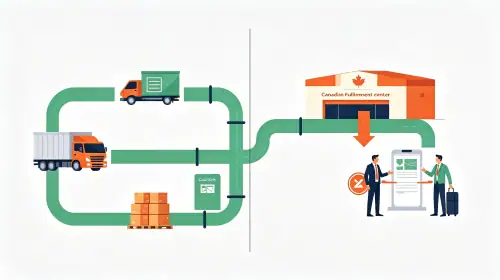
DDP (Delivered Duty Paid) – the seller covers all transport, duties, taxes, and clearance costs until the goods reach the FBA warehouse. The freight forwarder acts as the IOR for clearance and pays duties and GST on your behalf.
Pros: all‑inclusive single price, predictable costs. You do not need to register for a Canadian GST/HST account or deal with CARM registration.
Risk: under DDP, the import GST is credited to the forwarder’s CARM account. You cannot claim it back as input tax credit. That 5% GST becomes a non‑recoverable cost.
DAP (Delivered at Place) – the seller covers transport costs, but duties and taxes are paid by the buyer (the consignee) at clearance. The seller needs their own IOR and CARM account, with clearance handled through a customs broker (POA).
Pros: the 5% GST paid can be claimed as an input tax credit, directly adding to your margin. For sellers with higher monthly sales, that 5% difference is significant.
Risk: you need to register your own BN9 and CARM account and arrange financial security. More operational complexity.
A quick guideline:
-
DDP works better for sellers with smaller volumes, no Canadian entity, or those who want to keep things simple
-
DAP/self‑clearance works better for sellers with higher monthly sales who want to recover the 5% GST and have the capacity to handle Canadian tax compliance
Other Important Changes to Amazon Canada FBA in 2026
Fuel and logistics surcharge (effective April 17, 2026)
Amazon added a 3.5% fuel and logistics surcharge to FBA fulfilment fees in the US and Canada. This applies to FBA, remote fulfilment, multi‑channel fulfilment, and Buy with Prime. The surcharge adds a cost per unit on average, depending on the item’s size and weight.
Very low de minimis thresholds
Canada’s de minimis thresholds are extremely low – CAD 20 for duty and CAD 40 for taxes. The vast majority of commercial imports – including all FBA inventory – are subject to duties and 5% federal GST.
Key Takeaways for Amazon Sellers Shipping to Canada
Vancouver vs. Toronto: 10‑20 days difference. Shipping to Vancouver is 10‑20 days faster than to Toronto. Plan your buffer time based on the location of your destination FBA warehouse.

Canadian port congestion in winter is common. The Port of Vancouver often experiences backlogs during winter weather. Add an extra 5‑7 days of buffer for Q4 peak‑season shipments.
FNSKU labelling must be done in China. Amazon Canada stopped its labelling service on January 1, 2026. All FNSKU labels must be applied before the goods leave China.
Commercial invoices must be detailed. CBSA requires detailed line‑item breakdowns – a vague “500 pcs electronics” will be flagged. Each SKU needs its own line with HS code, unit value, and country of origin.
Wood packaging must be compliant. Canada strictly enforces ISPM 15 standards. Non‑compliant wood packaging will be held for quarantine, incurring fumigation and storage fees.
Plan your Q4 shipments early. For inventory that needs to arrive before Black Friday (November 27, 2026), ocean shipments should leave China by October 10 at the latest.
As a logistics provider focused on cross‑border ecommerce, AMZ Shipper helps Amazon sellers plan their China‑to‑Canada FBA logistics – from transport mode selection and customs compliance to DDP clearance and final delivery – so you can expand into Canada with fewer detours.
ABout AMZ Shipper
AMZ Shipper has several years of experience for international logistics Freight Forwarding service. Our service is for importer and exporter, foreign freight forwarders, local and abroad business. Export of 1500 of 40HQ per year for FBA Amazon shipping, 15-30tons of air shipments per month.
Member of WCA. Our company is a professional Amazon freight forwarder that specializes in providing comprehensive and efficient services to customers.