You shipped your goods, the vessel has sailed, you have paid the invoice – and then your shipment gets stuck at customs because the HS Code was wrong. This is not an exaggeration. The HS Code (Harmonized System Code) is the product classification system used by over 200 countries and territories worldwide. It is developed and maintained by the World Customs Organization (WCO) and covers more than 98% of global trade volume.
An HS Code determines three critical things: the customs duty rate (different codes attract different rates), regulatory requirements (whether you need a licence, inspection, or other controls), and trade statistics (how your product gets counted). For cross‑border ecommerce sellers, getting the HS Code wrong can mean anything from a minor clearance delay to heavy fines and even cargo seizure. This guide explains the logic behind HS Codes, how major markets differ, the most common mistakes, and practical steps you can take to avoid problems.
What Is an HS Code and Why Does It Matter?
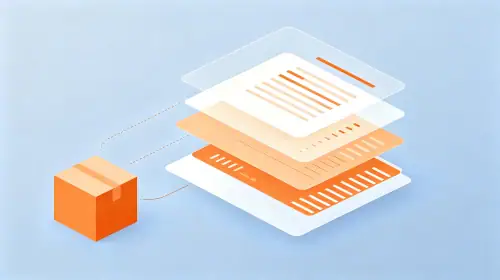
The HS Code is the universal language of global trade. The WCO conducts a complete review of the system every five years. The last major update was HS 2022, and the next full revision – HS 2028 – is expected to take effect on January 1, 2028. Between these major overhauls, the WCO also makes annual adjustments to keep up with changes in trade and technology.
How HS Codes are structured: the first six digits are the same everywhere in the world. Countries can then add extra digits – up to 8, 10, or even more – for their own tariff and regulatory purposes.
-
Digits 1‑2: Chapter (e.g., Chapter 85 = electrical machinery)
-
Digits 3‑4: Heading (more detailed category)
-
Digits 5‑6: Sub‑heading (globally uniform)
-
Digits 7 and beyond: country‑specific extensions for local duty rates and regulations
For example, a cotton T‑shirt has the first six digits 6109.10 – Chapter 61 (knitted apparel), Heading 09 (T‑shirts), Sub‑heading 10 (cotton). Those first six digits are the same in any country, but the additional digits after them will differ from one market to another.
HS Codes Around the World: Same First Six Digits, Different Extensions
While the first six digits of an HS Code are globally harmonised, different countries can have completely different subdivision codes, duty rates, and regulatory requirements for the very same product.
| Market | Coding System | Number of Digits | Notes |
|---|---|---|---|
| Global standard | HS Code | 6 digits | WCO‑managed international standard |
| United States | HTSUS | 10 digits | Maintained by the USITC; determines specific duty rates |
| European Union | CN + TARIC | 8‑10 digits | CN is 8 digits (6 + 2 EU subdivisions); TARIC can go to 10 digits |
| Other countries | Various national systems | 8‑13 digits | Japan, Canada, Australia, etc. all have their own extensions |
Key point: the same product may have the same first six digits in the US and the EU, but the later digits – and therefore the duty rates and regulatory controls – can be very different. Sellers must check the specific requirements of their destination country before shipping. You cannot simply reuse a code from one market in another.
Major HS Code Updates in 2026
In 2026, the HS Code system saw several important changes.

On January 21, 2026, the WCO released its HS 2028 amendment proposals, which include 299 sets of changes affecting 1,229 headings and 5,852 sub‑headings. Although HS 2028 does not officially take effect until January 1, 2028, there have already been changes in 2026 that affect current declarations.
Also on January 21, 2026, the WCO, together with the WHO and the WTO, made a significant update to the HS system by adding new tariff headings for human vaccines and other critical health supplies – to strengthen global preparedness for future health emergencies.
The 2026 updates focus heavily on emerging technologies and sustainable products:
-
Electronics and semiconductors: new sub‑headings for chips and integrated circuits
-
Energy storage products: updated classifications for lithium compounds and hydrogen fuel cells
-
Solar technology: new and revised codes for photovoltaic wafers and related components
-
Chemicals and pharmaceuticals: adjustments for substances that are sensitive to the environment or human health
In addition, the Gulf Cooperation Council (GCC) countries switched to a 12‑digit HS Code system on January 1, 2025. On June 15, 2026, Japan introduced a new rule requiring a 6‑digit HS Code for all low‑value ecommerce imports even under simplified declaration procedures.
What this means is that a code that worked in 2025 may no longer be valid in 2026. If your products fall into any of the affected categories, it is worth reviewing and updating your HS Codes early.
Six Common HS Code Mistakes
Here are six of the most frequent errors cross‑border sellers make when dealing with HS Codes:
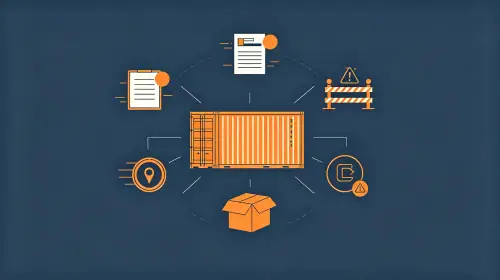
Mistake 1: Guessing based on the name rather than the function. Many sellers classify goods simply by what they are called or what they look like. But the real basis for classification is the product’s core function, how it works, and what it is made of – not its trade name. For example, a smart watch with communication functions cannot be declared as an ordinary watch; a display cabinet with a refrigeration unit cannot be declared as a standard display cabinet.
Mistake 2: Reusing old codes. Many sellers copy codes from previous shipments or guess based on similar products. HS Codes are updated every year, and 2026 has seen significant changes. Using outdated codes will lead to incorrect duty rates and clearance failures.
Mistake 3: Copying the supplier’s code without verification. It is common to take the HS Code directly from a Chinese supplier’s commercial invoice and assume it is correct for the destination country. The supplier’s code may only be suitable for Chinese export declarations, not for import clearance in the US, EU, or elsewhere.
Mistake 4: Ignoring differences between countries. The same product may have different subdivision codes in the US, the EU, and Japan. Declaring only the first six digits without the full code required by the destination country is considered incomplete and can cause delays.
Mistake 5: Using vague product descriptions. Overly broad descriptions like “parts” or “samples” are easily flagged as inaccurate, which can trigger manual inspections, holds, and penalties.
Mistake 6: Not keeping up with code updates. HS Codes undergo a major global revision every five years, and individual countries make annual adjustments in between. Using an obsolete code will cause your declaration to fail.
What Happens When You Get HS Codes Wrong?
The consequences depend on how serious the error is and whether it appears to be intentional.
At the mild end: delays. Your shipment will be held for re‑classification, adding days or even weeks to clearance. Data suggests that cargo delays caused by HS Code errors typically last 7 to 14 days on average.
In the middle: fines and back duties. You may be fined and required to pay the difference in duty. Unintentional HS Code errors often result in penalties ranging from 5% to 20% of the declared value. In some cases, misclassification can lead to fines as high as 100% of the cargo’s value.
At the severe end: seizure and destruction. Goods may be confiscated, returned, or even destroyed. Persistent or serious coding errors can lead to more frequent inspections and further clearance delays.
The worst case: legal action. If the error is deemed deliberate, you could face legal consequences, be placed on a customs blacklist, and have your business credit record damaged.
The real business impact: supply chain disruption, inventory stock‑outs, lost customers, and damage to your brand reputation. In 2025, HS Code errors are estimated to have caused over $5 billion in penalties worldwide.
How to Avoid HS Code Problems: A Practical Checklist
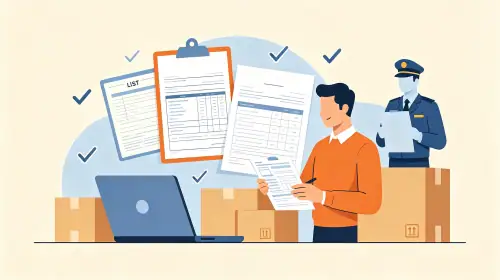
Four Things to Do Before You Ship
First, analyse your product in detail – its materials, function, use, and how it works. Do not rely on its name alone. The core function, working principle, and physical properties are what determine the correct code.
Second, check the official tariff schedule of your destination country – for example, the USITC website for the US, or the TARIC database for the EU. Each country has its own extensions and duty rates, so you must verify them individually.
Third, use official HS Code lookup tools. The WCO provides a searchable database, and most national customs authorities also offer online query systems.
Fourth, if you are unsure, apply for an Advance Ruling on classification. Many countries allow importers to request a formal, binding classification decision from customs before the goods are shipped. This ruling is legally valid and gives you certainty.
Three Things to Watch During Declaration
Declare the full number of digits required by the destination country – 10 digits for the US, 8‑10 for the EU, etc. Do not stop at the first six.
Use specific, accurate product descriptions. Avoid vague terms like “parts” or “samples”. Overly broad descriptions are more likely to be flagged.
Make sure the HS Code matches exactly on your commercial invoice, packing list, and customs declaration. Inconsistent documents are one of the most common reasons for clearance delays.
Two Things for Long‑Term Compliance
Build an SKU‑level HS Code database that includes the correct code for each market you sell to. As your product range grows, having a systematic record will help you avoid mistakes.
Keep track of WCO updates and changes in your destination countries. HS Codes are revised every five years (the next is HS 2028, effective 2028), and most countries also issue annual changes. Staying informed is part of staying compliant.
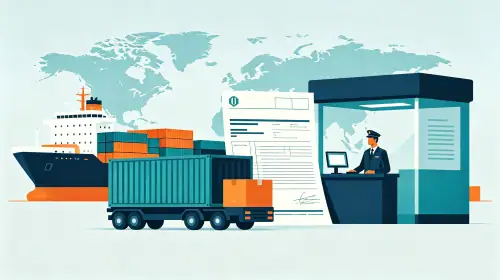
As a logistics provider focused on cross‑border ecommerce, AMZ Shipper helps sellers understand HS Code classification and compliance – from code lookup to document verification – so you can move through customs smoothly in every market you serve.
ABout AMZ Shipper
AMZ Shipper has several years of experience for international logistics Freight Forwarding service. Our service is for importer and exporter, foreign freight forwarders, local and abroad business. Export of 1500 of 40HQ per year for FBA Amazon shipping, 15-30tons of air shipments per month.
Member of WCA. Our company is a professional Amazon freight forwarder that specializes in providing comprehensive and efficient services to customers.