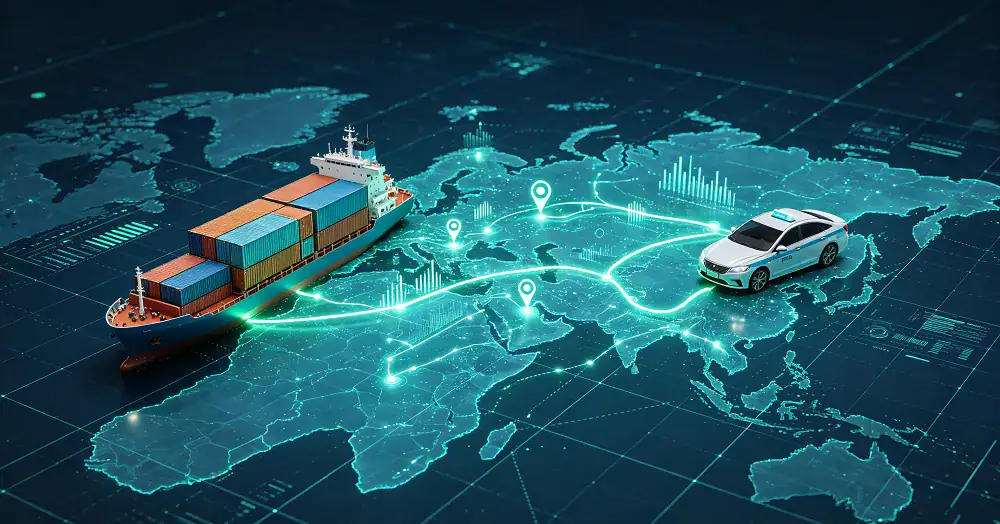
If you’ve used Uber, you probably remember the first time you saw the car’s real-time location, estimated arrival time, and fare on your phone. No phone calls, no “hold on, let me ask the driver” — everything done in seconds. Over the past decade, this experience has reshaped the taxi industry. Now, a similar logic is entering a field that doesn’t sound quite as “sexy”: international freight forwarding.
If you run a small or medium-sized cross-border business, you’re probably familiar with this scene: you send an inquiry email to a freight forwarder with your cargo details and destination, then you wait. A few hours, sometimes a whole day. When the quote finally arrives, you may have already missed a decision window, or the rate has changed. So you ask again, and wait again.
The problem here isn’t that forwarders are unprofessional. It’s that the process relies too heavily on human back-and-forth. And AI instant quoting is changing that.
Why Is Traditional Freight Quoting So Slow?
Let’s break down the whole chain of a traditional inquiry and see where the time goes.
You send an email to a forwarder’s sales rep. The rep needs to confirm your cargo type and route, then check internal rate sheets or contact carriers to confirm space and pricing. The rate itself includes base freight plus a pile of surcharges — fuel surcharges, terminal handling fees, documentation fees, peak season surcharges — each one requiring manual verification. After that, the rep still has to go through internal approval or pricing review before replying to you.
This whole loop takes hours to a full day, even when everything goes smoothly. The bigger problem is that by the time the quote reaches you, the rate may have already changed. The global trade environment has made freight rates more volatile than ever. A quote’s “shelf life” might only be a few hours. You get it, think about it, reply to confirm — and a new price has already appeared.
For large enterprises, this delay might just be an efficiency issue. But for SMEs, a delayed quote can mean missing a shipping window or running out of stock. And SMEs are often the ones with the least bargaining power and the least likely to get priority response from forwarders.

What Exactly Is the “Uber Logic” Behind AI Instant Quoting?
Comparing AI instant quoting to an “Uber for freight” isn’t about “having an app.” It’s about a fundamental shift in how things work behind the scenes.
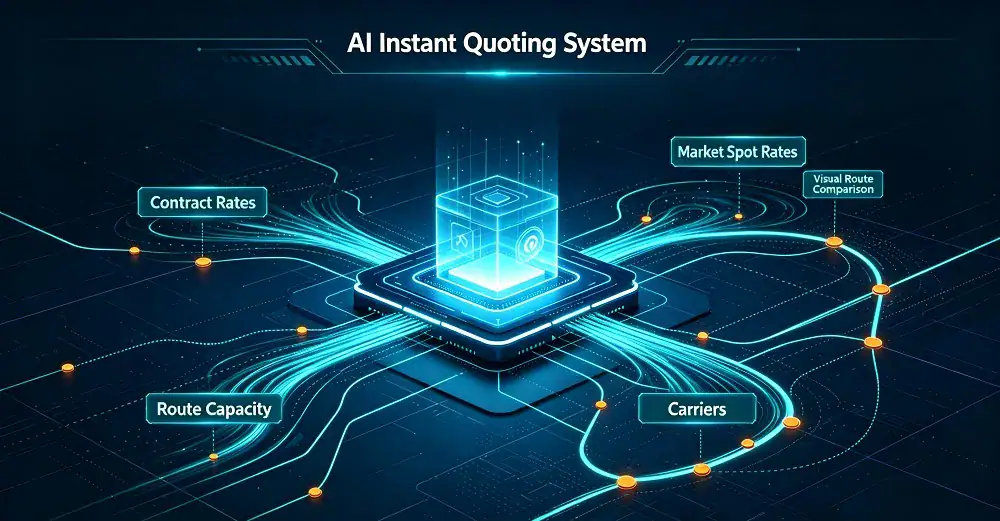
Uber’s core is a matching algorithm plus instant pricing: the system knows in real time which cars are nearby, how high demand is, and calculates a price instantly. AI freight quoting works in a similar way — except “cars” become “space and routes,” and “drivers” become “carriers and partners.” The system pulls from multiple data sources — contract rates, market spot rates, space availability on different routes — and when you enter cargo details and destination, it automatically calculates all costs and delivers results in seconds.
This trend is being validated by major players in the industry. In 2026, DHL and Alibaba signed a memorandum of cooperation to explore integrating DHL’s quoting and booking capabilities into Alibaba’s AI platform, allowing SMEs to “get real-time freight quotes, evaluate shipping options, and complete bookings.” DHL’s Chief Commercial Officer put it plainly: the goal is to let businesses “spend less time managing complexity and more time growing.”
Meanwhile, Project44’s AI freight procurement agent, launched in 2026, has shown real results: early deployment data shows quote cycles cut by up to 75% and manual coordination work reduced by 70%. Freightos’ ocean quoting tool claims it can build accurate LCL and FCL quotes “in seconds,” with all carrier surcharges clearly listed.
These numbers all point in the same direction: quoting itself is shifting from a “human service” to a “system capability.”
How Much Time Can Instant Quoting Actually Save You?
A simple comparison makes the difference clear.
In the traditional model, from sending your inquiry to getting a usable quote, you go through: email back-and-forth (send + wait + read), internal rate checking (possibly involving multiple carriers), surcharge calculation, internal pricing review, and reply. Even when everything goes well, this is an hours-long process — and it only covers one option.
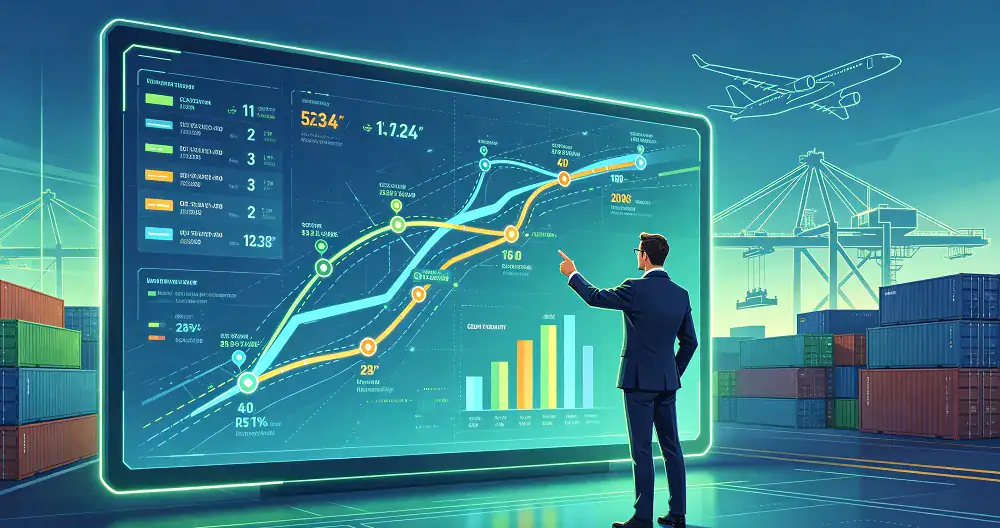
In the AI instant quoting model, you enter cargo details and the system returns results in seconds — and usually more than one option. You can see comparisons across different routes, transit times, and carriers, with each cost item clearly listed. Freightos data shows that users on its quoting and booking platform report saving an average of 2 to 4 days per shipment from inquiry to final delivery.
But the deeper meaning of “saving time” isn’t just that quoting gets faster. What really changes is the pace of decision-making. In the past, you’d get a quote, hesitate, ask again the next day, and the situation might have changed. Now you can compare multiple options in minutes and make a choice on the spot. For SMEs that need to respond quickly to market changes, this decision speed may be worth more than the quote itself.
AMZ Shipper’s Practice: How Instant Quoting Works in Reality
At AMZ Shipper, we treat instant quoting as infrastructure, not a gimmick.
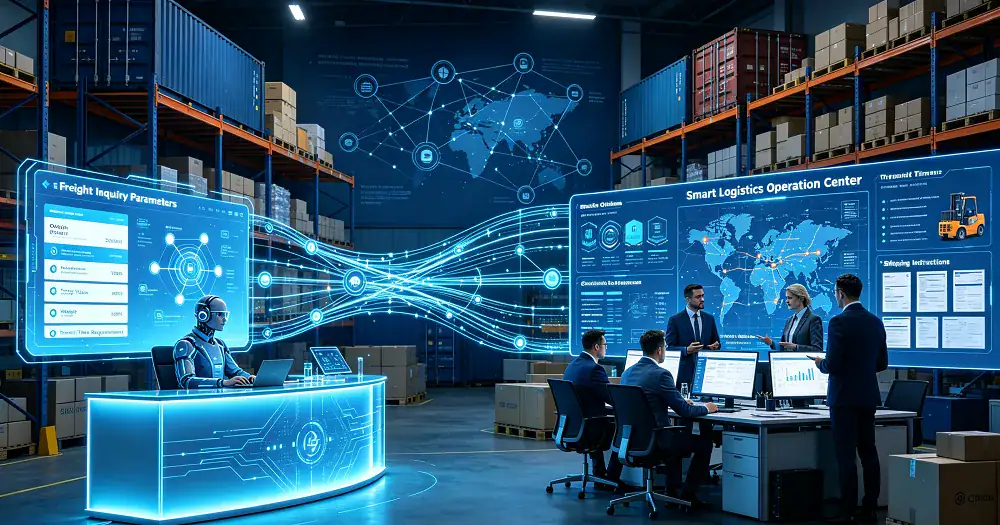
When you submit cargo details through our platform — origin, destination, volume and weight, transit time requirements — the system pulls rate data from multiple channels, automatically calculates costs, and generates comparable options. What you see isn’t just a number, but complete information including route options, estimated transit times, and cost breakdowns. If you have special requirements, such as complex cargo types or destinations with specific customs clearance needs, our human team steps in.
The key to this model is “human + machine”: AI handles speed and standardized calculation, people handle judgment and exceptions. Standard inquiries are completed in seconds by the system — you don’t need to wait for a sales rep to come online or for an email reply. But when cargo involves special categories, complex routes, or you need a customized solution, our people take over. A Uber Freight executive once said something we strongly agree with: “There’s always a dedicated human in the loop.”
Our warehouse network and partner resources are the “back end.” AI quoting is the “front end.” The front end makes communication instant; the back end ensures reliable execution. You need both.
Will AI Quoting Replace Freight Forwarders?
No. But it will change what they do.
AI excels at standardized, repetitive information processing. A routine FCL ocean inquiry with clear cargo details and a regular route can be calculated in seconds. But the truly complex parts of freight forwarding — the parts that really need people — are exactly what AI can’t do yet.
Take special cargo — dangerous goods, cold chain, oversized items — these require human judgment on packaging, declaration, and carrier qualifications. Take customs clearance issues — someone needs to communicate with all parties and coordinate solutions. Or take a customer suddenly asking to change ports, delay, or split a shipment — these non-standard scenarios require experience to figure out the best approach.
A consensus is forming across the industry: AI handles the “normal,” people handle the “exceptions.” When DHL described its cooperation with Alibaba, it emphasized that AI “lets businesses spend less time managing complexity,” not “replace logistics experts.” Uber Freight, while heavily investing in automation, has its executives repeatedly emphasize “balancing automation and human expertise.”
For freight forwarders, AI quoting means they can be freed from repetitive rate-checking and price-calculating work, and spend their time on things that truly require judgment. This isn’t replacement — it’s a restructuring of roles.
How Do You Tell If a Forwarder’s “AI Quoting” Is Actually Reliable?
There are more and more “digital forwarders” out there, but the quality varies a lot. You can judge from a few angles.
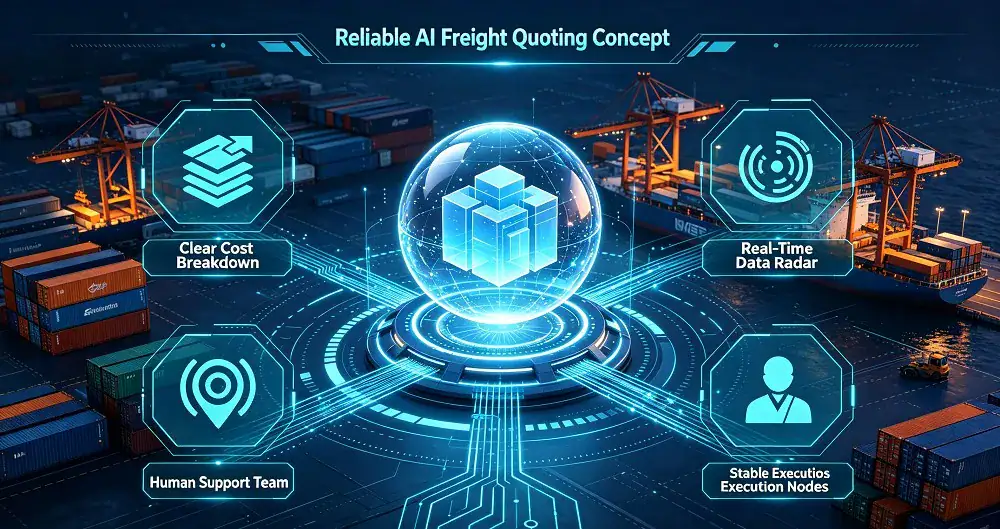
Is the quote transparent? A reliable instant quote should let you see the cost breakdown, not just a “flat price.” What are the base freight, fuel surcharge, terminal fees, and documentation fees? You should know. If the system only gives you a total, you can’t tell whether the price is reasonable.
Where does the rate data come from? Is it real-time data, or a periodically updated rate sheet? The former means the quote reflects the current market; the latter may already be outdated. You can ask the forwarder this question directly.
Is there human backup? If a platform only tells you “the system calculated it, we don’t handle that,” you’ll be stuck when something goes wrong. A good digital forwarder should be able to provide human support when you need it.
Is “fast” the only selling point? Fast is a result, not the whole story. A quote that’s fast but often wrong, or fast but you can’t understand why it’s that price, loses much of its value.
AMZ Shipper‘s approach is this: provide instant quoting as a basic capability, while keeping a human team to handle complex needs. We don’t think AI should do everything, but we do think making customers wait half a day for a routine inquiry is unacceptable in 2026. If you’re still stuck in the “send email — wait for reply — confirm again” loop, maybe it’s time to experience what “quoting in seconds” actually feels like.


