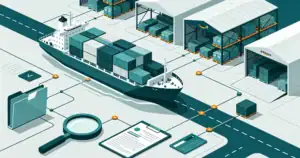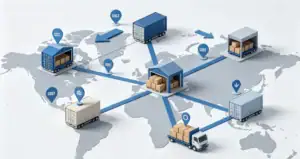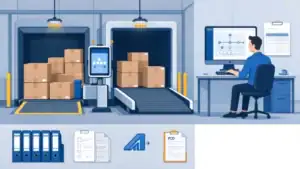
On January 1, 2026, Amazon fully discontinued its FBA prep and labelling service. That means every shipment to FBA must now be labelled and packed before it even reaches the warehouse – the entire compliance burden has shifted to the shipping stage. At the same time, the delivery window for non‑partnered carriers was cut from 14 days to 7 days, and barcode rules also changed significantly.
Against this backdrop, the role of a professional freight forwarder has been redefined. It is no longer just about booking space on a vessel. It has become a critical partner in driving Amazon seller growth. This article breaks down how a professional freight forwarder supports Amazon seller growth across five dimensions: cost control, compliance, time release, risk management, and scalability.
The New Reality in 2026: Freight Forwarding Is No Longer Optional
In 2026, Amazon FBA rules saw their biggest tightening in years:
-
The prep and labelling service was fully discontinued (effective January 1, 2026) – all FBA shipments to US fulfilment centres must now be properly packed, sealed, and labelled by the seller or their partner before arrival.
-
The delivery window for non‑partnered carriers was shortened to 7 days – any mistake in appointment info, an expired window, or a mismatch between booked quantity and actual cargo can trigger rejection or detention.
-
Barcode rules changed (effective March 31, 2026) – sellers who have not completed brand registry must now use Amazon barcodes (FNSKU starting with X00) for all new FBA inventory.
The combined effect is that sellers face more compliance pressure than ever. One small labelling error can get an entire shipment rejected. One appointment mistake can cause a delivery refusal. And the hidden costs of “doing it yourself” are rising fast – customs inspections, clearance delays, FBA rejections – any of these can cost you far more than a freight forwarder’s service fee.
That is why the value of a professional freight forwarder has shifted from “someone who books space” to “a supply‑chain compliance and growth partner.”
Growth Dimension 1: Cost Control – Turning Uncertain Freight Costs into Predictable Landed Costs
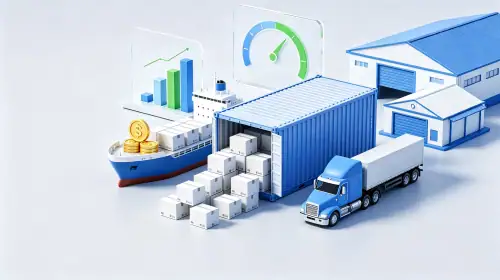
For Amazon sellers, logistics costs are the second‑largest expense after product costs. A professional freight forwarder adds value in several ways.
LCL (Less than Container Load) lowers the entry barrier – for sellers who do not yet have enough volume for a full container, forwarders consolidate small shipments from multiple sellers into one container, significantly reducing the per‑unit freight cost. Sellers do not have to wait until they can fill an entire container to enjoy scale‑based rates.
Direct carrier contracts and long‑term agreements – forwarders with direct carrier contracts and long‑term capacity commitments can secure lower rates than sellers could get on their own. That saving goes straight to the seller’s bottom line.
DDP makes costs predictable – a professional forwarder’s DDP (Delivered Duty Paid) service bundles everything into a single all‑in price – duties, clearance fees, and final delivery are all included. The seller knows the full cost before the shipment leaves, with no hidden charges or duty‑fluctuation surprises.
Data backs this up – strategic logistics partnerships can reduce landed costs. Amazon data shows that sellers using AGL preferred routes see an average sales increase of 13.6%. Logistics typically accounts for 20‑30% of total transaction costs – optimising logistics is optimising your profit.
Growth Dimension 2: Compliance Assurance – Turning Rejection Risk into First‑Time Success

Amazon FBA has strict rules on labelling, carton size, pallets, and delivery appointments. Sellers who handle shipping themselves often run into these common “beginner mistakes”:
-
FNSKU label not covering the manufacturer barcode, leaving multiple barcodes visible.
-
Label placed on a curved surface, corner, or seam, making it unscannable.
-
Carton overweight (over 50 lb) without a “Team Lift” label.
-
Carton dimension exceeding 25 inches on any side.
-
Carton labels copied or reused instead of using unique labels per box.
A professional FBA freight forwarder knows Amazon’s inbound rules inside out. They check every carton, prepare customs documents correctly, and make sure the goods arrive at the FBA warehouse ready for immediate check‑in.
The new challenge in 2026 makes compliance even more critical – Amazon no longer provides labelling services. That means compliance is now 100% the seller’s responsibility. A professional forwarder is the last line of defence – they catch and fix problems before the goods leave China, saving you from the nightmare of a rejected shipment on arrival.
Growth Dimension 3: Time Release – Getting Unstuck from Logistics and Focused on Growth

An Amazon seller’s time is their scarcest resource. A professional freight forwarder frees that time up for what really drives growth.
One point of contact vs. countless parties – the seller deals only with the forwarder. No need to talk to shipping lines, customs brokers, trucking companies, or FBA warehouses directly. The forwarder handles all the coordination – booking, clearance, warehousing, and last‑mile delivery.
Sellers can then focus on – expanding product lines, optimising listings, improving ad efficiency, and enhancing customer service. These are the activities that actually move the needle for Amazon seller growth.
The forwarder becomes your invisible logistics team – you do not need to hire a logistics specialist, learn complex customs regulations, or figure out FBA appointment rules. Professionals handle the logistics, and you handle what you do best.
Growth Dimension 4: Risk Management – Turning Unpredictable Supply‑Chain Disruptions into Controlled Contingency Plans
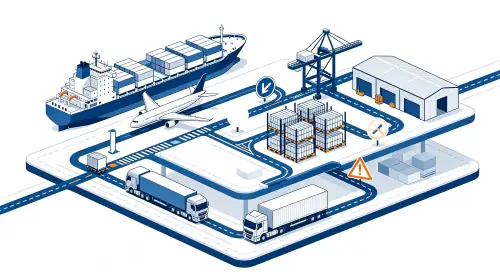
Cross‑border supply chains are full of uncertainty. The 2026 peak season proved it again: vessel delays, customs inspections, port congestion, FBA warehouse overload – any one of these can throw your replenishment plan into chaos.
A professional freight forwarder has a multi‑layered transport network and backup options:
-
When ocean freight is delayed, they can switch to air freight for emergency replenishment.
-
When one port is congested, they can reroute to another.
-
When an FBA warehouse is overloaded, they can adjust delivery plans.
Peak‑season challenges in 2026 are particularly tough – FBA warehouses are congested, and appointment slots are hard to get. Professional forwarders have stable booking channels and direct communication lines, helping sellers keep inventory flowing even during the busiest months.
End‑to‑end visibility – professional forwarders provide full tracking from factory pick‑up to FBA sign‑off. Sellers can monitor inventory status in real time, adjust replenishment schedules early, and avoid stock‑outs or overstocking – which is critical for inventory management and cash flow.
Growth Dimension 5: Scalability – Turning Growth Bottlenecks into Growth Accelerators
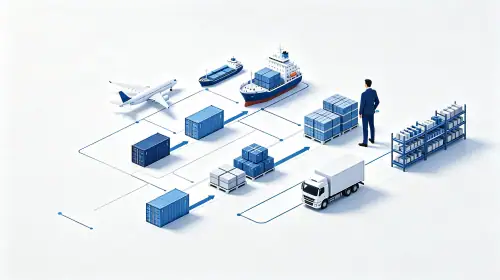
Many sellers hit their first growth bottleneck not in products or traffic – but in logistics.
When shipment volume goes from 100 units to 1,000, or from LCL to FCL, logistics complexity multiplies. There are more moving parts, bigger financial exposure, and higher costs if something goes wrong.
A professional freight forwarder’s service system can grow with you:
-
LCL → FCL → multi‑warehouse distribution → multi‑market expansion.
-
From single‑mode transport to intermodal combinations.
-
From standard services to customised supply‑chain solutions.
The long‑term value – a reliable logistics partner is not just a “box mover”. They become a strategic supply‑chain advisor. As your business scales, they can advise on inventory placement, landed‑cost optimisation, and replenishment cycle reduction.
How to Choose a Freight Forwarder That Drives Growth
For Amazon sellers evaluating or re‑evaluating their logistics partners, here are five dimensions worth focusing on:
-
FBA experience – are they familiar with Amazon’s labelling rules, carton specifications, and warehouse appointment processes? Do they understand the 2026 rule changes?
-
Service scope – do they offer end‑to‑end service, from factory pick‑up and export clearance to international transport, import clearance, and FBA delivery?
-
DDP capability – do they provide a transparent all‑in DDP quote that covers duties, clearance, and final delivery?
-
Compliance capability – do they know the latest 2026 FBA rules (prep cancellation, shortened delivery window, barcode changes)?
-
Responsiveness – can they respond quickly and solve problems when issues arise?
| Evaluation Dimension | Questions to Ask | Impact on Amazon Seller Growth |
|---|---|---|
| FBA experience | Are they familiar with Amazon labelling, carton rules, and warehouse appointments? | Directly affects check‑in pass rate and speed to shelf |
| Service scope | Do they offer end‑to‑end service (pick‑up → transport → clearance → delivery)? | Determines how many service providers you need to manage |
| DDP capability | Do they offer a transparent all‑in price? | Affects cost predictability and cash flow stability |
| Compliance capability | Do they understand the latest 2026 rule changes? | Determines risk of rejection or penalties |
| Responsiveness | Can they resolve issues quickly when problems arise? | Determines recovery speed during supply‑chain disruptions |
As a logistics provider focused on cross‑border ecommerce, AMZ Shipper helps Amazon sellers build a stable supply chain from Chinese factories to FBA warehouses – from LCL to FCL, from export customs to US clearance, from compliant labelling to final delivery – so you can focus on growing your business, not on getting lost in the logistics maze.
ABout AMZ Shipper
AMZ Shipper has several years of experience for international logistics Freight Forwarding service. Our service is for importer and exporter, foreign freight forwarders, local and abroad business. Export of 1500 of 40HQ per year for FBA Amazon shipping, 15-30tons of air shipments per month.
Member of WCA. Our company is a professional Amazon freight forwarder that specializes in providing comprehensive and efficient services to customers.