You spend weeks getting your inventory ready, pay for shipping, and finally your goods make it all the way to a US FBA warehouse. Then, just when you think you are done, your shipment gets rejected – because a label was stuck in the wrong place, a carton was a couple of pounds overweight, or the delivery window was missed. This happens to Amazon sellers more often than you would think.
Amazon FBA warehouse delivery requirements are a set of standardised rules that Amazon applies to every inbound shipment. They cover packaging, labelling, weight, dimensions, delivery appointments, and more. In 2026, Amazon tightened these rules more than it has in years – the prep and labelling service was cancelled, delivery windows were shortened, barcode rules changed, and penalty fees went up. Get any of these wrong, and you could face extra charges, or worse, your entire shipment could be turned away.
This guide walks you through the key Amazon FBA delivery requirements for US warehouses in 2026, so you can get your shipments checked in without a hitch.
Four Major Changes to Amazon FBA Delivery Requirements in 2026
Amazon made some big adjustments to its inbound rules in 2026. These four changes affect every seller who ships to FBA.
Change 1: FBA prep and labelling service fully discontinued (effective January 1, 2026)
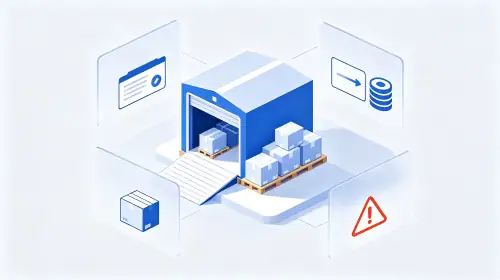
As of January 1, 2026, Amazon ended its FBA prep and labelling service, which had been around for over a decade – including all paid options. Under the new rule, all FBA shipments to US fulfilment centres must be properly packed, sealed, and labelled by the seller or their partner before they arrive. This applies to all FBA inbound channels, including Amazon Warehousing and Distribution (AWD), Amazon Global Logistics (AGL), and Amazon SEND.
For shipments created before January 1, 2026, Amazon will still provide prep and labelling services. But for shipments created on or after that date, if they arrive without proper prep and labelling and are later damaged or lost, you will not be able to get reimbursed. In the past, sellers could send slightly non‑compliant goods and pay Amazon to fix them at the warehouse – that safety net is now gone.
Change 2: Delivery window for non‑partnered carriers shortened from 14 days to 7 days
Previously, you could set a 14‑day delivery window when you created a shipment. Under the new rule, for non‑partnered carriers, that window is now just 7 days – calculated as a calendar week, with no splitting, no overlap, and no grace period.
Amazon requires that the delivery appointment time must exactly match the estimated delivery window you entered in Seller Central. Shipments with a scheduled delivery window get priority when booking appointments. If the appointment information is wrong, the window expires, or the quantity does not match what is on the appointment, your shipment may be rejected or held. Appointments that miss the 7‑day window are automatically cancelled, and your goods will arrive with no appointment at all.
Change 3: Barcode rules changed (effective March 31, 2026)
From March 31, 2026, Amazon’s barcode requirements have changed significantly. Brand‑registered sellers can continue using manufacturer barcodes (UPC/EAN). But sellers who have not completed brand registry – including resellers and distributors – must now use Amazon barcodes (FNSKU starting with X00) for all new FBA inventory, even if the products already have manufacturer barcodes.
Shipments that do not meet this requirement will be flagged as defective, which delays check‑in and makes them ineligible for reimbursement protection.
Change 4: Inbound defect fees increased significantly
Amazon not only stopped its prep service – it also raised the cost of non‑compliance. Inbound defect fees used to be a few cents per unit. They are now higher – for standard‑size items, the fee ranges from a modest amount to over a dollar per unit, and for large items it can be even more. Shipments that are undeliverable, late, or sent to the wrong address are subject to a flat inbound defect fee. Repeated violations can also affect your account health rating.
Amazon FBA Packaging Requirements
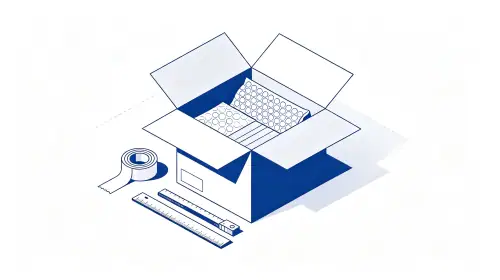
Carton Requirements
According to Amazon’s official rules, each shipping carton sent to an FBA warehouse must meet these standards:
-
Material: use rigid, six‑sided corrugated boxes with intact flaps.
-
Sealing: use strong tape designed for shipping.
-
Cushioning: use enough padding (bubble wrap, air pillows, foam sheets, etc.) so that items do not move when you shake the box lightly. Do not use packing peanuts (even biodegradable ones), shredded paper, or foam chips.
-
Do not use sales packaging (the original retail packaging that typically contains a single item) as your shipping container.
Weight and Dimension Limits
Amazon FBA warehouses have strict limits on carton weight and size:
| Limit Type | Standard Requirement | Exception |
|---|---|---|
| Carton weight | No more than 50 lb (about 22.7 kg) | Allowed if a single unit exceeds 50 lb |
| Any side length | No more than 25 inches (63.5 cm) | Allowed if a single unit exceeds 25 inches |
| Overweight label | If over 50 lb, apply “Team Lift” label (top + 4 sides = 5 labels) | If over 100 lb, apply “Mech Lift” label |
| Minimum size | No smaller than 15.2 cm × 10.0 cm × 2.5 cm | – |
If a carton weighs over 50 lb but does not have a “Team Lift” label, Amazon will either reject it or charge an extra handling fee.
Poly Bag Requirements
If your product is packed in a poly bag with an opening larger than 5 inches (measured flat), the bag must have a suffocation warning label. Amazon also has specific poly bag requirements for apparel, textiles, and other soft goods.
Amazon FBA Labelling Requirements
Labelling is the area where sellers most often run into trouble – and where penalties are the strictest.
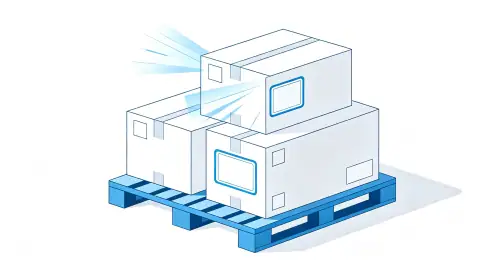
FNSKU Labels
(Item‑Level)
Every sellable unit must have a scannable FNSKU label. Here is what you need to get right:
-
Place the label on a flat surface of the product packaging – not on curved areas, corners, or seams.
-
It must cover the manufacturer’s original barcode (such as UPC) completely, so that only one barcode is visible.
-
Leave enough white space around the label (1/4 inch on the sides, 1/8 inch on top and bottom).
-
The label must include the ASIN or FNSKU, product name, and condition.
-
Use thermal printing – inkjet can smear.
Carton Labels (Box‑Level)
Each carton needs a unique FBA box label (Box ID Label), printed from the shipment workflow in Seller Central:
-
Each box has its own unique label – do not copy or reuse labels.
-
Place it on a flat surface, away from seams or openings.
-
It is a good idea to put the carrier label next to it, side by side on top of the box.
Pallet Labels (Pallet‑Level)
If you ship on pallets, each pallet needs four FBA pallet labels – one in the centre of each of the four sides, at the top.
Pallet Standards
-
Standard size: GMA‑standard pallet, 48 in × 40 in (about 122 cm × 102 cm).
-
Maximum height: total height including pallet no more than 72 inches (182 cm).
-
Maximum weight: no more than 1500 lb (680 kg) per pallet.
-
Material: use wooden pallets that can be accessed by four‑way forklifts. Do not use plastic, cardboard, or damaged wood. Solid wood pallets must have a clear, readable ISPM‑15 fumigation stamp.
-
Overhang: goods must not extend beyond the pallet edge by more than 1 inch.
Amazon FBA Delivery Appointment and Scheduling Requirements
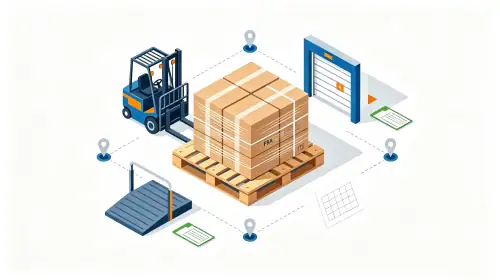
Appointments Are Mandatory
Amazon requires that all truck deliveries (LTL, FTL, FCL) be scheduled through Carrier Central in advance. Trucks that show up without an appointment will be turned away.
Key 2026 Appointment Rules
-
Delivery window: non‑partnered carriers must deliver within a 7‑day calendar week. The appointment time must exactly match the estimated delivery window you entered in Seller Central.
-
Book early: it is wise to book at least 7 days in advance; for ocean shipments, allow 3 weeks or more.
-
PO information must match: the PO numbers, product quantities, and destination warehouse on the appointment must exactly match the actual delivery.
-
SPD (small parcel delivery) does not require an appointment – shipments sent via UPS, FedEx, or similar carriers with fewer than 10 cartons or under 150 lb total can be delivered without prior appointment.
Common Mistakes That Violate Amazon FBA Delivery Requirements
Labelling Mistakes
-
FNSKU label placed on a curved surface, corner, or seam, making it unreadable.
-
Not covering the manufacturer’s original barcode, leaving multiple barcodes visible.
-
Using inkjet printing, causing the label to smudge.
-
Reusing or photocopying carton labels.
Packaging Mistakes
-
Carton overweight (over 50 lb) without a “Team Lift” label.
-
Carton dimension exceeds 25 inches on any side.
-
Insufficient cushioning – items shift inside the box.
-
Using retail sales packaging as the shipping container.
Appointment and Delivery Mistakes
-
Showing up at the FBA warehouse without a prior appointment.
-
Appointment time does not match the delivery window in Seller Central.
-
PO information does not match the actual shipment.
-
Missing the 7‑day delivery window.
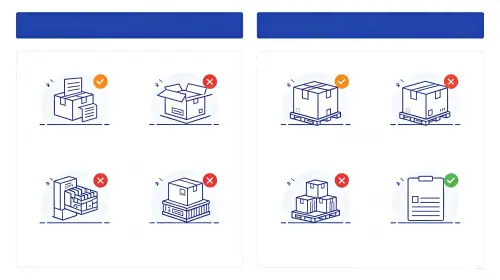
As a logistics provider focused on cross‑border ecommerce, AMZ Shipper helps sellers go through every item on the FBA delivery requirements checklist before shipping – from packaging and label printing to delivery appointments – so that every shipment passes FBA warehouse inspection smoothly.
ABout AMZ Shipper
AMZ Shipper has several years of experience for international logistics Freight Forwarding service. Our service is for importer and exporter, foreign freight forwarders, local and abroad business. Export of 1500 of 40HQ per year for FBA Amazon shipping, 15-30tons of air shipments per month.
Member of WCA. Our company is a professional Amazon freight forwarder that specializes in providing comprehensive and efficient services to customers.