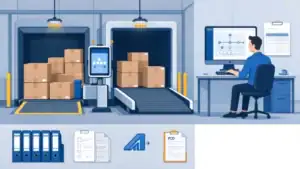
You have sent a shipment to FBA, but the vessel is delayed, customs pulls it for inspection, or the goods arrive at the warehouse but just sit there without being checked in – now what? What happens next? This is one of the most worrying questions for Amazon sellers after they ship their goods.
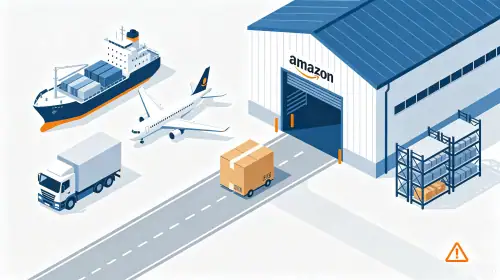
Inbound shipment delays are one of the most common headaches for FBA sellers. But many sellers do not realise that delays before delivery and delays after delivery lead to very different outcomes. This article breaks down the two types of inbound shipment delays, Amazon’s rules and penalties, and what sellers can actually do about them.
Two Types of Inbound Shipment Delays: Before Delivery vs. After Delivery
Inbound shipment delays generally fall into two categories:
-
Type 1: Delays before delivery – the goods have not yet reached the FBA warehouse. These happen during ocean, air, or truck transport.
-
Type 2: Delays after delivery – the goods have arrived at the FBA warehouse, but Amazon has not yet checked them in and made them available for sale.
The consequences and the actions you can take are completely different for each type.
Inbound Shipment Delays Before Delivery – Amazon’s Rules and Penalties
While your goods are still on the way and have not yet reached the FBA warehouse, Amazon has two key rules that determine the consequences of inbound shipment delays.
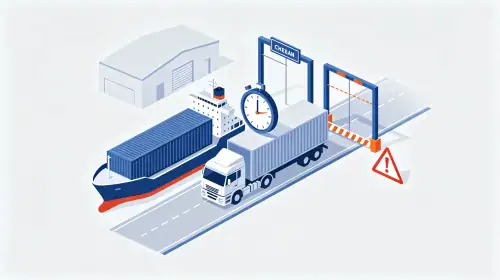
Rule 1: Delivery deadline after shipment creation
Amazon requires that domestic shipments must arrive within 45 days of shipment creation, and international shipments within 75 days. Shipments that exceed these deadlines receive a violation notice and are automatically closed.
Rule 2: The 30‑day rule for multi‑destination plans
If you create a multi‑destination inbound plan (where your shipment is split across multiple FBA warehouses), all shipments must arrive within 30 days of the first shipment’s delivery.
A real case from 2026 – a Chinese Amazon seller shared his experience on the Seller Central forum. Due to peak season delays and a customs inspection, one of his shipments arrived 32 days later than the first – just 2 days over the limit. He was charged an inbound defect fee. He tried to appeal, explaining the customs inspection and the peak season delays, but was told: force majeure events such as customs delays are not accepted as grounds for exemption.
He wrote in his post: “Global logistics and customs are becoming more and more unpredictable. Peak season delays are now the norm, not the exception. A delay of just 2 days led to a significant penalty.”
Penalty levels have gone up significantly in 2026. From January 15, 2026, Amazon overhauled its inbound defect fee structure. For shipments that are undeliverable, overdue, or sent to the wrong address, Amazon now applies a standardised mishandling fee. The inbound defect fee for standard‑size items has increased substantially compared to previous rates.
Inbound Shipment Delays After Delivery – Delivered but Not Checked In
Once your goods arrive at the FBA warehouse, they are not immediately available for sale. Amazon’s receiving process has several stages: “Delivered” → “Checked In” → “Receiving” → “Closed”.
During normal times, small parcel deliveries (SPD) typically take 2‑4 days from “Checked In” to “Receiving”, while truck deliveries (LTL/FTL) can take up to 10 days. But during inbound shipment delays, this timeline can stretch significantly.
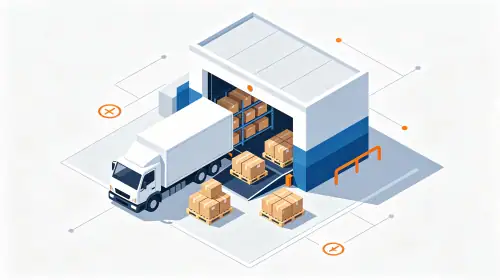
The “Trailer Arrived” trap – one seller posted in June 2026 that his shipment had been showing “Trailer Arrived” at the SCK1 warehouse since May 31 – with zero progress for 10 full days. Zero units were sellable.
“Delivered” status stuck for weeks – another seller’s shipment sat at “Delivered” for nearly 2 weeks without moving to “Checked In” or “Receiving”.
Delivered but not checked in for weeks – one seller reported that his goods were “fully received” by the FBA warehouse on June 20, 2026, but as of July 15 – 25 days later – not a single unit was available for sale.
What sellers face while goods are “delivered but not checked in”:
-
Inventory is not sellable – your goods are physically at the warehouse, but your listing shows “out of stock”. Your PPC ads are still running, but clicks do not convert.
-
Investigation window is not open – Amazon requires that a shipment must be in “Closed” status before you can file an investigation. Until receiving is complete, you just wait.
-
Peak sales windows are missed – once Prime Day, Black Friday, or other key traffic peaks pass, the opportunity is gone and cannot be recovered.
Why Are Inbound Shipment Delays Getting Worse?
In 2026, inbound shipment delays are becoming both more frequent and more severe. Here is why:
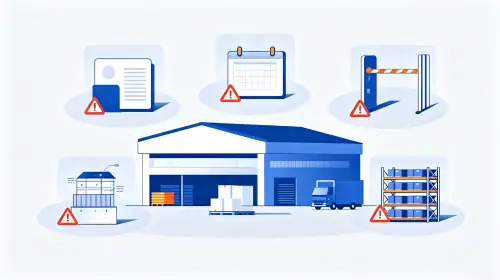
Reason 1: FBA prep and labelling service has been fully discontinued
Since January 1, 2026, Amazon has fully ended its FBA prep and labelling service, which had been running for over a decade. All FBA shipments to US fulfilment centres must now be properly packed, sealed, and labelled by the seller or their partner before they arrive. If a shipment is rejected for non‑compliance, Amazon no longer offers any compensation. In the past, sellers could send slightly non‑compliant cartons and pay Amazon to re‑label them at the warehouse – that safety net is now gone.
Reason 2: Delivery window shrunk from 14 days to 7 days
In 2026, Amazon reduced the delivery window for non‑partnered carriers from 14 days to 7 days. Your estimated delivery date must fall precisely within the appointment window – if you miss it, the appointment is automatically cancelled, and your shipment arrives with no appointment at all.
Reason 3: Appointment rules have been tightened across the board
Amazon updated its appointment rules in 2026 – the delivery window is now fixed at a 7‑day calendar week. Incorrect appointment information, expired windows, or quantity mismatches will trigger rejection or detention issues.
Reason 4: Customs inspection rates are rising
US Customs scrutiny has continued to increase in 2026, especially during peak seasons. If your container is selected, expect delays of 1‑3 weeks.
Reason 5: FBA warehouse congestion
During peak season, warehouses operate at full capacity. It is difficult for FBA warehouses to predict exactly how much cargo will arrive on any given day – and during the long ocean journey and customs process, all sorts of factors can prevent shipments from arriving on schedule.
Inbound Shipment Delays – A Side‑by‑Side Comparison
The table below summarises the key differences between delays before delivery and delays after delivery:
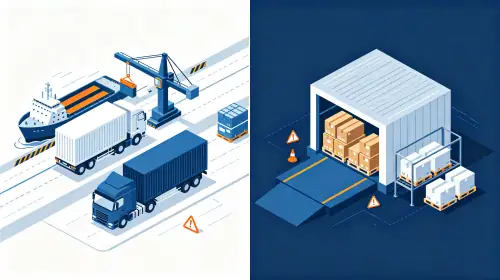
| Comparison Point | Delays Before Delivery | Delays After Delivery |
|---|---|---|
| When it happens | Goods are still in transit | Goods have arrived at the FBA warehouse |
| Key rules | 45/75‑day delivery deadlines; 30‑day multi‑destination rule | Waiting time across receiving stages |
| Main consequences | Inbound defect fees; shipment auto‑closed | Inventory unsellable; wasted PPC; missed sales windows |
| Seller’s control | Partially controllable (choose reliable carriers; plan ahead) | Almost uncontrollable (depends on FBA warehouse processing speed) |
| New in 2026 | Penalties increased; delivery window cut to 7 days | Prep service cancelled; non‑compliance risk much higher |
What Amazon Sellers Can Do About Inbound Shipment Delays
Plan ahead and build in buffer. Add at least 10‑15 extra buffer days to your replenishment plan for inbound shipment delays. Do not base your plan on the “theoretical minimum” transit time.
Make sure your documentation and labels are 100% compliant. Run through the FBA inbound checklist before shipping – FNSKU labels, carton labels, carton weight (under 50 pounds), and packaging standards. Penalties for labelling or packaging defects have gone from a few cents to several dollars.
Build a multi‑modal transport mix. Use ocean freight as your base and air freight as your emergency backup. When inbound shipment delays hit your ocean shipment, air can step in quickly.
Track your shipment status closely. Use the “Shipments” page in Seller Central to monitor status updates in real time. If you spot a shipment stuck at “Trailer Arrived” or “Delivered” for longer than normal, contact Seller Support promptly.
Know the investigation process. You can only file an investigation once the shipment status changes to “Closed”. If you disagree with an inbound defect fee, you can appeal within the time limit specified in the notification.
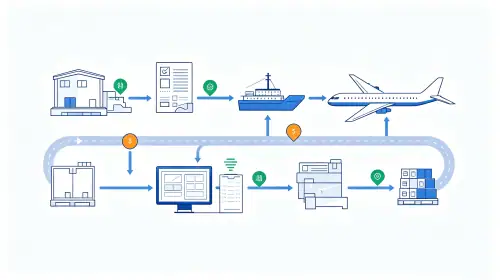
As a logistics provider focused on cross‑border ecommerce, AMZ Shipper helps sellers get their compliance right before shipping, choose reliable transport solutions, and build in enough buffer time – so that when inbound shipment delays occur, you are not just sitting and waiting.
ABout AMZ Shipper
AMZ Shipper has several years of experience for international logistics Freight Forwarding service. Our service is for importer and exporter, foreign freight forwarders, local and abroad business. Export of 1500 of 40HQ per year for FBA Amazon shipping, 15-30tons of air shipments per month.
Member of WCA. Our company is a professional Amazon freight forwarder that specializes in providing comprehensive and efficient services to customers.