For most Amazon sellers shipping from China, sea freight is the backbone of their FBA inbound logistics. It is not as fast as air, but the cost advantage is clear – especially for bulky, heavy, or regular replenishment shipments. Sea freight costs significantly less per unit than air or express shipping. Understanding how sea freight costs are structured, how transit times work, and what the full process looks like is essential for any Amazon seller who wants to control supply chain costs and avoid stock‑outs.
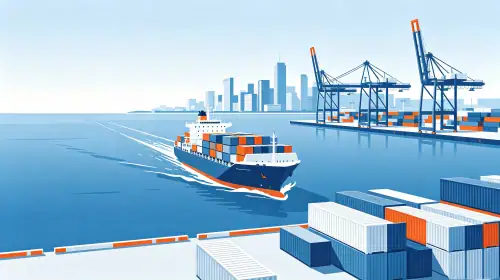
This guide covers six key areas: why you should choose sea freight, a breakdown of costs, transit time analysis, the full process, LCL versus FCL options, and common mistakes to avoid. By the end, you will have a solid framework for planning your sea freight shipments.
Why Amazon Sellers Choose Sea Freight
The core value of sea freight is simple – you trade time for cost. For most Amazon sellers, sea freight is the foundation of a cost‑first logistics strategy.
Sea freight works well for:
-
Regular, planned large‑volume replenishment with a 4‑6 week lead time
-
Bulky or heavy products (like furniture, appliances, or outdoor gear) where air freight is too expensive
-
Low‑margin standard products where per‑unit shipping cost is a key factor
Looking at 2026 market data, sea freight costs roughly a fifth to a quarter of what air freight costs. For Amazon sellers shipping large volumes, that difference directly affects your bottom line.
In 2026, the US permanently removed the de minimis duty‑free exemption for small parcels under $800. Many sellers who had relied on direct‑to‑consumer shipping have accelerated their shift to sea freight combined with FBA. At the same time, Amazon introduced a 3.5% fuel and logistics surcharge on US and Canada FBA fees starting April 17, 2026 – making it even more important to take a close look at your sea freight cost structure.
Sea Freight Costs – What Amazon Sellers Are Actually Paying For
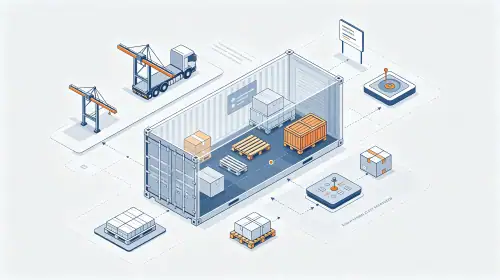
Many Amazon sellers only look at the “per‑kilo” rate when choosing sea freight, but the real total cost includes much more than that. A complete sea freight inbound shipment typically consists of the following components:
Line haul – this makes up 50‑70% of the total cost and is the core expense of sea freight. It is charged based on volume (CBM) or weight (KG), whichever is greater. Different providers use different conversion rates – DDP (Delivered Duty Paid) services often use 1 CBM = 167 KG, while non‑DDP services may use 1 CBM = 300 KG.
Domestic handling – includes pick‑up from the factory, domestic warehousing, export customs clearance, and VGM (Verified Gross Mass) declaration.
Destination charges – customs clearance fees at the US port, DTHC (Destination Terminal Handling Charges), and drayage. If US Customs selects your shipment for inspection, there may be additional X‑ray or container unpacking fees.
Duties – calculated based on HS code and cargo value. Under DDP, these are already included in the quoted price.
Last‑mile delivery – truck or express delivery from the port to the FBA warehouse. Truck delivery works well for large volumes at lower cost; express delivery is faster but more expensive per unit.
FBA‑side fees – effective January 15, 2026, Amazon’s FBA inbound placement service fee was adjusted upward. From April 17, 2026, a 3.5% fuel and logistics surcharge applies to FBA fulfilment fees in the US and Canada.
For most Amazon sellers, DDP is the recommended option. It bundles all costs into one “all‑in” price, so you don’t need to handle US import clearance or duty payments yourself – and your total landed cost is more predictable.
Sea Freight Transit Times – How Long Should Amazon Sellers Expect?
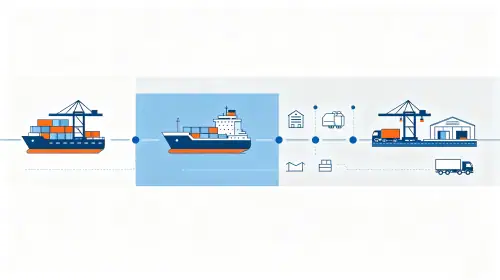
Transit time is the biggest downside of sea freight – and the most important factor to consider when planning your FBA inventory. The table below shows typical 2026 transit times for major shipping routes from China to US FBA warehouses:
| Route Type | Ocean Voyage (to port) | Clearance + Pick‑up + Delivery | Total Door‑to‑Door | Best For |
|---|---|---|---|---|
| Matson CLX (fast vessel) | 10‑12 days | 5‑9 days | 17‑21 days | Regular restocking; most reliable during peak season |
| ZIM / ONE (fast vessel) | 12‑14 days | 5‑9 days | 19‑23 days | Good balance of speed and cost |
| Standard vessel (COSCO, MSC, etc.) | 14‑18 days | 5‑12 days | 22‑30 days | Large‑volume, low‑value, non‑urgent shipments |
These are ideal‑case estimates. In practice, four hidden variables can significantly affect your final delivery date:
Customs inspections – US Customs scrutiny has been increasing in 2026, with inspection rates at the Port of Los Angeles / Long Beach exceeding 30%. If your container is selected, expect delays of 1‑3 weeks.
Port congestion – during peak season (August‑October), vessels may wait 4‑7 days at US West Coast ports, adding 5‑14 days to overall transit. Matson has its own terminal at Long Beach with 24‑48 hour turnaround; standard vessels using public terminals may wait 3‑7 days during peak periods.
Last‑mile delivery method – truck delivery requires an appointment with the FBA warehouse; express delivery does not, but costs more. Express delivery is usually 1‑3 days faster than truck.
FBA warehouse congestion – during peak season, FBA warehouses operate at capacity. Appointment slots can be hard to get, and check‑in times may stretch significantly.
For Amazon sellers, a good rule of thumb is to add at least 10‑15 extra buffer days to your sea freight replenishment plan – do not base your plan on the “theoretical minimum” transit time.
The Sea Freight Process – 6 Steps from Factory to FBA
A complete sea freight inbound shipment typically follows these six steps:
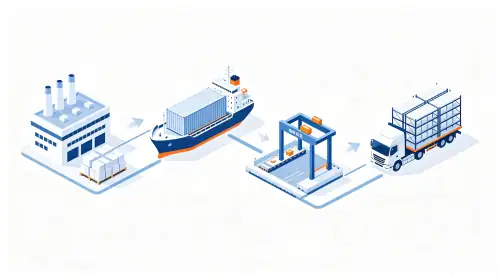
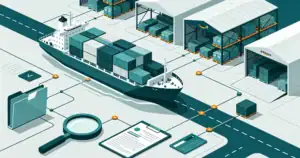
Step 1: Prepare goods and documentation – your supplier finishes production, and you prepare the commercial invoice, packing list, and bill of lading (B/L) details. Make sure product names, quantities, and weights are accurate and consistent across all documents.
Step 2: Book space and arrange pick‑up – contact your freight forwarder to book space on a vessel and confirm the sailing schedule. The forwarder arranges pick‑up from the factory to the departure port.
Step 3: Export customs clearance and loading – the forwarder handles Chinese export customs clearance on your behalf. The goods are loaded onto the vessel, and you receive the vessel name, voyage number, and estimated time of arrival (ETA).
Step 4: Ocean transit – your goods are at sea. Your forwarder provides tracking updates. Keep an eye on the schedule – if there are delays, adjust your replenishment plan accordingly.
Step 5: US import clearance and duty payment – once the vessel arrives at the US port, your forwarder handles US import clearance and pays duties (under DDP). If the shipment is selected for inspection, expect extended transit times.
Step 6: Book delivery to FBA – after clearance, your forwarder books an appointment with the FBA warehouse and arranges truck or express delivery. Once the goods are signed for, you wait for Amazon to complete check‑in and make your inventory available for sale.
You can track your sea freight shipments through Amazon Seller Central. Amazon Global Logistics (AGL) also offers door‑to‑door sea freight services from China to US FBA warehouses.
Sea Freight – LCL vs. FCL – Which Should Amazon Sellers Choose?
When planning a sea freight shipment, Amazon sellers face another key decision: LCL (Less than Container Load) or FCL (Full Container Load)?
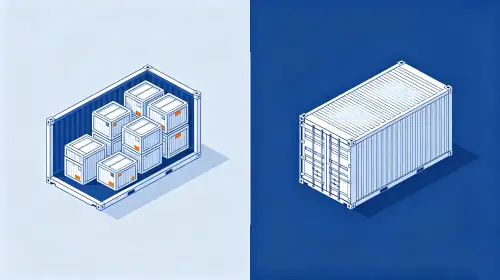
LCL (Less than Container Load) works best for smaller volumes (typically under 15 CBM). Your goods share a container with other sellers’ cargo, and you are charged based on actual volume or weight. LCL offers flexibility – it is ideal for testing new products, small‑batch replenishment, or off‑season restocking. The downsides: more handling points, transit times 3‑7 days slower than FCL, risk of being rolled during peak season, and hidden costs like destination unpacking fees and storage charges.
FCL (Full Container Load) is better for larger volumes (typically over 15‑20 CBM). Your goods have the entire container to themselves – they are loaded, sealed, and shipped without sharing with others. FCL offers more stable transit times, fewer handling points, and lower risk of damage or loss. You pay a fixed rate per container, so the more you fill it, the lower your per‑unit cost. The downside: you need enough volume to fill the container economically.
A quick rule of thumb:
-
If you have 20 CBM or more, or you have steady, long‑term replenishment needs – go with FCL. Lower cost, more stable timing, and better space availability during peak season.
-
If you have less than 15 CBM, or you are testing a new product – go with LCL. It gives you flexibility and keeps your capital and inventory risk lower.
-
For high‑value, fragile, or time‑sensitive goods – FCL is the safer choice regardless of volume.
Common Mistakes Amazon Sellers Make with Sea Freight
Only counting the ocean voyage time. Many Amazon sellers plan their replenishment based on the vessel’s sailing time, forgetting about domestic pick‑up, export clearance, import clearance, last‑mile delivery, and FBA check‑in. Sea freight door‑to‑door usually takes 25‑40 days in total, not just the voyage time.
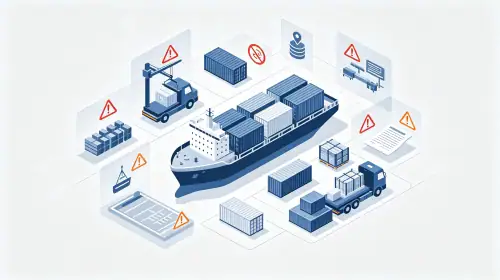
Ignoring volumetric weight. Sea freight is charged on volume (CBM) or weight (KG), whichever is greater. For lightweight but bulky items, your actual freight cost may be much higher than you expected.
Inconsistent documentation. If your commercial invoice, packing list, and bill of lading do not match in product names, quantities, or weights, customs clearance will be delayed or rejected. Use specific product names – avoid vague terms like “accessories” or “samples”.
Not booking an FBA delivery appointment in advance. Your goods arrive in the US, but you cannot get a delivery slot at the FBA warehouse – leading to waiting time and extra storage charges.
Underestimating peak season impact. During peak season (typically August‑October), port congestion, higher inspection rates, and FBA warehouse backlogs can add 5‑14 days to your total sea freight transit time.
As a logistics provider focused on cross‑border ecommerce, AMZ Shipper helps Amazon sellers plan their sea freight inbound strategies – from cost estimation and transit time planning to LCL/FCL selection and end‑to‑end tracking – so you can make better replenishment decisions in this complex international shipping environment.
ABout AMZ Shipper
AMZ Shipper has several years of experience for international logistics Freight Forwarding service. Our service is for importer and exporter, foreign freight forwarders, local and abroad business. Export of 1500 of 40HQ per year for FBA Amazon shipping, 15-30tons of air shipments per month.
Member of WCA. Our company is a professional Amazon freight forwarder that specializes in providing comprehensive and efficient services to customers.