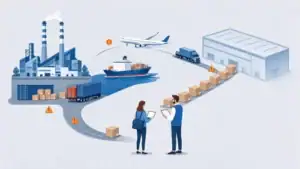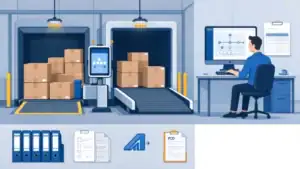
For ecommerce sellers who are new to cross‑border trade, seeing “EXW Shenzhen” or “FOB Shanghai” on a supplier’s quote for the first time can be confusing. What do these abbreviations actually mean? And which one works better for you?
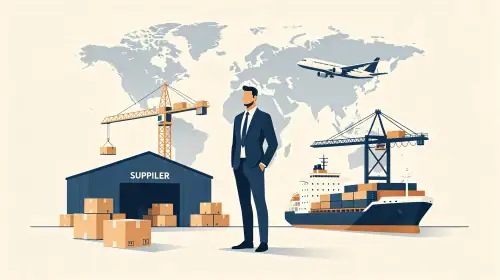
That is exactly what Incoterms are designed to clarify.
Incoterms (short for International Commercial Terms) are a set of standardised rules developed and regularly updated by the International Chamber of Commerce (ICC) since 1936. The current version is Incoterms 2020, which includes 11 terms. They define three key things for buyers and sellers in international trade: who is responsible for what (arranging transport, customs clearance, and insurance), who pays for which costs, and where the risk of loss or damage transfers from the seller to the buyer.
For ecommerce businesses involved in cross‑border operations, understanding Incoterms is essential – choosing the wrong term can lead to unexpected costs, shipping delays, or even trade disputes. This article focuses on the four terms that ecommerce sellers encounter most often: EXW, FOB, CIF, and DDP.
The Two Categories of Incoterms
Incoterms 2020 divides the 11 terms into two groups based on the mode of transport:
-
Terms that work for any mode of transport (7 terms) : EXW (Ex Works), FCA (Free Carrier), CPT (Carriage Paid To), CIP (Carriage and Insurance Paid To), DAP (Delivered at Place), DPU (Delivered at Place Unloaded), and DDP (Delivered Duty Paid).
-
Terms that are only for sea and inland waterway transport (4 terms) : FAS (Free Alongside Ship), FOB (Free on Board), CFR (Cost and Freight), and CIF (Cost, Insurance and Freight).
For most ecommerce businesses, the four terms you will see most often are EXW, FOB, CIF, and DDP. Let us break each one down.
EXW (Ex Works) – Least Responsibility for the Seller, Most for the Buyer
EXW (Ex Works) is the term with the smallest obligation for the seller under Incoterms.
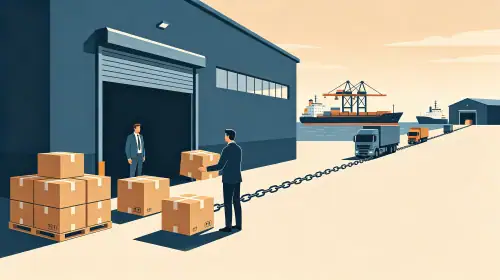
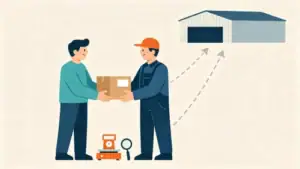
What it means: The seller’s only duty is to make the goods available at their own factory or warehouse. The seller is not responsible for loading the goods onto a vehicle or for handling export customs clearance.
Transfer of risk: At the seller’s factory/warehouse gate – once the goods are placed at the buyer’s disposal at that location, the risk passes to the buyer.
Seller’s responsibilities: Minimal – just packing the goods and providing basic documents like the commercial invoice.
Buyer’s responsibilities: Maximum – the buyer bears all costs and risks from the factory gate to the final destination, including domestic transport, export customs clearance, international freight, insurance, import clearance, and duties.
When to use it:
-
The buyer has a reliable freight forwarder or sourcing team in China to handle pick‑up and export procedures.
-
The buyer wants full control over the logistics chain.
A note of caution for ecommerce businesses: If you do not have local logistics experience in China, you may run into trouble with domestic transport and export documentation. ICC experts suggest that if you are exporting from China and are concerned about getting the export clearance documents right, FCA is a better choice than EXW.
FOB (Free on Board) – A Favourite for Ocean Freight
FOB (Free on Board) is an Incoterm that is only for sea and inland waterway transport.
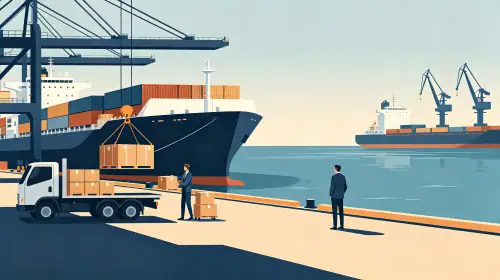
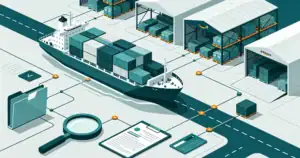
What it means: The seller is responsible for delivering the goods to the named port of shipment and loading them onto the vessel designated by the buyer. The seller also handles export customs clearance. Once the goods are on board, the risk and costs transfer to the buyer.
Transfer of risk: When the goods are loaded on the vessel at the port of shipment – the risk shifts from the seller to the buyer.
Seller’s responsibilities: Export clearance + delivery to port + loading on board.
Buyer’s responsibilities: International freight + insurance + import clearance + duties + inland transport at destination.
Mode of transport: Sea and inland waterway only.
Why it is popular among ecommerce businesses: FOB gives you a transparent price – you can clearly see how much the supplier charges and how much the forwarder charges, which makes it easier to compare quotes. The seller does not have to absorb fluctuations in ocean freight rates, and the buyer retains control over the shipping arrangements.
Important note: For containerised cargo, FCA (Free Carrier) is actually the recommended alternative to FOB, because FCA works for all modes of transport, including air.
CIF (Cost, Insurance and Freight) – Seller Covers Transport and Insurance
CIF (Cost, Insurance and Freight) is another Incoterm that is only for sea and inland waterway transport.
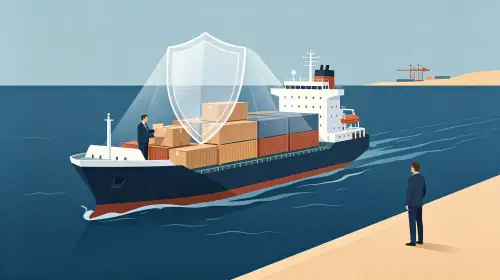
What it means: On top of the FOB costs, the seller also pays for international freight and the minimum required cargo insurance. The seller must arrange, at their own expense, a contract of carriage to the named port of destination and also purchase insurance for the goods on the buyer’s behalf.
Transfer of risk: Same as FOB – when the goods are loaded on the vessel at the port of shipment.
Seller’s responsibilities: Export clearance + delivery to port + loading + international freight + purchasing insurance.
Buyer’s responsibilities: Import clearance + duties + inland transport at destination.
Mode of transport: Sea and inland waterway only.
A key detail about insurance: Under Incoterms 2020, the seller is only required to buy the minimum level of cover (such as Institute Cargo Clauses C). If you need a higher level of cover (like All Risks), you must clearly agree on that in your sales contract.
When to use it: When the buyer wants the seller to arrange transport and basic insurance.
DDP (Delivered Duty Paid) – Maximum Seller Responsibility, Easiest for the Buyer
DDP (Delivered Duty Paid) is the term with the greatest obligation for the seller under Incoterms.
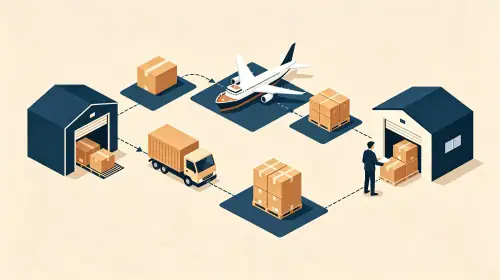
What it means: The seller bears all costs and risks until the goods reach the named place of destination – including international freight, export clearance, import clearance, payment of import duties, and all taxes. The buyer only needs to receive and unload the goods.
Transfer of risk: When the goods are at the named place of destination, on the arriving means of transport, ready for unloading.
Seller’s responsibilities: Maximum – the seller is responsible for transport, insurance, export and import clearance, and for paying all duties and taxes.
Buyer’s responsibilities: Minimum – just unloading the goods.
Mode of transport: Any mode.
When it makes sense for ecommerce businesses:
-
FBA shipments – sellers who want a “door‑to‑door all‑in” solution.
-
Small parcel B2C direct shipments – to avoid unexpected duty charges for the buyer, improving customer satisfaction.
-
Ecommerce platforms offering “tax‑inclusive door‑to‑door” pricing.
Risks to consider:
-
DDP exposes the seller to the highest level of risk: customs delays in unfamiliar markets, miscalculated duties, or VAT refund issues.
-
DDP requires the seller to handle import clearance in the destination country, which involves IOR (Importer of Record) registration and compliance obligations.
-
The supplier may bundle logistics and duties into one opaque price, which could hide mark‑ups – making it harder for ecommerce businesses to know the true cost.
Side‑by‑Side Comparison of the Four Incoterms
The table below summarises the key differences in responsibility, risk, and cost among these four Incoterms – to help ecommerce businesses make a quick comparison:
| Comparison Point | EXW | FOB | CIF | DDP |
|---|---|---|---|---|
| Seller’s level of responsibility | Lowest | Moderate | Moderate‑high | Highest |
| Transfer of risk | At seller’s factory gate | On board vessel at port of shipment | On board vessel at port of shipment | At named place of destination |
| Seller handles export clearance? | No | Yes | Yes | Yes |
| Seller pays international freight? | No | No | Yes | Yes |
| Seller arranges insurance? | No | No | Yes (minimum cover) | Yes |
| Seller handles import clearance and duties? | No | No | No | Yes |
| Applicable transport modes | Any | Sea/inland waterway only | Sea/inland waterway only | Any |
How to Choose the Right Incoterm for Your Ecommerce Business
If you are a new ecommerce seller sourcing from China for the first time: Start with FOB – it gives you a clear split of responsibilities, transparent pricing, and makes it easier to compare quotes.
If you have a reliable freight forwarder in China: Consider EXW – it gives you full control over the logistics chain, but you need local expertise to handle it properly.
If you want the seller to arrange transport and insurance: Consider CIF – just remember that the seller is only required to buy minimum cover insurance.
If you are shipping FBA and want a simple “one‑stop” solution: DDP sounds the most convenient – but be aware that it requires the seller to take on all the responsibility and risk of import clearance and duties in the destination country.
Common Mistakes Ecommerce Sellers Make with Incoterms
Treating EXW as “the easiest option” – it is the easiest for the seller, but for the buyer it means handling everything that comes after, including export customs, international transport, import clearance, and duties.
Thinking FOB works for air freight – FOB is only for sea and inland waterway transport. For air cargo, use terms like FCA, CPT, CIP, DAP, or DDP.
Assuming CIF means “all‑inclusive” – CIF only includes international freight and minimum insurance; it does not include import clearance or duties.
Not factoring in destination‑country risks when choosing DDP – with DDP, the seller bears the full risk of any changes in customs policies or duty rates at the destination.
Forgetting to specify which version of Incoterms applies – always write “Incoterms 2020” in your contracts to avoid ambiguity.
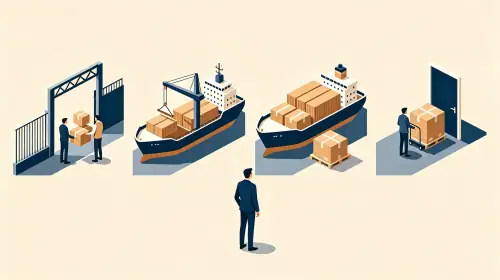
As a logistics provider focused on cross‑border ecommerce, AMZ Shipper helps ecommerce businesses understand the meaning and logic behind each Incoterm – from EXW to DDP – so that when you negotiate with suppliers, you know exactly what responsibilities and risks you are taking on, and can make smarter trade decisions.
ABout AMZ Shipper
AMZ Shipper has several years of experience for international logistics Freight Forwarding service. Our service is for importer and exporter, foreign freight forwarders, local and abroad business. Export of 1500 of 40HQ per year for FBA Amazon shipping, 15-30tons of air shipments per month.
Member of WCA. Our company is a professional Amazon freight forwarder that specializes in providing comprehensive and efficient services to customers.