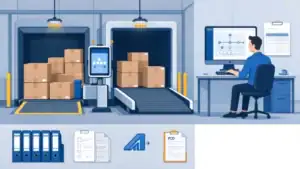
For Amazon sellers using FBA, inventory is never just about having products in stock or running out. It’s more like a delicate balancing act. Order too much, and you face rising storage fees and pressure on your IPI score. Order too little, and stockouts hurt your rankings while low-inventory fees start adding up. And right in the middle of all this sits logistics —the journey your goods take from a factory in China to an Amazon warehouse. Every detail of that journey—speed, cost, and visibility—has a direct impact on your inventory decisions and ultimately your bottom line.

In 2026, Amazon has tightened its inbound policies and adjusted its fee structure, making this balancing act even trickier. This article breaks down what’s changed, and looks at how AMZ Shipper’s recent service upgrades can help you turn logistics into a real advantage when managing inventory risk.
1. What’s New in Amazon Inventory Management for 2026
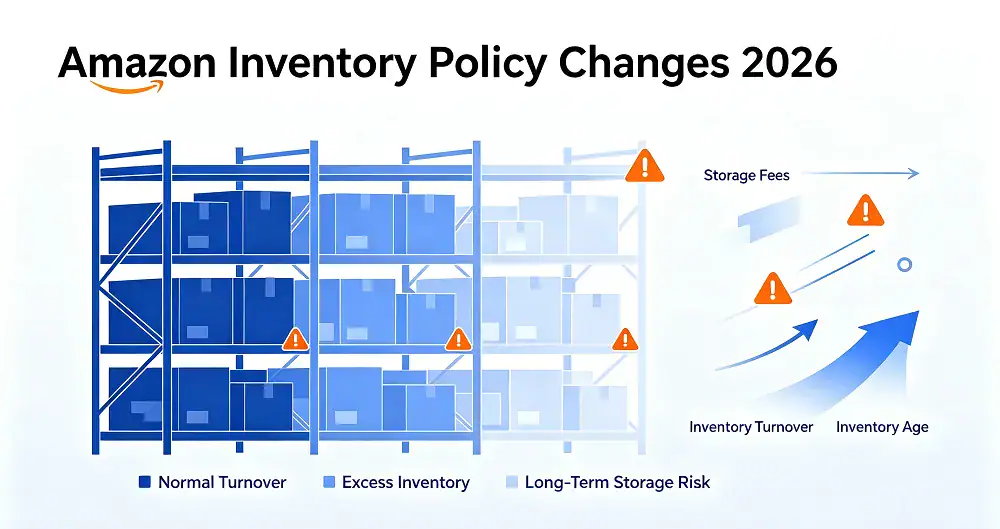
The old approach of shipping large batches every few months—or even once every six months—carries a lot more risk these days. Amazon is pushing for faster inventory turnover, and it’s using two main tools to get sellers to pay attention.
First, your IPI score still matters a lot. Your Inventory Performance Index directly affects how much storage space Amazon gives you. A low score can mean your storage limits get cut, and you might also face extra fees. One of the biggest things that drags down your IPI score is excess inventory. Amazon now labels any product with more than 90 days of estimated sales as “excess.” The more excess inventory you have, the more your IPI score takes a hit. And if your stock sits even longer, things get worse: products stored in FBA warehouses for over 181 days now trigger inventory surcharges, with the cutoff moved up by 90 days from the previous 271-day threshold.
Second, the fee structure is squeezing sellers from both ends. The newer low-inventory fee is now calculated per FNSKU, rather than at the parent ASIN level like before. This means that in a product with multiple variations, even if your best-selling size is well-stocked, a slow-moving size with under 28 days of inventory will trigger an extra charge on every order placed for that variation. For brands with lots of variations, this adds up fast. Here’s a quick look at what’s changed:
| Fee / Policy | Old Rules | 2026 Rules | What It Means for Sellers |
|---|---|---|---|
| Inventory Surcharge Start Point | Stored over 271 days | Stored over 181 days | Need to restock more often, in smaller batches, to avoid long-term storage fees. |
| Low-Inventory Fee Calculation | Based on parent ASIN | Based on individual FNSKU | Every variation needs its own inventory monitoring—a slow-selling size alone can trigger fees. |
| FBA Prep Service | Amazon could label, pack, etc. | Discontinued as of Jan 1, 2026 | Sellers must handle prep work themselves or outsource it, or risk having shipments refused at the door. |
As you can see, sellers are caught between two pressures: hold too much stock, and you hit the new, earlier surcharge; hold too little, and you get hit with low-inventory fees per variation. The safe window is getting narrower.
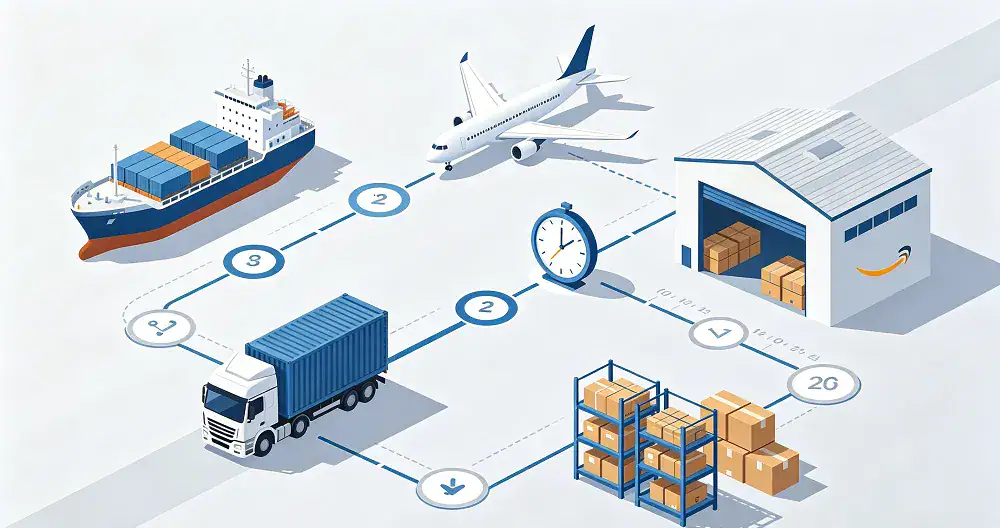
2. Rethinking Logistics: It’s Not Just Shipping Anymore
In the inventory balancing act, logistics is the key factor that determines how much inventory you actually need to keep on hand. Many sellers end up holding excessive stock simply because they can’t predict how long their head-end shipping will take. With an unpredictable 8-to-10-week (or longer) journey from China to Amazon’s warehouses, they have no choice but to build in large buffer stocks—which ties up cash and increases the risk of aged inventory.
The way out is to stop treating logistics as a passive “move-my-goods” service and start treating it as an active inventory-control tool. That means your logistics partner needs to offer:
-
Highly predictable shipping timelines, so you can figure out exactly when to reorder, rather than guessing.
-
Value-added services like product prep, to help you stay compliant with Amazon’s new rules and avoid costly delays or rejections.
-
End-to-end visibility, so you always know where your in-transit inventory is and can make informed restocking decisions based on real-time data.
3. AMZ Shipper’s Service Upgrades: Built for Smarter Inventory Management
AMZ Shipper, a cross-border logistics provider, clearly sees these challenges. In June 2026, the company rolled out a major service upgrade that directly addresses the new pressures sellers are facing.
1. Getting Your Restocking Math Right with “Predictable Transit Times”
The basic restocking formula is simple: Reorder Point = (Average Daily Sales × Lead Time) + Safety Stock. In this formula, “lead time” is the most powerful lever you have. The shorter and more consistent it is, the less safety stock you need to keep, which frees up your cash flow.
AMZ Shipper has overhauled its core Less-than-Container-Load (LCL) service to deliver exactly that. For shipments heading to the two main US gateways—Los Angeles/Long Beach on the West Coast and New York/New Jersey on the East Coast—the company now guarantees that, from the moment your goods arrive at one of its warehouses in Shenzhen, Yiwu, or Guangzhou, the entire consolidation and vessel-loading process is completed within five working days.
What this means for you: This provides a clear, predictable anchor for your head-end timeline. You can now build those five days into your restocking calculations, combine them with reliable ocean transit schedules, and plan your orders with much more confidence. Less guesswork means less need for oversized safety stock, which reduces both your capital tie-up and the risk of your inventory aging past Amazon’s surcharge thresholds.
2. Staying Compliant with Transparent, Upfront Prep Services
With Amazon no longer offering FBA prep services, tasks like labeling and poly-bagging are now squarely on the seller’s shoulders. Get it wrong, and you could face fees of up to $8.25 per unit—or worse, have your entire shipment turned away.
To take this headache off your plate, AMZ Shipper launched a standardized, transparent price list for FBA prep services in 2026, turning a formerly vague service into something clear and predictable.
What makes AMZ Shipper’s approach different:
-
Itemized pricing based on SKU type and prep complexity, so you can factor these costs into your product sourcing and pricing models with confidence.
-
A written, all-in quote covering ocean freight, customs clearance, final-mile delivery, and any optional services—with a clear commitment that, unless you request changes, your final bill won’t include any surprise charges.
What this means for you: What could have been a major headache and a source of unexpected costs is now a manageable, predictable standard service. It helps you avoid the direct financial losses and operational disruptions that come with non-compliance, so you can stay focused on running and growing your business.
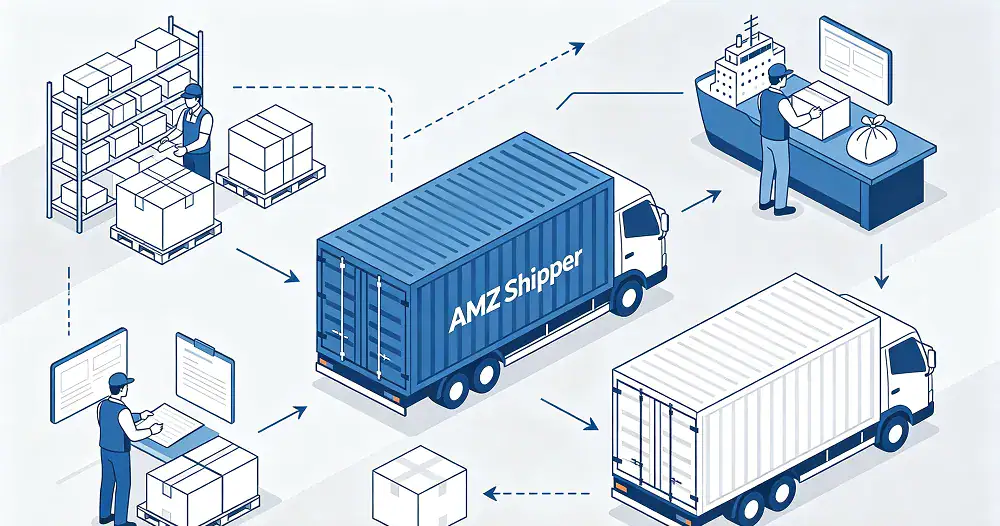
3. Gaining Flexibility with Multi-Channel Logistics Support
Beyond FBA, AMZ Shipper’s Less-than-Truckload (LTL) service is open to all business clients. It’s a true end-to-end solution that covers pick-up from your factory in China, international sea or air freight, customs clearance, palletizing, and final delivery anywhere in the US.
Why this matters: This means that when you’re planning your Amazon inventory, you can work with one logistics partner to handle multi-channel inventory distribution or urgent last-minute restocking needs. The more flexible your logistics, the more agile your overall inventory strategy can be.
4. Putting It All Together: A Practical Framework for Your Inventory Planning
With the 2026 rule changes and AMZ Shipper’s service upgrades in mind, here’s a practical way to build a more resilient inventory management system.
Start Here: Audit Your Current Situation
-
Pull and analyze the right reports. From Seller Central, download the “Manage Excess Inventory” report and the “FBA Inventory Age” report. Identify every ASIN flagged as “excess” (over 90 days of estimated sales) and every SKU that’s been sitting for more than the 181-day surcharge threshold.
-
Calculate your true per-SKU holding costs. For each core SKU—especially in multi-variation products—add up monthly storage fees, potential low-inventory fees (if stock dips below 28 days), and potential inventory surcharges (if it exceeds 181 days).
-
Review your prep workflows. Check which SKUs currently need prep work (labeling, bagging, etc.) and whether you’re handling that in-house or outsourcing it. Evaluate your capacity and costs, and consider reliable third-party options like AMZ Shipper’s standardized prep services.

Shift Your Strategy: From “Big and Rare” to “Small and Frequent”
Use the new predictability in your shipping timelines to recalculate your reorder points. With AMZ Shipper’s 5-day consolidation commitment giving you a reliable baseline, you can start reducing your order sizes from covering months of sales to covering 30 to 45 days of sales instead.
-
Striking the right balance:
-
Avoid the “high” end: Use your logistics partner’s reliable lead times to shorten the coverage period per shipment, so your inventory consistently stays below the 181-day surcharge line. Set a target of keeping all core SKUs under 180 days of age.
-
Avoid the “low” end: Set up individual inventory alerts for every FNSKU to make sure each one stays comfortably above the 28-day threshold, so you never trigger low-inventory fees.
-
5. Final Thoughts: Make Logistics a Competitive Edge
Given how complex Amazon’s inventory rules have become, logistics is no longer just about moving boxes from point A to point B. It has become a critical link that ties together cost, speed, compliance, and cash flow.
AMZ Shipper’s service upgrades for 2026 reflect this new reality: by offering predictable lead times, fully transparent prep services, and flexible LTL options, they help you shift logistics from a “cost center” to a reliable inventory planning tool. When you know exactly when your goods will move from a warehouse in China to an Amazon fulfillment center, you gain the control you need to manage inventory risk effectively—and free up resources to focus on what really matters: growing your business.
ABout AMZ Shipper
AMZ Shipper has several years of experience for international logistics Freight Forwarding service. Our service is for importer and exporter, foreign freight forwarders, local and abroad business. Export of 1500 of 40 HQ per year for FBA Amazon shipping, 15-30 tons of air shipments per month.
Member of WCA. Our company is a professional Amazon freight forwarder that specializes in providing comprehensive and efficient services to customers.