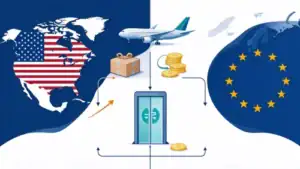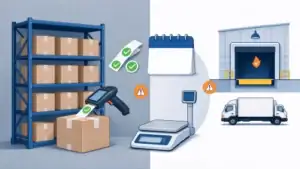
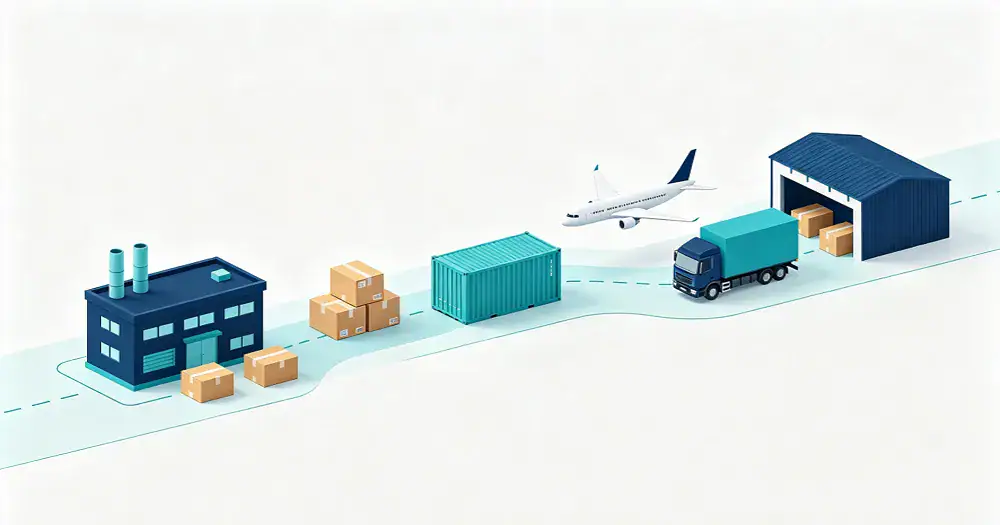
For Amazon sellers, FBA (Fulfillment by Amazon) takes care of warehousing, picking, packing, shipping, and customer service. But the first leg of the journey—getting your goods from your factory or warehouse in China to an Amazon fulfillment center overseas—is entirely on you. This part, known as inbound shipping, is often the second biggest expense after product costs. Plan it well, and you save real money. Plan it poorly, and you risk stockouts that hurt your rankings, or worse, shipments that get stuck in customs or even destroyed.
In 2026, Amazon has updated its inbound rules and discontinued some FBA prep services. Customs regulations in the EU have also changed. This guide breaks down the entire FBA shipping process into five practical steps, with tips drawn from real experience to help you avoid common pitfalls.
Step 1: Create Your Shipping Plan in Seller Central
The journey starts with the “Send to Amazon” workflow in Seller Central. This is the current recommended way to go—it’s clear and leaves less room for error.
Key Things to Get Right
-
Pick Your SKUs and Quantities: Select the FBA SKUs you’re sending and decide how many units for each. A quick sanity check against your sales data is always a good idea before you commit to a number.
-
Enter Your Ship-from Address: This needs to be a real, complete address. If you’re shipping from a factory in China, include the city and district. Otherwise, Amazon’s address verification can fail. A common mistake: don’t use a random address just to try and influence which fulfillment center Amazon assigns. The system calculates this automatically based on actual logistics, so a fake address won’t help and could cause compliance issues.
-
Set Up Your Packaging Template: Enter details like how many units go in each box, and the box dimensions (length, width, height) and weight. You can save this template for future shipments—it saves time later.
-
Confirm Who Applies Labels: For most private-label sellers, you’ll choose “Seller” as the label responsible party. That means you or your supplier print and apply the FNSKU labels before the goods leave.
-
Check Your FC Assignment: The system will tell you which FBA fulfillment center(s) your shipment is going to. Getting split across multiple centers isn’t necessarily bad—sometimes it’s Amazon’s way of placing inventory closer to customers for faster delivery.

Two Common Hiccups
| Issue | What Happens | How to Avoid |
|---|---|---|
| Measurement units wrong (cm vs inches, kg vs lbs) | Carrier quotes come out wrong, and the shipment might be rejected or incur extra fees at the warehouse | Double-check all units when creating the template. It helps to use a standard set of units consistently |
| Label mix-up after split shipments | Your supplier gets a PDF with labels for different FBA centers and can’t figure out which label goes on which box; the shipment gets stuck at receiving | Send your supplier a brief note clearly stating which box numbers go to which FBA center, and keep label files for different destinations in separate folders |
A naming tip: Use a consistent format when naming your shipments—something like “Supplier_Product_Month_Batch”—it makes tracking and communication much smoother down the line.
Step 2: Packing, Labeling, and Prep
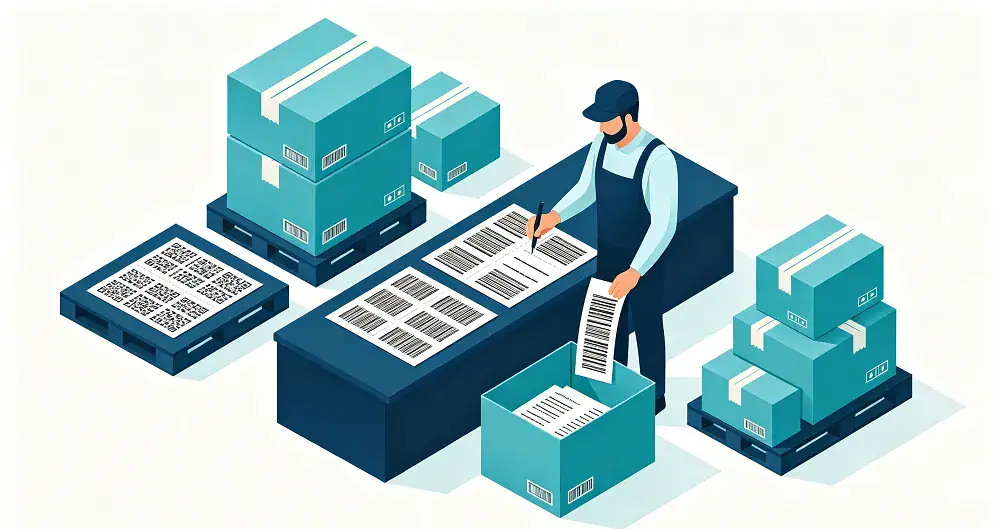
As of January 2026, Amazon no longer offers label application, packing, or assembly services for inbound shipments. You need to handle this yourself or outsource it to a third-party service provider.
FNSKU Label Requirements
FNSKU is the unique barcode Amazon uses to track your inventory. Here’s what you need to know about applying them:
-
Size: Between 1 and 2 inches tall, and 2 to 3 inches wide
-
Material: Black ink on non-reflective paper with a pressure-sensitive adhesive backing
-
Printer: A 300 DPI or higher laser printer is recommended
-
What’s on the label: A scannable barcode, the FNSKU number, product name, and condition (New/Used)
Where to place it: Stick the label on a flat surface of the product, away from corners, edges, and curved areas. If the product already has a UPC or other barcode, you must completely cover it with the FNSKU label so the warehouse scans the right one. Amazon won’t accept damaged or copied labels.
Box Labels
Each shipping box needs two box labels, placed on opposite sides of the box so they’re easy to spot. The “FBA XXXX” barcode on these labels is what the warehouse scans to receive your shipment—make sure it’s clear and scannable.
Don’t forget to include a packing slip inside the box.
Weight Limits to Watch
-
US market: Each box must not exceed 50 lbs (about 22.5 kg). If it’s heavier, you’ll need to slap a “Team Lift” sticker on it.
-
European market: The limit is 15 kg per box. Anything above that requires a “Heavy Package” label.
Also important: Every outer carton must clearly display a “MADE IN CHINA” mark.
Should You Outsource Prep Work?
If you’re dealing with many SKUs, or products that need special handling (fragile items, liquids, bundled sets), it’s worth considering whether to prep in-house or outsource. In 2026, many sellers are going with a hybrid approach: handle high-volume, simple SKUs internally, and outsource the complex ones.
| Prep Approach | Best For | Key Considerations |
|---|---|---|
| In-house prep | Simple products, low SKU count, available space and staff | You’ll need equipment (label printer, bubble wrap, etc.). Initial setup might run anywhere from a few hundred to a couple thousand dollars |
| Outsource to a prep center | Complex products, high SKU variety, seasonal peaks when you’re short-staffed | Charged per unit. Remember to factor their processing time (typically 3-7 business days) into your replenishment cycle |
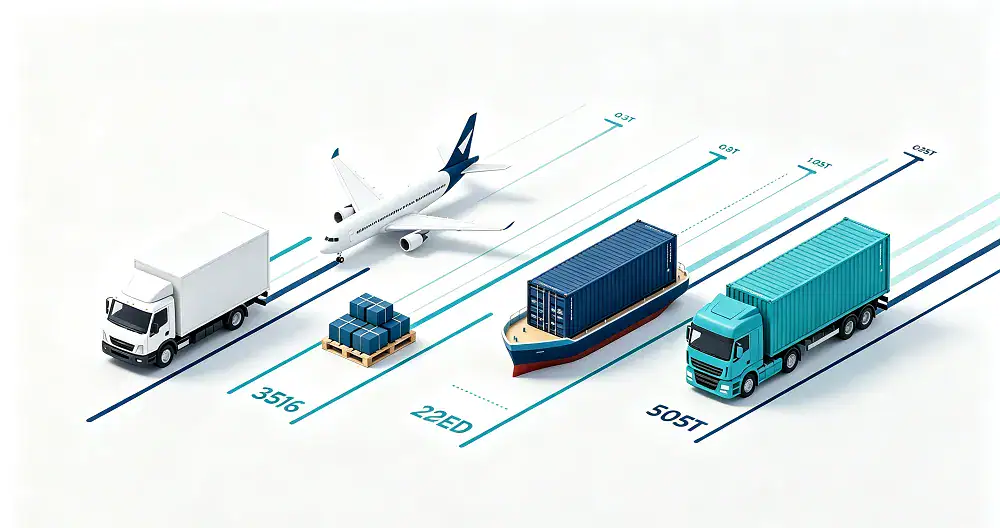
Step 3: Choose Your Inbound Shipping Method
This is where experience really matters. The goal is to balance cost, speed, and risk based on your product and business needs.
A Quick Comparison
| Shipping Method | Typical Timeframe | Best For | Cost Level |
|---|---|---|---|
| Express (e.g., DHL, UPS Red) | 3-7 days | Urgent restocks, testing new products | Highest |
| Air Freight + Express (Air Express) | 10-15 days | Regular restocking with moderate speed requirements | Medium-high |
| Sea Freight + Express (Sea Express) | 30-45 days | Regular restocking for established bestsellers | Medium-low |
| Full Container Load (FCL) / Sea + Truck | 30-45 days+ | Large/heavy items, full container shipments | Lowest |
How to Pick the Right Mix
Don’t rely on just one method—combine them. For a stable, best-selling product, send the bulk of your inventory (say, 80%) by sea to keep costs down. Keep a smaller “safety cushion” of inventory either in a third-party warehouse or sent via air for quick replenishment when you need it.
For oversize or heavy items, shipping by sea and then using truck delivery (rather than express courier) from the port is usually much cheaper. Express couriers have strict limits on dimensional weight and per-box weight, and going over triggers hefty surcharges.
For a brand new SKU you’re testing: Start small. Ship maybe 60 units or less via express to get the product listed and see how it sells. Once you confirm demand, you can plan your next restock with a mix of air and sea.
Always Budget for Delays
The timeframes above are just estimates. Port congestion, flight cancellations, and peak-season warehouse backlogs can all cause delays. It’s wise to add at least 7-10 extra days of buffer when planning your restock schedule.
Step 4: Customs Clearance—Compliance Is Non-Negotiable
Customs is often the most stressful part of FBA inbound shipping, and it’s where a knowledgeable logistics partner makes a real difference.
Key 2026 Update: New EU Customs Rules
Effective July 1, 2026, the EU has updated its customs rules for low-value B2C imports. If you’re shipping to the EU, you need to keep these points in mind:
-
Use an Amazon-approved carrier: When you confirm your shipment, you must select the carrier from the dropdown list in Seller Central. Typing in a carrier name manually is no longer accepted.
-
Provide the IOSS number and ASINs: For shipments valued at €150 or less, you must give your carrier Amazon’s IOSS number and the ASIN for each product in the shipment. The carrier needs this to complete the customs declaration.
-
Ship on a DDP (Delivered Duty Paid) basis: All inbound shipments from outside the EU must be sent DDP, meaning the buyer won’t have to pay any extra fees upon delivery.
Failing to follow these rules can mean you can’t confirm your shipment, and in some cases, it could even affect your selling privileges.
General Clearance Prep
Regardless of your destination, always prepare:
-
Accurate HS codes: Each product needs the correct customs tariff number
-
Country of origin: Clearly marked “MADE IN CHINA”
-
Material/composition details: Especially for textiles, food-contact materials, and electronics
One hard-learned lesson: If you delay providing customs documents, your cargo can get stuck at the border, racking up expensive storage fees. It’s much better to have all your clearance paperwork ready before the goods even leave the port of origin—don’t wait for customs to come back asking for them.
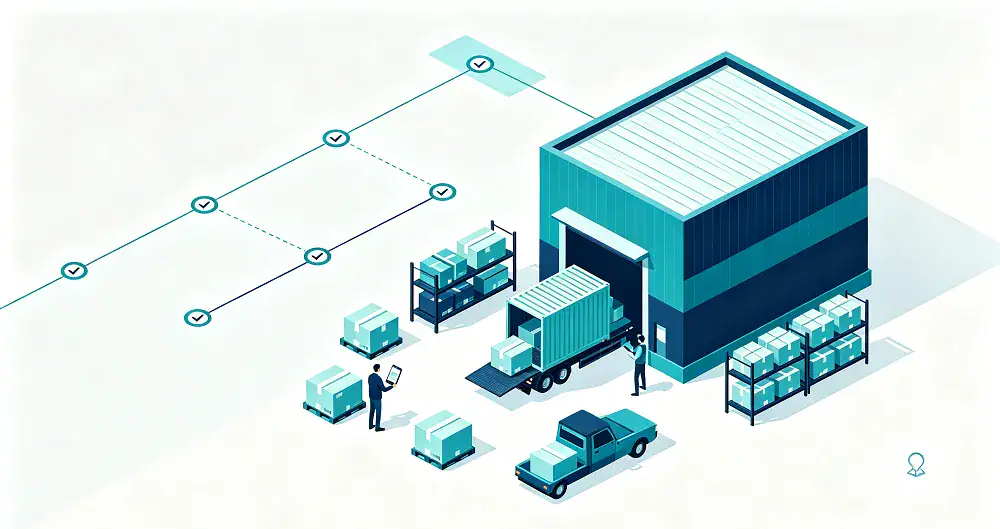
Step 5: Tracking and FBA Warehouse Receiving
Once your shipment is on its way, staying informed and keeping communication open is key.
What to Track
-
Key milestones: Departure from origin port, arrival at destination port, customs clearance completion, carrier pickup for final delivery, and warehouse check-in. You should have visibility into each of these steps.
-
Receiving progress at the FBA center: After the warehouse signs for the goods, they need time to unload, scan, and make the items available for sale. If there are issues with labels or quantity mismatches, Amazon will start a “shipment discrepancy investigation,” which can take weeks to resolve.
When Your Shipment Is Split Across Multiple FBA Centers
If Send to Amazon assigns your shipment to more than one fulfillment center, pay extra attention: After you print the box labels, make sure your supplier or warehouse team knows exactly which boxes go to which FBA center. A clear written instruction is best. Keep labels for each destination in separate physical folders or bags—this prevents mix-ups and saves a lot of headache later.
What a Good Logistics Partner Looks Like in 2026
Sellers today expect more than just “get it there.” A professional freight forwarder should offer:
-
Proactive updates: Letting you know about delays before you have to ask
-
Dedicated account management: A single point of contact who knows your account
-
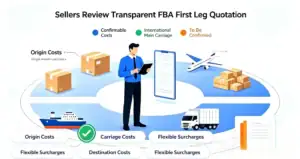
Transparent pricing: A breakdown of ocean freight, clearance fees, and destination trucking costs—no hidden charges
-
A global network: Membership in organizations like WCA (World Cargo Alliance) is a good sign they have reliable partners on the ground overseas
That wraps up the full journey—from planning your shipment to getting your products checked in at Amazon’s warehouse. Each step has its own details worth getting right. A truthful ship-from address, the right label stock, a smart mix of shipping methods—these are the small things that add up to smooth sailing. Get them right, and your inventory lands on time, your costs stay predictable, and you can focus on growing your business.
ABout AMZ Shipper
AMZ Shipper has several years of experience for international logistics Freight Forwarding service. Our service is for importer and exporter, foreign freight forwarders, local and abroad business. Export of 1500 of 40HQ per year for FBA Amazon shipping, 15-30 tons of air shipments per month.
Member of WCA. Our company is a professional Amazon freight forwarder that specializes in providing comprehensive and efficient services to customers.