A lot of sellers see the “Amazon Partnered Carrier” option in Seller Central and wonder: should I use Amazon’s partnered carrier, or stick with my China freight forwarder?

The common mistake here is treating it as an either-or choice. In reality, Amazon Partnered Carrier and a China freight forwarder don’t cover the same leg of the journey. Once you understand that boundary, you can make the right call.
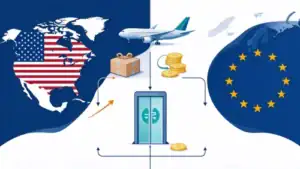
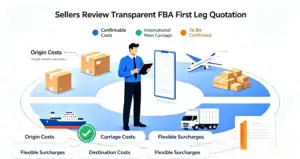
Amazon Partnered Carrier mainly covers the destination-country leg – from an address in the destination country to the FBA warehouse. A China freight forwarder covers the full cross-border chain – pickup from the Chinese factory, export customs, international transport, import clearance, all the way to last-mile delivery.
For sellers shipping from China, the cross-border leg has to be handled by someone – and Amazon Partnered Carrier usually doesn’t cover it. So the real question isn’t “A or B,” it’s “who handles the cross-border leg, and who handles the destination leg.”
1. What Amazon Partnered Carrier Covers – and What It Doesn’t
Let’s start with Amazon Partnered Carrier’s scope.
What it covers
-
Transport within the destination country (from a designated address to the FBA warehouse)
-
Discounted freight rates (usually below market)
-
Automatic tracking sync to Seller Central
-
Delivery appointments in some scenarios
-
Port-to-FBA warehouse transport on some marketplaces
What it doesn’t cover
-
Pickup from a Chinese factory
-
China export customs
-
International transport (ocean/air/rail)
-
Destination import clearance
-
Duties and VAT payment
-
FNSKU labeling and packaging compliance checks
Key reminder: Amazon Partnered Carrier’s quote usually covers only the destination-country leg. If you’re shipping from China, the cross-border leg needs to be arranged separately – and that’s typically handled by a China freight forwarder.

2. What a China Freight Forwarder Covers – and Where It Fits
Now let’s look at a China freight forwarder’s scope.
What it covers
-
Pickup from the Chinese factory or supplier warehouse
-
Export customs clearance
-
International transport (ocean FCL/LCL, air, rail)
-
Destination import clearance
-
Duties and VAT payment (under DDP terms)
-
Last-mile delivery
-
Delivery appointments (Carrier Central)
-
FNSKU labeling and packaging compliance checks (some forwarders)
What it doesn’t cover
-
Storage and fulfillment inside the FBA warehouse
-
Shipment creation and label generation in Seller Central
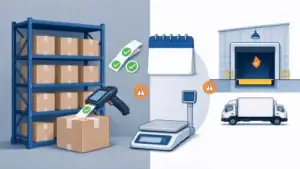
Key reminder: a China freight forwarder’s value lies in integrating the full cross-border chain. A good forwarder doesn’t just move cargo – they make sure it meets Amazon FBA’s inbound requirements. That’s become especially important since FBA prep services ended in 2026.
3. China Freight Forwarder vs Amazon Partnered Carrier – A Comparison Table
| Dimension | China Freight Forwarder | Amazon Partnered Carrier |
|---|---|---|
| Service start point | Chinese factory/warehouse | Designated address in destination country |
| Covers cross-border leg | Yes | No (usually not) |
| Export customs | Yes | No |
| International transport | Yes | No |
| Import clearance | Yes | No |
| Duties/VAT payment | Yes (DDP) | No |
| Last-mile delivery | Yes | Yes |
| Delivery appointment | Yes | In some scenarios |
| FNSKU labeling | Some forwarders provide | No |
| Packaging compliance checks | Some forwarders provide | No |
| Tracking | Full chain | Destination leg only |
The bottom line: the two aren’t substitutes – they cover different legs. For sellers shipping from China, the cross-border leg must be handled by a China freight forwarder. The destination leg can either go through Amazon Partnered Carrier or be handled by the forwarder as part of a door-to-door service.
4. How to Choose Between a China Freight Forwarder and Amazon Partnered Carrier
Here’s a framework based on your situation.

Scenario 1: Shipping from China, larger volume, by ocean or air
The cross-border leg must go through a China freight forwarder. For the destination leg, you can either let the forwarder handle it door-to-door, or switch to Amazon Partnered Carrier after the cargo arrives at the port.
Scenario 2: Shipping from China, small volume, by express
Express usually covers door-to-door already, so no extra arrangement is needed. If the express service only delivers to a designated address, you can use Amazon Partnered Carrier for the final leg.
Scenario 3: Goods are already in the destination country and need to go to an FBA warehouse
This is where Amazon Partnered Carrier works well. The cross-border and clearance stages are done – you just need domestic transport.
Scenario 4: You need FNSKU labeling and packaging compliance checks
You must use a China freight forwarder that offers these services. Amazon Partnered Carrier doesn’t provide them.
Scenario 5: You need DDP customs clearance
You must use a China freight forwarder. Amazon Partnered Carrier doesn’t handle import clearance or duty payment.
The judgment principle: start by looking at where your goods are. If they’re in China, the cross-border leg must go through a China freight forwarder. If they’re already in the destination country and cleared, Amazon Partnered Carrier is a convenient choice.
5. How 2026 Rule Changes Affect the Choice Between China Freight Forwarder and Partnered Carrier
Several changes in 2026 have made this choice a bit different from before.

Change 1: FBA prep and labeling services are completely gone
Ended for US sites on January 1, 2026, and for European sites on July 1, 2026. Labels must be applied at origin. That means if you need labeling services, you must find a China freight forwarder that offers origin labeling. Amazon Partnered Carrier doesn’t provide this.
Change 2: Inbound defect fees have shot up
Fines for labeling errors and oversized cartons have increased significantly. Choosing a China freight forwarder that offers packaging compliance checks reduces the risk of inbound defect fees.
Change 3: Delivery appointments are tighter
Amazon FBA warehouse appointments get tighter during peak season. Choosing a forwarder that handles Carrier Central appointments avoids the awkward situation of your cargo arriving at the warehouse and not being able to get in.
Change 4: New FNSKU label rules
As of March 31, 2026, non-brand-registered sellers must use FNSKU labels. A China freight forwarder who knows this can help you get labels right at origin.
6. Four Questions to Decide If You Need a China Freight Forwarder or Amazon Partnered Carrier
Here’s a simplified decision path.
Question 1: Where are your goods now?
In China → you need a China freight forwarder for the cross-border leg
Already in the destination country → Amazon Partnered Carrier is an option
Question 2: Do you need customs clearance?
Yes → you must use a China freight forwarder
No (already cleared) → Amazon Partnered Carrier is an option
Question 3: Do you need labeling and packaging compliance checks?
Yes → you must use a China freight forwarder that offers these
No (you or your supplier handled it) → Amazon Partnered Carrier is an option
Question 4: Do you need delivery appointment service?
Yes → confirm whether your chosen forwarder handles Carrier Central appointments
Handle it yourself → confirm you understand the appointment process
The judgment principle: if your goods are in China, need customs clearance, and need labeling, then a China freight forwarder is essential. Amazon Partnered Carrier can serve as a supplement or alternative for the destination leg.
7. Common Misunderstandings About Choosing Between a China Freight Forwarder and Partnered Carrier

Misunderstanding 1: Assuming Amazon Partnered Carrier can pick up from China
Amazon Partnered Carrier usually covers only the destination-country leg. It doesn’t cover factory pickup in China or international transport.
Misunderstanding 2: Assuming you don’t need a forwarder if you use a partnered carrier
If your goods are in China, the cross-border leg still needs a China freight forwarder.
Misunderstanding 3: Assuming the two can’t be used together
They can be combined: use a China freight forwarder for the cross-border leg and Amazon Partnered Carrier for the destination leg, or let the forwarder handle the destination leg as well.
Misunderstanding 4: Looking only at freight rates, not service coverage
Amazon Partnered Carrier may offer discounted freight, but if your goods still need labeling, customs clearance, and delivery appointments, it doesn’t provide those – you’ll still need a China freight forwarder.
Misunderstanding 5: Ignoring the 2026 rule changes
After FBA prep services ended, labeling responsibility shifted to the shipper. If your goods need labeling, you must confirm whether your chosen service provider offers it.
Choosing a China freight forwarder that handles both the cross-border leg and FBA-specific services covers the gaps Amazon Partnered Carrier leaves. For example, AMZ Shipper focuses on cross-border logistics for Amazon sellers, offering support across origin labeling coordination, destination clearance, and last-mile delivery – helping sellers connect the cross-border leg with the destination leg. But whoever you choose, the key is finding a freight forwarder that genuinely understands Amazon FBA inbound rules and clearly explains their service boundaries – not one that just quotes a freight rate and pushes you to book.
Shipping from China to Amazon FBA involves two separate questions: the cross-border leg and the destination leg. A China freight forwarder solves the first; Amazon Partnered Carrier solves the second. Figure out where your goods are and what services you need first, then decide who to use – that matters far more than asking “which one is cheaper.”