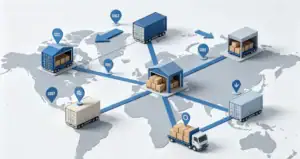
When you’re looking for a freight forwarder for the first time, the biggest problem isn’t “can’t find one” – it’s “don’t know what to ask.”
You might get a quote, think the number looks okay, and sign. Then later you find out they don’t handle delivery appointments, don’t do origin labeling, and don’t know that FBA prep services ended in 2026. These problems don’t show up when you sign – they surface when something goes wrong with your shipment.
The 2026 rule changes make this freight forwarder checklist even more necessary: FBA prep and labeling services are completely gone, so labels must be applied at origin. New FNSKU label rules are in effect, requiring non-brand-registered sellers to use FNSKU labels. And inbound defect fees have shot up, making labeling errors more costly than ever.
Here’s how to use this checklist: go through each item before you sign, and confirm one before moving to the next. Don’t skip anything just because the quote is cheap.
1. Freight Forwarder Checklist – Credentials and Legitimacy

First category: is this a legitimate freight forwarder?
Credential checks
-
Is the NVOCC license real? Can it be verified on the Ministry of Transport website?
-
Do they have China Customs AEO certification? What level?
-
Do they have FMC registration for US-bound routes?
-
Are they a member of WCA or another international freight network? Can it be verified online?
-
Do they have Amazon-recognised credentials (SPN, SEND, FIST)?
Company information checks
-
Is the company registration information verifiable?
-
Do they have a fixed office address and contact details?
-
Can they provide references from past clients?
The judgment standard: every credential they claim should be findable through official channels. If you can’t find it, treat it as if it doesn’t exist. Don’t just trust what’s on their marketing materials.
2. Freight Forwarder Checklist – Amazon FBA Capabilities
Second category: do they actually understand Amazon FBA? This is the part new sellers overlook most – and the one that causes the most problems.
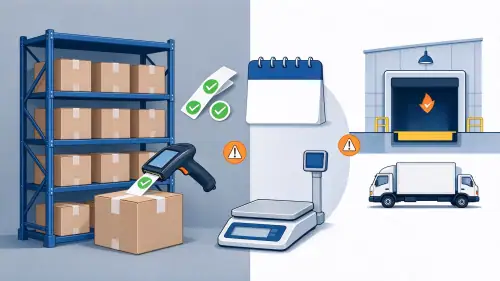
FBA labeling capability
-
Where do FNSKU labels go? What size?
-
Can they apply FNSKU labels at origin?
-
Do they know that as of March 31, 2026, non-brand-registered sellers must use FNSKU labels?
Packaging compliance capability
-
What’s the max weight per carton for US sites?
-
What’s the side length limit?
-
What labels do cartons over 15kg need?
-
Do they offer packaging compliance checks?
Delivery appointment capability
-
Do they handle Carrier Central delivery appointments?
-
If I handle the appointment myself and the goods can’t get in, who’s responsible?
Awareness of 2026 rule changes
-
Do they know FBA prep services have ended?
-
Do they know inbound defect fees have gone up?
-
Have they proactively flagged these changes to you?
The judgment standard: if the freight forwarder can answer these questions specifically and accurately, they’ve genuinely handled Amazon FBA shipments. If their answers are vague or they can’t answer at all, they’re just treating Amazon FBA shipments as regular cargo.
3. Freight Forwarder Checklist – Pricing and Transparency
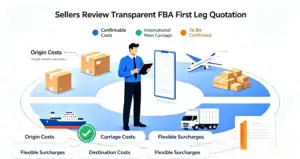
Third category: is the quote transparent and predictable?

Quote structure checks
-
Is the quote itemised, or just one lump sum?
-
Does it include origin charges (pickup, customs, labeling)?
-
Does it include destination charges?
-
Does it include customs clearance fees?
-
Does it include last-mile delivery and the delivery appointment?
Surcharge checks
-
How are peak season surcharges applied? When do they start?
-
How are fuel surcharges calculated?
-
Is there a remote warehouse surcharge?
-
How are waiting fees or detention fees calculated if they occur?
Payment and exchange rate checks
-
Is payment prepaid or collect?
-
What exchange rate is used?
-
Is there a credit period?
The judgment standard: be extra cautious with a freight forwarder who only gives you one lump-sum price with no breakdown. You have no way of knowing if extra charges will pop up later.
4. Freight Forwarder Checklist – Communication and Exception Handling
Fourth category: can they actually help when problems arise?
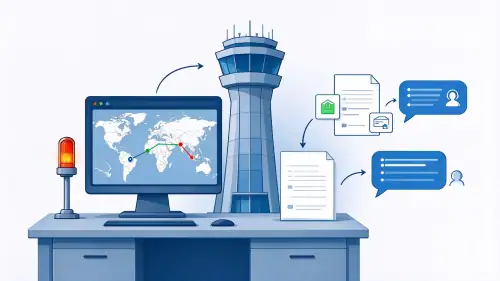
Communication capability checks
-
How long do they take to reply to a question?
-
Are their answers specific and professional, or just “don’t worry, no problem”?
-
Are they willing to proactively flag risks before you sign?
Exception handling capability checks
-
If customs inspects the shipment, what happens? Who covers the cost?
-
If the warehouse rejects delivery, what happens?
-
If inbound defect fees are incurred, how is responsibility divided?
-
If goods are lost or damaged in transit, how do you claim?
Tracking capability checks
-
Do they provide end-to-end tracking from origin to the FBA warehouse?
-
At which milestones do they proactively update status?
-
What’s their response time when problems arise?
The judgment standard: exception handling says more about a forwarder than smooth sailing does. If all they say is “there’s nothing we can do,” they haven’t prepared any specific response plan for Amazon FBA shipments.
5. Freight Forwarder Checklist – Quick Reference Table
| Category | Core Question | Red Flag |
|---|---|---|
| Credentials | NVOCC/AEO/FMC verifiable? | Can’t find, dodges |
| FBA capability | Where do FNSKU labels go? Carton limits? | Vague, can’t answer |
| Delivery appointments | Do you handle Carrier Central? | You do it yourself |
| 2026 rules | Know FBA prep ended? | Clueless |
| Quote structure | Itemised? | One lump sum |
| Surcharges | How are peak/fuel charged? | Vague |
| Customs | Whose IOR? | Someone else’s |
| Exception handling | What if inspected or rejected? | “Nothing we can do” |
| Tracking | End-to-end? | Have to chase every time |
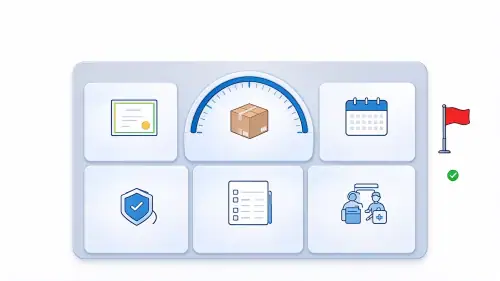
6. Freight Forwarder Checklist – How to Test Before Committing
One of the biggest mistakes new sellers make is handing all their inventory to a new freight forwarder right away. Here’s a suggested testing process.
Step 1: Send a small test shipment first
Send a small batch. See if communication is smooth, whether the final bill matches the quote, whether transit times hold up, and whether the goods get into the warehouse without issues.
Step 2: Watch how they handle exceptions
If your test shipment runs into problems (delays, inspections, labeling issues), see how they respond. Exception handling says more about a forwarder than smooth sailing does.
Step 3: Confirm information transparency
After shipping, see if they proactively provide tracking updates and sync status at key milestones. If you have to chase them every time, the partnership will be exhausting.
Step 4: Scale up only after it runs smoothly
Once your test shipment is received, accounts are clear, and communication is smooth, then consider scaling up. Get at least two or three shipments through before committing long-term. Don’t let one good experience lower your guard.
7. Freight Forwarder Checklist – Red Flags for New Sellers
These signals suggest this freight forwarder may not be right for new sellers.
Signal 1: One lump-sum price with no breakdown
You can’t assess the cost structure or know if extra charges will pop up later.
Signal 2: Unaware of 2026 FBA rule changes
They’re not tracking Amazon’s policy updates.
Signal 3: Can’t provide NVOCC or FMC credentials
Basic requirements for US-bound routes. If they can’t show these, move on.
Signal 4: Claims “Amazon can act as your importer”
That’s seriously misleading. You – the seller – are the Importer of Record.
Signal 5: Can’t handle Carrier Central appointments
This means they don’t do last-mile delivery – they only cover the port.
Signal 6: Promises “guaranteed no inspection” or “100% customs clearance”
No legitimate freight forwarder makes promises like that. Customs inspections are probabilistic – no forwarder can guarantee your shipment won’t be inspected.
Signal 7: Pushes you to sign but won’t answer questions
If they’re eager to get you to commit but dodge your specific questions, that’s a clear red flag.
Signal 8: No exception handling process
If they have no concrete answer for “what happens if the shipment gets inspected,” they haven’t prepared any specific response plan for Amazon FBA shipments.
Choosing a freight forwarder with verifiable credentials, who’s willing to break down the quote item by item, and who can clearly answer FBA-specific questions is the key to getting your first shipment right. For example, AMZ Shipper focuses on cross-border logistics for Amazon sellers, offering support across origin labeling coordination, destination clearance, and last-mile delivery – helping new sellers confirm what needs confirming before they sign. But whoever you choose, the key is finding a freight forwarder that genuinely understands Amazon FBA rules and is willing to explain every step clearly – not one that just throws out a “one-price-fits-all” number and pushes you to book.
Finding a freight forwarder as a new seller isn’t something you solve by asking “anyone used one?” Go through this checklist item by item, send a small test shipment first, and scale up only after it runs smoothly – follow this process, and your odds of finding a reliable freight forwarder go up significantly.