FBA first-leg quotes are one of the least transparent cost items in cross-border e-commerce. Two forwarders can quote the same shipment at prices that differ by nearly double, and the gap often has little to do with the freight rate itself. It comes down to three structural factors: how chargeable weight is calculated, what the quote actually includes, and where the service boundary is drawn. Understanding these three factors is the difference between comparing quotes meaningfully and comparing numbers that mean different things.
Why the Same Shipment Can Get Quotes That Differ by Double
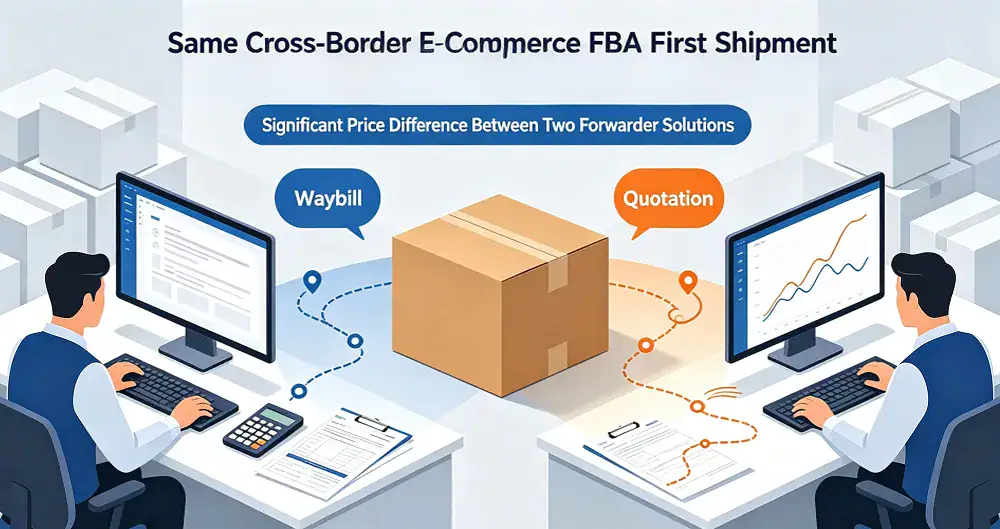
The difference in FBA first-leg quotes doesn’t come down to the “freight rate” itself. It comes down to three things: how the weight is calculated, what’s included, and where the service boundary is drawn.
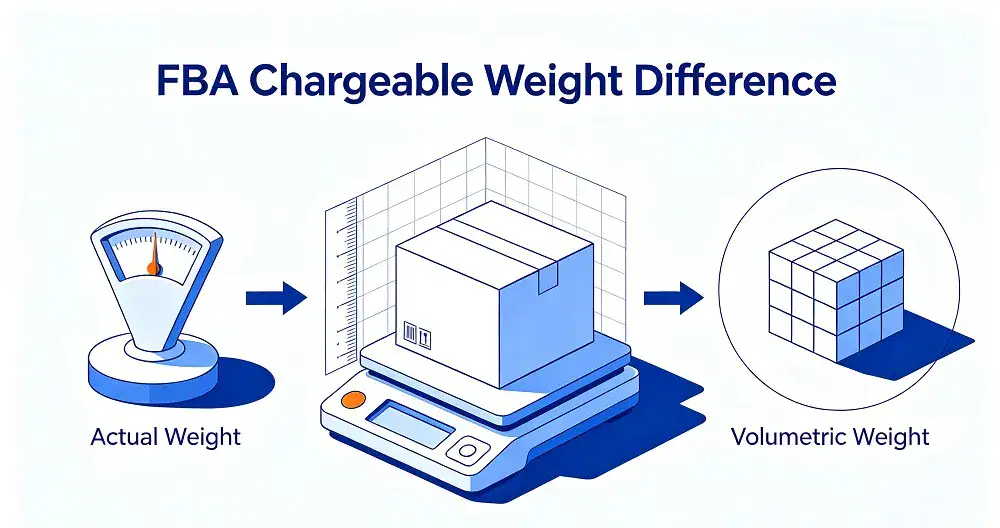
Let’s start with how the weight is calculated. For the same box, whether the forwarder tells you “charged by actual weight” or “charged by volumetric weight” can make a completely different result. In the industry, the mainstream air freight conversion is length × width × height ÷ 6000, but some express channels use ÷ 5000. Take a box that weighs 15 kg actual and measures 60 × 40 × 40 cm. By ÷ 6000 it’s 16 kg. By ÷ 5000 it’s 19.2 kg. That’s a 20% difference in chargeable weight. If your goods are bulky but light, this gap gets even bigger. Sea freight has a similar issue — the industry reference is 1 CBM ≈ 167 kg, but “reference” and “contract” are two different things.
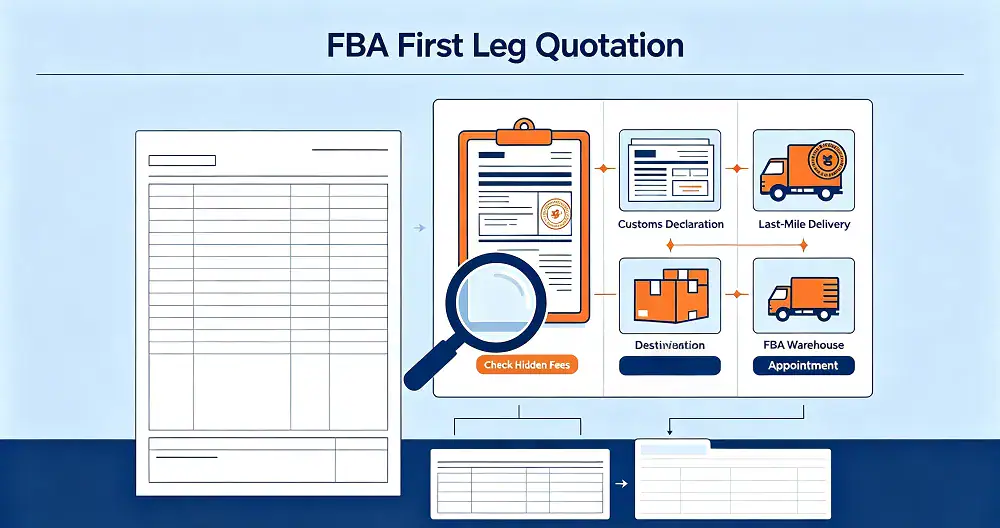
Now let’s look at what’s included. One quote says “sea freight + delivery, XX per kg.” Another says “sea freight + delivery, XX per kg, including customs declaration, clearance, duty prepayment, last-mile delivery, and FBA appointment.” The unit prices look close, but with the first one, you’ll be paying separately later for customs declaration, clearance service, duty prepayment handling, and appointment fees. The second one is an all-in price. Sellers have reported being quoted one rate, then getting a final bill with destination port handling fees, appointment fees, and oversize surcharges added on — bringing the total cost significantly above the initial quote.
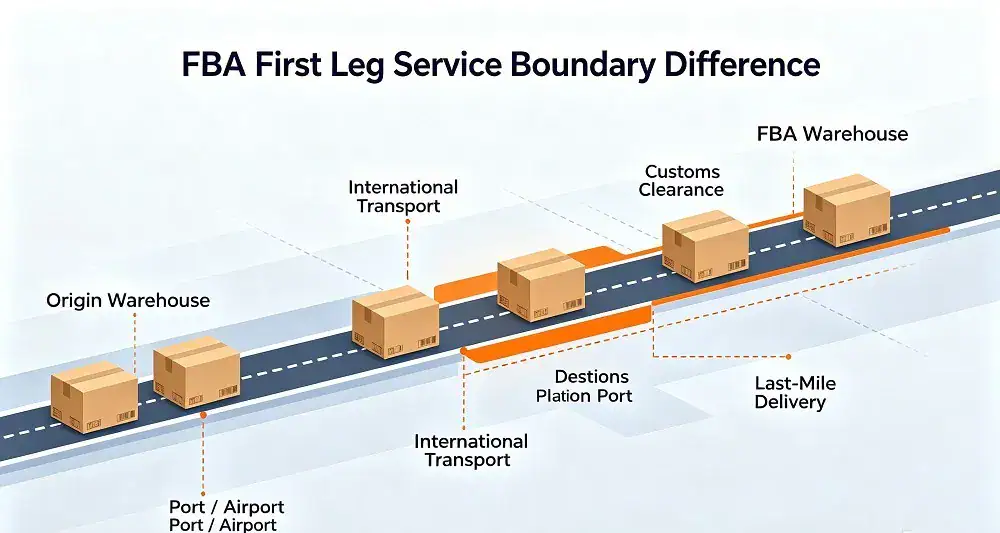
Then there’s the service boundary. A common approach with low quotes is “port to port” or “airport to airport” — meaning the forwarder only gets your goods to the destination port or airport. Clearance, pickup, and delivery are all billed separately. If a seller only looks at the unit price and places the order, they’re effectively agreeing to pay for everything else down the line.
Stack these three differences together, and a same shipment costing double in the end makes perfect sense.
Four Cost Categories a Transparent Quote Must Include
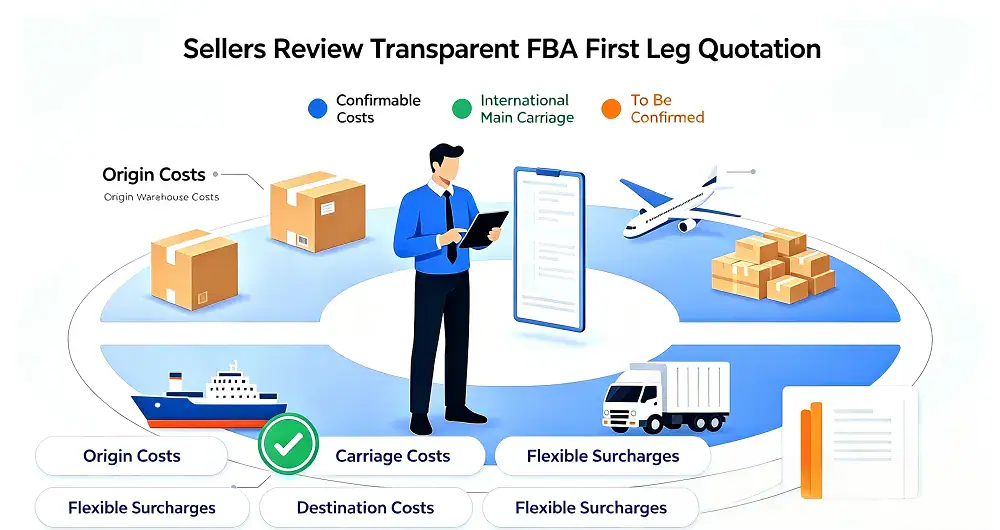
To judge whether an FBA first-leg quote is actually “clear,” you can check it against these four categories. If any one of them is missing, it’s worth asking about.
Origin-side costs. This covers door pickup, warehouse receiving and unloading, export customs declaration, labeling, and palletizing. What sellers need to confirm: Is pickup included in the quote or charged separately per shipment? Is labeling billed per SKU or per carton? Does the pallet price include fumigation treatment? Industry analyses point out that low quotes often leave palletizing fees and solid wood pallet fumigation fees as follow-up charges — charging separately for wood pallets and fumigation is a common practice.
International main carriage and surcharges. This is the biggest cost component. Sea freight is billed by cubic meter or weight. Air freight and express are billed by weight, taking the greater of actual weight or volumetric weight. Beyond the base freight, fuel surcharges are a standard floating item, usually a percentage of the freight that adjusts with oil prices. During peak season, there may also be space surcharges or queue fees. What sellers need to confirm: What volumetric weight conversion factor is stated in the quote? What’s the basis and adjustment cycle for fuel surcharges? When does the peak season surcharge kick in?
Destination-side costs. This includes import customs clearance, duty prepayment handling fees, port or airport container pickup, last-mile delivery, and FBA warehouse appointment. This is where “hidden charges” concentrate the most. Destination customs clearance service fees, FBA appointment fees, and remote warehouse delivery surcharges are all common add-ons. What sellers need to confirm: Does the quote include clearance fees and duty prepayment handling? Is last-mile delivery by truck or by express? (The cost and timing difference is significant.) Is the FBA appointment fee included? If the goods get assigned to a remote warehouse, is there an extra charge?
Flexible surcharges. These are triggered by the actual condition of the goods, but they can have a big impact on cost. Oversize and overweight surcharges are the most common. Mainstream channels usually define “standard” as a single carton not exceeding a certain weight and longest side not exceeding a certain length. Anything beyond that gets charged extra per piece. What sellers need to confirm: What are the weight and size limits per carton? Is the over-limit charge a flat fee per piece or a per-kg increase?
For quick reference, here’s a summary of the key checkpoints for the four cost categories above:
| Cost Category | What Should Be Included | Key Points for Sellers to Confirm |
|---|---|---|
| Origin-side | Pickup, warehousing, customs declaration, labeling, palletizing | Is pickup free? Labeling per SKU or per carton? Does palletizing include fumigation? |
| International carriage | Sea/air freight, fuel surcharge | Volumetric factor? When does peak season surcharge start? |
| Destination-side | Clearance, duty prepayment, container pickup, last-mile delivery, FBA appointment | Duty included? Truck or express? Remote warehouse surcharge? |
| Flexible surcharges | Overweight/oversize, inspection, detention, peak season premium | Carton limits? How are over-limit charges calculated? |
What Changed in 2026: Which Costs Went from “Optional” to “Must Be Included”
A policy change from Amazon in 2026 directly changed how FBA first-leg quotes should be evaluated.
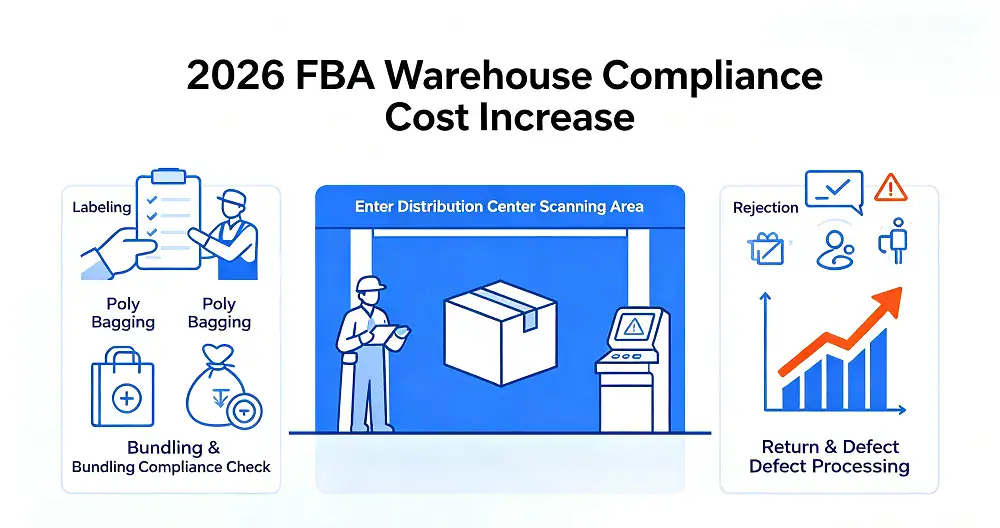
Starting January 1, 2026, Amazon discontinued its FBA prep and labeling services for the US marketplace. This includes FNSKU labeling, poly bagging, bubble wrap, bundle sets, and compliance prep — all gone. This means every item sent to FBA must have all compliance prep completed before it reaches the Amazon warehouse. In the past, sellers could send goods to Amazon without proper labeling and let Amazon handle it. After 2026, that path is completely closed.
At the same time, inbound defect fees went up significantly. According to Amazon’s official rate card, for shipments created after January 15, 2026, standard-size items sent on the wrong route or deleted shipments are charged an inbound defect handling fee per unit, at a notably higher amount than before. For non-compliant shipments, Amazon may reject them outright and return them, without taking responsibility for related damage.
With these two changes combined, the conclusion is clear: the “China-side prep capability” in an FBA first-leg quote has gone from a nice-to-have to a core cost-control item. In the past, you might have thought “labeling, I can just do it myself.” Now, if prep isn’t done properly, you’re facing per-unit inbound defect fees — and the per-unit cost could be far higher than having a reliable forwarder handle prep for you.
So when evaluating a 2026 FBA first-leg quote, there’s one extra thing to confirm: Does the quote include FNSKU labeling, outer carton compliance checks, and prep quality control? If not, you need to calculate what it costs you to do it yourself — labor, materials, and most importantly, the risk of inbound defect fees if something goes wrong. If it is included, that service is worth more in 2026 than it used to be.
A Quote Checkup List Sellers Can Actually Use
When you get a quote from any forwarder, run through these questions quickly:
-
Does the quote clearly state the volumetric weight conversion factor? If not, ask. Different factors can mean a 20%+ difference in chargeable weight.
-
Does the quote include destination customs clearance and duty prepayment handling? “Clearance included” and “duty included” are two different things. The cost structure and compliance risk of “tax-included” channels versus standard clearance channels are also different.
-
What are the per-carton weight and size limits? What’s the rate if you exceed them? Measure your goods before shipping and calculate whether you’ll trigger oversize or overweight surcharges.
-
Is the FBA appointment fee included in the quote? This one is a “hidden item” in some quotes — it only shows up at the delivery stage.
-
Does the quote include China-side labeling and prep? After 2026, the weight of this item has gone up significantly.
-
How long is the quote valid? Peak season prices move fast. A quote from two weeks ago may already be outdated. Reconfirming before shipping is standard practice.
Once you’ve asked these questions, you’ll have a pretty good idea of how much “water” is in a quote.
How AMZ Shipper Does It
We provide itemized quotes — not to look professional, but because sellers need a list they can actually use for comparison.
In June 2026, we made a service adjustment, and a few of the changes directly relate to quote transparency: LCL shipments guaranteed to be loaded within 5 working days; China-US dual time zone support with 4-hour response; all quotes issued in written, itemized form, with origin-side, main carriage, destination-side, and flexible surcharges listed separately.
We’ve seen too many sellers go back and forth between a “cheap quote” and a “final bill,” falling into the same pit. A quote that spells out the costs is more useful than a pretty number. If you have a few quotes on hand and aren’t sure about them, send them to us. We’ll help you break them down and compare.
AMZ Shipper has several years of experience for international logistics Freight Forwarding service. Our service is for importer and exporter, foreign freight forwarders, local and abroad business. Export of 1500 of 40HQ per year for FBA Amazon shipping, 15-30 tons of air shipments per month.
Member of WCA. Our company is a professional Amazon freight forwarder that specializes in providing comprehensive and efficient services to customers.