Sellers doing Amazon FBA in 2026 are feeling the same thing: more rules, less room for error.
In the past, some things were “close enough” – labels a little crooked, manufacturer barcodes left as they were, low-value parcels going through duty-free channels. After 2026, those “close enough” moves can turn directly into rejections, defect fees, or extra duty costs. The changes aren’t happening in isolation – operations, compliance, and cost are all tightening at the same time.
This article won’t list policy clauses. It’ll help you see how these changes connect, and how your logistics strategy should adjust.
1. Why 2026 Is a Turning Point for Amazon FBA
2026 isn’t “another year of fee adjustments” – it’s a year when several fundamental rules change at once.

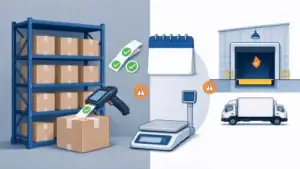
Operations side: FBA prep and labeling services are completely gone. Sellers must handle labeling and packaging themselves or through a third party.
Compliance side: Commingling ends and barcode rules tighten. Non-brand-registered resellers must use FNSKU labels – manufacturer barcodes are no longer accepted.
Cost side: The US low-value duty-free channel closes, the EU removes the €150 duty exemption, and FBA fulfillment fees gain a fuel surcharge.
Look at each one separately, and sellers can find a way to cope. But with all three tightening at once, the margin for error in Amazon FBA logistics is shrinking – what used to be “deal with it when it arrives” can now lead directly to rejection or extra fees.
2. Amazon FBA Prep Services End – Labeling Responsibility Moves Upstream
This is the change with the most direct impact on seller operations in 2026.

As of January 1, 2026, Amazon no longer provides prep and labeling services for US Amazon FBA shipments. The change covers all inventory sent to US FBA, including shipments sent directly from sellers to FBA and inventory entering FBA through AWD, AGL, SEND, and other channels. European sites followed on July 1.
What this means: previously, sellers could send unpackaged goods to the warehouse and let Amazon apply FNSKU labels and do prep. Now every unit must be labeled and compliantly packaged before it reaches the warehouse. Non-compliant goods that get damaged or can’t be traced will not be compensated.
Sellers have three options:
-
Label it yourself: apply FNSKU labels and packaging at origin or in a domestic warehouse
-
Have your supplier label it: ask the factory to do it before shipment, but provide clear visual instructions
-
Use third-party prep: hand it to a prep center or forwarder at origin
The key logistics coordination: whichever option you choose, your forwarder needs to be able to check packaging at origin, or at least confirm labels and carton specs are compliant. If the forwarder only goes as far as the port, labeling responsibility falls entirely on you or your supplier.
3. Amazon FBA Barcode Rules Tighten – Resellers Lose the Labeling Shortcut
The barcode rule change is linked to the end of prep services.

As of March 31, 2026, Amazon FBA’s commingling model officially ends. The new rules:
-
Brand-registered sellers (Brand Representative role): can continue using manufacturer barcodes (UPC/EAN) for inbound, without FNSKU labels
-
Resellers (not brand-registered or not Brand Representative): must use FNSKU labels, even if the product has a manufacturer barcode
-
Products without manufacturer barcodes: all sellers must use FNSKU
Why this matters: many resellers previously relied on commingling and manufacturer barcodes, skipping the labeling step. After 2026, that shortcut is closed. Resellers must build labeling into their shipping process, or goods will be treated as defective – and non-compliant inventory won’t be compensated.
How it connects to the end of prep services: Amazon no longer labels for you, and barcode rules tighten at the same time. Together, that means labeling goes from optional to mandatory – and it has to be done at origin.
4. How Global Customs Changes Affect Amazon FBA Logistics Costs
The most underestimated change in 2026 is the disappearance of duty thresholds.

US: low-value duty-free channel closes
The US previously had a de minimis exemption for imports valued at $800 or less. That exemption was suspended as of August 29, 2025, and related imports no longer enjoy duty-free treatment in principle. In October 2026, CBP proposed new rules requiring electronic filing for shipments under $2,500 before or on the day of import, replacing the current 15-day post-arrival window. The direction is clear: low value no longer means you can ignore declaration and duties.
Impact on Amazon FBA sellers: sellers who used small parcels and low declarations to ship to FBA now need formal customs entry and duty payment. Duties take a bigger share of logistics costs, and quotes need to factor this in.
EU: €150 duty exemption removed
As of July 1, 2026, the EU removed the duty exemption for imported parcels valued at €150 or less. In its place is a fixed €3 duty per item, with a transition period until July 1, 2028. From November 2026, a handling fee of about €2 per item is also expected.
An easily overlooked detail: the EU’s “item” isn’t “parcel” – it’s “all goods under the same tariff heading.” A parcel with three products under three different HS codes means three €3 duties. That means the accuracy of product classification directly affects the duty amount.
Impact on Europe-bound sellers: low-value shipments to EU FBA warehouses no longer carry zero duty cost. When choosing a logistics solution, duties and potential handling fees need to be included in the total cost calculation.
5. Amazon FBA Fulfillment Fee Surcharges Rise – A New Cost Variable
Another cost-side change is the increase in fuel and logistics surcharges.

As of April 17, 2026, North America (US and Canada) Amazon FBA fulfillment fees carry a 3.5% fuel and logistics-related surcharge. European sites (UK, France, Germany, Italy, Spain, Poland, Sweden, Netherlands, Ireland, Belgium) carry a 1.5% surcharge. The surcharge is calculated on the fulfillment fee, not the selling price.
Impact on sellers: for low-price, oversized, or heavy goods, this cost is more noticeable. When calculating Amazon FBA fees, don’t just look at the base fulfillment fee – include the surcharge.
6. What These Amazon FBA Changes Mean for Your Logistics Strategy
Connecting the changes above, your logistics strategy needs four adjustments.
Adjustment 1: Pin labeling responsibility to one end of the logistics chain
With prep services ending and barcode rules tightening, labeling must be done at origin. Sellers need to decide: supplier labels, forwarder labels at origin, or a prep center. Whichever you choose, your forwarder needs to check label compliance, or at least offer origin labeling services.
Adjustment 2: Duties must enter quote comparisons
With the US duty-free channel closed and the EU exemption removed, duties are no longer a “only if inspected” variable. When comparing logistics solutions, don’t just compare freight – include duties and potential handling fees.
Adjustment 3: Choose a logistics partner that covers “origin compliance”
The 2026 changes make the origin stage more important. A forwarder that offers origin labeling coordination, packaging compliance checks, and carton spec verification can help you stop problems before shipping. For example, AMZ Shipper focuses on cross-border logistics for Amazon sellers and can provide support across origin labeling coordination, packaging checks, and destination clearance. But whichever partner you choose, confirm their capabilities cover the new 2026 compliance requirements – not just a freight quote.
Adjustment 4: Build surcharges into long-term budgets
Surcharge increases aren’t one-off events – they’re ongoing cost items. When calculating product profit and pricing, treat fulfillment surcharges as a fixed variable.
7. Amazon FBA 2026 Changes – Quick Reference Table
| Change | Effective Date | Impact Area | What Sellers Need to Do |
|---|---|---|---|
| FBA prep and labeling services end | US Jan 1, 2026 / Europe Jul 1, 2026 | Origin operations | Complete labeling and packaging before shipping |
| Commingling ends, resellers must use FNSKU | Mar 31, 2026 | Barcode compliance | Confirm your seller status and barcode requirements |
| US low-value duty exemption suspended | Since Aug 29, 2025 | Customs and duties | Formal entry, include duties in costs |
| EU €150 duty exemption removed | Jul 1, 2026 | European clearance | Calculate duties by tariff heading, update quotes |
| FBA fulfillment fuel surcharge | Apr 17, 2026 | Fulfillment costs | Include surcharge in profit calculations |
Amazon FBA logistics in 2026 isn’t about isolated changes – operations, compliance, and cost are all tightening together. Labeling responsibility moves upstream, barcode thresholds rise, and duty costs become explicit. Stacked together, these changes require sellers to get more things right before shipping, rather than fixing them after arrival. And choosing a logistics partner needs to shift from “who has the lowest freight” to “who can help me get origin compliance right.”
ABout AMZ Shipper
AMZ Shipper has several years of experience for international logistics Freight Forwarding service. Our service is for importer and exporter, foreign freight forwarders, local and abroad business. Export of 1500 of 40HQ per year for FBA Amazon shipping, 15-30 tons of air shipments per month.
Member of WCA. Our company is a professional Amazon freight forwarder that specializes in providing comprehensive and efficient services to customers.