
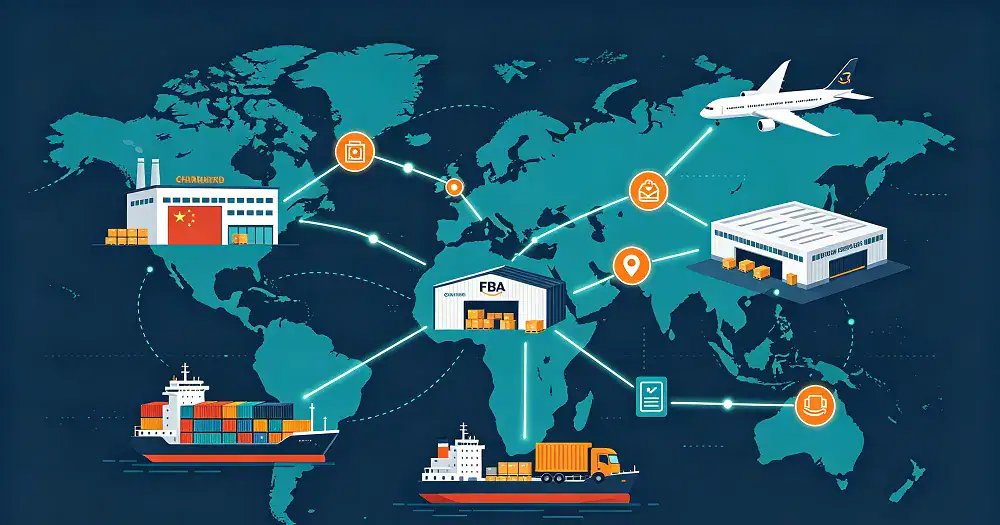
For Amazon sellers, product selection and store operations often take the spotlight, but logistics is the hidden cornerstone that can make or break your business. FBA headhaul logistics—the process of moving your goods from your factory or warehouse all the way to Amazon’s fulfillment centers overseas—is far more than simple point-to-point shipping. It’s a complex chain that involves local pickup, export customs clearance, international ocean or air transport, destination customs clearance, and appointment scheduling for warehouse receiving. One misstep could lead to stockouts, a nosedive in your product rankings, or even hefty penalty fees. That’s why finding a professional and trustworthy freight forwarder is a must for every seller.
1. Five Core Criteria for Evaluating FBA Freight Forwarders
When choosing a forwarder, it’s wise to look beyond the price tag and evaluate them systematically across these five dimensions.
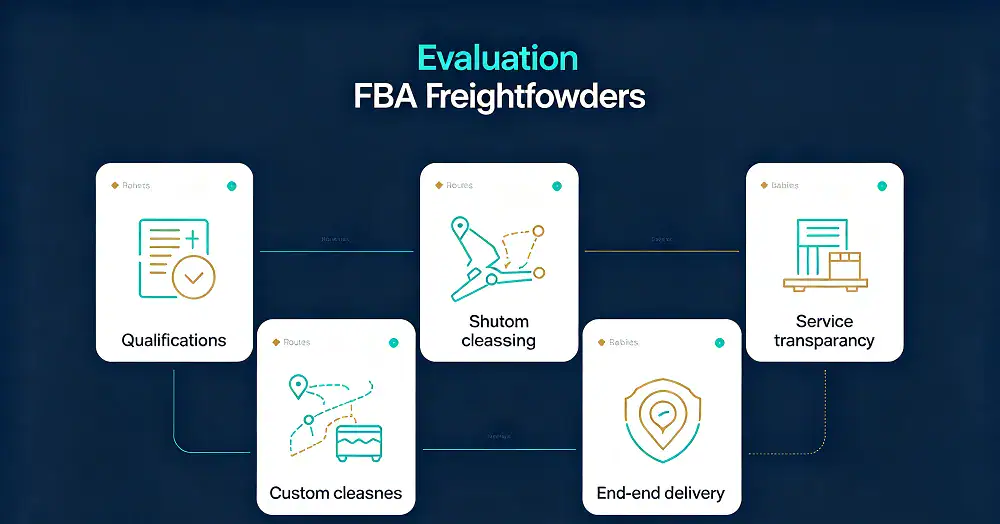
1. Qualifications and Compliance: The Foundation of Safety and Stability
A legitimate forwarder should hold the necessary operating credentials, which are a basic indicator of their professionalism and reliability. Key credentials to check for include:
-
NVOCC (Non-Vessel Operating Common Carrier) license: This means they can sign contracts directly with shipping lines and have actual control over your cargo.
-
AEO (Authorized Economic Operator) certification: This is a customs seal of approval, signaling lower inspection rates and faster customs processing.
-
Amazon official recognition: Programs like SPN (Service Provider Network) or SEND. These recognitions mean the forwarder has passed Amazon’s vetting process, offering better service standards and system integration.
2. Shipping Routes and Container Space: Your Safety Net During Peak Seasons
Whether a forwarder is a first-tier agent of a shipping line or airline, or a second- or third-tier reseller, makes a huge difference in their ability to secure stable space and rates during busy seasons. A forwarder with reliable, direct space allocations is less likely to have your shipment “rolled” to the next sailing. It’s worth asking which carriers they work with (like Matson, ZIM, or the Ocean Alliance) and whether their strengths align with your target markets, such as the US West Coast, East Coast, or Europe.
3. Customs Clearance Capability: The Key to Avoiding Port Delays
Customs clearance is one of the biggest risks in FBA headhaul logistics. A truly professional forwarder typically has its own in-house or long-term partnered customs brokerage in the destination country. They should be familiar with local customs regulations and offer services like document pre-screening, assisting with complex procedures such as DDP (Delivered Duty Paid) and VAT deferral. This expertise can greatly reduce the chances of inspections and cargo holds caused by declaration errors.
4. End-to-End Services and Last-Mile Delivery Network
A top-tier forwarder provides a full suite of services—from pickup and warehousing consolidation in China, to overseas customs clearance and container de-stuffing, all the way to timely and compliant delivery into Amazon’s warehouses. A key indicator is whether they own or operate local overseas warehouses and in-house trucking fleets. This capability determines how quickly your cargo can be de-stuffed, temporarily stored, relabeled if needed, and efficiently scheduled for delivery to Amazon, which is especially critical for maintaining speed during peak seasons.
5. Service Transparency and Exception Handling
Hidden fees are a common headache in this industry. A reliable forwarder will provide a detailed written quote, clearly listing every cost item, including ocean freight, customs brokerage fees, destination terminal charges, and delivery fees, with a promise of no surprise charges. Equally important is their exception handling mechanism—what happens if your shipment gets pulled for inspection, how delays or damage are compensated, and how responsive and effective their customer service team is at resolving issues.
2. Comparison of Major Shipping Options
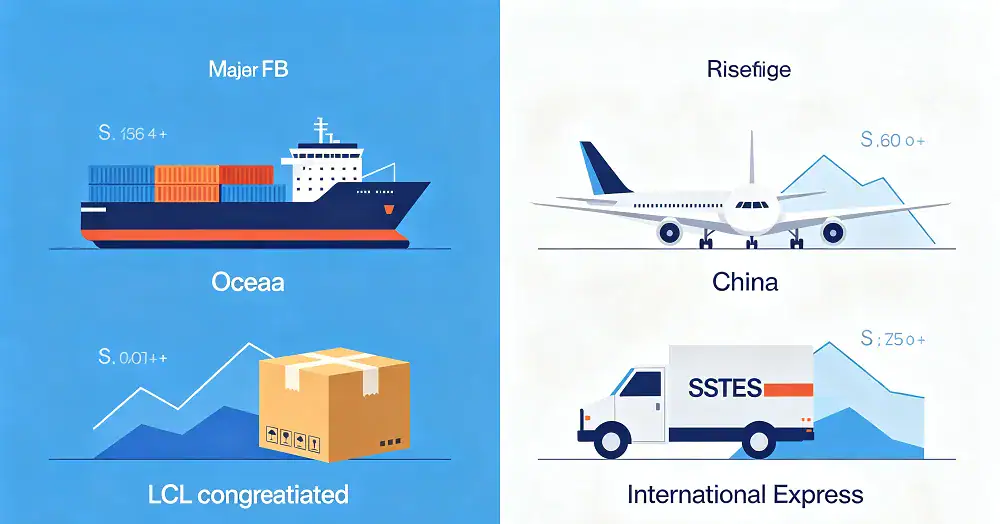
Depending on your product characteristics and time sensitivity, choosing the right shipping method helps you balance cost against efficiency. Here’s a comparison of the main FBA headhaul shipping options from China to the United States:
| Shipping Method | Estimated Transit Time (Door-to-Door) | Cost Profile | Advantages | Best For |
|---|---|---|---|---|
| Ocean FCL (Full Container Load) | 30-45 days | Low per-unit cost, high total cost | Cost-effective for large volumes, economical | Established sellers’ routine restocking, bulky items |
| Ocean LCL (Less than Container Load) | 35-50 days | Higher per-unit cost | Low minimum requirement, flexible | Small to medium sellers, orders that don’t fill a full container |
| Air Freight (Special Line) | 8-15 days | High, based on weight | Faster than ocean, a middle-ground option | Urgent restocking, new product testing, medium-value goods |
| International Express | 3-7 days | Very high | Fastest, stable delivery times | Emergency restock for out-of-stock items, high-value small samples |
3. How to Evaluate and Select in Practice
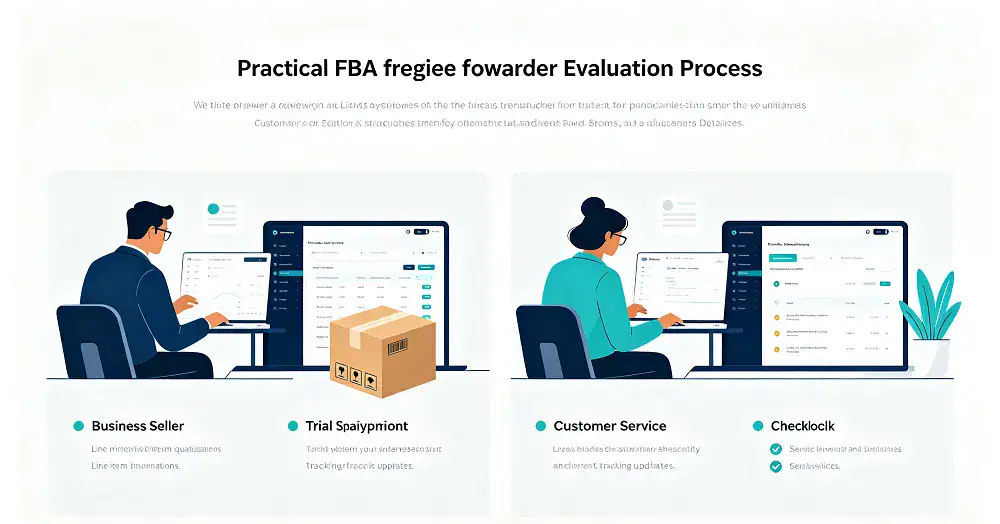
After narrowing down a few potential forwarders, you can dig deeper with these steps:
-
Ask for a Line-Item Quotation: Request quotes from at least 3-5 forwarders, making sure each one covers pickup, customs clearance, ocean/air freight, destination terminal charges, duties (if applicable), and delivery fees. Carefully compare the breakdown of each cost item, and be wary of a low total price that comes with vague descriptions.
-
Do a Trial Shipment: Before committing to large-volume cooperation, send a small test shipment to see how they actually perform. Focus on:
-
Operational Expertise: Do they proactively remind you about FBA labeling, packaging, weight limits, and other compliance issues?
-
Communication Responsiveness: Does their customer service get back to you with useful updates within a reasonable time (say, 4 hours)?
-
Information Transparency: Do they provide clear tracking updates and proactively inform you about key milestones like customs clearance and warehouse receiving?
-
-
Look Into Their Service Details:
-
Local Pickup Network: Do they have warehouses in or near your city for convenient pickup and consolidation? For instance, AMZ Shipper has facilities in Shenzhen, Yiwu, Guangzhou, and Qingdao, covering major manufacturing regions in China.
-
Special Service Capabilities: Do your products have special requirements, like built-in batteries, oversized dimensions, or pre-treatment services such as labeling or assembly? Starting January 2026, Amazon will stop offering certain FBA pre-treatment services, so this work will fall on sellers or their forwarders. This makes it even more important to confirm whether your forwarder provides FBA prep services (like labeling, kitting, and quality checks) and their pricing for these tasks.
-
4. Red Flags to Watch Out For
-
The Too-Good-To-Be-True Price Trap: Be cautious of quotes that are significantly lower than the market average. This could mean services are cut (like not covering duties), there will be surprise extra charges (like fuel or peak-season surcharges), or the forwarder is just a middleman with poor service reliability.
-
Compliance Pitfalls: Overlooking product compliance and inaccurate customs documentation are common errors. For example, failing to provide the necessary FCC/CE/FDA certifications, or misdeclaring the value of your goods, can lead to customs holds, steep fines, and expensive demurrage fees.
-
Vague Transit Time Claims: Avoid forwarders who only give you fuzzy statements like “we’re pretty fast.” Instead, ask for specific, data-backed transit time estimates based on their history, and clarify what the compensation policy is if delays occur due to their fault.
ABout AMZ Shipper
AMZ Shipper has several years of experience for international logistics Freight Forwarding service. Our service is for importer and exporter, foreign freight forwarders, local and abroad business. Export of 1500 of 40HQ per year for FBA Amazon shipping, 15-30tons of air shipments per month.
Member of WCA. Our company is a professional Amazon freight forwarder that specializes in providing comprehensive and efficient services to customers.