For cross‑border ecommerce sellers, logistics costs have always been one of the biggest variables on the profit and loss statement. Over the past few years, wild swings in ocean freight rates have given sellers plenty of headaches – one shipment at one price, the next at double, with margins pulled back and forth by the tide of rising and falling rates. But heading into 2026, things are shifting: shipping from China to the US is becoming noticeably more competitive. And it is not just about rates – it is about efficiency gains and new service models as well.
This article looks at three key areas – freight rate trends, logistics efficiency, and service innovation – to explain why shipping from China to the US is now a more attractive option for ecommerce sellers than it has been in years.
Rates Have Dropped Significantly – The Most Direct Sign of More Competitive Shipping
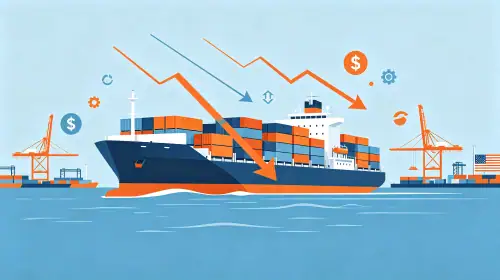
In 2026, container rates on the China‑US route have seen a notable correction. According to Xeneta data, as of October 31, 2026, average spot rates from China to the US West Coast fell 59% year‑over‑year to around $2,147 per FEU, while rates to the US East Coast fell 48% to about $3,044 per FEU. Xeneta forecasts that global spot rates could decline by 25% in 2026, with long‑term contract rates expected to drop by 10%.
Average 40HQ rates on the West Coast route dropped from $1,850 in June 2025 to $1,320 in February 2026 – a cumulative decline of 28.7%. On some routes, 40‑foot high‑cube container rates have fallen into the $1,200‑1,500 range, roughly half of their previous peaks.
What does this mean for shipping competitiveness? With the same logistics budget, you can now move significantly more cargo. For ecommerce sellers shipping from China to the US, inbound freight costs are taking up a smaller share of total costs, and margins are improving. One 3C seller selling on Amazon US noted that by 2026, the rate for a Matson express vessel 40HQ had dropped noticeably compared to Q4 2025 – and they could finally breathe a little easier.
That said, rates are not a straight line downward. In August 2026, the SCFI rose for four consecutive weeks, hitting 3,409.63 on August 21, driven by Panama Canal draft restrictions and Red Sea diversions. West Coast rates climbed to $6,765 per FEU, and East Coast rates to $9,700. Volatility is still there. But overall, 2026 rates sit well below the extreme highs of previous years, making shipping more competitive across the board.
Logistics Efficiency Is Improving – Making Shipping Competitive About More Than Just Price
Lower rates are one thing, but what really makes shipping from China to the US more competitive is the systemic improvement in logistics efficiency. Speed and cost are never separate issues – if ocean freight is cheap but too slow to be practical, the “cheap” part does not really matter.
The “rail‑plus‑fast‑vessel” model cuts transit times significantly
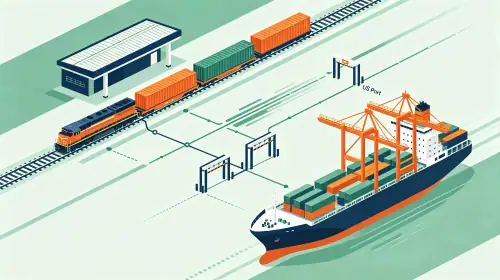
In February 2026, the “Yiwu Suxi – Ningbo Zhoushan Port” ZIM e‑commerce rail‑sea express service officially launched. Using a “rail‑sea express + fast vessel” combined model, cargo departs Yiwu, arrives at Ningbo Zhoushan Port the same day, and connects to ZIM’s ZX2 e‑commerce express vessel to Los Angeles, with a sea transit time of about 12 days. Under the traditional rail‑plus‑sea model, the journey from Yiwu to the US took around 18 days at best. The new model compresses total transit to about two weeks – a roughly 25% improvement in efficiency.
Customs authorities also provide a streamlined process – “one declaration, one inspection, one release” – cutting overall clearance time by about half. The service also allows empty containers to be picked up locally in Yiwu, reducing the logistics cost of repositioning boxes from Ningbo Zhoushan Port for individual shippers. Overall, this model reduces total logistics costs by about 10%.
A new balance between speed and cost
In the past, ecommerce sellers faced a binary choice: ocean was cheap but slow, air was fast but expensive. The “rail‑plus‑fast‑vessel” model now offers a middle ground – close to air freight speed with near‑ocean freight cost. That makes shipping from China to the US more competitive on the speed‑cost spectrum. For sellers who need both inventory turnover and cost control, this is a game‑changer.
Service Innovations – Making Competitive Shipping Accessible to Smaller Sellers
Lower rates and better efficiency are the foundation, but what truly makes shipping more competitive is the service innovation that lets a wider range of sellers tap into these benefits.
LCL services lower the entry barrier
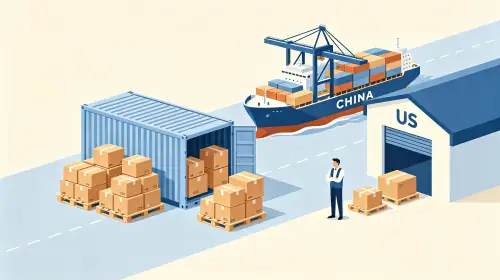
In the past, FCL (full container load) was the default for ocean freight, and smaller sellers often could not access the cost advantages because they did not have enough volume. But LCL (less than container load) services have matured significantly. In 2026, LCL rates from China to the US West Coast are roughly $80‑160 per cubic metre, and $100‑180 per cubic metre to the East Coast. With LCL, shipments as small as 2‑15 cubic metres can go by sea – so sellers no longer need to wait until they can fill an entire container to enjoy ocean freight’s low‑cost advantage.
Data shows that LCL costs per kilogram are only 15‑25% of air freight rates, and FCL costs are even lower – just 8‑12% of air freight. For sellers with steady but smaller volumes, LCL provides a cost‑controlled entry point, making shipping competitive even for smaller players.
Overseas warehousing networks lower last‑mile costs
The growth of overseas warehousing networks is further reducing last‑mile delivery costs. Some sellers report that fulfilment through an overseas warehouse saves at least 15% per unit compared to FBA. In 2026, Cainiao launched an optimised last‑mile product that uses AI to match shipments with the most cost‑effective final carrier, with savings of up to 40% on last‑mile fees.
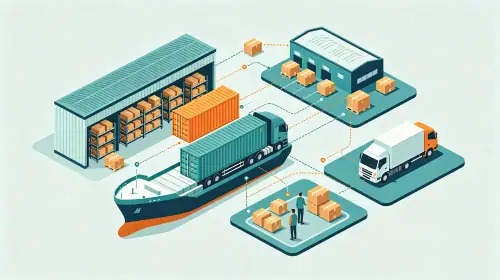
The “ocean freight + overseas warehouse” model is becoming the dominant fulfilment strategy for many sellers. In 2026, ocean freight (fast vessel + overseas warehouse) accounted for about 70% of the China‑US cross‑border ecommerce volume. Goods move in bulk by sea to a US warehouse, then are flexibly restocked to FBA or shipped directly to consumers based on actual sales. This model captures the cost advantage of ocean freight while avoiding the storage fees that eat into slow‑moving FBA inventory.
Key Data Points on Shipping Competitiveness
The table below summarises the key changes in cost, speed, and service models for China‑to‑US shipping in 2026:
| Dimension | Past Situation | Current Situation | Impact on Shipping Competitiveness |
|---|---|---|---|
| Ocean freight rates | High volatility, unpredictable costs | West Coast rates down 59% YoY to ~$2,147/FEU | Inbound costs significantly lower; margin room improves |
| Transit time | Traditional sea freight 18+ days | “Rail‑fast‑vessel” model delivers in ~14 days | Better speed‑cost trade‑off |
| LCL access | FCL‑dominated; hard for smaller sellers | 2‑15 CBM shipments; $80‑160/CBM | Smaller sellers can access ocean benefits |
| Last‑mile delivery | Mostly FBA‑dependent | Overseas warehouses save 15%+; AI matching saves up to 40% | More options, less reliance on a single channel |
| Mainstream model | Single‑mode transport | “Sea + warehouse” accounts for 70% of volume | More flexible supply chain; better resilience |
What This Means for Ecommerce Sellers
Falling rates, improving efficiency, and lower barriers – these three shifts together are making shipping from China to the US a more competitive proposition than it has been in years.
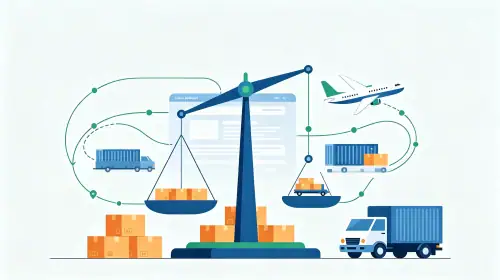
Cost structures are improving. With rates at favourable levels and efficiency gains across the board, total logistics costs are declining. For ecommerce sellers shipping from China, that means either more inventory for the same budget or lower costs for the same volume.
The entry bar is lower. LCL services let smaller sellers access ocean‑freight cost advantages, and overseas warehouse networks make last‑mile delivery more flexible and economical. The mainstreaming of “sea + warehouse” means sellers no longer have to rely solely on FBA – they can mix and match based on their product profile and sales rhythm.
The strategic toolbox is bigger. Sellers can now combine sea, air, overseas warehousing, and FBA in ways that suit their specific needs. Volatility still exists, but the overall improvement in shipping competitiveness gives sellers more options and more room to absorb bumps along the way.
As a logistics provider focused on cross‑border ecommerce, AMZ Shipper helps sellers identify cost‑effective shipping windows and optimise their freight strategies – from LCL to FCL, from ocean freight to overseas warehouse transshipment – so you can find the right balance between cost and speed for your business.
ABout AMZ Shipper
AMZ Shipper has several years of experience for international logistics Freight Forwarding service. Our service is for importer and exporter, foreign freight forwarders, local and abroad business. Export of 1500 of 40HQ per year for FBA Amazon shipping, 15-30 tons of air shipments per month.
Member of WCA. Our company is a professional Amazon freight forwarder that specializes in providing comprehensive and efficient services to customers.