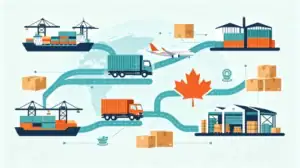
Ask any Amazon seller who ships from China, and they’ll tell you the same thing: there’s no single answer to how much it costs to send your goods to an Amazon FBA warehouse. And honestly, anyone who gives you a fixed number per kilogram is probably oversimplifying things. The real cost of getting your inventory from a factory in China to an Amazon FBA fulfillment center in the US depends on a whole bunch of factors—shipping mode, cargo volume, destination warehouse location, product category, customs duties, and how fast you need it there.
If you only focus on the “per-kg rate,” you’re likely in for a surprise when the final bill arrives. That’s because the true landed cost for Amazon FBA includes way more than just freight. In this article, we’ll break down every single charge you’ll encounter when shipping from China to US Amazon FBA centers, so you can build a realistic cost model for your business.
The 9 Cost Categories That Make Up Your Amazon FBA Inbound Shipment
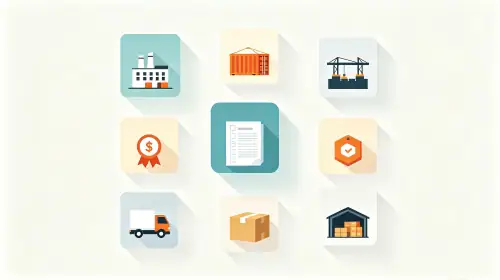
Every shipment from China to a US Amazon FBA warehouse goes through these nine cost buckets. Some are fixed fees, some are percentages of your declared value, and some vary with volume. Knowing each one helps you avoid budget blowouts.
1. Origin operation charges
These cover pick‑up from the factory or delivery to the CFS, export customs clearance, and export documentation. The exact cost depends on your trade terms (FOB vs. CIF) and whether your freight forwarder provides door‑pickup service.
2. Main freight (ocean or air)
This is the biggest chunk of your Amazon FBA inbound cost. Ocean freight is quoted per cubic meter (CBM) or per container, while air freight is based on chargeable weight (the greater of actual weight and dimensional weight). Your choice of shipping method directly drives this cost.
3. Destination port charges
These include terminal handling charges (THC), destination CFS fees (for LCL shipments), and release fees. For LCL cargo, the destuffing fee at the destination port can be a significant extra, so watch out for that.
4. Customs duties
Duties are one of the most variable parts of Amazon FBA shipping costs. The amount depends on the HS code of your goods, their country of origin, the CIF declared value, and the applicable tariff rates. For products made in China, you’re looking at a combination of Most‑Favored‑Nation rates plus Section 301 tariffs.
5. MPF (Merchandise Processing Fee)
This is a mandatory fee collected by US Customs, calculated at 0.3464% of the declared value, with a minimum and maximum cap per entry.
6. HMF (Harbor Maintenance Fee)
Applies only to ocean shipments and is set at 0.125% of the CIF value, with no upper limit.
7. Customs bond
Any commercial shipment above a certain value requires a customs bond. A single‑entry bond covers one shipment, while a continuous bond covers all your entries for a year.
8. Last‑mile delivery (trucking from port to Amazon FBA warehouse)
This covers the truck ride from the port to the Amazon FBA fulfillment center door. Costs vary by distance, the specific Amazon FBA warehouse location, chassis fees, fuel surcharges, and appointment fees.
9. Prep and labeling
As of January 1, 2026, Amazon has officially ended its in‑house FBA prep and labeling service, which had been running for over a decade. That means every shipment headed to an Amazon FBA fulfillment center must be properly packaged, sealed, and labeled before it arrives—either by you or by a third‑party partner you arrange. This applies to all Amazon FBA inbound paths, including AWD and AGL. If your shipment doesn’t meet the requirements, it can be rejected or even disposed of without compensation. So prep work is now a fixed upfront cost you need to plan for in your Amazon FBA budget.
Amazon FBA Shipping Methods: Cost vs. Transit Time
Choosing the right shipping method makes a huge difference in both cost and speed. Here’s how the three main options compare for Amazon FBA shipments from China:
| Shipping Method | Cost Level | Typical Transit Time | Best For |
|---|---|---|---|
| Ocean LCL (Less than Container) | Lowest | West Coast 20‑25 days / East Coast 32‑43 days | Small to mid‑sized sellers, bulk restocking |
| Ocean FCL (Full Container) | Low | West Coast 14‑18 days / East Coast 28‑35 days | Large volumes, multi‑SKU consolidation |
| Air Freight | Higher | 7‑10 days | Emergency restocking, high‑value goods, test runs |
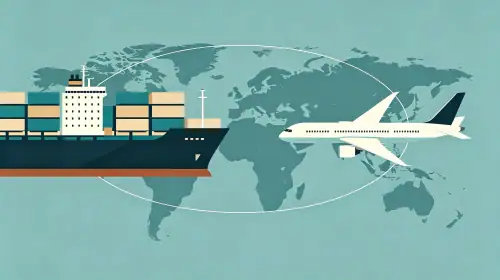
Ocean freight is the go‑to for most Amazon FBA sellers who want to keep costs down. LCL charges by the cubic meter and works well for shipments between 1‑15 CBM, while FCL gives you a flat rate per container (20GP/40GP/40HQ) and is more economical for bigger volumes. Air freight costs more, but when your Amazon FBA inventory is running low, it can save your listing from going out of stock.
6 Key Factors That Drive Your Amazon FBA Shipping Costs
Even two sellers shipping similar products from China to the US can end up with very different Amazon FBA freight bills. Here’s why:
1. Shipment volume
The more you ship, the lower your unit cost. A full container gives you a much better per‑unit rate than LCL, and larger shipments spread fixed costs like customs clearance over more pieces.
2. Shipping method choice
As we just saw, ocean, air, and express have very different price tags. Your decision depends on your Amazon FBA inventory turnover and how much cash you’re willing to tie up in transit.
3. Destination Amazon FBA warehouse location
Shipping to West Coast Amazon FBA centers is generally cheaper than to East Coast ones, because the voyage is shorter and there’s more shipping capacity. But Amazon’s warehouse allocation might split your shipment across different regions, which directly affects your total freight cost.
4. Seasonality
Peak season (usually Q3‑Q4) brings peak season surcharges, while off‑peak periods are more affordable. Smart Amazon FBA sellers plan their restocking schedules around these cycles.
5. Packaging and dimensional weight
For air freight and some ocean LCL, carriers charge by dimensional weight (length × width × height ÷ 6000). Optimizing your packaging—using the smallest box that still protects your goods—can directly lower your Amazon FBA shipping costs.
6. Amazon FBA inbound placement fees
As of January 15, 2026, Amazon adjusted the fees for its inbound placement service. Standard‑size items now see a moderate per‑unit increase if you choose single‑point receiving. You have two options: pay the fee for single‑point delivery, or opt for “Amazon‑optimized split shipments” to avoid the fee—but that may increase your domestic trucking complexity. Under the 2026 fee structure, the weight threshold for splitting decisions has been raised from 5 lb to 8.5 lb, meaning more Amazon FBA sellers can potentially reduce placement fees by optimizing their inbound plan.
Key 2026 Policy Changes That Affect Amazon FBA Shipping Costs
Several major updates took effect in 2026 that directly impact the total cost of shipping from China to Amazon FBA:

Customs duty changes
The US has tightened its de minimis exemption rules. The previous $800 duty‑free threshold for low‑value shipments is no longer available for goods from China. Every shipment to an Amazon FBA center now requires formal customs entry and full duty payment. For Chinese‑origin products, duties are a combination of MFN rates, Section 301 tariffs, and other layers—making this a much bigger slice of your Amazon FBA cost pie than before.
End of Amazon FBA prep service
As mentioned, Amazon no longer provides prep and labeling services for FBA shipments. You’ll need to handle packaging, sealing, and FNSKU labeling yourself or through a partner before the goods reach the warehouse.
Inbound placement fee updates
The 2026 fee schedule introduces more granular tiers for standard‑size items. Single‑point receiving costs have gone up moderately, so it’s worth recalculating whether splitting your shipment makes financial sense for your Amazon FBA strategy.
Aged inventory surcharge increase
Starting in 2026, Amazon applies steeper surcharges on inventory stored in FBA centers for over 180 days, on a stepped scale. Items aged over 15 months could face fees several times higher than the monthly storage charge—so keeping your Amazon FBA inventory fresh is more important than ever.
Practical Tips to Keep Your Amazon FBA Shipping Costs Under Control
Now that you know where the money goes, here are some actionable strategies to trim your Amazon FBA inbound expenses:
Combine ocean and air strategically
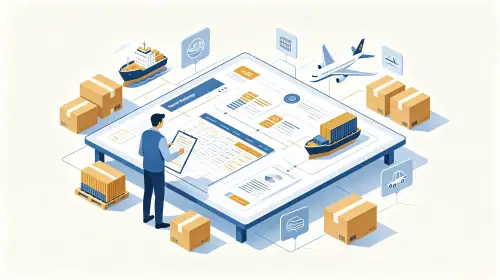
Use ocean freight for your big bulk restocks to get the lowest unit cost, and keep air freight for emergency top‑ups when you’re running low. This hybrid approach is what experienced Amazon FBA sellers rely on.
Optimize your packaging to reduce dimensional weight
Smaller boxes mean less chargeable weight, especially for air shipments. Test different box sizes and materials to find the sweet spot between protection and size.
Plan ahead to avoid peak season
Peak surcharges can add 10‑30% to your Amazon FBA freight costs. If you can ship 6‑8 weeks before the busy season, you’ll avoid the highest rates.
Compare single‑point vs. split shipments carefully
Don’t just look at the inbound freight—add up the inbound placement fees too. Split shipments can save you the placement fee, but they may cost more in trucking and coordination. Under the 2026 rules, if your SKU weighs less than 8.5 lb and has decent monthly sales, splitting might be the cheaper overall option for your Amazon FBA operation.
Work with a logistics partner who knows Amazon FBA
Amazon FBA inbound involves origin handling, international shipping, customs clearance, last‑mile delivery, and prep work. A forwarder who understands FBA rules can help you avoid compliance fines and rejected shipments. For example, AMZ Shipper specializes in cross‑border first‑mile solutions for Amazon sellers and offers end‑to‑end services from China to FBA warehouses, including destination clearance and delivery. But no matter which partner you choose, make sure they give you a clear, itemized quote that covers all the cost categories we’ve discussed—so you know exactly what you’re paying for.
Understanding the real cost of shipping from China to Amazon FBA isn’t about finding a magic number—it’s about knowing what makes up that number and how each piece moves. With the 2026 policy shifts around duties, placement fees, and prep requirements, the landscape is more complex than ever. But by breaking down the nine cost layers, comparing shipping modes, and applying the practical tips above, you can build a solid cost model that works for your business. Keep these factors in mind, review your shipping strategy regularly, and you’ll be in a much better position to manage your Amazon FBA budget effectively.
ABout AMZ Shipper
AMZ Shipper has several years of experience for international logistics Freight Forwarding service. Our service is for importer and exporter, foreign freight forwarders, local and abroad business. Export of 1500 of 40HQ per year for FBA Amazon shipping, 15-30 tons of air shipments per month.
Member of WCA. Our company is a professional Amazon freight forwarder that specializes in providing comprehensive and efficient services to customers.