For Amazon FBA sellers, freight costs are usually the second biggest expense after product costs. Yet many sellers don’t realize how tricky this decision can be until they learn it the hard way—sending everything by sea to save money, only to watch their bestseller run out of stock and tank in the rankings, or going all-in on air freight and watching their profits disappear into thin air. The real supply chain pros know it’s all about finding that sweet spot between speed and cost.
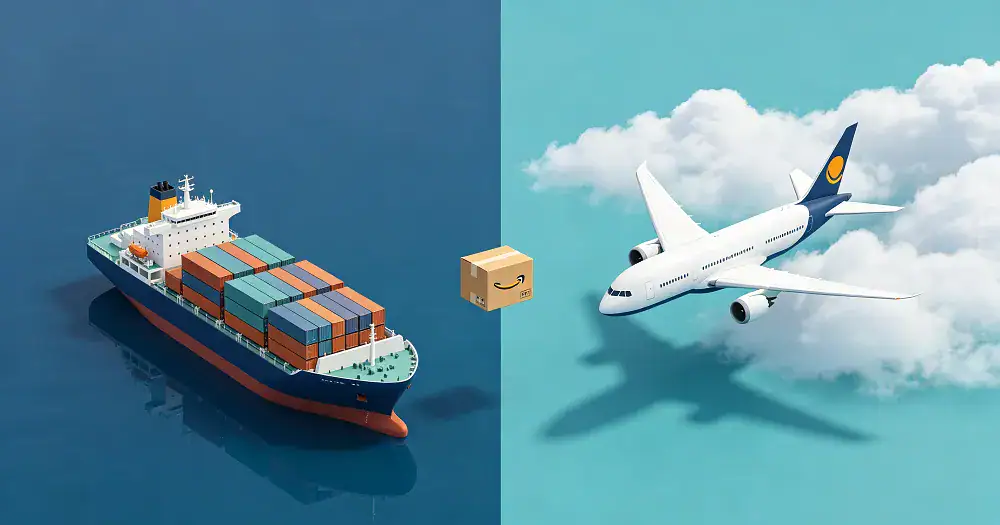
This article breaks down the differences between air and sea freight from four angles—cost, transit time, use cases, and hidden risks—so you can build a practical strategy that actually works for your business.
The Cost Picture: More Than Just the Price Tag
This is what everyone asks about first, but “cheaper” isn’t always as simple as it looks.
Where Sea Freight Shines (and Where It Doesn’t)
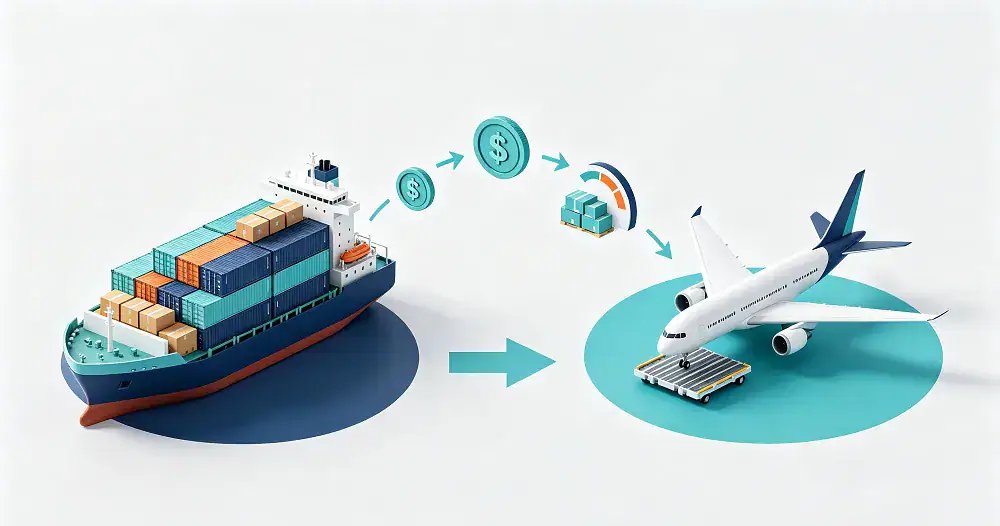
On paper, sea freight is a clear winner. Shipping from China to the US, for example, can cost as little as one-third to one-fifth of air freight. For bulky, low-value items like furniture, home goods, or industrial parts, the economies of scale really add up.
But here’s the catch—there are hidden costs that can eat into your savings:
-
Money tied up in transit: A 30-to-45-day voyage means your cash is sitting on a boat instead of working for you. If you’re running tight on working capital, that “invisible interest” can offset what you saved on shipping.
-
Warehousing and overstock risks: Long lead times force you to predict sales 1-3 months ahead. If you miss the mark, you’re either paying extra storage fees or sitting on dead stock.
-
Those surprise extras: Port congestion fees, detention charges—these can pop up unexpectedly. During peak seasons, surcharges alone have been known to add up to 40% to your base freight cost.
The Real Value of Air Freight
Sure, air freight is expensive. But for high-value goods like electronics or jewelry, the freight cost might only account for 5-10% of the total product price—totally worth it when you consider how fast you get paid. A $100 gadget that misses its sales window because it’s stuck on a ship could lose you more than the shipping savings ever gave you.
Bottom line: Sea freight is your cost-saver for scale. Air freight is your speed booster for agility. Which one makes sense depends entirely on what you’re selling and how your cash flow looks.
Transit Time: The Stability Factor
The time difference is obvious, but consistency matters just as much.
| Aspect | Air Freight (including air+delivery) | Sea Freight (including sea+delivery) |
|---|---|---|
| Typical total time | 5-12 days (express options can do 3-5 days) | 25-45 days (fast boat services can trim to 20-25 days) |
| What throws it off | Weather, limited cargo space, holiday rushes | Port jams, ship schedule changes, customs checks |
| Best for | Urgent restocks, testing new products, seasonal items with tight windows | Regular restocking, building inventory before big sales |
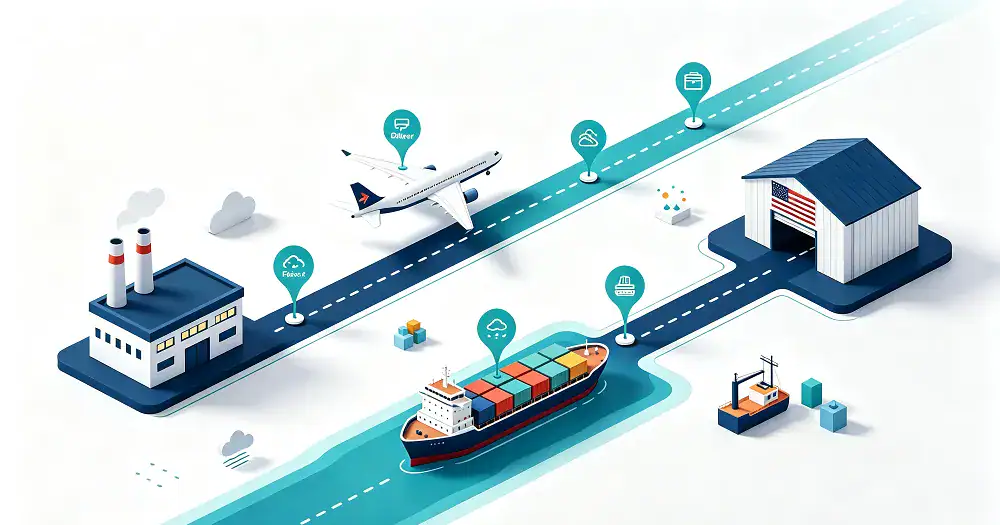
Air freight is generally more reliable, but during crazy seasons like Black Friday prep, cargo space can get really hard to secure. Sea freight takes longer, but with services like Matson’s express boats and more direct routes, the predictability has gotten much better.
One trend worth noting: customers are less and less willing to wait. Studies show that about 46% of cross-border online shoppers have abandoned a cart because delivery was too slow. With services like “3-day global delivery” becoming a thing, shipping speed has turned from a backend detail into a front-end selling point. It affects your conversion rates and whether people come back to buy again.
When to Use Which (and What to Watch Out For)
Air Freight Works Best When:
-
You’re testing a new product with a small batch to see if it sells before ordering more.
-
Your bestseller is running low and you need to restock ASAP to protect your ranking.
-
You’re selling fashion, seasonal decor, or promotional items that have a clear deadline.
Sea Freight Works Best When:
-
You have a mature bestseller with steady, predictable sales—think phone cases or charging cables.
-
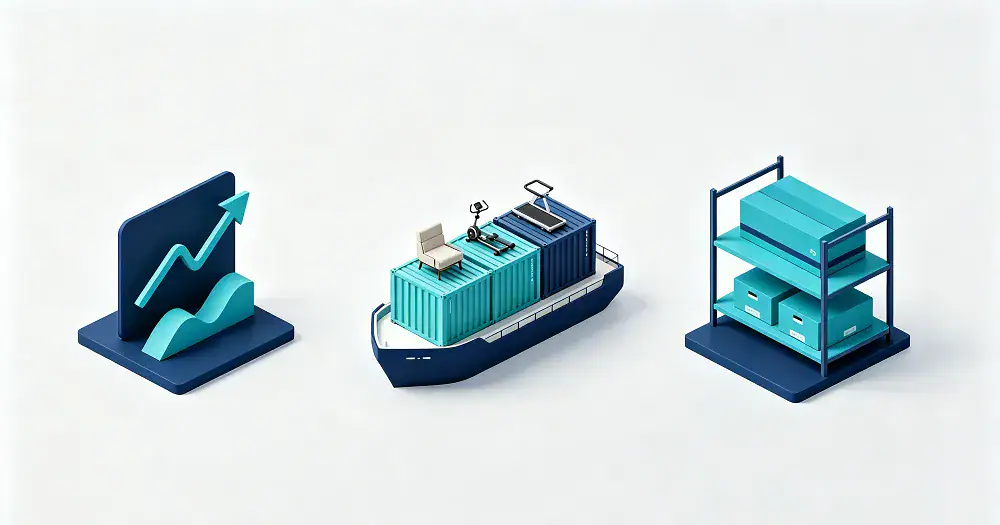
Your products are big and heavy, like furniture or exercise gear—sea freight (especially truck delivery) beats courier services hands-down.
-
You’re selling everyday items that aren’t tied to a specific season and can be planned months ahead.
Watch Out For:
-
Air freight risks: Beyond cost, goods with batteries or cosmetics face strict screening. Missing paperwork can get your shipment stuck.
-
Sea freight risks: Beyond delays, exchange rate swings or policy changes at the destination port (like new certification rules) can turn into major headaches.
A Smarter Approach: Mix and Match
Think of logistics as a lever for profits, not just another expense. The winning formula is simple: categorize by product, combine by cycle.
1. Sort by Product Type
For high-margin items where time equals money, air freight makes sense even if it costs more. For low-margin, bulkier goods, go with sea freight and set honest delivery expectations for your customers.
2. Mix by Sales Cycle
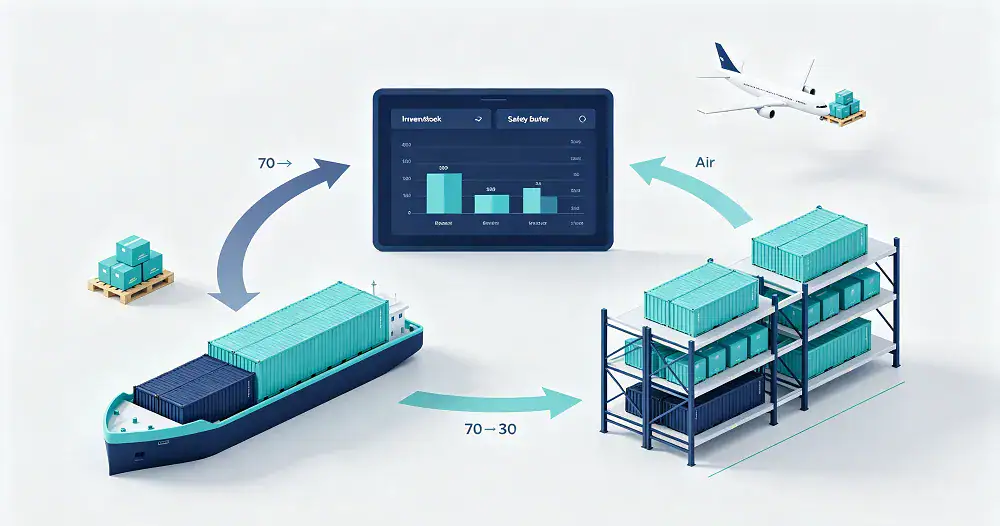
A good rule of thumb: 70-80% via sea for your base inventory + 20-30% via air as a backup. Keep about 3 months’ worth of stock total—most of it arriving by sea to save costs. Keep a safety buffer with a third-party warehouse or use air freight to handle sudden sales spikes.
3. Work Backwards from Your Deadline
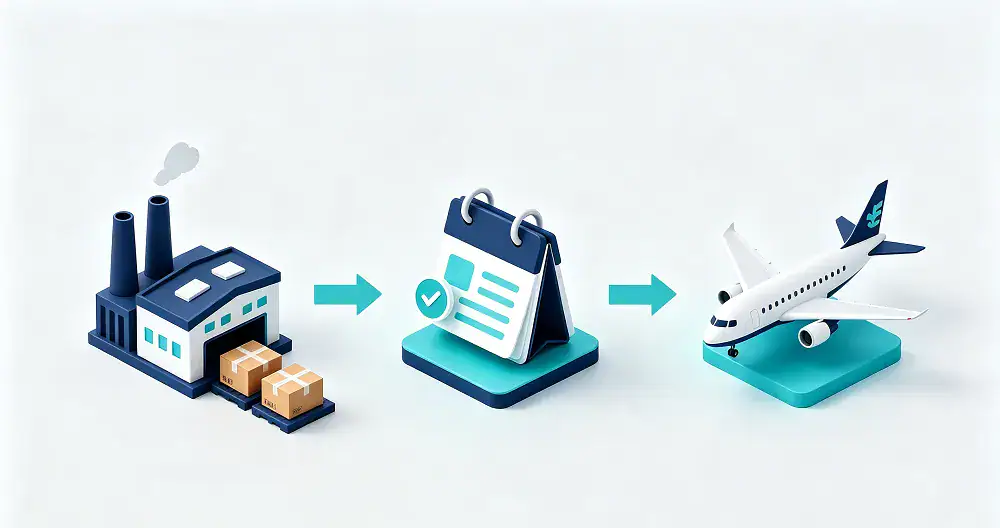
Here’s a practical timeline to guide your decisions:
-
30+ days before your sale or restock date: Go with sea freight for the best cost.
-
15-30 days out: Consider fast boat or air to balance cost and timing.
-
7 days or less: You need air freight, no matter the cost.
Logistics Decision Quick Guide
| Consider This | Choose Sea Freight | Choose Air Freight |
|---|---|---|
| Product value | Low-value, bulky items | High-value, compact items |
| Sales predictability | Proven bestsellers with 80%+ forecast accuracy | New items or products with unpredictable demand |
| Current stock level | Over 45 days of cover, cash flow is okay | Under 20 days of cover, you’re at risk of going out of stock |
| Product type | Everyday basics with long shelf life | Seasonal, trendy, or time-sensitive items |
To make all this work, you need a logistics partner who plays it straight and offers flexible options. AMZ Shipper, for example, has been adjusting its services to address exactly the pain points sellers keep bringing up—unclear quotes, slow replies, and unstable LCL shipping. The company now provides itemized written quotes, promises responses within 4 hours, and guarantees LCL loading within 5 working days. They’ve also rolled out a standardized price list for FBA prep services—a practical move that helps sellers comply with Amazon’s new rule (starting January 2026) that stops offering certain prep services. As a WCA member with warehouses in Shenzhen, Yiwu, Guangzhou, and Qingdao, AMZ Shipper serves not just Amazon but also TikTok Shop, Temu, and other platforms.
There’s no one-size-fits-all answer. The right shipping method depends on where your business is right now, what you’re selling, and how your cash flow is looking. Let go of the “all or nothing” mindset. Take a data-driven, flexible approach to your freight strategy, and you’ll not only protect your margins—you’ll turn delivery speed into a reason for customers to choose you over the competition.
ABout AMZ Shipper
AMZ Shipper has several years of experience for international logistics Freight Forwarding service. Our service is for importer and exporter, foreign freight forwarders, local and abroad business. Export of 1500 of 40HQ per year for FBA Amazon shipping, 15-30 tons of air shipments per month.
Member of WCA. Our company is a professional Amazon freight forwarder that specializes in providing comprehensive and efficient services to customers.