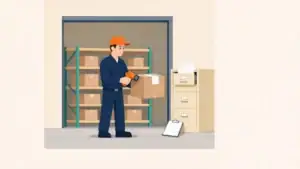
For cross-border e-commerce sellers, FBA (Fulfillment by Amazon) means handing over warehousing, picking, packing, delivery, and even customer service and returns to Amazon. Products enrolled in FBA are more likely to get the Prime badge, reaching over 300 million Prime members worldwide. This directly boosts click-through rates, conversion rates, and repeat purchases. However, FBA shipping is not simply “sending a package”. It is a complete chain from preparing goods, receiving them into the warehouse to inventory management and order fulfillment. Any error in any link may lead to delays in receiving goods, additional costs, or even missing the sales window.
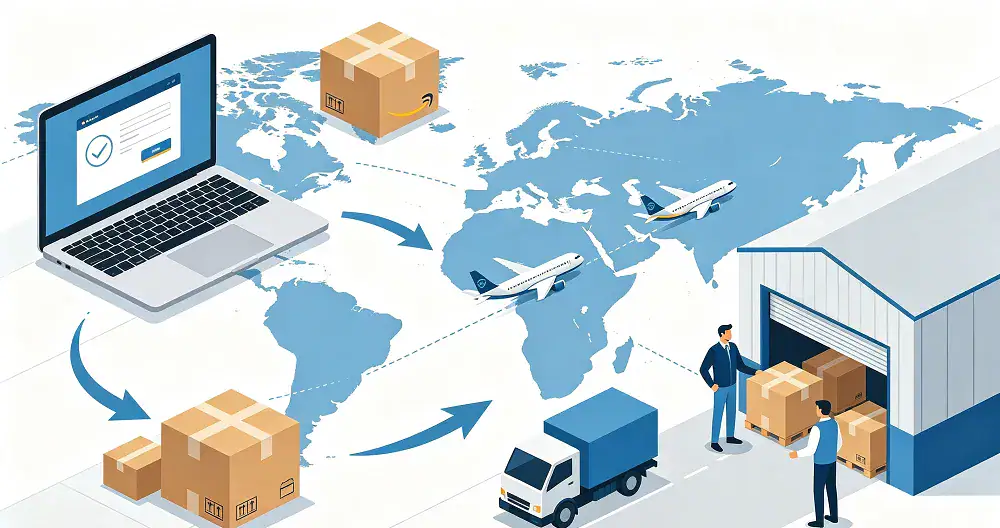
In 2026, Amazon made a significant change to FBA prep services. Starting January 1, 2026, U.S. fulfillment centers will no longer provide prep and labeling services for FBA shipments. What does this mean for you? Sellers are now fully responsible for labeling and prepping their own products. If you don’t, your shipment could be rejected, or you’ll face hefty prep fees—anywhere from $0.50 to $2 per unit. A similar policy will roll out in Europe starting July 1, 2026.
This guide breaks down the entire 2026 FBA shipping process into four parts: pre-shipment preparation, creating your shipment in Seller Central, choosing your first-mile carrier, and handling customs clearance and inbounding. We’ll also cover the common pitfalls and how to avoid them.
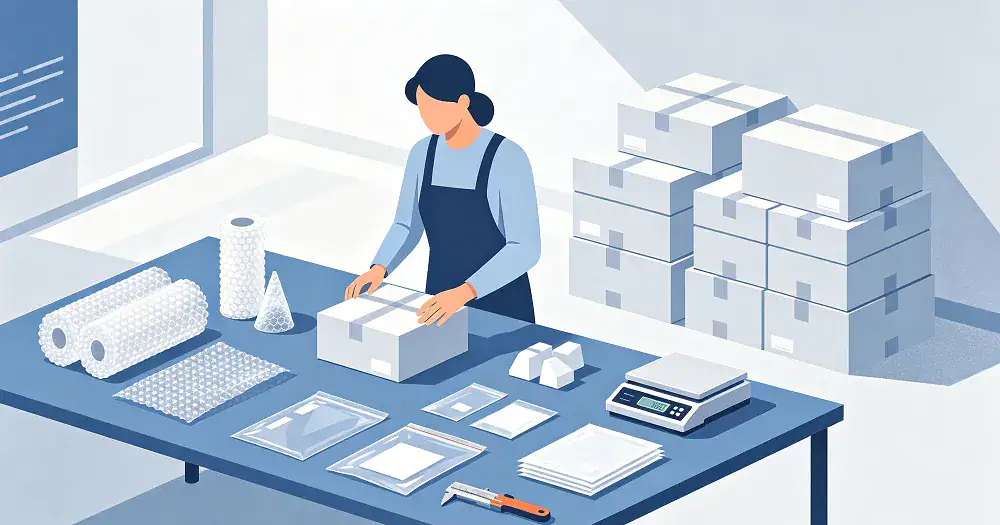
Part 1: Pre-Shipment Preparation – Get This Wrong, and You’ll Regret It
Many new sellers run into errors when creating a shipment or face delays later on. More often than not, the root cause is poor preparation. Before you click “Create Shipment,” make sure you’ve checked these four things:
1. Listing Status and FBA Conversion
Go to “Inventory” → “Manage Inventory” and confirm your product is set to “Fulfilled by Amazon.” If it’s still set to “Fulfilled by Merchant,” you’ll need to switch it over first. Otherwise, the FBA shipping option won’t even show up.
2. The 2026 Prep Rule – Labeling Is Now on You
As mentioned, Amazon no longer does the labeling and prepping for you in the U.S. This means every single unit must have a scannable FNSKU label that covers the original UPC. You’ll also need to choose appropriate packaging based on your product type—bubble wrap for fragile items, sealed bags for liquids, protective corners for sharp objects, etc.
If your shipment arrives without proper labels or in unsuitable packaging, Amazon may reject it outright or charge you a prep service fee. This fee is charged per unit and can add up quickly, so it’s far cheaper and safer to do it right from the start.
3. Product Compliance Check
Double-check that your product isn’t on Amazon’s restricted list—no hazardous materials, meltables, or items with expiration dates that require special handling. Also, don’t forget the small stuff: your packaging should clearly show the country of origin (e.g., “Made in China”). This is often overlooked but can cause issues at customs.
4. Box Specifications
Each box should weigh no more than 50 pounds (about 22.5 kilograms). If it exceeds that, you must slap a “Team Lift” label on it. Box dimensions matter too—oversized boxes can trigger extra handling fees, so measure carefully and stay within Amazon’s guidelines.
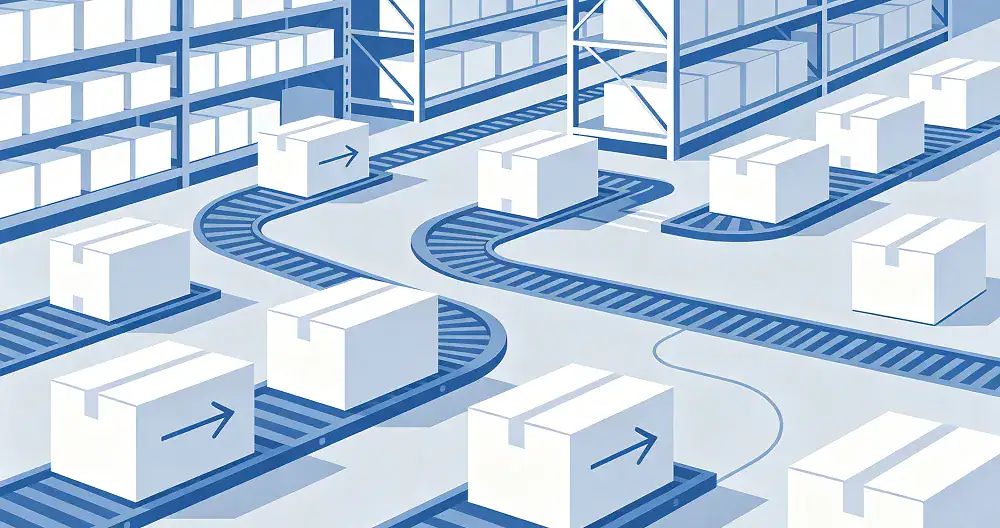
Part 2: Creating Your FBA Shipment – The “Send to Amazon” Workflow (2026 Version)
Amazon’s current recommended way to create a shipment is through the “Send to Amazon” workflow. It’s more streamlined than the older method. Here’s a quick breakdown of the key steps:
| Step | What to Do | Critical Reminders |
|---|---|---|
| 1. Select SKUs & Quantities | Choose the SKUs you want to ship and enter the quantity for each | For beginners, it’s safer to send 20-50 units per SKU. Don’t exceed your inventory storage limit. |
| 2. Confirm Ship-From Address | Enter your real, complete shipping address (city, province, district) | Don’t use a random address to try and influence warehouse assignment—Amazon’s system assigns FCs based on its own logic. A fake address can mess up compliance and pickup documents. |
| 3. Create Packing Template | Enter the SKU mix, unit count, box dimensions, and weight for each box | Watch your units! Mixing up centimeters with inches, or kilograms with pounds, will throw off your shipping quotes and could cause issues at the fulfillment center. |
| 4. Review Warehouse Assignment | The system will assign one or more FBA warehouses (e.g., ONT8, FTW1) | Splitting shipments across multiple warehouses is normal—it’s Amazon’s way of optimizing their delivery network. Don’t treat it as a failure. |
| 5. Print Labels | Print FNSKU labels (for individual products) and box labels (for cartons) | Use a thermal or laser printer with high-quality, non-reflective sticker paper. Smudged or wrinkled labels might not scan. |
What to do when your shipment is split: If Amazon assigns your inventory to multiple warehouses, create a clear routing instruction for your supplier or logistics partner. Specify which box numbers go to which destination and attach the correct labels. This prevents the nightmare of “wrong label, wrong warehouse, shipment stuck.”
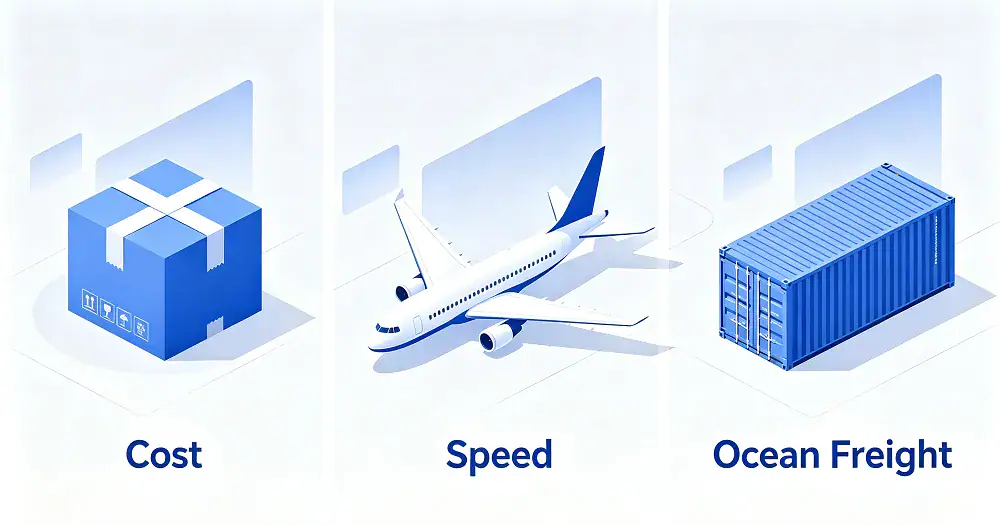
Part 3: Choosing Your First-Mile Carrier – Balancing Cost, Speed, and Transparency
Amazon doesn’t handle the first-mile leg from your factory or warehouse to their fulfillment centers. You’ll need to pick a shipping method. Here’s a quick comparison of the three main options:
| Shipping Method | Estimated Time | Best For |
|---|---|---|
| Express (DHL/UPS/FedEx) | 3-7 days | Urgent restocks, small batches of high-value items. No appointment needed for inbound. |
| Air Freight (air + last-mile courier) | 10-15 days | Medium batches, when you need a balance of speed and cost. No appointment needed. |
| Ocean Freight (LCL/FCL) | 25-45 days | Large-volume restocks, low-margin products, non-urgent shipments. Appointment required for inbound. |
How to choose between air and sea? Ask yourself these questions:
-
Timing: More than 30 days before a major sale or cutoff date? Go with sea. Only 15-30 days out? Consider a fast boat or air. Less than 7 days? Air is your only option.
-
Volume: Under 50kg? Air is usually more flexible. Over 100kg? Sea freight starts to make economic sense.
-
Product value: High-value items (jewelry, electronics) can absorb higher shipping costs. Low-margin products need sea freight to stay profitable.
-
A smart combo: Many experienced sellers use a 70/30 split—70% via sea for baseline stock, 30% via air for emergency top-ups. This balances cost control with inventory safety.
Three common headaches sellers face in 2026: unclear tracking milestones (you have to keep asking “where’s my cargo?”), late customs document notifications (they ask for papers only when the ship is already at port), and surprise final bills that blow past the initial quote (extra fees pile up). When choosing a logistics partner, look for someone who offers itemized written quotes, regular tracking updates, and early warnings on customs paperwork. These signs of transparency can save you a ton of stress.
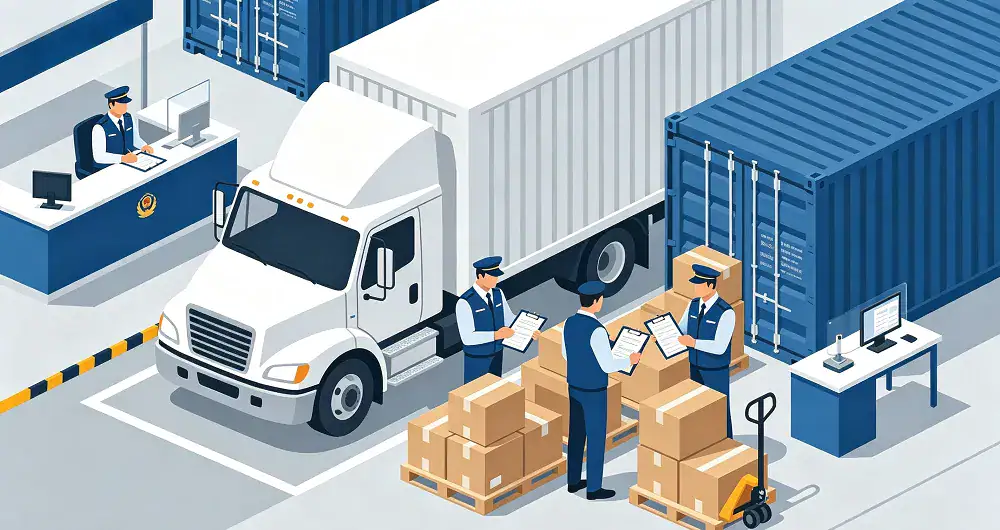
Part 4: Export Declaration & Import Clearance – The Most Overlooked Link
Amazon does not handle first-mile customs clearance—that responsibility falls on you or your chosen logistics provider. For export, you’ll need a commercial invoice and packing list. For import into the destination country, additional certificates may be required depending on your product category (CE, FDA, FCC, etc.).
Common reasons for customs delays include: declared value that seems too low, missing product certificates, or a product description that doesn’t match the actual goods. To avoid surprises, confirm the required document checklist with your logistics partner before your cargo departs. Waiting until the shipment is already at the port is a recipe for costly storage fees and missed sales windows.
Part 5: Tracking and FBA Inbounding
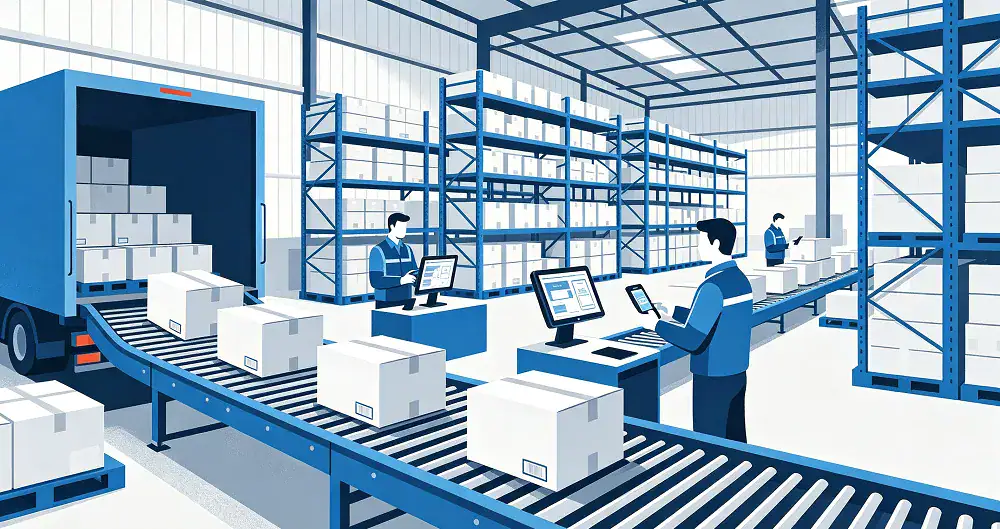
After your shipment leaves, you can monitor its status in Seller Central under “Manage Shipments.” The status will show as “In Transit,” “Arrived at Warehouse,” etc. Once the cargo reaches the FBA center, it usually takes 3 to 7 days for them to scan, verify, receive, and make your inventory available for sale.
A critical note: Even if your cargo arrives safely at the warehouse, if the box labels are smudged, the FNSKU labels can’t be scanned, or the packaging doesn’t meet requirements, your shipment may still be rejected or incur additional processing fees. That’s why labeling quality and packaging compliance are non-negotiable throughout the entire process. They’re not just formalities—they directly determine whether your inventory makes it to your listing on time.
ABout AMZ Shipper
AMZ Shipper has several years of experience for international logistics Freight Forwarding service. Our service is for importer and exporter, foreign freight forwarders, local and abroad business. Export of 1500 of 40 HQ per year for FBA Amazon shipping, 15-30 tons of air shipments per month.
Member of WCA. Our company is a professional Amazon freight forwarder that specializes in providing comprehensive and efficient services to customers.