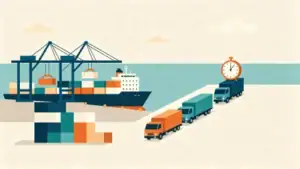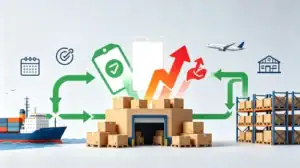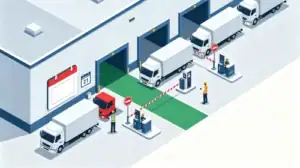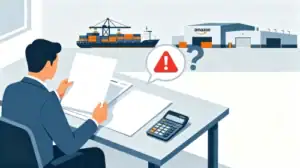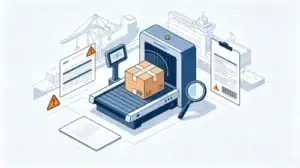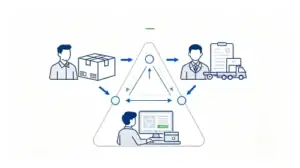
For Amazon sellers, shipping costs are often the biggest chunk of operating expenses. In 2026, with multiple policy adjustments landing—including inbound placement fees, low‑inventory fees, aged inventory surcharges, and Amazon’s official discontinuation of FBA prep and labeling services as of January 2026—sellers face brand‑new challenges in managing logistics costs. Rising freight rates eat directly into profit margins. But the real solution isn’t simply hunting for the cheapest rate—it’s about building a systematic strategy that keeps costs under control while protecting inventory turnover and delivery speed.
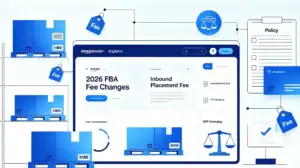
I. Policy Changes in 2026: Three Fee Adjustments You Need to Watch
Understanding the policy landscape is step one. The following three changes will impact most sellers directly:
| Fee Type | Key Change | What It Means for You |
|---|---|---|
| Inbound Placement Fee | Single‑point inbound is charged per unit; splitting into 5 shipments waives the fee, with the weight reference raised to 8.5 lb | Lightweight items (<8.5 lb) benefit more from split shipments; heavy items need a total cost calculation including first‑mile freight |
| Low‑Inventory Fee | Calculation moved from parent ASIN to FNSKU level—each child ASIN is tracked separately, making the threshold stricter | Inventory management now needs to be precise at the child‑ASIN level; consider raising safety stock to 45–60 days |
| SIPP Packaging Program | For large items, not joining SIPP means an extra $1.51–$4.04 per unit in packaging fees from 2026; standard items get a delivery fee discount for joining | Joining SIPP is no longer optional for large‑item sellers—it’s a must‑do |
II. First‑Mile Freight: Combining Transport Mode and Inbound Strategy
First‑mile freight typically accounts for over 40% of total logistics costs. Optimizing it requires looking at both transport mode selection and inbound strategy in parallel.
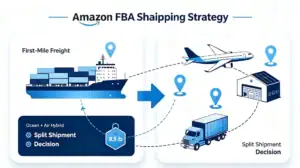
Choosing your transport mode: Ocean freight remains the lowest‑cost option, especially for stable, non‑seasonal, bulky items. But with longer transit times, it demands more accurate inventory forecasting. For best‑sellers or urgent restocks, air freight or expedited ocean services are necessary supplements. A hybrid approach works best—move base inventory by sea to control costs, and top up with air when needed to maintain availability.
The decision point for inbound strategy: The latest weight reference for split‑shipment decisions has been updated to 8.5 lb. For SKUs weighing less than this with steady monthly sales, choosing “Amazon‑optimized split shipments” (into 5 warehouses) waives the inbound placement fee. But splitting means higher first‑mile costs (since you’re shipping to multiple warehouses), so you need to calculate the net benefit between “placement fee saved” and “extra freight incurred.”
Practical tip: Sort your SKUs by weight—for items <8.5 lb with monthly sales ≥5 units, prioritize 5‑warehouse splits. For heavier items or those with unstable sales, decide based on a total cost estimate before committing.
III. Packaging Optimization: Double‑Duty Savings from Size Reduction and SIPP
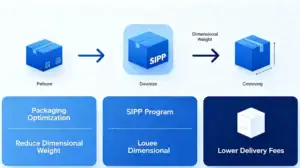
Packaging is a hidden lever for cost control. Amazon FBA delivery fees are based on the greater of dimensional weight and actual weight—so shrinking package size is one of the most direct ways to cut costs.
Downsizing your packaging: Evaluate if your product can be designed for knock‑down assembly—separating tabletops from legs, or disassembling seat posts and handles—which can dramatically reduce box volume. Using high‑strength but thinner corrugated board and optimizing internal supports (like paper corners instead of bulky foam) also helps reduce outer dimensions.
SIPP is now a must‑do for 2026: SIPP (Ship in Product Packaging) lets you ship products in their own branded packaging without Amazon adding extra outer boxes. The 2026 policy shift is significant: standard‑size items enrolled in SIPP get a delivery fee discount of $0.04–$0.23 per unit; large items that are NOT enrolled face an extra packaging fee of $1.51–$4.04 per unit. For large‑item sellers, skipping SIPP essentially means paying a penalty on every order.
SIPP is now live in 7 marketplaces across the US, Canada, and 5 European countries, and enrollment is completely free. Sellers can sign up via the “Ship in Product Packaging” page in Seller Central and download reports to see which ASINs qualify and how much they can save.
IV. Outsourcing Prep Services: Your Compliance Strategy After Amazon Stopped Doing It
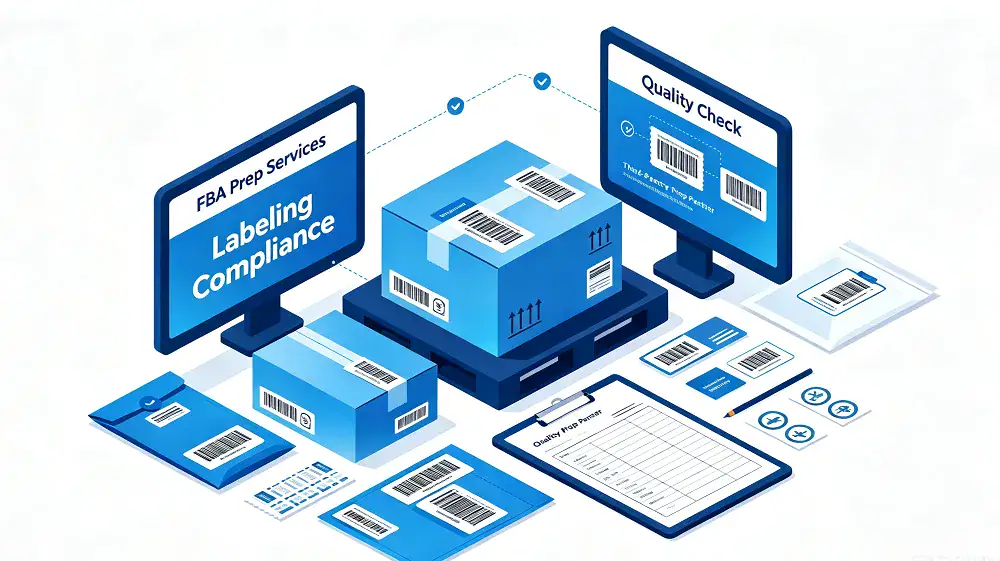
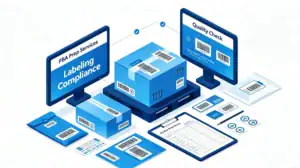
As of January 1, 2026, Amazon permanently discontinued FBA prep and labeling services in the US. Previously, sellers could pay Amazon to handle labeling, bagging, bubble wrapping, and other prep work—now all these tasks must be done by sellers themselves or outsourced to third‑party partners.
The direct impact: you now need to handle FNSKU labeling, palletizing, bundling, and other prep work on your own—and must strictly meet Amazon’s compliance standards. Otherwise, you risk inbound rejections, extra fees, or even returned inventory.
What to look for in a professional prep partner:
-
Amazon‑specific expertise: Do they understand the special requirements for your product category (e.g., choke hazard warnings for toys, FCC labels for electronics)?
-
Quality control processes: Do they have multiple checkpoints (receiving, pre‑prep, post‑prep)?
-
Turnaround and flexibility: Can they handle standard cycles within 24–72 hours, and maintain that during peak seasons?
-
Quote transparency: Do they provide itemized written quotes to avoid “surprise charges”?
V. Inventory Management: Dodging Both Storage Fees and Low‑Inventory Penalties
Poor inventory management is a major driver of cost overruns. In 2026, the low‑inventory fee calculation shifted from parent ASIN to FNSKU level—each child SKU is tracked separately for days of inventory, so you can no longer “average out” across different variations in the same family.
Core strategies:
-
Set up inventory alerts: Check for SKUs aged over 150 days before the 14th of each month and plan promotions early; submit removal or disposal orders for inventory over 181 days before the 15th to avoid aged surcharges.
-
Identify “negative‑return” ASINs regularly: Cross‑reference profit reports with FBA inventory reports to spot SKUs with negative net profit that are also racking up aged fees—and consider phasing them out.
-
Raise your safety stock target: Given longer ocean transit times and peak‑season congestion, consider lifting safety stock from 28–30 days to 45–60 days.

ABout AMZ Shipper
AMZ Shipper has several years of experience for international logistics Freight Forwarding service. Our service is for importer and exporter, foreign freight forwarders, local and abroad business. Export of 1500 of 40HQ per year for FBA Amazon shipping, 15-30tons of air shipments per month.
Member of WCA. Our company is a professional Amazon freight forwarder that specializes in providing comprehensive and efficient services to customers.