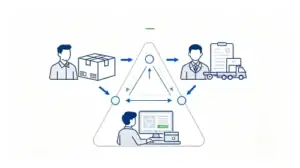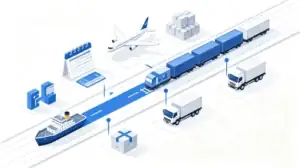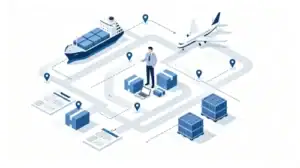
A lot of sellers pick a China freight forwarder the same way: get three quotes, go with the cheapest one.
But a quote sheet only shows you the freight rate. It doesn’t show you what the forwarder is actually capable of. The stuff you can’t see on a quote – whether they really understand Amazon FBA inbound rules, whether they can handle FNSKU labeling at origin, whether they can book Carrier Central appointments – is exactly what determines whether your goods make it into the warehouse smoothly.
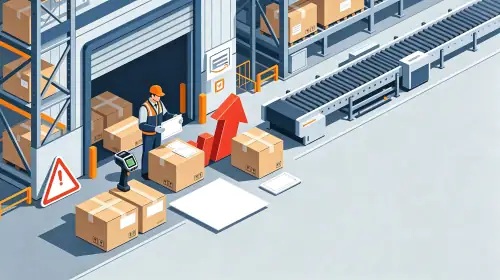
In 2026, Amazon FBA rules have changed dramatically. FBA prep and labeling services are completely gone, new FNSKU label rules are in effect, and inbound defect fees have shot up. A freight forwarder who doesn’t understand these changes could end up costing you more in fines than you save on freight. Checking before you sign is really about confirming one thing: can this freight forwarder get your goods into an Amazon FBA warehouse, not just to the port?
Here are the five areas you need to check before signing with any China freight forwarder.
1. Check Credentials Before Choosing a China Freight Forwarder – Compliance Is the Baseline
Before you even talk about price, confirm the forwarder’s credentials. Here are the basics.
NVOCC license
This allows them to issue their own bills of lading and contract directly with shipping lines. Without it, they have to piggyback on someone else’s license – if that upstream operator drops your container or runs into trouble, you have no legal protection.
China Customs AEO certification
The highest customs trust level, with lower inspection rates and faster clearance. AEO Advanced Certified companies typically have inspection rates well below regular companies.
FMC registration (for US-bound routes)
US law requires all NVOCCs to register with the FMC and post a bond.
Amazon-recognised credentials (if applicable)
Like SPN service provider, SEND carrier, or FIST carrier. These credentials mean they have integration with Amazon’s systems.

How to verify: Don’t just trust what’s on their marketing materials. Check official databases – NVOCC on the Ministry of Transport website, AEO on China Customs, FMC on the US Federal Maritime Commission site.
2. Check Amazon FBA-Specific Capabilities Before Choosing a China Freight Forwarder
This is the core of your due diligence. The difference between a general freight forwarder and an Amazon FBA-specialised one shows up right here.
1. Do they know Amazon FBA packaging and labeling requirements?
Ask specific questions: Where do FNSKU labels go? How many carton labels per box, and on which sides? What’s the max weight per carton for US sites? What’s the side length limit? If they can’t answer or give vague responses, they haven’t seriously handled Amazon FBA shipments.
2. Can they handle labeling at origin?
After FBA prep services ended in 2026, labels must be applied at origin. If your supplier can’t handle labeling well, can the freight forwarder apply FNSKU labels and check packaging compliance at origin? This is a must-confirm capability for 2026.
3. Do they handle Carrier Central delivery appointments?
Amazon FBA warehouses don’t accept unscheduled deliveries. The freight forwarder needs to book delivery appointments through Carrier Central in advance. If they say “you handle the appointment yourself in Seller Central,” that means they don’t do last-mile delivery – they only go as far as the port.
4. Are they aware of 2026 compliance changes?
A good freight forwarder should proactively remind you: FBA prep services are gone, new FNSKU label rules are in effect, inbound defect fees have gone up. If they’re clueless, that’s a clear red flag.
5. Can they clear customs using your IOR?
For DDP shipments, the freight forwarder should use its own IOR and customs bond for proper clearance. If they’re using someone else’s IOR, you’ll have no one to hold accountable if something goes wrong.
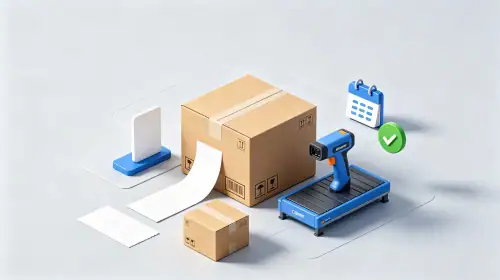
3. Check the Pricing Structure Before Choosing a China Freight Forwarder
Price transparency is a key indicator of whether a freight forwarder is reliable. Here’s what you need to clarify before signing.
| Cost Item | What to Confirm |
|---|---|
| Base freight | Ocean: priced by CBM or per container? Air: by actual weight or volumetric weight? |
| Origin charges | Are pickup, customs declaration, and labeling fees included? |
| Destination charges | Who covers terminal handling, deconsolidation, and chassis fees? |
| Customs clearance | How are duties, VAT, and brokerage fees calculated? |
| Last-mile delivery | Is the delivery appointment included? Extra charge for remote warehouses? |
| Surcharges | How are peak season and fuel surcharges applied? |
| Payment terms | Prepaid or collect? How is the exchange rate calculated? |
Key reminder: be extra cautious with a freight forwarder who only gives you one lump-sum price with no breakdown. You have no way of knowing if extra charges will pop up later, or what’s actually included in the quote.

4. Check Operational Capabilities Before Choosing a China Freight Forwarder
1. Carrier capacity
Whether you get space during peak season depends on whether the freight forwarder is a first-tier or lower-tier booking agent. First-tier agents contract directly with carriers and hold fixed space allocations. Lower-tier agents buy space from first-tier agents and face higher rollover risks during peak season.
2. Route coverage
Where is your target Amazon FBA warehouse? Does the freight forwarder have stable routes for that region? Shipping to the US West Coast and East Coast involves different logistics plans. Shipping to Europe and the UK involves different customs rules.
3. Exception handling
What happens if customs inspects your shipment? What if there’s a labeling problem? What if the warehouse rejects your delivery? Ask what kinds of exceptions they’ve handled in the past and see if their answers are specific. If they just say “don’t worry, nothing will go wrong,” that itself is a problem.
4. Tracking and communication
Can the freight forwarder provide end-to-end tracking from origin to the Amazon FBA warehouse? How fast do they respond when issues come up? Test their communication efficiency before signing – send a question and see how long they take to reply, and whether the reply is professional.
5. Check for Red Flags Before Choosing a China Freight Forwarder
Watch out for these warning signs.
Signal 1: One lump-sum price with no breakdown
You can’t assess the cost structure or know if extra charges will appear later.
Signal 2: Unaware of 2026 Amazon FBA rule changes
If they don’t know FBA prep services have ended, or about the new FNSKU rules, or the spike in inbound defect fees – they’re not tracking Amazon’s policy updates.
Signal 3: Can’t provide NVOCC or FMC credentials
Basic requirements for US-bound routes. If they can’t show these, move on.
Signal 4: Claims “Amazon can act as your importer”
That’s seriously misleading. You – the seller – are the Importer of Record.
Signal 5: Can’t handle Carrier Central appointments
This means they don’t do last-mile delivery – they only cover the port.
Signal 6: Promises “guaranteed no inspection” or “100% customs clearance”
No legitimate freight forwarder makes promises like that. Customs inspections are probabilistic – no forwarder can guarantee your shipment won’t be inspected.
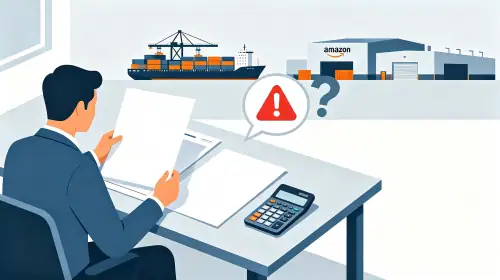
6. A Practical Pre-Contract Checklist for Choosing a China Freight Forwarder
Here’s everything from above, turned into a checklist you can actually use before signing.
Credentials check
-
Is the NVOCC license real? Can it be verified online?
-
What AEO certification level do they hold?
-
Do they have FMC registration for US-bound routes?
Amazon FBA capability check
-
Are they familiar with Amazon FBA packaging and labeling requirements?
-
Can they handle FNSKU labeling at origin?
-
Do they handle Carrier Central delivery appointments?
-
Are they aware of 2026 compliance changes?
Pricing check
-
Is the quote itemised?
-
How are surcharges applied?
-
How are payment terms and exchange rates handled?
Operations check
-
What tier of booking agent are they?
-
Do they have stable resources on your target routes?
-
What’s their exception handling process?
-
How do they provide tracking information?
Communication check
-
Do they respond promptly?
-
Are their answers specific and professional?
-
Are they willing to proactively flag risks?
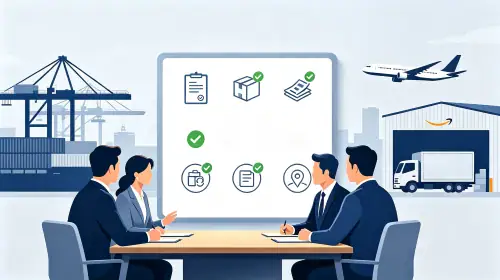
Choose a freight forwarder who knows Amazon FBA rules, breaks down costs clearly, and is willing to answer all your questions before you sign. For example, AMZ Shipper focuses on cross-border logistics for Amazon sellers, offering support across origin labeling coordination, destination clearance, and last-mile delivery. But whoever you choose, the key is finding a team that knows Amazon FBA rules and explains every step clearly – not one that just throws out a “one-price-fits-all” number and pushes you to book.
In 2026, Amazon FBA logistics is no longer just about moving boxes – it’s about moving them through a compliance maze. Spending an extra half hour checking before you sign could save you weeks of customs delays and a pile of inbound defect fees.