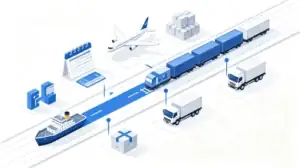
A lot of sellers run into a counterintuitive truth when they send their first Amazon FBA shipment: most Amazon FBA shipping problems don’t happen during transit – they happen before the goods even leave China.
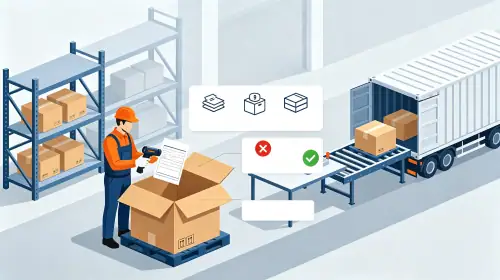
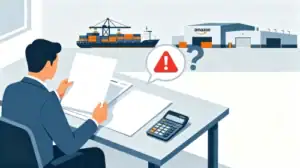
Wrong labels, oversized boxes, incorrect shipment details, missing compliance documents – these issues might not show up when you ship, but they all surface at once when your goods reach the Amazon FBA warehouse. By then, there’s nothing you can do to fix them. Your shipment gets rejected, or you get hit with inbound defect fees, and you just have to accept it.
The 2026 rule changes have made this even more of a problem. FBA prep and labeling services are completely gone, shifting labeling responsibility to the shipper. New FNSKU label rules are in effect, requiring non-brand-registered sellers to use FNSKU labels. And inbound defect fees have shot up, making wrong labels and oversized cartons more costly than ever.
The good news: most Amazon FBA shipping problems can be prevented before you ship. The key is knowing what tends to go wrong at each stage – and how to stop it at the source.
1. Common Problems at the Origin Stage of Amazon FBA Shipping
This is where problems cluster the most – and where you have the most control.
Problem 1: FNSKU labels applied incorrectly
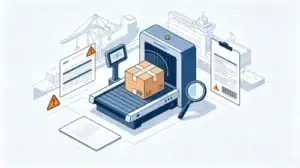
This is the most common issue in Amazon FBA shipping. It shows up as labels in the wrong place, covered by tape so they can’t be scanned, not meeting size requirements, or using the wrong barcode type.
Why it happens: Your supplier has no Amazon FBA order experience, or you didn’t give them clear labeling instructions.
How to prevent it:
-
Give your supplier a visual labeling guide with pictures, not just a PDF
-
Ask them to send photos before sealing the boxes
-
Make it clear: as of March 31, 2026, non-brand-registered sellers must use FNSKU labels – UPC/EAN is no longer accepted
Problem 2: Non-compliant carton packaging
This shows up as cartons that are overweight, have sides that are too long, aren’t sealed properly, or are missing the “MADE IN CHINA” mark.
Why it happens: Suppliers pack according to their own habits, without knowing Amazon FBA’s carton limits.
How to prevent it:
-
US sites require cartons under 22.7kg, with no side longer than 63.5cm
-
Cartons over 15kg need a “Team Lift” label – one on top and one on each of the four sides
-
Every outer carton must be marked “MADE IN CHINA”
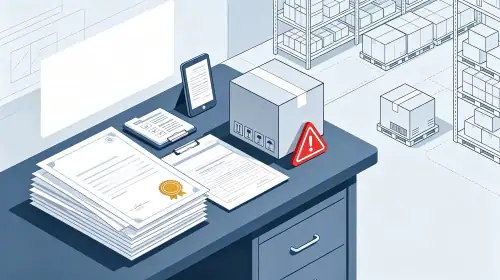
Problem 3: Missing product compliance documents
This shows up as electronics missing FCC certification, children’s products missing CPC, cosmetics missing FDA registration, or battery-powered goods missing UN38.3 reports.
Why it happens: Sellers don’t confirm compliance at the sourcing stage, or assume “the forwarder will handle it.”
How to prevent it: Confirm certification requirements for your destination and product category before shipping. Ask your supplier for compliance documents.
2. Common Problems During Transit in Amazon FBA Shipping
Once goods leave China, your control narrows – but some problems can still be prevented ahead of time.
Problem 4: Inaccurate export customs documents
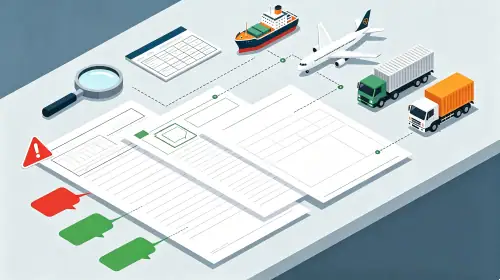
This shows up as vague product descriptions on the commercial invoice, wrong HS codes, or declared values that don’t match the goods.
Why it happens: Sellers or suppliers fill in the forms casually without checking carefully.
How to prevent it: Product descriptions on the commercial invoice need to be specific. HS codes need to be accurate. Declared values need to match the physical goods. Before shipping, put the commercial invoice, packing list, and Amazon FBA shipment plan side by side and compare.
Problem 5: Import customs delays
This shows up as late or incorrect ISF filings (US), missing ENS filings (Europe), or EORI/VAT information that doesn’t match the store entity.
Why it happens: Incomplete customs documentation, or wrong importer information.
How to prevent it:
-
US: ISF must be submitted 24 hours before vessel departure
-
Europe: ENS must be completed before goods arrive
-
The importer information on customs documents must match the legal entity registered with your Amazon FBA store
3. Common Problems at the Amazon FBA Warehouse Stage
When goods reach the Amazon FBA warehouse door, that’s when problems really surface.
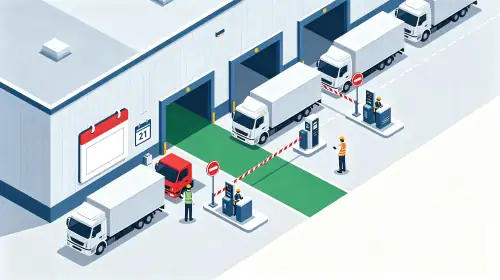
Problem 6: No delivery appointment booked in advance
This shows up as goods arriving at the warehouse without an appointment – and being unable to deliver.
Why it happens: The forwarder doesn’t offer delivery appointment services, or the seller assumes “it’ll get in once it arrives.”
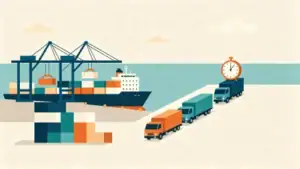
How to prevent it: Amazon FBA warehouses don’t accept unscheduled deliveries. The forwarder needs to book through Carrier Central in advance. Without an appointment – or if the truck shows up late – the slot is cancelled.
Problem 7: Received quantity doesn’t match
This shows up as the Amazon FBA warehouse receiving a different quantity than what’s on the shipment plan, creating receiving discrepancies.
Why it happens: Packing errors, wrong shipment details, or lost items in transit.
How to prevent it: Before sealing boxes, confirm contents match the shipment plan. After shipping, confirm the shipment in Seller Central and upload tracking numbers promptly.
Problem 8: Inbound defect fees
This shows up as fees charged for wrong labels, oversized cartons, or missing tracking information.
Why it happens: It’s the accumulated result of the earlier problems.
How to prevent it: Inbound defect fees are essentially “fines for mistakes made earlier in the process.” Plug the problems at origin and transit, and the defect fees naturally go down.
4. Amazon FBA Shipping Problems and Prevention – A Quick Reference
| Stage | Common Problem | Prevention |
|---|---|---|
| Origin | FNSKU labels applied incorrectly | Provide visual guide, ask for photos before sealing |
| Origin | Cartons overweight or oversized | Clarify size/weight limits, check before shipping |
| Origin | Missing compliance documents | Confirm certification requirements early |
| Transit | Inaccurate customs documents | Cross-check invoice, packing list, shipment plan |
| Transit | Customs delays | Submit ISF/ENS early, ensure IOR matches |
| Warehouse | No delivery appointment | Forwarder books via Carrier Central in advance |
| Warehouse | Quantity mismatch | Verify packing, confirm shipment promptly |
| Warehouse | Inbound defect fees | Plug the earlier problems |
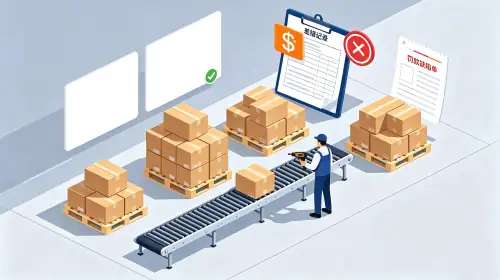
5. Why These Amazon FBA Shipping Problems Are Easier to Trigger in 2026
Several changes in 2026 have turned “occasional” problems into “more likely” problems.
Change 1: FBA prep and labeling services are completely gone
Ended for US sites on January 1, 2026, and for European sites on July 1, 2026. Previously, if labels were wrong, Amazon could fix them for you – that’s no longer an option. Labels must be applied at origin. Get them wrong, and it’s rejection or defect fees.
Change 2: New FNSKU label rules
As of March 31, 2026, non-brand-registered sellers must use FNSKU labels. Manufacturer barcodes are no longer accepted. If your supplier habitually applies UPC/EAN labels, your shipment will be rejected.
Change 3: Inbound defect fees have shot up
Fines for labeling errors, oversized cartons, and missing tracking info have increased significantly. What used to be a minor penalty can now eat into the profit of an entire shipment.
6. How to Build a Prevention Routine for Amazon FBA Shipping
Here’s a prevention routine organized by shipping timeline. None of these steps is complicated, but together they plug most problems.
Before shipping: Cross-check three documents
Commercial invoice, packing list, and Amazon FBA shipment plan – product names, quantities, and SKUs must all match exactly. This is the most basic check, and the easiest one to skip.
Before shipping: Give your supplier a written checklist
Put Amazon FBA packaging requirements, label specs, carton limits, and country-of-origin marking requirements on one page with pictures. For your first order, ask them to make a sample carton and send photos for confirmation.
Before shipping: Confirm compliance documents are complete
Check certification requirements by destination and product category. Ask your supplier for compliance documents.

During shipping: Keep all three parties in sync
Information flow between supplier, forwarder, and seller must be accurate and timely. Set up a group chat with all three parties and confirm at every key milestone.
After shipping: Confirm shipment and track promptly
As soon as the forwarder picks up, go back to Seller Central and confirm shipment. Enter the carrier and tracking number. Check shipment status regularly to catch anomalies early.
Before warehouse arrival: Confirm the appointment is booked
Make sure your forwarder has booked the delivery appointment through Carrier Central, and that the appointment time matches the arrival time.
Keep every document
Commercial invoices, packing lists, bills of lading, customs documents, tracking numbers – archive everything. If something goes wrong, these are your key evidence for investigations and claims.
Choosing a logistics partner who provides end-to-end tracking, proactively flags anomalies, and helps with labeling and packaging checks at origin can significantly reduce the chance of Amazon FBA shipping problems. For example, AMZ Shipper focuses on cross-border logistics for Amazon sellers, offering support across origin labeling coordination, destination clearance, and last-mile delivery – helping sellers stop problems before they ship. But whoever you choose, the key is finding a team that knows Amazon FBA rules and is willing to warn you before problems happen.
In 2026, Amazon FBA shipping is no longer just about moving boxes – it’s about moving them through a compliance maze. Plug the problems at origin, transit, and warehouse receiving, and your Amazon FBA shipment will go from factory to shelf without a hitch.