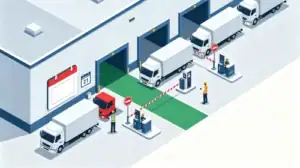
When most sellers prepare their first Amazon FBA shipment, they focus on freight rates and transit times. Very few think to ask upfront: what documents do I actually need?

But in practice, document problems are one of the leading causes of Amazon FBA shipment delays and rejections. Product descriptions on the commercial invoice that don’t match the actual goods, wrong HS codes, packing list quantities that don’t add up, missing FNSKU labels – these issues won’t show up on a quote sheet, but they’ll all surface at once when your cargo reaches customs or the Amazon FBA warehouse.
In 2026, several new changes have made document requirements even stricter. FBA prep and labeling services have been completely discontinued, shifting labeling responsibility to the shipper. New FNSKU label rules are in effect, requiring non-brand-registered sellers to use FNSKU labels. And inbound defect fees have increased significantly, making documentation errors more costly than ever.
This article isn’t a generic checklist. It organizes documents by the stages of the Amazon FBA shipping process, so you know what to prepare, when to prepare it, who’s responsible, and which ones cause the most trouble.
1. Why Documents Are the Most Underestimated Part of Amazon FBA Shipping
A lot of sellers think “documents” just means an invoice and a packing list. But Amazon FBA shipping involves far more than those two.
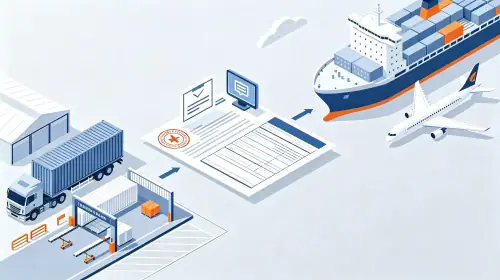
Export customs requires one set of documents. Import clearance requires another. Amazon FBA warehouse receiving needs labels and shipment information. These documents are prepared by different parties at different stages – suppliers, sellers, freight forwarders, customs brokers, carriers. If any document is missing or any information doesn’t match, your cargo gets stuck at customs or rejected by the Amazon FBA warehouse.
What makes it worse is that document problems often don’t show up at the time of shipping. Your goods might be at sea for weeks before the destination customs flags a vague product description on the commercial invoice and requests additional information – adding days to the clearance process. Or your shipment arrives at the Amazon FBA warehouse door only to be rejected because the FNSKU labels are wrong.
The 2026 rule changes have made this issue even more prominent. With FBA prep services gone, labels must be applied at origin. With inbound defect fees up, documentation errors cost more than ever. Understanding what each document does and when it’s needed is the foundation for getting your Amazon FBA shipment through customs and into the warehouse smoothly.
2. Documents You Need Before Amazon FBA Shipping
These documents are mainly prepared by the supplier and the seller. They’re the starting point of the entire chain – without them, nothing else can begin.

Commercial Invoice
Issued by the seller or supplier, this lists the product description, quantity, unit price, total value, and trade terms. It’s the core document for both export customs and import clearance, and the information must match the physical goods. Product descriptions can’t be too vague – writing only “plastic products” will trigger a request for additional information from customs, causing clearance delays. HS codes must be accurate; wrong codes can lead to incorrect duty calculations or even seizure.
Packing List
This lists the dimensions, weight, and contents of each carton. It works alongside the commercial invoice for customs inspection and Amazon FBA warehouse verification. Carton counts, weights, and dimensions must be accurate – the Amazon FBA warehouse checks this information during receiving, and discrepancies can affect check-in.
FNSKU Label Files
Downloaded from Seller Central, these are applied at origin by the supplier or forwarder. As of March 31, 2026, sellers who aren’t brand-registered with Amazon Brand Registry must use FNSKU labels – manufacturer barcodes are no longer accepted. Labels must be clear, flat, and scannable. Don’t place them over box seams or cover them with tape.
Carton Labels (FBA Box Labels)
Downloaded from Seller Central, each carton needs at least two labels, preferably on two opposite sides to prevent wear during transit. Cartons over 15kg need a “Team Lift” label – one on top and one on each of the four sides, five in total.
Product Compliance Documents
Depending on the destination country and product category, you may need FCC (electronics), CE or UKCA (Europe), FDA (food-contact materials or cosmetics), CPC (children’s products), MSDS (chemical safety data sheets), UN38.3 (lithium battery test reports), and other certifications. Confirm these before shipping – don’t wait until your cargo reaches customs to discover something’s missing.
3. Documents for Amazon FBA Export Customs and Import Clearance
Export Customs Documents (Leaving China)
-
Customs declaration authorization letter: the seller or supplier authorizes the forwarder or its customs broker to handle export declaration
-
Export customs declaration form: submitted by the forwarder or customs broker to Chinese customs
-
Bill of Lading (B/L) or Air Waybill (AWB): issued by the carrier, this is the document of title and is required for cargo pickup at the destination port
Import Clearance Documents (Entering Destination Country)
-
Import declaration form: submitted by the forwarder or customs broker to destination customs
-
ISF filing (US): Importer Security Filing, must be submitted at least 24 hours before vessel departure. Late or incorrect filings can result in fines, and in serious cases, cargo detention
-
ENS filing (Europe): Entry Summary Declaration, required before goods arrive in the EU
-
EORI number (Europe) / EIN number (US): importer identification, required for customs clearance
-
VAT number (Europe): used for VAT declaration and deferment
-
Customs bond (US): single-entry or continuous bond, required for commercial customs clearance
Last-Mile Delivery and Amazon FBA Warehouse Receiving Documents
-
Delivery appointment confirmation: generated after booking through Carrier Central. Amazon FBA warehouses do not accept unscheduled deliveries
-
Delivery Note: accompanies the truck for Amazon FBA warehouse verification
-
Tracking Number: required for small parcel deliveries, uploaded to Seller Central by the forwarder or seller
4. Amazon FBA Shipping Document Checklist – A Quick Reference Table
| Stage | Document | Who Prepares | Key Reminder |
|---|---|---|---|
| Pre-shipment | Commercial Invoice | Seller/Supplier | Must match the physical goods |
| Pre-shipment | Packing List | Seller/Supplier | Accurate carton counts, weights, dimensions |
| Pre-shipment | FNSKU Labels | Seller downloads/Supplier applies | Mandatory from March 31, 2026 |
| Pre-shipment | Carton Labels | Seller downloads/Supplier applies | At least two per carton |
| Pre-shipment | Product Compliance Docs | Supplier/Seller | Confirm by destination and category |
| Export Customs | Declaration Authorization | Seller/Supplier | Authorizes forwarder to declare |
| Export Customs | B/L or AWB | Carrier | Required for cargo pickup |
| Import Clearance | ISF Filing (US) | Forwarder/Broker | 24 hours before vessel departure |
| Import Clearance | ENS Filing (Europe) | Forwarder/Broker | Before goods arrive |
| Import Clearance | EORI/EIN/VAT | Seller | Must match store entity |
| Last-Mile | Delivery Appointment | Forwarder | Book 48 hours in advance |
| Last-Mile | Tracking Number | Forwarder/Seller | Upload to Seller Central promptly |
5. The 5 Amazon FBA Shipping Documents That Cause the Most Problems

Not all documents are equally important. Here are the ones that cause the most trouble in practice:
1. Commercial Invoice
The most common problems: product descriptions too vague, wrong HS codes, declared value not matching the goods. Customs will request additional information when descriptions are unclear, causing clearance delays.
2. Packing List
Carton counts don’t match reality, weight data is inaccurate, or the contents listed don’t align with the commercial invoice. The Amazon FBA warehouse checks packing list information during receiving.
3. FNSKU Labels
As of March 31, 2026, non-brand-registered sellers must use FNSKU labels. Labels in the wrong place, covered by tape, or not meeting size requirements can all lead to rejection or inbound defect fees.
4. ISF Filing (US)
Must be submitted 24 hours before vessel departure. Late or incorrect filings can result in fines and, in serious cases, cargo detention.
5. EORI/VAT Information
The importer information on customs documents must match the legal entity registered with your Amazon FBA store. Mismatched information will cause clearance failure.
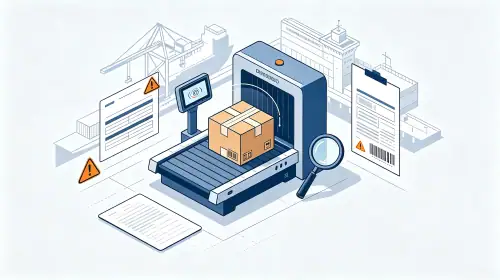
6. What’s Changed in 2026 for Amazon FBA Shipping Documents
Change 1: FBA prep and labeling services discontinued
Ended for US sites on January 1, 2026, and for European sites on July 1, 2026. Labeling responsibility has shifted entirely to the shipper – FNSKU labels and carton labels must be applied at origin.
Change 2: New FNSKU label rules
As of March 31, 2026, non-brand-registered sellers must use FNSKU labels. Manufacturer barcodes are no longer accepted.
Change 3: Inbound defect fees increased
Fines for documentation errors and non-compliant labels have gone up significantly. The accuracy of your document preparation directly affects your costs.
Change 4: New EU rules for low-value goods
As of July 1, 2026, low-value B2C shipments from outside the EU face new clearance documentation requirements.
7. How to Prepare Amazon FBA Shipping Documents Without Mistakes
Build your own document template library
Turn your commercial invoice and packing list into standard templates. Each shipment, you just swap in the product information and quantities. This avoids starting from scratch every time and reduces the chance of errors.
Run through a pre-shipment checklist
Before handing goods to your forwarder, check every item: Has the shipment been created? Have labels been downloaded? Has the supplier received labeling instructions? Are compliance documents complete? Ten minutes of checking can save days of customs delays.
Make sure all three parties have consistent information
The product names, quantities, and SKUs on the commercial invoice, packing list, and Amazon FBA shipment plan must all match exactly. Inconsistencies are the most common cause of customs delays. Before shipping, put all three documents side by side and compare.
Confirm destination country requirements in advance
Different countries have different import document requirements. The US needs ISF. Europe needs ENS. Confirm these before shipping – don’t wait until your cargo arrives to discover something’s missing.
Keep electronic copies of every document
Commercial invoices, packing lists, bills of lading, customs documents, tracking numbers – archive everything. If something goes wrong, these are your key evidence for investigations and claims.
Choose a logistics partner who can help with document verification
Document preparation isn’t a solo job. A logistics partner who can help verify customs documents and proactively flag compliance requirements can significantly reduce the chance of errors. For example, AMZ Shipper focuses on cross-border logistics for Amazon sellers and can assist with preparing and submitting ISF, ENS, and other customs documents, as well as verifying document consistency before shipping. But whoever you choose, the key is finding a team that’s willing to help you get documents right upfront, not just tell you something’s wrong after the fact.

Shipping from China to Amazon FBA – documents were never a “just fill in the blanks” step. They span pre-shipment preparation, export customs, import clearance, and last-mile delivery, involving suppliers, sellers, forwarders, customs brokers, and carriers. Get every document ready at the right time, make sure all three parties have consistent information, and confirm destination requirements in advance – do these three things well, and your Amazon FBA shipment won’t run into major document problems.
8. ABout AMZ Shipper
AMZ Shipper has several years of experience for international logistics Freight Forwarding service. Our service is for importer and exporter, foreign freight forwarders, local and abroad business. Export of 1500 of 40HQ per year for FBA Amazon shipping, 15-30 tons of air shipments per month.
Member of WCA. Our company is a professional Amazon freight forwarder that specializes in providing comprehensive and efficient services to customers.