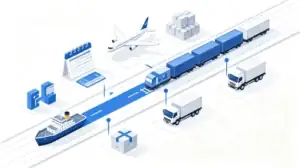
If you’re getting ready to ship goods from China to an Amazon FBA warehouse, you’ve probably asked yourself one question: which shipping method is actually the best?
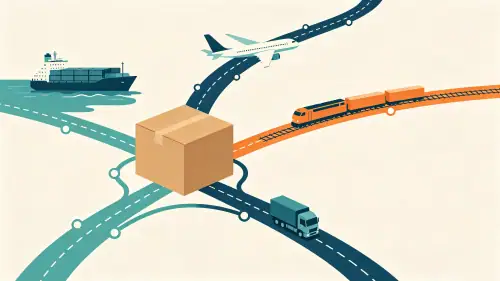
This question gets asked in seller groups all the time, and the answers are all over the place. Some say sea freight is the most cost-effective. Others say air freight is fastest and most hassle-free. Some insist express is expensive but the most reliable. But once you’ve shipped a few Amazon FBA orders yourself, you realise something: there’s no single method that’s best for everyone. Your product value, profit margin, inventory turnover cycle, and restock window determine what works best for you.
A mature seller with steady sales and healthy margins, and a new seller who’s just testing a product with only two weeks of stock left, could come to completely opposite conclusions when choosing an Amazon FBA shipping method.
This article won’t give you a one-size-fits-all answer – instead, it gives you a decision framework to work out your own answer.
1. Why There’s No Single “Best” Shipping Method for Amazon FBA
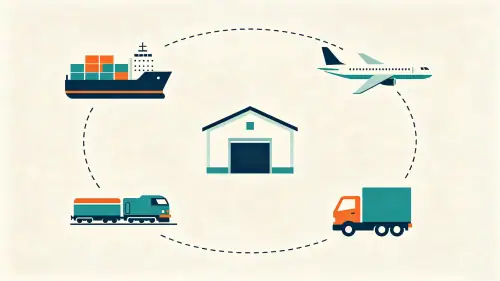
From China to Amazon FBA, there are five main shipping methods: full container load (FCL) ocean freight, less than container load (LCL) ocean freight, air freight, international express, and rail (for Europe-bound sellers). Each has its own use case – none is optimal in every situation.
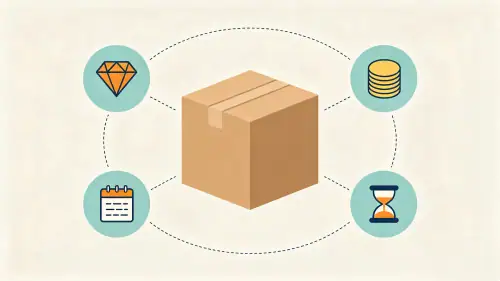
Four core variables that determine which method suits you best:
Product value – The higher the value per unit, the more you can afford to pay per kilo. A higher-priced electronics item can still be profitable with air freight; a low-value everyday item might see its entire margin eaten up by air freight costs.
Profit margin – Low-margin products are extremely sensitive to freight cost changes. If your margins are already thin, your shipping options are limited.
Inventory turnover cycle – How many days of safety stock do you have on hand? This number directly determines how wide your time window is.
Restock window – How close are you to going out of stock? If you’ve only got two weeks left, even the cheapest ocean freight won’t save you.
Different combinations of these four variables lead to different answers. So what’s actually useful isn’t “which method is best” – it’s a framework that lets you calculate the answer yourself.
2. Five Amazon FBA Shipping Methods from China – An Overview

Before diving into the decision framework, here’s a quick look at the basic characteristics of each method:
Full Container Load (FCL) – Best for large volumes where you’re not in a rush. Longest transit time but the lowest unit cost. When your cargo is enough to fill a 20-foot or 40-foot container, FCL is the most economical choice.
Less than Container Load (LCL) – Best for small and mid-sized sellers whose cargo doesn’t fill a container. Priced by cubic meter, sharing container space. Watch out for destination deconsolidation fees and minimum charge thresholds.
Air Freight – Best for time-sensitive, higher-value products. Charged by chargeable weight (the greater of actual weight and volumetric weight). Costs more than ocean but gets there much faster.
International Express – Best for emergency restocks, samples, or small batches of high-value goods. Fastest option, highest unit cost. Usually has weight and size limits.
Rail (China-Europe Railway Express) – An option for Europe-bound sellers. Transit time sits between ocean and air, making it a unique value proposition for the European market.
3. Amazon FBA Shipping Methods Compared – A Decision Table
| Shipping Method | Door-to-Door Transit Time | Best Cargo Volume | Ideal For |
|---|---|---|---|
| FCL Ocean Freight | 25-35 days | Large volumes | Steady restocking, low-margin products |
| LCL Ocean Freight | 25-40 days | Medium volumes | Regular restocks for small/mid sellers |
| Air Freight | 7-12 days | 45-500kg | Emergency restocks, high-value lightweight goods |
| International Express | 3-7 days | Small batches | Stockout rescue, samples, product testing |
| Rail (China-Europe) | 18-25 days | Medium volumes | Europe-bound sellers, cost-effectiveness |
How to read this table: don’t just look at transit time, and don’t just look at cost. Look at your inventory safety line – if you’re 60 days away from a stockout, ocean freight works fine. If you’ve only got 15 days left, only air or express can save you.
4. How to Choose the Best Shipping Method for Your Amazon FBA Business
Here’s a practical decision framework. Walk through it step by step, and the answer usually reveals itself.

Step 1: Calculate your days of inventory
Current inventory ÷ average daily sales = how many days you can keep selling.
This number determines how wide your time window is. Over 60 days, ocean freight is comfortable. 30-60 days, ocean or rail both work. 15-30 days, air freight is safer. Under 15 days, express or air is your only option.
Step 2: Assess your product economics
-
High value per unit, small size → air freight’s cost share is manageable
-
Low value per unit, bulky → ocean freight is basically your only choice
-
Thin margins → prioritise ocean or rail; air freight is only for emergencies
Step 3: Separate “regular restocks” from “emergency restocks”
This is where a lot of new sellers get confused. Regular restocks should be planned ahead, using ocean or rail to keep costs down. Emergency restocks should ignore cost and use air or express to protect your listing’s ranking and conversion rate.
Step 4: Factor in seasonality
Stock up 2-3 months before peak season using ocean freight to keep costs down. If you run out during peak season, air freight is your only lifeline. Don’t wait until peak season is in full swing to start shipping – space is tight, prices go up, and warehouse appointment queues get long.
Step 5: Don’t just look at unit price – calculate the total
Ocean freight looks cheap, but after adding destination port charges, customs clearance fees, and last-mile delivery, the total cost can be higher than expected. Air freight looks expensive, but if it protects your best-seller ranking, it might be cheaper than going out of stock. When calculating Amazon FBA shipping costs, include every stage.
5. What’s Changed in 2026 for Amazon FBA Shipping Method Selection
Several changes in 2026 directly affect how you choose a shipping method.
Change 1: FBA prep and labeling services are completely gone
As of January 1, 2026, FBA prep and labeling services ended completely for US sites. On July 1, European sites followed. All goods must be labeled and compliantly packaged before shipping.
What this means for your shipping method choice: when selecting a method, confirm that your logistics partner can handle FNSKU labeling at origin – otherwise your goods will be rejected at the Amazon FBA warehouse door.
Change 2: Inbound defect fees have shot up
Fines for labeling errors, oversized cartons, and missing tracking information have increased significantly. If a cheaper shipping method leads to inbound problems, the money you save on freight might not cover the fines.
Change 3: New EU customs duties on low-value goods
As of July 1, 2026, low-value B2C shipments from outside the EU face new clearance requirements. Europe-bound sellers need to factor this into their cost calculations when choosing an Amazon FBA shipping method.
6. The 5 Most Common Mistakes When Choosing an Amazon FBA Shipping Method
Mistake 1: Comparing only “price per kilo”
Different methods use different billing logic – ocean by cubic meter, air by chargeable weight. Comparing only unit prices leads to wrong conclusions.
Mistake 2: Ignoring volumetric weight
Light but bulky products can cost far more by air than expected. Calculate volumetric weight before shipping.
Mistake 3: Putting all your inventory on one method
Experienced sellers typically use ocean freight to maintain base inventory and air freight for emergencies. Combining methods is safer than relying on just one.
Mistake 4: Waiting until peak season to plan
Peak season brings tight space and higher prices. Planning 2-3 months ahead locks in more stable space and rates.
Mistake 5: Overlooking inbound compliance costs
If a cheaper shipping method leads to non-compliant labels or substandard packaging, the inbound defect fees can wipe out your freight savings. When choosing an Amazon FBA shipping method, compliance costs are costs too.
From China to Amazon FBA, the best shipping method isn’t a fixed answer – it’s the one that best matches your product value, profit margin, and inventory cycle. Ocean freight suits steady, cost-conscious restocking. Air freight suits time-critical situations. Rail offers a cost-effective balance for Europe-bound sellers. Express is for stockout emergencies. Experienced Amazon FBA sellers rarely stick to just one method – they switch between them based on inventory status and sales rhythm.
Choosing a logistics partner who offers multiple shipping options and knows Amazon FBA inbound rules can make switching between methods much smoother. For example, AMZ Shipper focuses on cross-border logistics for Amazon sellers, offering both ocean and air freight solutions, with support for origin labeling coordination, destination customs clearance, and last-mile delivery. But whoever you choose, the key is finding a team that knows Amazon FBA rules and can give advice based on your actual inventory situation.
In 2026, Amazon FBA shipping is no longer just about “choosing the cheapest” or “choosing the fastest.” Calculate your inventory days, assess your product economics, and factor in compliance costs – do these three things well, and the best shipping method will reveal itself.