When Amazon sellers first get into international shipping, they often get lost in a sea of terms. Freight forwarder, shipping agent, cargo agent, NVOCC – they all sound like they do the same thing. But once you’ve actually sent a few shipments, you realise – picking the wrong one can cost you big time.
This isn’t just scaremongering. In 2026, Amazon rolled out several major changes: FBA prep and labeling services are completely gone, inbound defect fees have shot up, and new FNSKU label rules are in full effect. Pick the wrong partner, and you could end up overpaying, having your cargo stuck at port, or getting it rejected by Amazon FBA outright.
This isn’t about giving you a simple “pick A or B” answer. It’s about helping you understand what a freight forwarder and a shipping agent actually do – and which one your Amazon FBA shipments really need.
1. What Is a Shipping Agent? – The Carrier’s “Port Representative”
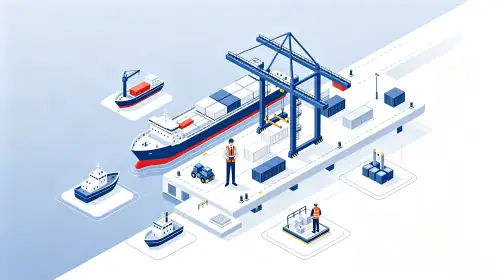
A shipping agent is a local representative who acts on behalf of the shipping line at a specific port.
What a shipping agent does:
-
Arranges vessel berthing and dock space
-
Coordinates cargo loading and unloading
-
Handles port documentation and communications with port authorities
-
Manages port fees and local charges
-
Arranges crew changes and supplies
In plain terms, a shipping agent works for the carrier, not for you. Their service stops at the port. They don’t handle door‑to‑door logistics.
What a shipping agent does NOT do:
-
Design end‑to‑end logistics solutions for you
-
Handle FNSKU labeling or Amazon FBA packaging compliance
-
Book Carrier Central appointments
-
Arrange last‑mile delivery from the port to Amazon FBA warehouses
If you’re dealing with a pure shipping agent, they’ll unload your cargo at the port, handle the paperwork, and then tell you – “the rest is on you.”
2. What Is a Freight Forwarder? – Your “End‑to‑End Logistics Manager”
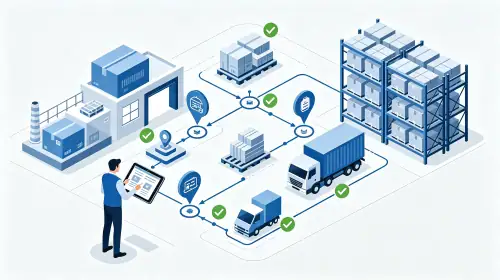
A freight forwarder is a company that acts on behalf of the cargo owner to arrange shipping, customs clearance, warehousing, and transportation services.
What a freight forwarder does:
-
Designs door‑to‑door transport solutions
-
Books cargo space (ocean, air, rail)
-
Handles export customs and import clearance
-
Arranges consolidation and warehousing
-
Organises insurance
-
Coordinates last‑mile delivery
What an FBA‑specialised freight forwarder does extra:
-
Knows Amazon FBA carton limits (no side over 63.5cm, max 23kg per box) and label specs
-
Handles FNSKU labeling and packaging compliance at origin
-
Manages Carrier Central appointment booking
-
Uses its own IOR for proper DDP clearance
-
Knows how to optimise inbound placement fees
Simply put, a freight forwarder works for you – the cargo owner. Their service covers the whole journey, from the factory floor to the Amazon FBA warehouse door.
FBA‑specialised forwarder vs. general forwarder
Even among freight forwarders, there’s a difference between a general one and one that specialises in Amazon FBA. A general forwarder thinks the job is done once the cargo reaches the destination port. An FBA‑specialised forwarder knows that customs clearance is only half the battle – getting your shipment through Amazon FBA’s receiving check is the real finish line.
A general forwarder who doesn’t know Amazon FBA rules might not know where FNSKU labels should go, what size they should be, or what the carton weight limits are – and your shipment pays the price.
3. Shipping Agent vs. Freight Forwarder – A Quick Comparison
| Dimension | Shipping Agent | Freight Forwarder |
|---|---|---|
| Represents | The carrier/shipping line | The cargo owner (Amazon seller) |
| Service scope | Port‑side operations | Door‑to‑door logistics |
| Service endpoint | Cargo loading/unloading at port | Amazon FBA warehouse receiving |
| Handles booking? | No (carrier handles it) | Yes |
| Handles customs clearance? | No | Yes |
| Handles FNSKU labeling? | No | Yes (FBA‑specialised) |
| Handles Carrier Central appointments? | No | Yes (FBA‑specialised) |
| Handles last‑mile delivery? | No | Yes |
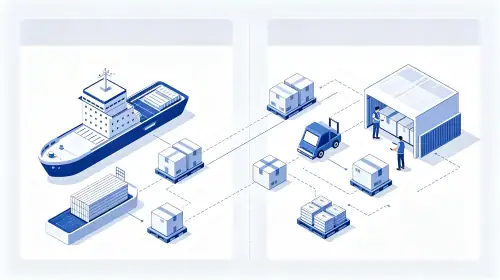
The bottom line: a shipping agent covers the port segment, while a freight forwarder covers the entire journey. For shipments heading to Amazon FBA, you need the latter – because your cargo needs to travel all the way from a Chinese factory to an Amazon FBA warehouse shelf. A breakdown at any point means delays or rejection.
4. Why This Distinction Matters More in 2026
Several policy changes in 2026 have made the cost of choosing the wrong partner higher than ever.
1. FBA prep and labeling services are completely gone
As of January 1, 2026, Amazon US fully discontinued its FBA prep and labeling service, which had run for over a decade – including all paid options. On July 1, European and Canadian sites followed. Every single unit must now be labeled and properly packaged before it arrives at the Amazon FBA warehouse.
What this means for you: if your partner is just a shipping agent (port‑side only), they won’t help with FNSKU labeling at all. You’ll have to arrange it yourself – or risk having your shipment rejected at the FBA warehouse door because labels don’t meet the requirements.
2. Inbound defect fees have shot up
Since January 15, 2026, Amazon has overhauled how it calculates inbound defect fees. For standard‑size items, the fee has gone from $0.02‑0.07 per unit to $0.32‑1.74. For small items, the increase is up to 700%. For oversized items, defect fees can reach $5.72‑8.25 per unit.
What this means for you: a shipping agent who doesn’t know Amazon FBA rules could use the wrong labels or the wrong boxes – and you’ll be hit with hefty fines without even knowing why.
3. New FNSKU label rules are in effect
Since March 31, 2026, sellers who are not brand‑registered with Amazon Brand Registry must stick Amazon‑exclusive FNSKU labels on every unit. Items without these labels are treated as defective, delaying your receiving process and voiding any claim rights. Brand‑registered sellers with a “brand representative” role can continue using manufacturer barcodes like UPC.
What this means for you: if your partner doesn’t know this rule – especially the difference between brand owners and resellers – your shipment might not even make it into the Amazon FBA warehouse.
5. How to Tell If You’re Dealing with a Shipping Agent or a Freight Forwarder
If you’re talking to a potential partner, here are some signals that tell you what they really are:
Signal 1: Their service stops at the port
“Once the cargo arrives at the destination port, you handle clearance and delivery yourself.” – that’s a shipping agent.
Signal 2: They don’t know what FNSKU is
“Labeling? Don’t you sellers do that yourself?” – that means they have no clue about Amazon FBA receiving requirements.
Signal 3: They don’t know about 2026 rule changes
If they’re unaware that FBA prep services have ended, that new FNSKU rules exist, or that inbound defect fees have spiked – they’re not paying attention to Amazon’s changing landscape.
Signal 4: They give you one lump‑sum price with no breakdown
A professional freight forwarder itemises every cost – freight, customs fees, destination charges, delivery fees, surcharges. If they don’t, something’s off.
Signal 5: They can’t help with Carrier Central appointments
If they say “you handle the warehouse appointment yourself in Seller Central” – that means they don’t do last‑mile delivery. They only cover the port.

6. Which One Should You Choose?
There’s not much debate here – for Amazon FBA shipments, you need an FBA‑specialised freight forwarder, not a shipping agent.
Why?
Because your goal isn’t “get my cargo to port.” Your goal is “get my cargo into an Amazon FBA warehouse and successfully checked in.” That involves export customs, international transport, import clearance, FNSKU labeling, packaging compliance, Carrier Central appointments, last‑mile delivery, and FBA warehouse receiving. A shipping agent covers only the port – you’d have to handle everything else yourself or find someone else to do it.
What a good FBA freight forwarder should do for you:
-
Provide a door‑to‑door logistics plan
-
Know Amazon FBA carton limits, label specs, and pallet requirements
-
Coordinate or complete FNSKU labeling and packaging compliance at origin
-
Handle Carrier Central appointment booking
-
Use their own IOR for proper DDP clearance
-
Know all 2026 compliance changes and warn you in advance
What an FBA‑specialised forwarder saves you from doing yourself:
-
Labeling – they handle FNSKU labeling at origin, so you don’t have to chase your factory
-
Appointments – they book FBA warehouse slots via Carrier Central, so you don’t have to figure it out
-
Clearance – they use their own IOR for DDP clearance, so you don’t need to find a separate broker
-
Compliance – they track Amazon rule changes and tell you what to prepare
For example, AMZ Shipper focuses on cross‑border logistics for Amazon sellers, offering end‑to‑end services from China to Amazon FBA warehouses – origin handling, international transport, destination clearance, FNSKU labeling coordination, and last‑mile delivery. But whoever you choose, the key is finding a team that knows Amazon FBA rules inside out, breaks down costs clearly, and doesn’t just throw a “one‑price‑fits‑all” number at you.
Amazon FBA logistics in 2026 isn’t just about “moving boxes” anymore. It’s about moving them through a compliance maze. Picking the right freight forwarder is the first and most important safeguard for your business.