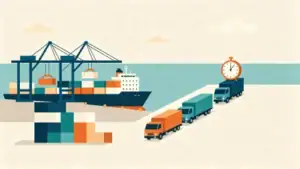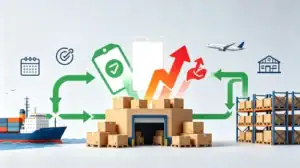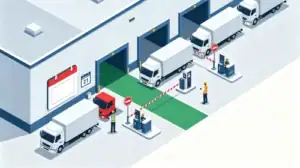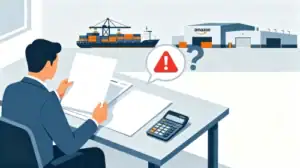
When new Amazon sellers first hear the term “freight forwarder,” most of them just think – “the person who ships my stuff.”
That’s not entirely wrong, but it misses a lot of the detail. Different freight forwarders do very different things. Some just book cargo space. Others handle labeling, appointment booking, customs clearance, and delivery all the way to the FBA warehouse door. Pick the right one, and your shipment goes through smoothly. Pick the wrong one, and your cargo could get stuck at port, hit with heavy fines, or rejected by FBA outright.
In 2026, with multiple major policy changes at Amazon, a freight forwarder who actually understands FBA has gone from “nice to have” to “must have.” This guide walks you through what an Amazon FBA freight forwarder actually does, why it matters more in 2026, and how to tell if one is any good.
1. What Exactly Is an Amazon FBA Freight Forwarder?
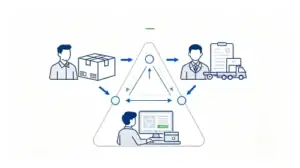
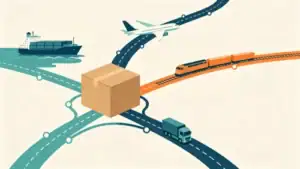
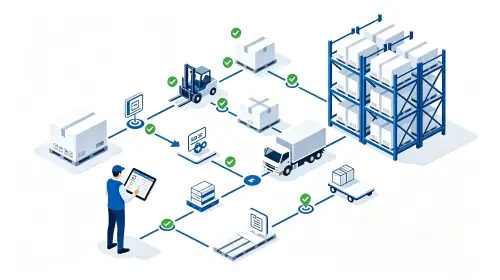
Simply put, an Amazon FBA freight forwarder is a logistics provider that specialises in moving goods from your supplier’s factory to an Amazon FBA warehouse. They arrange ocean or air transport, handle export customs and import clearance, make sure your shipment meets Amazon’s inbound requirements, and manage the final mile delivery.
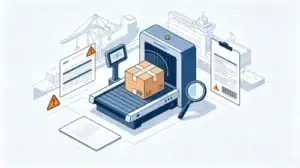
But that word “specialises” is key. A general freight forwarder might just move cargo from point A to point B – their job ends at the destination port. An FBA‑specialised freight forwarder knows that customs clearance is only half the battle. The real finish line is getting your shipment through Amazon’s receiving check. Wrong label placement, oversized boxes, no appointment – any of these can get your shipment rejected and trigger hefty defect fees.
So a better definition is: an Amazon FBA freight forwarder is your end‑to‑end compliance partner, from factory floor to FBA shelf.
2. Why the FBA Freight Forwarder’s Role Has Grown So Much in 2026
Before 2026, sellers had a safety net – you could send unpackaged goods to Amazon and pay a small fee for them to label, prep, and package everything for you.
That safety net is gone in 2026.
As of January 1, 2026, Amazon fully discontinued its FBA prep and labeling service, which had been running for over a decade. The US change took effect on January 1, and European and Canadian sites followed on July 1. The new rule covers every FBA inbound path – including AWD, AGL, SEND, and the Supply Chain portal.
What this means: every single unit must be labeled and properly packaged before it reaches the FBA warehouse. Non‑compliant shipments will be rejected outright, and Amazon won’t compensate you.
At the same time, inbound defect fees have shot up. Since January 15, 2026, Amazon overhauled how it calculates these fees. For standard‑size items, the fee went from $0.02‑0.07 per unit to $0.32‑1.74 – an increase of over 700% in some cases. For oversized items, defect fees can reach as high as $5.72‑8.25 per unit. Wrong labels, oversized cartons, missing tracking info – any mistake can cost you dearly.
New FNSKU label rules also took effect on March 31, 2026. As of that date, Amazon ended its sticker‑less commingled inventory option. All FBA inventory must now have FNSKU labels applied before reaching the warehouse. Sellers already brand‑registered with Amazon Brand Registry can still use manufacturer barcodes, but unregistered sellers must apply FNSKU labels to every single unit.
What all this means: in 2026, your Amazon FBA freight forwarder is no longer just a transport arranger – they have to be a compliance partner, making sure your shipment meets every FBA requirement from the moment it leaves the factory. Picking the wrong forwarder isn’t just about overpaying on freight anymore – it’s about whether your goods get accepted at all, and at what cost.
3. What an Amazon FBA Freight Forwarder Actually Does – End‑to‑End
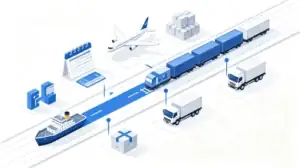
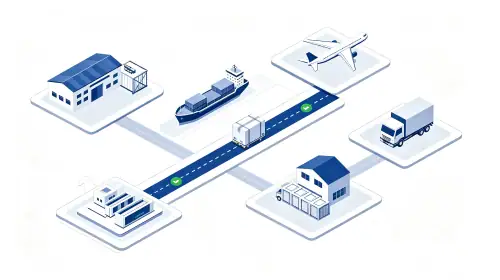
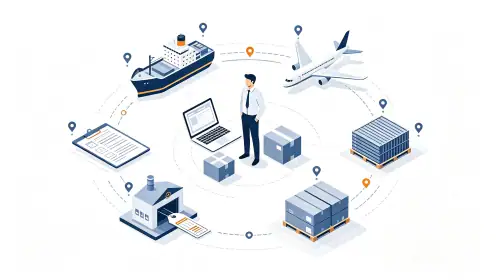
A professional Amazon FBA freight forwarder provides a one‑stop service from factory to FBA warehouse. Here’s what they handle at each stage:
1. Origin operations
-
Pick up cargo from the factory or warehouse
-
Check packaging and labeling against FBA standards
-
Coordinate or complete FNSKU labeling
-
Prepare commercial invoices, packing lists, and export documents
-
Book cargo space (ocean, air, or rail)
2. International freight
-
Match the right transport mode based on product type, weight, and urgency
-
Ocean: LCL or FCL
-
Air: standard air freight or express
-
Track shipment status throughout
3. Export customs clearance
-
Complete China customs export declaration
-
Obtain the Bill of Lading (B/L) or Air Waybill (AWB)
4. Import customs clearance at destination
-
Handle customs declaration in the destination country
-
Manage ISF filing (US) or ENS filing (Europe)
-
Pay duties and VAT (under DDP terms)
-
Assist with product certifications (FCC, CE, FDA, CPC, etc.)
5. Last‑mile delivery and FBA receiving
-
Pick up cargo from the port or airport
-
Book FBA warehouse appointment through Carrier Central
-
Arrange trucking to the designated FBA warehouse
-
Ensure the shipment passes FBA receiving checks
6. Value‑added services
-
FNSKU labeling, palletising, shrink‑wrapping
-
Temporary storage and transshipment at overseas warehouses
-
Label replacement and return handling
4. FBA‑Specialised Freight Forwarder vs. a General Forwarder – What’s the Difference?
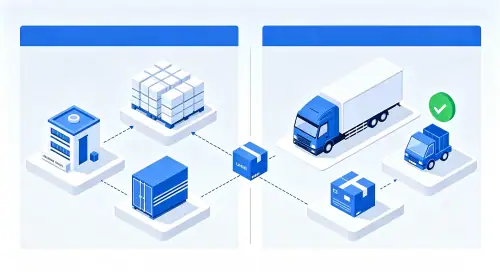
The gap between a general forwarder and an FBA‑specialised freight forwarder is much bigger than “have they handled Amazon orders before.”
| Dimension | General Freight Forwarder | FBA‑Specialised Freight Forwarder |
|---|---|---|
| Service endpoint | Destination port | FBA warehouse receiving complete |
| Familiar with FBA label specs? | Not necessarily | Yes |
| Knows FBA carton limits? | Not necessarily | Yes |
| Handles Carrier Central appointments? | No | Yes |
| Aware of 2026 compliance changes? | Not necessarily | Yes |
| Can help with FNSKU labeling? | Not necessarily | Yes |
The key difference: a general forwarder thinks the job is done after customs clearance. An FBA‑specialised forwarder knows that customs clearance is only the first half – getting your shipment through FBA’s receiving check is the real finish line. Wrong labels, oversized boxes, no appointment – any of these will get your shipment rejected and trigger defect fees.
5. What an Amazon FBA Freight Forwarder Does NOT Do – Setting Clear Boundaries
Knowing what a freight forwarder doesn’t do is just as important as knowing what they do:
They don’t handle storage or fulfillment inside the FBA warehouse.
The freight forwarder covers the “first mile” – getting your cargo to the FBA warehouse door. Once it’s inside, Amazon FBA takes over for shelving, storage, packing, and last‑mile delivery to customers.
They aren’t your Importer of Record.
When you use a third‑party freight forwarder, you – the seller – are the Importer of Record (IOR). The forwarder can handle the customs paperwork for you, but the legal liability sits with you, not them, and not Amazon.
They don’t guarantee FBA receiving speed.
FBA warehouses process shipments on a first‑come, first‑served basis. The forwarder can deliver on time, but how fast Amazon checks in and shelves your inventory depends on their own queue.

6. How to Tell if an Amazon FBA Freight Forwarder Is Any Good
Here are the core criteria for evaluating an FBA freight forwarder:
1. FBA‑specific experience
Ask pointed questions: do they know where and what size FNSKU labels should be? Have they handled Carrier Central appointments before? Are they familiar with FBA carton limits (no side over 63.5cm, max 23kg per box) and pallet specs (standard 48″×40″)?
The most important factor is hands‑on experience with Amazon FBA protocols – FNSKU labeling, palletising requirements, and Amazon‑specific delivery appointment scheduling.
2. Awareness of 2026 compliance changes
A good freight forwarder should proactively flag the 2026 changes – the end of FBA prep services, the spike in defect fees, the new FNSKU label rules. If they seem clueless, that’s a red flag.
3. Customs clearance capability
They should have a licensed customs broker in‑house or a formal partnership with one. For US shipments, confirm they have FMC registration. For Europe, they need an EORI number and ENS filing capability.
4. Price transparency
A good forwarder itemises every cost – freight, customs fees, destination charges, delivery fees, surcharges – clearly. If they only give you one lump sum with no breakdown, be wary.
5. Carrier capacity and route access
Whether you get space during peak season depends on whether your forwarder is a first‑tier or lower‑tier booking agent. First‑tier agents contract directly with carriers and have fixed space allocations.
7. Red Flags – Signs You Should Look Elsewhere
Watch out for these warning signs:
-
One lump‑sum price with no breakdown – you have no way of knowing if extra charges will pop up later.
-
Unaware of 2026 FBA rule changes – they’re not tracking Amazon’s policy updates.
-
Can’t show NVOCC or FMC credentials – basic requirements for US‑bound routes.
-
Claims “Amazon can act as your importer” – that’s simply false.
-
Can’t handle Carrier Central appointments – they don’t do last‑mile delivery.
Choose a freight forwarder who knows FBA rules inside out, breaks down costs clearly, and doesn’t just throw a “one‑price‑fits‑all” number at you. For example, AMZ Shipper specialises in cross‑border logistics for Amazon sellers, offering end‑to‑end services from China to FBA warehouses – origin handling, international transport, destination clearance, FNSKU labeling coordination, and last‑mile delivery. But whichever partner you go with, the key is finding a team that knows Amazon FBA rules and is upfront about costs.
In 2026, Amazon FBA logistics is no longer just about moving boxes – it’s about moving them through a compliance maze. Picking the right freight forwarder is the first and most important safeguard for your business.
ABout AMZ Shipper
AMZ Shipper has several years of experience for international logistics Freight Forwarding service. Our service is for importer and exporter, foreign freight forwarders, local and abroad business. Export of 1500 of 40HQ per year for FBA Amazon shipping, 15-30 tons of air shipments per month.
Member of WCA. Our company is a professional Amazon freight forwarder that specializes in providing comprehensive and efficient services to customers.