A lot of Amazon sellers pick their freight forwarder based on one thing only: the price.

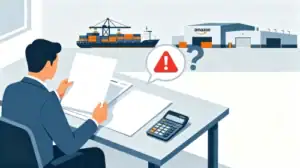
Whoever gives the lowest quote gets the business. Then after a few shipments, they realise – the cheapest quote rarely leads to the cheapest final bill. Terminal handling fees, chassis fees, ISF filing fees, inland drayage – none of these might have been mentioned upfront. When the invoice arrives, you find out you’re paying way more than expected.
In 2026, picking the wrong freight forwarder costs more than ever. Amazon has completely shut down its FBA prep and labeling service, inbound defect fees have jumped significantly, new FNSKU label rules are in effect, and EU customs rules have changed too. A freight forwarder who doesn’t know FBA requirements inside out could get your shipment rejected, held at customs, or hit with heavy penalties.
This isn’t a list of “top 10 forwarders” – it’s a practical screening framework to help you figure out who’s reliable and who isn’t, on your own.
1. Why Choosing a Freight Forwarder Matters More in 2026
A lot of sellers think a freight forwarder is just “the person who moves my boxes to Amazon.” But here’s the thing – you are the Importer of Record (IOR). The legal responsibility for customs clearance rests on you, not your forwarder, not Amazon.
Three things in 2026 make your choice of forwarder even more critical:
First, FBA prep and labeling services are gone for good. As of January 1, 2026, the US FBA prep and labeling service ended completely. On July 1, European sites followed suit. The service that ran for over a decade – including all paid options – is no longer available. Every single unit must be labeled and properly packaged before it reaches the FBA warehouse. If your freight forwarder isn’t up to speed on FBA label and packaging rules, your goods could be rejected outright, and Amazon won’t compensate you.
Second, inbound defect fees have shot up. Since January 15, 2026, Amazon has overhauled the way it calculates inbound defect fees. Mistakes like mis‑placed labels, oversized boxes, or missing tracking info now trigger fees that can be up to 700% higher than before. Label errors, missing or damaged box labels that can’t be scanned – these are the most common reasons you’ll get charged.
Third, new FNSKU label rules kicked in. From March 31, 2026, if you’re not brand‑registered with Amazon Brand Registry, you must stick Amazon‑exclusive FNSKU labels on every unit. Items without those labels are treated as defective, delaying your receiving process, and you lose any claim rights.
Choosing a freight forwarder who truly understands Amazon FBA is no longer just about saving a few bucks on shipping – it’s about whether your goods actually get accepted and at what cost.
2. FBA‑Specialized Freight Forwarder vs. a Regular One – What’s the Difference?
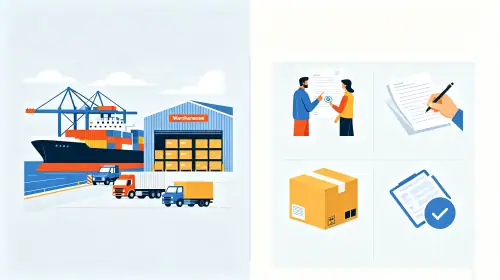
The gap between a regular forwarder and an FBA‑specialized freight forwarder is much bigger than “have they handled Amazon orders before.”
A regular forwarder does this: move goods from point A to point B, arrange transport, book space, handle export customs.
An FBA‑specialized freight forwarder does this:
-
Knows FBA’s carton size limits (no side over 63.5cm, max 23kg per box), label specs, and pallet requirements
-
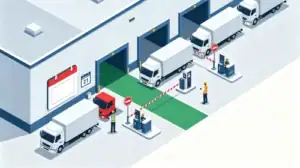
Handles Carrier Central appointment booking
-
Coordinates FNSKU labeling and packaging compliance at origin
-
Knows how to optimise inbound placement fees
-
Uses its own IOR and customs bond for proper DDP clearance
The key difference: a regular forwarder thinks the job is done once customs clears the goods. An FBA‑specialized forwarder knows that customs clearance is only half the battle – getting your shipment through FBA’s receiving check is the real finish line. Wrong labels, oversized boxes, no appointment – any of these can get your cargo rejected.

3. How to Evaluate a Freight Forwarder – Five Core Dimensions
Here’s a practical framework to assess any FBA freight forwarder across five areas:
1. Credentials and compliance – the absolute baseline
A legit freight forwarder should have:
-
NVOCC (Non‑Vessel Operating Common Carrier) license – allows them to issue their own bills of lading and contract directly with shipping lines, cutting out middlemen. Without it, they have to piggyback on someone else’s license – if that upstream operator drops your container or goes under, you have zero legal protection.
-
China Customs AEO (Authorized Economic Operator) certification – the highest customs trust level, with inspection rates a third of regular companies and clearance times improved by over 30%.
-
FMC registration (for US‑bound routes) – US law requires all NVOCCs to register with the FMC and post a bond.
-
Amazon‑recognised credentials – like SPN service provider, SEND carrier, or FIST (Fulfillment Integration Shipment Tracking) carrier.
You can verify these credentials on official websites – the Ministry of Transport, China Customs, or the FMC site for US‑bound forwarders.
2. FBA‑specific experience – more than just “handled Amazon”
Ask pointed questions:
-
Are they familiar with FBA carton size and weight limits?
-
Have they booked Carrier Central appointments before?
-
Do they know where and how to apply FNSKU labels?
-
Are they aware of the post‑2026 FBA prep service changes?
The most important thing is real‑world experience handling FBA protocols – FNSKU labeling, palletising requirements, and Amazon‑specific delivery appointment scheduling.
3. Customs clearance capability – the key to fast release
FBA shipments involve product certifications (FCC, CE, FDA, CPC), HS code classification, and VAT/IOSS declarations. Your forwarder should have an in‑house licensed customs broker or a formal partnership with one.
For US shipments, confirm they have FMC registration. For Europe, they need ENS filing capability and EU‑recognised AEO certification. With the EU scrapping the €150 duty‑free threshold in 2026 and charging €3 fixed duty per item, any forwarder handling Europe shipments must understand how this affects clearance procedures.
4. Price transparency – the cheapest quote is rarely the cheapest bill
Many sellers chase the lowest quote, only to find the final invoice much higher. A good freight forwarder should break down every line item:
-
Base freight
-
Terminal handling fees
-
Fuel surcharges
-
Manifest filing fees
-
Customs clearance fees
-
Destination charges
-
Delivery fees
For air and express, they should also clarify how volumetric weight is calculated, so they don’t tweak the numbers later to inflate your bill.
5. Capacity and route access – your insurance against peak‑season rollovers
Whether you get space during peak season and stable pricing depends on whether your forwarder is a first‑tier or lower‑tier booking agent.
-
First‑tier agents – contract directly with carriers, hold fixed space allocations.
-
Lower‑tier agents – buy space from first‑tier agents, and face higher rollover risks in busy seasons.
A forwarder with direct carrier contracts can get your cargo on board when it matters. Smaller players who resell space may leave you waiting.
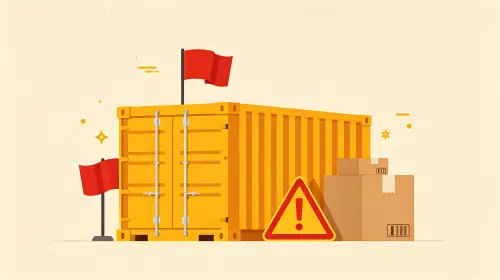
4. Red Flags – Walk Away If You See These
Here are signs that should make you think twice:
1. They give you one lump‑sum price with no breakdown
If they won’t itemise costs, you have no way of knowing if unexpected charges will pop up later.
2. They don’t know the 2026 rule changes
If they’re unaware that FBA prep services are gone, or that non‑brand‑registered sellers must use FNSKU labels, or that the EU duty‑free threshold has been removed – they’re not paying attention to Amazon’s evolving rules, and your shipments could suffer.
3. They can’t show NVOCC or FMC credentials
For ocean shipments, NVOCC is a basic requirement. For US routes, FMC registration is mandatory. If they can’t produce these, move on.
4. They claim Amazon can act as your IOR
That’s simply false – Amazon will never be your Importer of Record.
5. They don’t have their own IOR and customs bond
If a forwarder handling your DDP shipment uses someone else’s IOR instead of their own, you’ll have no one to hold accountable if something goes wrong.
6. They can’t handle Carrier Central appointments
If they leave FBA delivery booking to you, it’s a huge hassle and you might mess it up.
7. They have a lot of negative reviews – or none at all
Check their reputation across multiple channels. If you find nothing, or endless complaints, tread carefully.
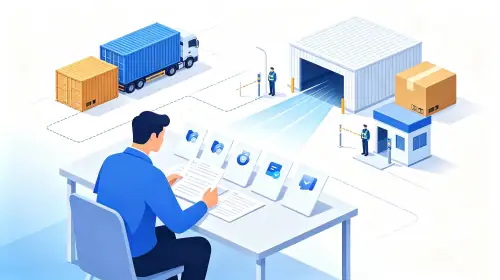
5. A Step‑by‑Step Process for Vetting a Freight Forwarder
Step 1 – Verify their credentials
Don’t just trust their website. Check official databases:
-
NVOCC: China Ministry of Transport website
-
AEO: China Customs website
-
FMC: US Federal Maritime Commission (www.fmc.gov)
Step 2 – Request a detailed quote
Ask for a full breakdown – base freight, customs fees, fuel surcharges, destination charges, delivery fees, and any extras. Make sure every line is clear.
Step 3 – Ask five specific questions
-
Have you shipped to my target FBA warehouse before?
-
Do you handle FNSKU labeling at origin? Will you check labels at pick‑up?
-
What’s your tier level with carriers? How reliable is your space during peaks?
-
For clearance, do you use your own IOR or someone else’s?
-
Do you manage Carrier Central appointments, or do I have to?
Step 4 – Test with a small shipment first
Don’t hand over all your inventory to a new forwarder right away. Send a small test box – see if communication is smooth, if the final bill matches the quote, and if transit times hold up.
Choose a freight forwarder who knows FBA rules inside out, explains costs clearly, and doesn’t just throw out a “one‑price‑fits‑all” number. AMZ Shipper, for instance, focuses on cross‑border logistics for Amazon sellers, offering support across transport mode selection, destination clearance, and last‑mile delivery. But whoever you go with, the key is finding a team that breaks down costs honestly and stays on top of 2026 FBA updates.
In 2026, FBA logistics is no longer about “moving boxes” – it’s about moving them through a compliance maze. Picking the right freight forwarder is your first and most important safeguard.
ABout AMZ Shipper
AMZ Shipper has several years of experience for international logistics Freight Forwarding service. Our service is for importer and exporter, foreign freight forwarders, local and abroad business. Export of 1500 of 40HQ per year for FBA Amazon shipping, 15-30 tons of air shipments per month.
Member of WCA. Our company is a professional Amazon freight forwarder that specializes in providing comprehensive and efficient services to customers.