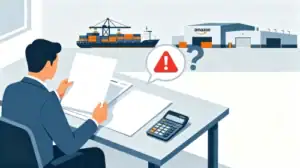
For most Amazon sellers shipping from China, FBA inbound logistics costs are the second largest expense after product procurement. Many sellers only look at the “total price” when asking for quotes, only to find that the final bill is significantly higher than expected – same volume, but a much bigger charge. The reason is that Amazon FBA inbound costs are never a simple “freight fee” – they are a complex chain made up of multiple cost components layered on top of each other.
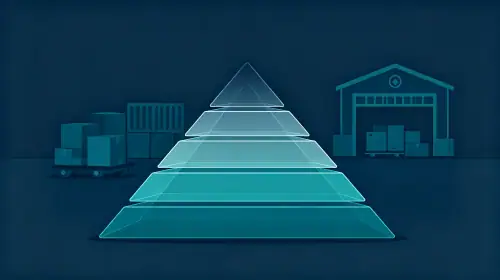
This guide breaks down the full cost structure of ocean freight from China to US Amazon FBA, so you can see exactly where every dollar goes.
A Quick Overview of Amazon FBA Ocean Freight Costs
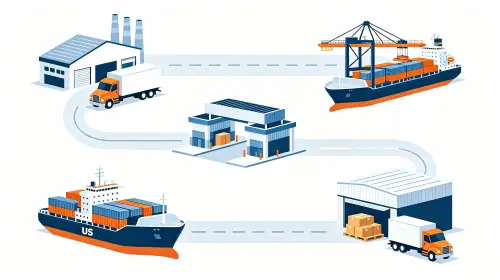
A complete ocean freight shipment from China to US Amazon FBA consists of six cost modules: line haul + domestic handling + destination charges + duties + last‑mile delivery + Amazon‑side fees. Line haul typically accounts for 50‑70% of the total – the biggest chunk.
The table below summarises the typical components and cost ranges for each module in 2026:
| Cost Module | What It Includes | Percentage of Total |
|---|---|---|
| Line haul | Ocean freight (FCL/LCL) | 50%‑70% |
| Domestic handling | Pick‑up, export customs, documentation, VGM | 10%‑20% |
| Destination charges | THC/DTHC, clearance, drayage | 5%‑10% |
| Duties | Import duties by HS Code (including Section 301 tariffs) | Varies by product |
| Last‑mile delivery | Truck or express to FBA warehouse | Varies by distance |
| Amazon‑side fees | Inbound placement, fuel surcharge, etc. | Varies by policy |
Breaking Down Amazon FBA Ocean Freight Costs: Line by Line
1. Line Haul (Ocean Freight)
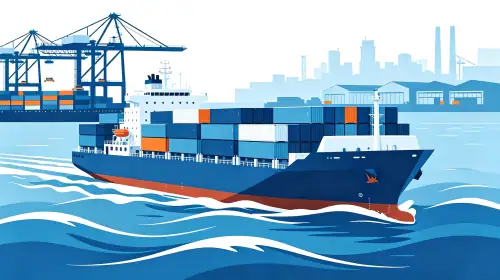
Line haul is the core expense of Amazon FBA inbound costs. It is calculated either as FCL (full container load) or LCL (less than container load). West Coast routes are typically 30‑40% cheaper than East Coast routes due to shorter distances and denser shipping networks.
-
LCL: Charged by cubic metre (CBM). In 2026, West Coast reference rates are roughly $80‑120/CBM, and East Coast $110‑150/CBM. This works best for smaller sellers who do not have enough volume to fill a full container.
-
FCL: Charged as a flat rate per container type. For a 20GP, West Coast rates are roughly $2,500‑3,800, East Coast $4,000‑5,800. For a 40HQ, West Coast rates are about $3,500‑4,800, East Coast $5,200‑6,500. The more you ship, the lower your per‑unit cost.
A common industry rule is that 1 CBM equals 167 kg for weight‑volume conversion. If your cargo is light but bulky (a “high‑cube” shipment), a 40HQ container is a good choice because it offers about 13% more capacity than a 40GP.
2. Domestic Handling
These are the costs incurred from the factory to the Chinese departure port, typically 15‑20% of the total Amazon FBA inbound cost:
-
Pick‑up fee: The forwarder collects the goods from your factory or warehouse, charged per trip or per kilometre.
-
Export customs fee: Service fee for Chinese export clearance – typically around RMB 1,500‑2,000 per FCL, or RMB 50‑80 per CBM for LCL.
-
Documentation fee: Costs for bills of lading, packing lists, and other shipping documents.
-
VGM declaration fee: The cost of verified gross mass submission.
3. Destination Charges
Costs incurred after the goods arrive in the US:
-
THC/DTHC (Terminal Handling Charges): Port‑levied operating fees. In 2026, THC on the West Coast is about $180 per 40HQ. LCL destination charges are typically $150‑400.
-
Customs clearance fee: Service fee for US import clearance, usually $150‑200 per shipment.
-
Drayage: Transport from the terminal to the warehouse – typically $250‑900 per trip, depending on distance and the specific FBA warehouse.
-
Inspection fee: If customs inspects your shipment, X‑ray inspection costs about $200‑400, while a full container unpacking inspection can cost $1,500‑3,000.
4. Duties
Duties are the single biggest variable cost in Amazon FBA inbound shipping. In 2026, due to US Section 301 tariffs, duty rates vary significantly by product category, ranging from 7.5% to 25% or more. Duties are calculated on the CIF value (cost of goods + insurance + freight).
An important 2026 change: the US de minimis exemption for shipments under $800 has been eliminated. All goods from China, regardless of value, must now go through formal import entry and pay full duties.
Two fixed US government fees related to duties:
-
MPF (Merchandise Processing Fee): 0.3464% of the declared value, with a minimum of $32.71 and a maximum of $614.35 per entry.
-
HMF (Harbor Maintenance Fee): 0.125% of the CIF value, applicable only to ocean shipments.
5. Last‑Mile Delivery
The final delivery from the port to the Amazon FBA warehouse:
-
Truck delivery: Best for large volumes – requires an appointment with the FBA warehouse. West Coast truck delivery fees are roughly $0.60‑0.90 per kg.
-
Express delivery: Best for smaller volumes – no appointment needed, but the per‑unit cost is about 15‑20% higher than truck delivery.
6. Amazon‑Side Fees
In 2026, Amazon made several adjustments to FBA fees:
-
Inbound placement fee: Increased by an average of $0.05 per unit from January 15, 2026. Sellers using the “minimum shipment split” option pay an additional fee per unit.
-
Fuel and logistics surcharge: 3.5% added from April 17, 2026, calculated on the fulfilment fee.
-
Peak‑season surcharge: From October 15, 2026, to January 14, 2027, FBA fulfilment fees will increase across the board.
Amazon FBA: FCL vs. LCL – Which One Makes More Sense?
Choosing between FCL and LCL directly affects your Amazon FBA per‑unit shipping cost:
| Comparison Point | FCL (Full Container Load) | LCL (Less than Container Load) |
|---|---|---|
| Ideal volume | 20 CBM and above | Under 15 CBM |
| Billing method | Flat rate per container | Per cubic metre (CBM) |
| Per‑unit cost | Lower (when volume is sufficient) | Higher (but total cost is lower for small shipments) |
| Transit stability | High | Moderate (affected by other cargo) |
| Security | High (dedicated container) | Moderate (shared container) |
| Typical break‑even point | – | Around 14‑16 CBM |
Key takeaway: if you ship more than 15‑20 CBM, FCL usually offers a lower per‑unit cost. If your volume is below that, LCL is a more flexible choice – but pay close attention to destination charges like DTHC and warehouse handling fees.
Hidden Costs That Often Inflate Your Amazon FBA Bill
These are the items that catch sellers off guard – many forwarders do not mention them upfront:
-
Bunker Adjustment Factor (BAF): Adjusts with global oil prices. In 2026, BAF on West Coast routes is roughly $150 per 40HQ, typically 8‑12% of the line haul.
-
Peak Season Surcharge (PSS): Added during peak seasons, usually 10‑15%. If you do not lock in space early, you could see a 12% PSS added.
-
Demurrage and detention fees: Charges for delays in clearing goods after arrival – demurrage is about $50‑100 per container per day, detention about $30‑50 per day.
-
Overweight/oversize surcharge: Amazon adds a surcharge for items over 15 kg or exceeding size limits – roughly $50‑100 per shipment.
-
Inspection fees for regulated products: Products requiring FDA, FCC, or other certifications may incur additional fees of about $200‑500 per shipment.
-
Customs inspection surcharge: When customs inspects, fees can be $500‑1,000 per occurrence.
-
AMS/ISF filing fees: US customs manifest filing – roughly $200‑500 per shipment.
-
MPF and HMF: As mentioned earlier, these are fixed US government fees.
-
Interception fee: Charges if you change destination or request a return while goods are in transit.
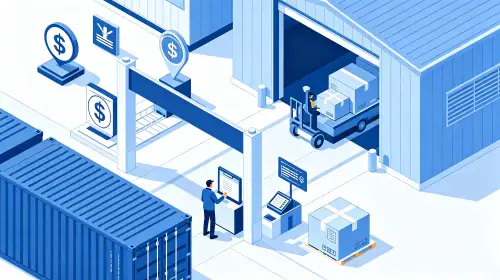
Collectively, these surcharges can add 15‑30% to your total freight bill. Always confirm whether a quote is an “all‑in” price.
How 2026 Policy Changes Are Affecting Amazon FBA Inbound Costs
Multiple policy changes in 2026 have directly pushed up Amazon FBA inbound costs:
-
From January 1, 2026: Amazon fully discontinued its FBA prep and labelling service. Sellers must now label and pack all goods before they leave China – otherwise, goods arriving without proper labels will not be eligible for reimbursement.
-
From January 15, 2026: The inbound placement fee increased by an average of $0.05 per unit; the weight threshold for split‑shipment decisions was raised from 5 lb to 8.5 lb.
-
From March 31, 2026: Sellers who have not completed brand registry must use FNSKU labels (starting with X00) – manufacturer barcodes are no longer accepted.
-
From April 17, 2026: A 3.5% fuel and logistics surcharge was added to US and Canada FBA fees.
-
From October 15, 2026: Peak‑season surcharges apply through January 14, 2027.
How to Get an Accurate Amazon FBA Freight Quote
Ask your forwarder for a line‑by‑line quote. Do not just look at a “total price” – ask for a breakdown of line haul, domestic handling, destination charges, duties, and last‑mile delivery.
Clarify DDP vs. DDU. DDP bundles everything into one predictable cost; DDU pushes duties to the delivery stage. Most sellers prefer DDP (“delivered duty paid door‑to‑door”).
Ask about surcharges. Are fuel surcharges, peak‑season surcharges, and overweight fees included in the quote?
Check the billing method. Is LCL charged per CBM or per weight? Does FCL have a minimum charge?
Factor in peak‑season buffers. Rates and surcharges typically rise during peak periods.
As a logistics provider focused on cross‑border ecommerce, AMZ Shipper helps sellers break down Amazon FBA inbound costs, identify hidden fees, and choose the shipping solution that best fits their volume and urgency – so you always know exactly what you are paying for.
ABout AMZ Shipper
AMZ Shipper has several years of experience for international logistics Freight Forwarding service. Our service is for importer and exporter, foreign freight forwarders, local and abroad business. Export of 1500 of 40HQ per year for FBA Amazon shipping, 15-30 tons of air shipments per month.
Member of WCA. Our company is a professional Amazon freight forwarder that specializes in providing comprehensive and efficient services to customers.